

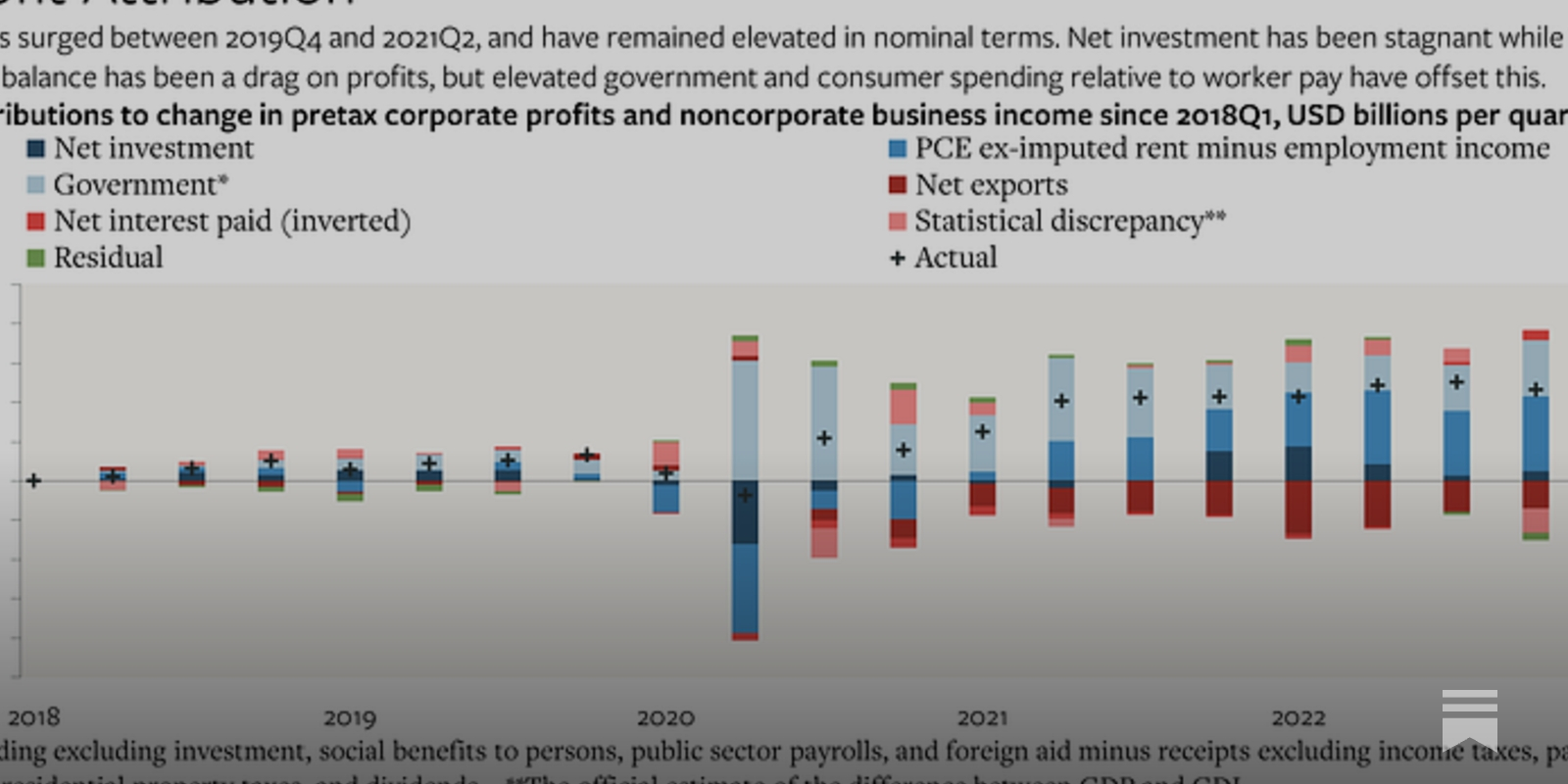
The assumption behind the "greedflation" thesis is that companies are choosing to squeeze volumes because they care more about unit margins than total profits. There are other possibilities.
The Marginal Productivity Theory of Distribution : A Critical History
The Marginal Productivity Theory of Distribution (MPTD) claims that in a free-market economy the demand for a factor of production will depend upon its marginal product – where "marginal product" is defined as the change in total product that is caused by, or that follows, the addition or subtraction of the marginal unit of the factor used in the production process, with all other inputs held constant. From its inception in the early nineteenth century the MPTD has been claimed by some economists to be a solution to the ethical problem of distributive justice, i.e. to be a means of determining fairness in wages, profits, interest and rent. Other economists have rejected this ethical claim, but have seen the MPTD as a valid demand-side criterion in the determination of equilibrium and efficiency. This book argues that the MPTD is valid, neither as a normative theory of social justice, nor as a positive law of economics. It suggests that economics is yet to develop a satisfactory theory of distribution that is scientific in the quantitative or mathematical sense. Through a survey of the origin and subsequent evolution of the MPTD in the writings of over 50 contributors over 150 years, John Pullen presents a critical history of the concept. The book begins by examining the conceptual tools that have been deployed to facilitate this analysis of past contributions to the MPTD and then looks at various economists and their contribution to the debate including its supporters such as Wicksteed, Marshall, Wicksell and Stigler, and its critics such as Pareto, Hobson, Edgeworth, Adriance and Cassel.
CMV: The labor theory of value is flawed
72 votes, 407 comments. This might be an obscure topic, however, in some—largely Marxist circles— the approach seems to motivate much of the dialogue…
Why the super rich are inevitable
Why some mathematicians argue the economy is designed to create a few super rich people – unless we stop it.
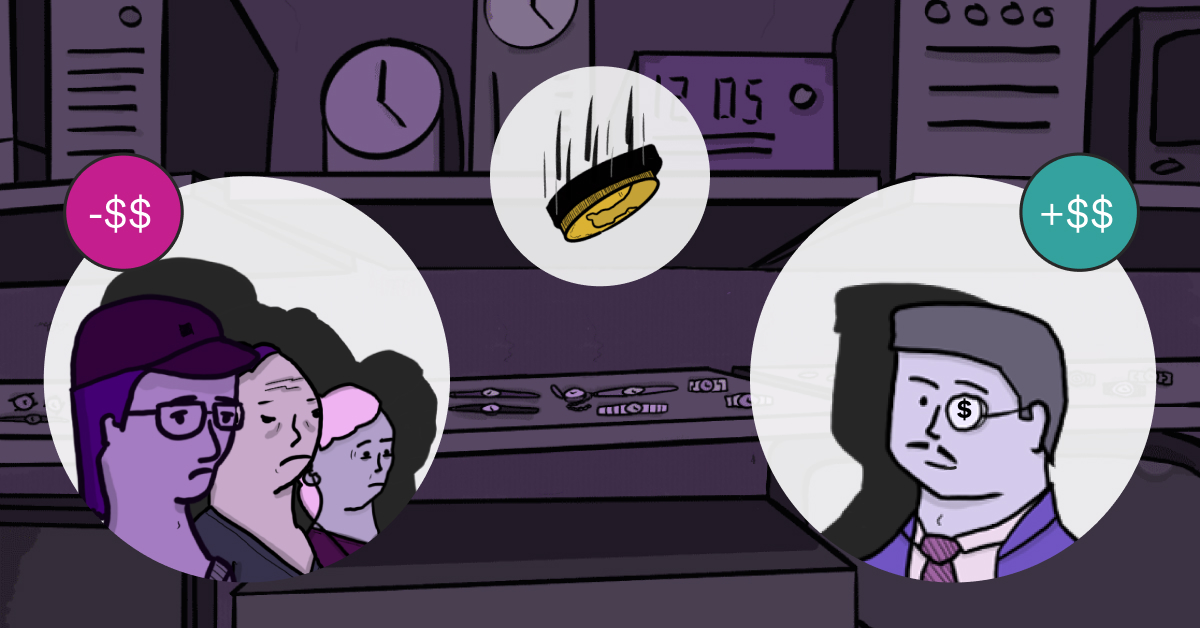
Pluralistic: How an AI moratorium can save AI bosses (16 Sep 2026) – Pluralistic: Daily links from Cory Doctorow
There's lots of reasons to believe the "hyperscaler" model of AI can never be profitable, and not just because of its gigantic expenditures and negative unit economics (the companies lose money with every new customer and every new use, and they lose more money with each generation of their products):
When your project isn’t making money
It might be that you’re losing money on every sale (Which means that each and every item you sell, every service you perform, costs you money. Bigger won’t make you better…) Becau…

Exocapitalism: economies with absolutely no limits
There is a touch of destiny with this one. We have real…

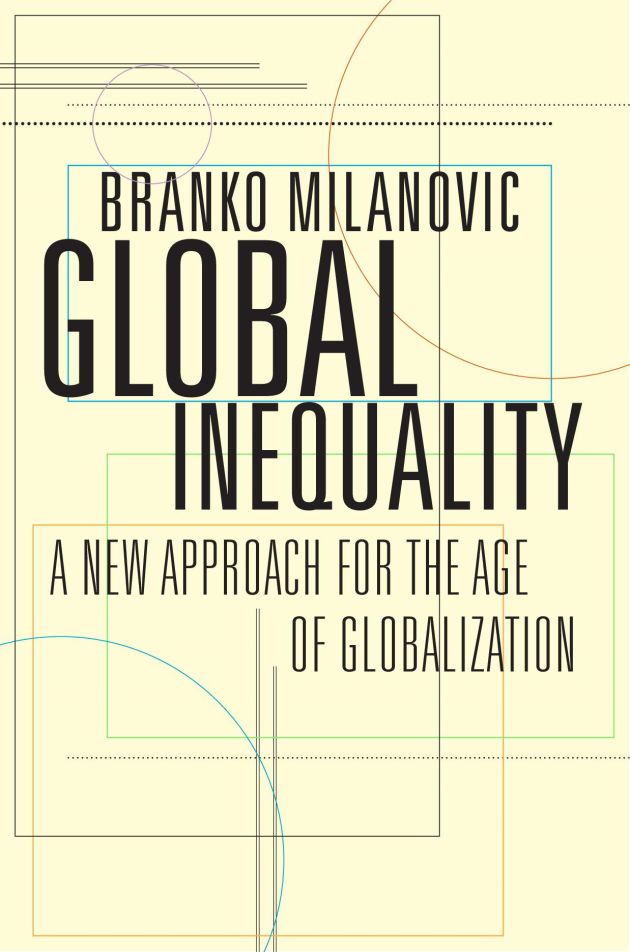
Global Inequality — Harvard University Press
Winner of the Bruno Kreisky Prize, Karl Renner InstitutA Financial Times Best Economics Book of the Year An Economist Best Book of the Year A Livemint Best Book of the YearOne of the world’s leading economists of inequality, Branko Milanovic presents a bold new account of the dynamics that drive inequality on a global scale. Drawing on vast data sets and cutting-edge research, he explains the benign and malign forces that make inequality rise and fall within and among nations. He also reveals who has been helped the most by globalization, who has been held back, and what policies might tilt the balance toward economic justice.“The data [Milanovic] provides offer a clearer picture of great economic puzzles, and his bold theorizing chips away at tired economic orthodoxies.”—The Economist“Milanovic has written an outstanding book…Informative, wide-ranging, scholarly, imaginative and commendably brief. As you would expect from one of the world’s leading experts on this topic, Milanovic has added significantly to important recent works by Thomas Piketty, Anthony Atkinson and François Bourguignon…Ever-rising inequality looks a highly unlikely combination with any genuine democracy. It is to the credit of Milanovic’s book that it brings out these dangers so clearly, along with the important global successes of the past few decades.—Martin Wolf, Financial Times

Behind the AI ‘Extinction’ Power Bid: Soaring Costs Could Hit 10% of World GDP
AI firms are invoking unproven extinction warnings to justify restrictions on developments by their smaller rivals whilst seeking greater influence over regulation

Jevons paradox
In economics, the Jevons paradox, or Jevons effect, is said to occur when technological improvements that increase the efficiency of a resource's use lead to a rise, rather than a fall, in total consumption of that resource. Greater efficiency reduces the amount of the resource needed per application, lowering its effective cost; if demand is sufficiently price elastic, this induces demand, frequently resulting in a net increase of total resource consumption.
1% for the People
Capitalism is the undisputed powerplant of global prosperity. Since Adam Smith first described the “invisible hand” that allows economies to be efficiently self-organizing and self-renewing, every attempt to supplant it with a competing system has failed spectacularly.

Anthropic's "Profitability" Swindle
Yesterday, the Wall Street Journal ran a story about how Anthropic is “about to have its first profitable quarter,” specifically an operating profit, or EBITDA profitability: Anthropic’s revenue is set to more than double to $10.9 billion in the second quarter, an explosive rate of growth that will

Why Amazon Has No Profits (And Why It Works) | Andreessen Horowitz
Amazon has a tendency to polarize people. On one hand, there is the ruthless, relentless, ferociously efficient company that’s building the Sears Roebuck of the 21st Century. But on the other, there is the fact that almost 20 years after it was launched, it has yet to report a meaningful profit. This chart captures the...

The Last Gasps of the Rent Seeking Class
Over the past fifty years, the U.S. economy built a giant rent-extraction layer on top of human limitations: things take time, patience runs out, brand familiarity substitutes for diligence, and most people are willing to accept a bad price to avoid more clicks. Trillions of dollars of enterprise value depended on those constraints persisting. – Citrini Research
“What we’ve got to understand is that this epistemic chaos, this collective psychosis, has risen as a result of the shareholder-driven model of global capitalism. What we’ve got to do is look at the mechanisms of that wealth pump itself & start to change that.” theecologist.org/2026/sep/09/soft-body-turtle

The soft body of the turtle
theecologist.org
