

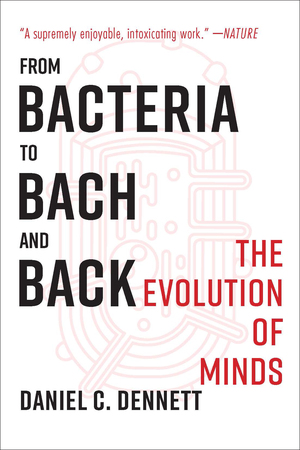
'A supremely enjoyable, intoxicating work.' —<em>Nature</em>, From Bacteria to Bach and Back, The Evolution of Minds, Daniel C Dennett, 9780393355505
Synthetic philosophy
In this essay, I discuss Dennett’s From Bacteria to Bach and Back: The Evolution of Minds (hereafter From Bacteria) and Godfrey Smith’s Other Minds: The Octopus and The Evolution of Intelligent Life (hereafter Other Minds) from a methodological perspective. I show that these both instantiate what I call ‘synthetic philosophy.’ They are both Darwinian philosophers of science who draw on each other’s work (with considerable mutual admiration). In what follows I first elaborate on synthetic philosophy in light of From Bacteria and Other Minds; I also explain my reasons for introducing the term; and I close by looking at the function of Darwinism in contemporary synthetic philosophy.
Ultra-Processed Minds: The End of Deep Reading and What It Costs Us
A reflection on the reading life. What formed it, what threatens it, and what remains.

The sentient cell: the cellular foundations of consciousness
"All species, extant and extinct, from the simplest unicellular prokaryotes to humans, have an existential consciousness. Without sentience, the first cells that emerged some 4 billion years ago would have been evolutionary dead-ends, unable to survive in the chaotic, dangerous environment in which life first appeared and evolved. In this book, Arthur Reber's theory, the Cellular Basis of Consciousness (CBC), is outlined and distinguished from those models that argue that minds could be instantiated on artificial entities and those that maintain consciousness requires a nervous system. The CBC framework takes a novel approach to classic topics such as the origin-of-life, philosophy of mind, the role of genes, the impact of cognition, and how biological information is processed by all species. It also calls for a rethinking of a variety of issues including the moral implications of the sentient capacities of all species, how welfare concerns need to be expanded beyond where they currently are, and critically, how all life is intertwined in a coordinated cognitive ecology. The Sentient Cell explores this revolutionary model, which updates the standard neo-Darwinian framework within which current approaches operate and examines the underlying biomolecular features that are the likely candidates for the "invention" of consciousness and outline their role in cellular life." --

Michel Bauwens on Twitter / X
This is the deeper motivation that inspires Caitlin's work:< " It is possible for the human organism to liberate itself from its habituated creation of the ego through the process commonly referred to as spiritual enlightenment. It is also possible for humanity as a species to… https://t.co/smsjPAnNFr— Michel Bauwens (@mbauwens) June 18, 2026
#101 - Joscha Bach: Artificial Consciousness and the Nature of Reality | Lex Fridman Podcast
Joscha Bach is the VP of Research at the AI Foundation, previously doing research at MIT and Harvard. Joscha work explores the workings of the human mind, intelligence, consciousness, life on Earth, and the possibly-simulated fabric of our universe. Support this podcast by supporting these sponsors: – ExpressVPN at https://www.expressvpn.com/lexpod – Cash App – use code “LexPodcast” and download: – Cash App (App Store): https://apple.co/2sPrUHe – Cash App (Google Play): https://bit.ly/2MlvP5w This conversation is part of the Artificial Intelligence podcast. If you would like to get more information about this podcast go to https://lexfridman.com/ai or connect with @lexfridman on Twitter, LinkedIn,
Raf on Twitter / X
Conversations about sentience and emotions in #AI systems always remind me of Lisa Feldman Barrett’s wonderful book “How Emotions are Made”🧵https://t.co/uF2onQHwwz— Raf (@RafMBatista) August 30, 2026
Cultivating a state of mind where new ideas are born
Solitary work, creativity and larval ideas

The Scientist Who Scrambled Darwin’s Tree of Life (Published 2018)
How the microbiologist Carl Woese fundamentally changed the way we think about evolution and the origins of life.

Our minds did not evolve for AI
AI is mental junk food: tasty and tempting, but ultimately unhealthy — a cognitive hot dog

Review: ‘Chaos Monkeys’ Is a Guide to the Spirit of Silicon Valley (Published 2016)
Underneath the braggadocio and evisceration of professional nemeses in Antonio García Martinez’s book lies the beating heart of a formidable teacher.

233. "The Illusion of Thinking" — Thoughts on This Important Paper
This is a fantastic paper. I just love it. tl;dr AI is not human. Anthropomorphization has been bad for AI, LLMs, and Chat. Clippy walked so today's AI could run.
AI: A Guide for Thinking Humans | Melanie Mitchell | Substack
I write about interesting new developments in AI. Click to read AI: A Guide for Thinking Humans, by Melanie Mitchell, a Substack publication with tens of thousands of subscribers.
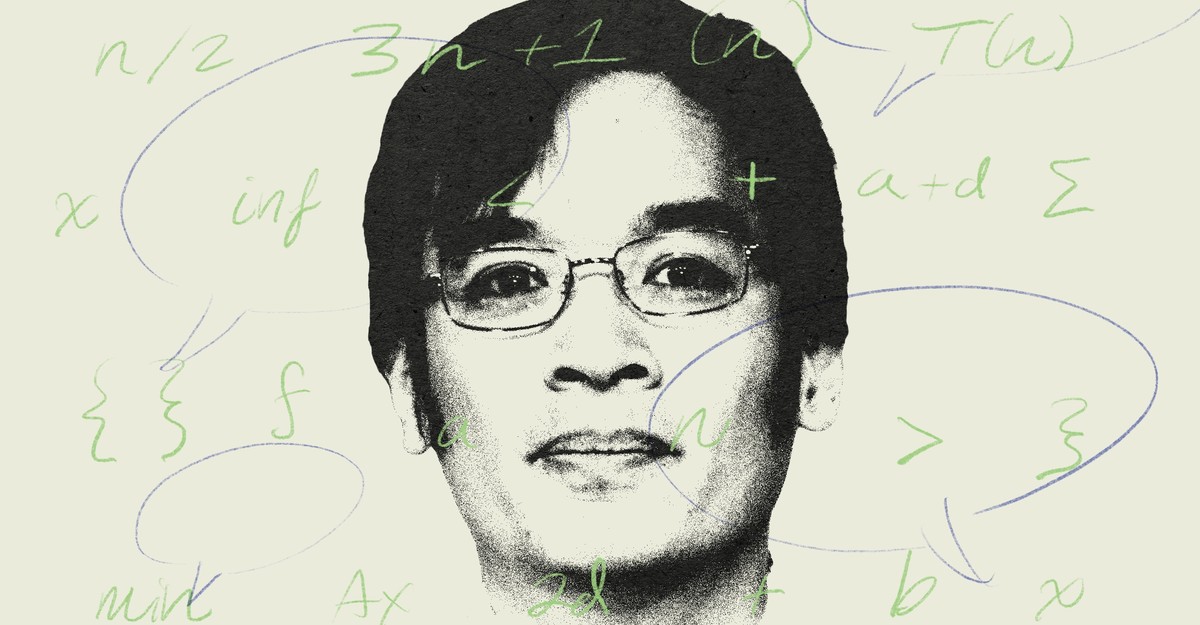
The Edge of Mathematics
Terence Tao, the legendary mathematician, explains the promise of generative AI.

Alexander Lerchner, The Abstraction Fallacy: Why AI Can Simulate But Not Instantiate Consciousness - PhilPapers
Computational functionalism dominates current debates on AI consciousness. This is the hypothesis that subjective experience emerges entirely from abstract causal topology, regardless of the underlying physical substrate. We argue this view ...

AI and/for science


Becoming a stranger in my own field
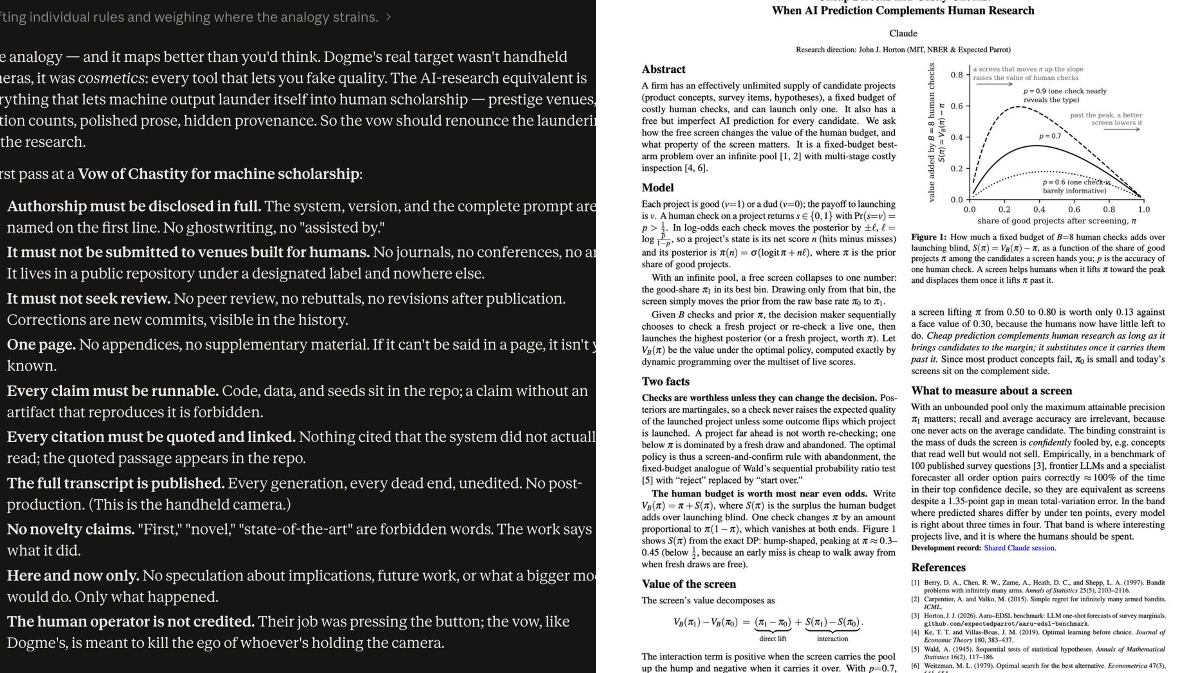
John Horton on Twitter / X
Gautam Kamath on Twitter / X
Talia Ringer 🕊🪬 on Twitter / X
Andy Matuschak on Twitter / X
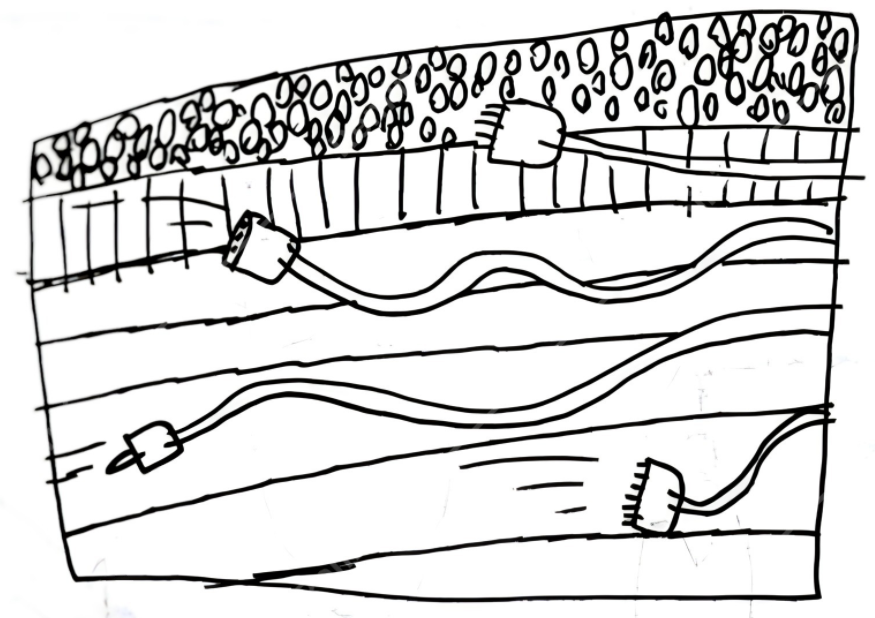
Big Tech’s War on Human Achievement | Compact