

The Old Farmer’s Almanac is your trusted source for long range weather forecasts, moon phases, full moon dates and times, gardening tips, sunrise and sunset times, Best Days, tide charts, home remedies, folklore, and more. All from the oldest continuously-published and best-selling farmers’ almanac in North America.
Indigenous knowledge for seasonal weather and climate forecasting across East Africa
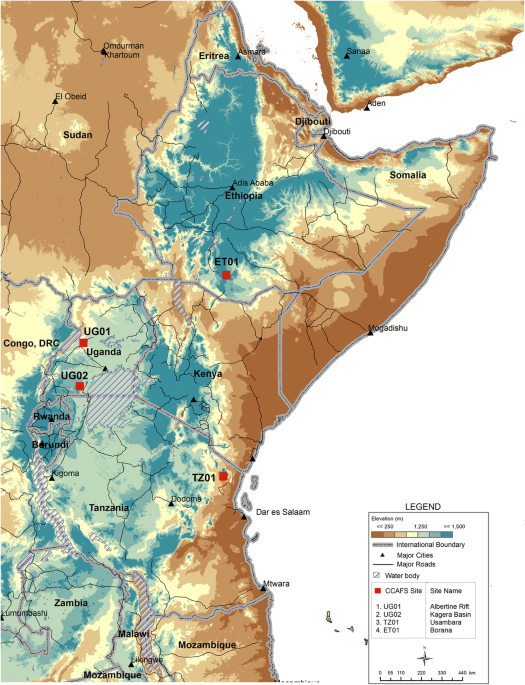
Climate information and agro-advisory services are crucial in helping smallholder farmers and pastoralists in East Africa manage climate-related risks and adapt to climate change. However, significant gaps exist in provision of climate information that effectively addresses the needs of farmers and pastoralists. Most farmers and pastoralists, therefore, rely on indigenous knowledge (IK), where local indicators and experiences are used to observe and forecast weather conditions. While IK-based forecasting is inbuilt and established in many communities in East Africa, coordinated research and systematic documentation of IK for weather forecasting, including accuracy and reliability of IK is largely lacking. This paper documents and synthesizes existing IK for weather forecasting in East Africa using case studies from Ethiopia, Tanzania, and Uganda. The results show that farmers and pastoralists use a combination of meteorological, biological, and astrological indicators to forecast local weather conditions. IK weather forecasting is, therefore, crucial in supporting efforts to improve access to climate information in East Africa, especially in resource-poor and vulnerable communities. The paper draws valuable lessons on how farmers and pastoralists in East Africa use IK weather forecasts for making crop and livestock production decisions and demonstrates that the trust and willingness to apply scientific forecasts by farmers and pastoralists is likely to increase when integrated with IK. Therefore, a systematic documentation of IK, and a framework for integrating IK and scientific weather forecasting from national meteorological agencies can improve accuracy, uptake, and use of weather forecasts.
Agriculture research summaries
Read short summaries of agricultural studies tailored to B.C. farmers and producers.
New app: Yesterday, an iPhone app for yesterday’s weather
Posted on Friday 28 Aug 2026. 519 words, 2 links. By Matt Webb.

Wikipedia:Reliable sources/Perennial sources
This is a non-exhaustive list of sources whose reliability and use on Wikipedia are frequently discussed. This list summarizes prior consensus and consolidates links to the most in-depth and recent discussions from the reliable sources noticeboard and elsewhere on Wikipedia.
USDA Plant Hardiness Zone Map | Planting Zones Map USA
Our USDA Plant Hardiness Zone Map will teach you everything you need to know about plant hardiness & growing zones. Find your planting zone with us today!

All the news that's fit for feeds - Applied Meteorology
Custom feeds can help surface the most useful information during big news events
Matakite — public forecasting
Public, timestamped forecasts as signed records in your own PDS.
Black Farmers Index
Black Farmers Index drives resources and exposure to agriculturalists with an online directory, workshops, events, data gathering/reporting and media features
homepages.news — News Homepages documentation
An open-source archive that gathers, saves, shares and analyzes news homepages
How to Choose the Right Forecasting Technique
What every manager ought to know about the different kinds of forecasting and the times when they should be used.

Atmospheric doesn’t have to be an app · Applied Meteorology
You can just build features into the websites you've already got!
Indigenous Knowledge Systems and Indicators of Rain: Evidence from Rwenzori Region, Western Uganda
This study investigated the abiotic and biotic environmental indicators used among pastoralists and arable farmers to predict the onset and cessation of rain as well as to make short-term and seasonal forecasts in the Rwenzori region of Western Uganda. We used a mixed-methods approach that included surveys of 907 households, focus group discussions, and key informant interviews. The results indicate that resident birds such as white-browed coucals and turacos and migrant birds such as eagles and swallows were important indicators of the onset of rains. Butterflies were an important indicator for the cessation of rains, and red ants were an indicator for the onset of rains. Among the abiotic indicators, winds, clouds, earthquakes, and cloud formation on Mount Rwenzori were important indicators. Behavior of cattle at the onset of rains was important among the pastoralists, and flowering of coffee plants was important among the arable farmers. The behavior of the biotic indicators was driven by the availability of food, water, or other necessities. An attempt to explain the phenology underlying the behavior of biotic indicators and the meteorological science underlying some of the abiotic indicators is made. Although biotic environmental indicators are rudimentary and their accuracy is influenced by external factors such as climate change, they provide climate information within the locality of the farmers. Our results suggest that the indicators used in indigenous forecasting could be incorporated in national meteorological systems in a bid to improve the accuracy of rainfall forecasts and their use among farmers and pastoralists in rural Africa.
at://news

Collectively-curated weather reports of the atmosphere.
Witchsky
bnewbold.net
Project vs. Product, Startup vs. Business

#atdev spent like 3h yesterday trying to make oauth permissions sets pretty only to hit a wall bc i need bsky to have more published sets bc…

Hello World from the PLC organization (plcred.org)! The org was soft-announced back in March at AtmosphereConf. We've been working through…

And that's fixed! Talks with live transcript at 2026.atmosphereconf.org/talks