

Have you noticed how the term “bioregional” is becoming a new eco-buzzword and greenwashing term? At the same time, many ordinary people are genuinely excited about the idea of bioregionalism as a constructive way to focus activism and socioeconomic innovation. Bioregionalism offers a practical, politically accessible space for addressing climate change, social inequality, the eclipse of democracy, out-of-control oligarchs, and capitalist growth.
Commoning as Relational Provisioning & Governance | David Bollier
This is the second section of an essay, "Relationalized Finance for Generative Living Systems and Bioregions," by David Bollier and Natasha Hulst. The remaining three sections of the essay will be published in the remaining days of this week. The full essay can be downloaded as a PDF here.
Grassroots Economics — Community-Powered Economies
Empowering communities across the World with community currencies, ecosystem restoration, and commitment pooling since 2010.
Bioeconomy
An open access, interactive textbook with videos and Q&As on sustainability and social change in the emerging field of bioeconomy in second edition.
What is a bioregion? Bioregionalism on the Internet (Part 1) — Hylo blog
What is bioregionalism? What would one find with an internet search? A knave's look at how the internet explains bioregions — and where it falls short.
Daniel Christian Wahl: “Bioregional Futures: Reconnecting to Place for Planetary Health” - The Great Simplification
In the past century of abundant energy surplus, humanity’s globalized, large-scale approach to problem-solving

New to the Commons? | David Bollier
If you’re coming to the commons for the first time, it can be difficult to grok the idea because there are so many different ways to understand the commons. That’s because the commons is not so much a fixed, universal thing as a general concept describing durable, dynamic sets of social relationships for managing resources -- all sorts of resources: digital, urban, natural, indigenous, rural, cultural, scientific, to use some crude categories.
Anthropocene Epistemology: Political, Ecological, and Economic Entanglements
This essay critically explores the connection between epistemology, political ecology, economy, and technological developments in the Anthropocene, understood a

Home - Schumacher Center for a New Economics
Our mission is to envision a just and regenerative economy; apply the concepts locally; then share the results for broad replication. Programs Library Lectures & Publications The Decentralism File Community Land Trust Local Currencies Reinventing The Commons All Programs eNewsletters All News “Since there is now increasing evidence of environmental deterioration, particularly in … Continued

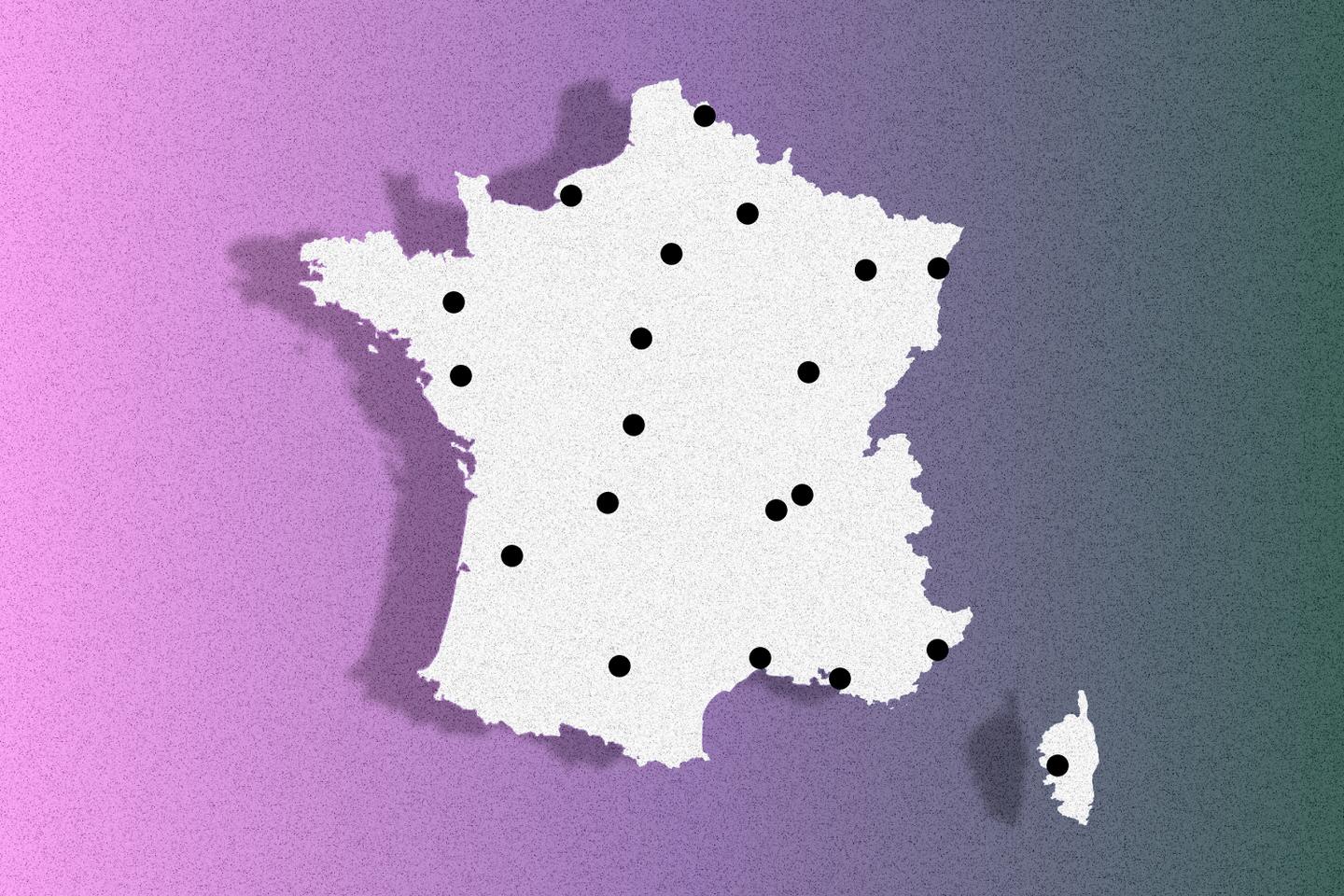
Le géographe Frédéric Giraut réagit aux « écorégions » promues par Jean-Luc Mélenchon : « Le biorégionalisme ne peut penser la question urbaine et migratoire autrement qu’en termes négatifs »
TRIBUNE. La proposition du candidat « insoumis » à l’élection présidentielle de redessiner la carte de France autour de 13 nouvelles zones s’inscrit dans une tradition de pensée qui fait primer les données naturelles et de supposés héritages culturels sur les réalités sociales et économiques, estime le géographe dans une tribune au « Monde ».
Planetary carambolage: The evolutionary political economy of technology, nature and work
The following editorial introduces the special issue (SI) on “Work, Environment and Planetary-scale Computation in Political-Economic Evolution”. Here, however, we go beyond an outline of what each contribution to the SI addresses, and attempt to draw a more pronounced shared embedding of the arguments that have come to the fore. The original idea of this SI was to synthesize a range of contemporary global political-economic challenges, i.e. (1) technology (esp. digital transformation), (2) nature (esp. ecological crisis) and (3) work (esp. precarization via the evolving platform economy). The main argument developed in this editorial reflection focuses on the common ground and origin of those processes found in the complex evolution of capitalist development. We frame the latter by assigning it a new term, i.e. “planetary carambolage”.
annotations: Quelques réflexions sur l’économie du développement, les institutions, Acemoglu, Johnson, Robinson…
Blog de sciences économiques et sociales de Martin Anota. Traductions, revues de presse.
Reclaiming the Computing Commons
Hunter writes: The commodification and exploitation of nature; the enclosure of the intellectual and informational commons in medicine, agriculture, and other areas of technical knowledge; the expropriation of public space to secure profit-all define an economic system supposedly premised on freedom.
Regenerative Economics
Regenerative economies strengthen social and ecological systems. It's time for economics education to show us how.

Urban problems: nature-based solutions and a Green New Deal everywhere
Nature-based Solutions with localised Green New Deals could save our settlements, and provide a just transition to a low-carbon society

Capitalism and markets are closely connected, but they aren't exactly the same thing. And once we recognize that it opens up a huge new terrain for different types of social organization. J.K. Gibson Graham wrote on this a lot. en.wikipedia.org/wiki/J._K._Gibson-Graham
J. K. Gibson-Graham - Wikipedia
en.wikipedia.orgEcological Media

Interconnected, relational, emergent. Socially networked media rooted in ecological relationalities.

We Need To Rewild The Internet

we were online
The information flaneur: a fresh look at information seeking
Trails and public spaces — Rafael M. Batista

It was a huge honor to present the opening keynote address at #SIGIR2026 and to talk about the need for IR to resist uncritical adoption of…

Chatty Community Gardens
