

Cyberdione Labs — infrastructure tooling for builders. Home of Hyprstream and The Onion Shell.
New tools for building agents


Composable, fast, and secure dev environments | Workshop | Ubuntu
Launch agent-ready, sandboxed development environments with a single command. Define them via simple YAML configs, share them to recreate on different machines.

Aaron Boodman on Twitter / X
There is this tension in dev tooling right now: Lots of people want to self-host, and not depend on a service. Lots of people also want the vibes of open source - being part of an open development community, having the code, etc.But builders still need to make a living...— Aaron Boodman (@aboodman) January 23, 2024
Home
I'm a writer and software developer. I currently work as a technical content marketer for PostHog, a suite of tools to help developers build better products.
Steven Vandevelde (@tokono.ma)
Looks like what I've been building is quite similar to what the foundation of Patchwork-26 is. Lots of "tiny apps" (atomization of software, loosely coupled) + just the web. Local-first and where everything revolves around the content (data-first, can use preferred UI/view). Happy to see this! 🎉

The League of Moveable Type
The first open-source foundry. And your spot to learn how to use, make, and work with type.
Svelte Agentation
Minimal source-inspection tooling for Svelte apps, inspired by Agentation and designed for dev-only workflows.

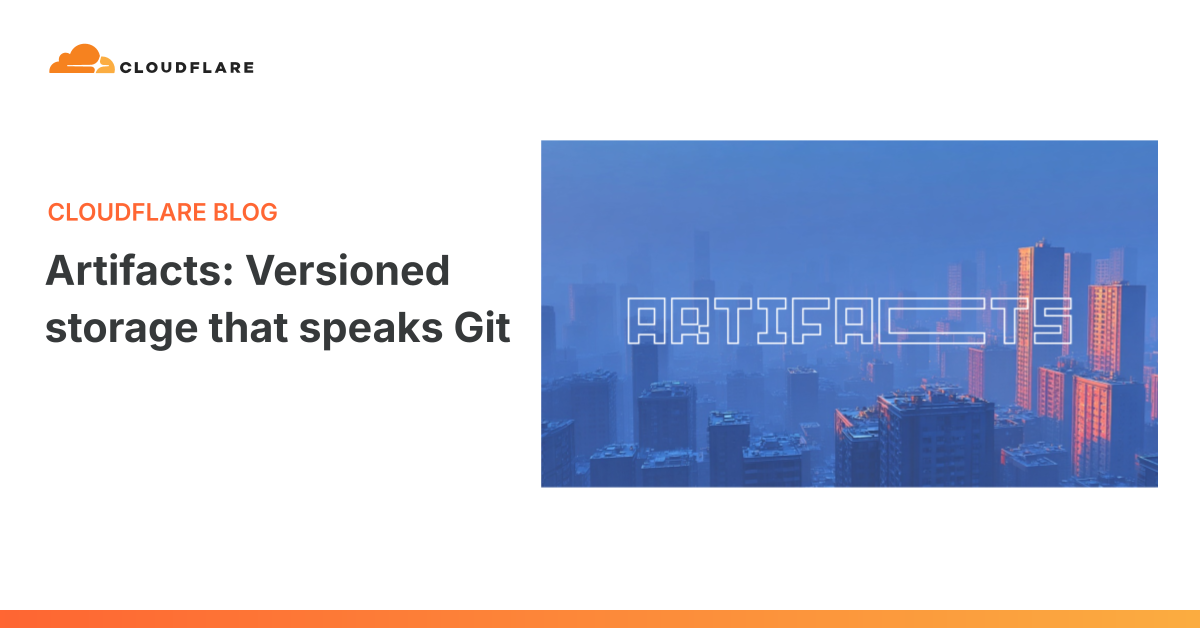
Artifacts: versioned storage that speaks Git
Give your agents, developers, and automations a home for code and data. We’ve just launched Artifacts: Git-compatible versioned storage built for agents. Create tens of millions of repos, fork from any remote, and hand off a URL to any Git client.
third-party apis: community infrastructure on atproto - Keith's Thoughts
you can just build things from an open set of tools
Home | Bellingcat's Online Investigation Toolkit
A toolkit for open source researchers

Architecture and the Internet: Designing places in cyberspace
Cyberspace, as the information space is called, has become accessible in the past decade through the World Wide Web. And although it can only be experienced through the mediation of computers, it is quickly becoming an alternative stage for everyday economic, cultural, and other human activities. As such, there is a potential and a need to design it according to place–like principles. Making places for human inhabitation is, of course, what architects, landscape architects, and town planners have been doing in physical space for thousands of years. It is curious, therefore, that Cyberspace designers have not capitalized on the theories, experiences, and practices that have been guiding physical place–making. While most 3D environments closely mimic physical spaces, they are, by and large, devoid of the essential characteristics that differentiate a ‘place’ from mere ‘space.’ And only rarely are they sensitive to, and take advantage of, the peculiarities of Cyberspace. We believe that this state of affairs is temporary, characteristic of early adoption stages of new technologies. As the Web matures, and as it assumes more fully its role as a destination rather than as means of communication, there will be a growing need to design it according to place–making principles. By looking at physical architecture as a case study and metaphor for organizing space into meaningful places, this paper explores the possibility of organizing Cyberspace into spatial settings that not only afford social interaction, but, like physical places, also embody and express cultural values. At the same time, because Cyberspace lacks materiality, is free from physical constraints, and because it can only be ‘inhabited’ by proxy, these ‘places’ may not necessarily resemble their physical counterparts.
A corner of the web for builders.
My name is Will King, and I am a design engineer...among many other things. You can find all of that work below and if you see something you like then let's be friends.
Peter van Hardenberg - Ink and Switch, Automerge
Anthropic has acquired the dev tools startup used by OpenAI, Google, and Cloudflare | TechCrunch
Stainless, a New York-based startup, founded in 2022, rose to prominence in the emerging AI industry for automating the creation and maintenance of software development kits, or SDKs — the libraries developers use to interact with APIs.


Commons Computer
@commonscomputer.com
Part of the #CommonsComputer project by @dwebyvr.org Visit the forum for more info forum.commonscomputer.com/c/commons-computer/11/none Admins: @bmann.ca @chadkoh.com @daffl.xyz @hyl.st