


Monique Craine of NeuroDivergent Matters talks all about the relationship between neurodiversity and the Social Model of Disability.
The social model of disability: thirty years on
This year marks exactly 30 years since I published a book introducing the social model of disability onto an unsuspecting world and yet, despite the impact this model has had, all we now seem to do...

The social model of disability: thirty years on
This year marks exactly 30 years since I published a book introducing the social model of disability onto an unsuspecting world and yet, despite the impact this model has had, all we now seem to do...
Social Model of Disability | The Paper Pilot
The Paper Pilot's digital garden of thoughts on philosophy, politics, and sociology
Disability-Driven Development
Belonging Is a Right, Not a Reward
CW: Ableism Disabled people have been made to prove their worth for too long. Society sees value in work, earnings, or productivity, and anyone who doesn’t meet these standards is expected to…

Against Technoableism
When bioethicist and professor Ashley Shew became a self-described "hard-of-hearing chemobrained amputee with Crohn's disease and tinnitus," there was no returning to "normal." Suddenly well-meaning people called her an "inspiration" while grocery shopping or viewed her as a needy recipient of technological wizardry. Most disabled people don't want what the abled assume they want--nor are they generally asked. Almost everyone will experience disability at some point in their lives, yet the abled persistently frame disability as an individual's problem rather than a social one. In a warm, feisty voice and vibrant prose, Shew shows how we can create better narratives and more accessible futures by drawing from the insights of the cross-disability community. To forge a more equitable world, Shew argues that we must eliminate "technoableism"--the harmful belief that technology is a "solution" for disability; that the disabled simply await being "fixed" by technological wizardry; that making society more accessible and equitable is somehow a lesser priority. This badly needed introduction to disability expertise considers mobility devices, medical infrastructure, neurodivergence, and the crucial relationship between disability and race. The future, Shew points out, is surely disabled--whether through changing climate, new diseases, or even through space travel. It's time we looked closely at how we all think about disability technologies and learn to envision disabilities not as liabilities, but as skill sets enabling all of us to navigate a challenging world.
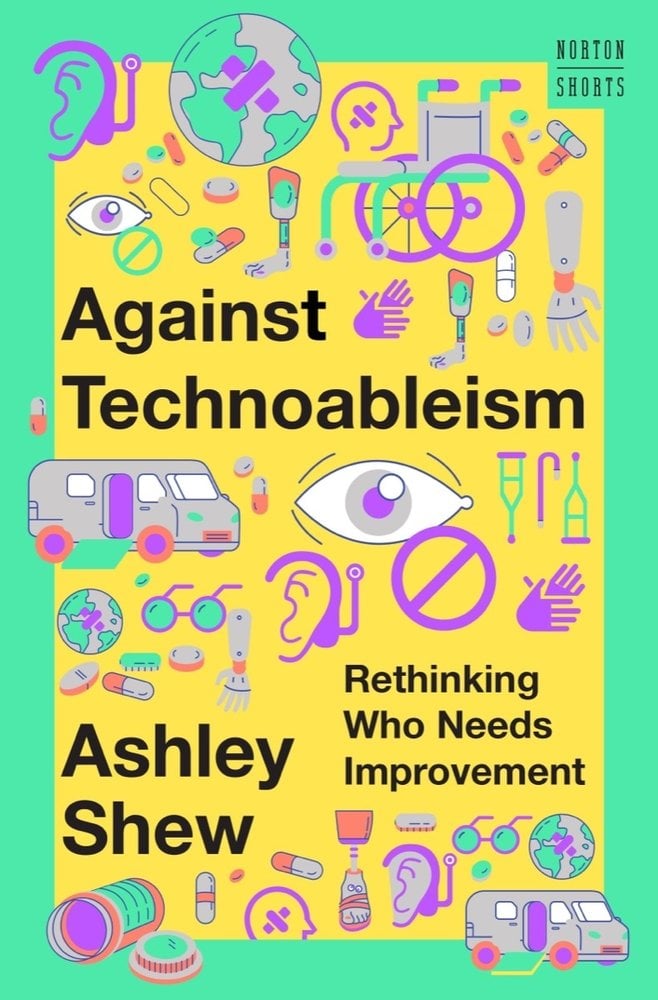
Against Technoableism
One of BookRiot’s Ten Best Disability Books of the YearShortlisted for the Inc. Non-Obvious Book Awards“Wonderfully lucid.” —Andrew Leland, New York Times Book ReviewA manifesto exploding what we think we know about disability, and arguing that disabled people are the real experts when it comes to technology and disability., Against Technoableism, Rethinking Who Needs Improvement, Ashley Shew, 9781324076254
Neurodiversity | The Paper Pilot
The Paper Pilot's digital garden of thoughts on philosophy, politics, and sociology
Anthropology and ableism
Abstract This article continues the tradition of writing about embodied knowledge production to highlight the underanalyzed issue of ableism, providing an opening for a disciplinary reckoning with oppressive legacies towards creating collective access in anthropology and academia. Building on the creative and collaborative labor of disabled and allied anthropologists, I argue that ableism is inherent to anthropology's disciplinary formations—especially expectations pertaining to fieldwork. I make a series of claims related to this argument: The continuation of fieldwork practices from the colonial model naturalizes able bodyminds, and without intervention, reproduces ableist anthropology. The normate anthropologist has always had a “nondisabled” bodymind, but once disability became a proper object for anthropology, a line was solidified between “anthropologist” and “the disabled,” thereby making disabled anthropologist a seemingly conceptual impossibility. The effect of the anthropological gaze turning towards disability introduced a “corporeal unconscious” in the discipline; the specter of becoming disabled (becoming subject to the anthropological gaze rather than being its source) haunts fieldwork and heightens the anxious relation of anthropology to disability. Illuminating the normative underpinnings of anthropology and embracing the unbearable possibility that we all might be(come) disabled should move us to collectively consider what anthropology might be otherwise. , Resumen Este artículo continúa la tradición de escribir acerca de la producción de conocimiento corporeizado para enfatizar la cuestión insuficientemente analizada de la discriminación o prejuicio contra los discapacitados, capacitismo, proveyendo una apertura para un lidiar disciplinario con legados opresivos hacia la creación de acceso colectivo en antropología y la academia. Construyendo sobre la labor creativa y colaborativa de antropólogos discapacitados y aliados, argumento que el capacitismo es inherente a las formaciones disciplinarias de la antropología –especialmente las expectativas pertenecientes al trabajo de campo–. Realizo una serie de aseveraciones relacionadas con este argumento: la continuación de las prácticas de trabajo de campo del modelo colonial naturaliza los cuerposmentes capaces, y sin intervención, reproduce una antropología capacitista. El antropólogo normate ha sido siempre un cuerpomente “no discapacitado”, pero una vez la discapacidad se convirtió en un objeto propio para la antropología, una línea fue solidificada entre “el antropólogo” y “el discapacitado”, haciendo de este modo al antropólogo discapacitado aparentemente una imposibilidad conceptual. El efecto de la mirada antropológica dirigiéndose hacia la discapacidad introdujo un “inconsciente corporal” en la disciplina; el espectro de llegar a ser discapacitado (llegar a estar sujeto a la mirada antropológica en vez de ser su fuente) ronda el trabajo de campo y realza la relación ansiosa de la antropología con la discapacidad. Iluminar los fundamentos normativos de la antropología y aceptar la insoportable posibilidad que todos podemos (llegar) a ser discapacitados debería movernos a considerar colectivamente lo que podría ser la antropología de otra manera. [ capacitismo, discapacidad, trabajo de campo, ethnograph, accesibilidad ]

Crip Technoscience Manifesto
As disabled people engaged in disability community, activism, and scholarship, our collective experiences and histories have taught us that we are effective agents of world building and dismantling toward more socially just relations.The grounds for social justice and world remaking, however, are frictioned;technologies, architectures, and infrastructures are often designed and implemented without committing to disability as a difference that matters. This manifesto calls attention to the powerful, messy, non-innocent, contradictory, and nevertheless crucial work of what we name as “crip technoscience,” practices of critique, alteration, and reinvention of our material-discursive world. Disabled people are experts and designers of everyday life. But we also harness technoscience for political action, refusing to comply with demands to cure, fix, or eliminate disability. Attentive to the intersectional workings of power and privilege, we agitate against independence and productivity as requirements for existence. Instead, we center technoscientific activism and critical design practices that foster disability justice.
The Missed Neurodiversity: advocate for recognition and resources for gifted individuals - BC Association of Clinical Counsellors
Note: This article includes additional questions and answers and supplementary resources from the Member Profile interview with Debbie Clelland, RCC, published in the Fall 2021 issue of BCACC’s Insights magazine. “When […]
I tried to check out the papers this links to, but a whole bunch of them (maybe most of them) are ei — @aiueo.ooo
The influence of artificial intelligence on individuals with disabilities - ScienceDirect
Out of Sight; Out of Mind - Ewan’s Blog
Disability did not become fashionable. Disabled people became harder to ignore.
Technoableism
Technoableism is a belief in the power of technology that considers the elimination of disability a good thing, something we should strive for. It’s a classic form of ableism—bias against disabled people, bias in favor of nondisabled ways of life. Technoableism is the use of technologies to reassert those biases, often under the guise of empowerment.

Challenging Ableism: A Critical Turn Toward Disability Justice in HCI
A reflection on our learnings from the CHI 2022 "Dreaming Disability Justice in HCI" workshop, and why we continue to call for disability justice, despite the limitations of how we practice it within academia and industry.
Disability-driven Development

Disability-driven Development is a practice that reimagines computing from a disabled perspective.
Against Technoableism

Is Meta Using Disabled People to Promote Its Glasses?
Challenging Ableism: A Critical Turn Toward Disability Justice in HCI
The influence of artificial intelligence on individuals with disabilities

AI Doesn't Fix Accessible Systems. It Depends on Them. — Anna E. Cook

Radical Accessibility and the Hyperaudio Lite Editor