


Visit the Doug Engelbart Institute to explore his remarkable legacy and all it inspires (official site)
Engelbart: Augmenting Human Intellect (1962)
AUGMENTING HUMAN INTELLECT : A Conceptual Framework Dr. Engelbart 1962
Welcome
Visit the Doug Engelbart Institute to explore his remarkable legacy and all it inspires (official site)
50 Years Later, We Still Don't Grasp the Mother of All Demos
Doug Engelbart didn't just want to show off new technology. He wanted to demonstrate a system for improving humanity.

Augmented human intelligence goes beyond the AGI mirage
This paper argues that contemporary Artificial General Intelligence (AGI) approaches face significant challenges that make Augmented Human Intelligence (AHI) a more promising and practically beneficial alternative. Drawing on phenomenological insights from Peter-Paul Verbeek’s technological mediation theory and comprehensive empirical evidence from decades of AI development, we argue that current AGI projects encounter recurring difficulties that may stem from attempting to replace rather than enhance human intelligence. Through analysis of mediation theory’s core concepts, systematic examination of recent AI performance data, and comprehensive review of human–AI collaboration studies, we show why augmentation approaches consistently outperform replacement attempts across domains requiring creativity, judgment, and contextual understanding. Prioritizing sophisticated AHI development over AGI pursuit represents not a compromise but a fundamental reorientation toward more effective and ethically sound approaches to artificial intelligence that better serve human flourishing.

Complementary Intelligence
In the following, I will try sketch a way of thinking about human intelligence and human nature through emphasizing its difference from the...

Abeba Birhane on Twitter / X
a classic case of “the human mind is afforded less complexity than is owed, and the computer is afforded more wisdom than is due.” Baria and Cross (2021)that "vibe" is at the core of what makes us human. it defies formalization and datafication https://t.co/AXELAqlYcq— Abeba Birhane (@Abebab) February 17, 2024
Towards Critical Artificial Intelligence Literacies
Critical Artificial Intelligence Literacies (CAILs) is the collection of ways of thinking about and relating to so-called artificial intelligence (AI) that rejects dominant frames presented by the technology industry, by naive computationalism, and by dehumanising ideologies. Instead, CAILs centre human cognition and uphold the integrity of academic research and education. We present a selection of CAILs across research and education, which we analyse into the following non-orthogonal dimensions: conceptual clarity, critical thinking, decoloniality, respecting expertise, and slow science. Finally, we note how we see the present with and without a wider adoption of CAILs — a fundamental aspect is the assertion that AI cannot be allowed to drive change, even positive change, in education or research. Instead cultivation of and adherence to shared values and goals must guide us. Ultimately, CAILs minimally ask us to contemplate how we as academics can stop AI companies from wielding so much power.
Prof. Judy Fan: Cognitive Tools for Making the Invisible Visible
Prof. Judy Fan: Cognitive Tools for Making the Invisible Visible
AI Literacy Across the Curriculum
As you have no doubt seen, AI is becoming ubiquitous in our lives and in the technologies we use every day. Generative AI is no longer an experimental tool, but a deployed technology in many of the…

Konrad Hinsen's blog
A much cited essay by Bret Victor, "Explorable Explanations", argues for supporting and encouraging active reading in communicating ideas. Explanatory text should thus be complemented by interactive visualizations and computational demonstrations, allowing the reader to actively engage with the ideas. If you haven't read Victor's essay yet, please do so now, and then come back here. It's not very long. What I am going to discuss is a variation on Victor's proposal, and I won't repeat his well-presented arguments.

Without a theory of intelligence
The history of science — and of progress — is a series of benefits that are direct results of new tools.
How to create reading experiences that "go beyond information transmission and toward reader transformation.” Great paper by @blue-phia.bsky.social @lepidopterane.bsky.social @yijunliu.bsky.social Sarah Sterman @sh1m.bsky.social @maxkreminski.bsky.social arxiv.org/abs/2606.04308 >
Neuroscience, Cognition & Psychology

Anti-democratic attitudes are highly contagious, new psychology study finds
Hyperactive–impulsive ADHD traits predict higher curiosity in adults: evidence from a cross-sectional study
Understanding the influence of digital technology on human cognitive functions: A narrative review

How the hypercuriosity of ADHD may have helped humans thrive | Aeon Essays
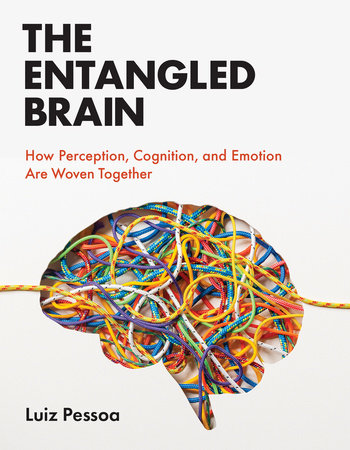
The Entangled Brain: How Perception, Cognition, and Emotion Are Woven Together
