


Purpose. This paper offers a definition of the core of information science, which encompasses most research in the field. The definition provides a unique identity for information science and positions it in the disciplinary universe.Design/methodology/approach. After motivating the objective, a definition of the core and an explanation of its key aspects are provided. The definition is related to other definitions of information science before controversial discourse aspects are briefly addressed: discipline vs. field, science vs. humanities, library vs. information science and application vs. theory. Interdisciplinarity as an often-assumed foundation of information science is challenged.Findings. Information science is concerned with how information is manifested across space and time. Information is manifested to facilitate and support the representation, access, documentation and preservation of ideas, activities, or practices, and to enable different types of interactions. Research and professional practice encompass the infrastructures – institutions and technology –and phenomena and practices around manifested information across space and time as its core contribution to the scholarly landscape. Information science collaborates with other disciplines to work on complex information problems that need multi- and interdisciplinary approaches to address them.Originality/value. The paper argues that new information problems may change the core of the field, but throughout its existence, the discipline has remained quite stable in its central focus, yet proved to be highly adaptive to the tremendous changes in the forms, practices, institutions and technologies around and for manifested information.
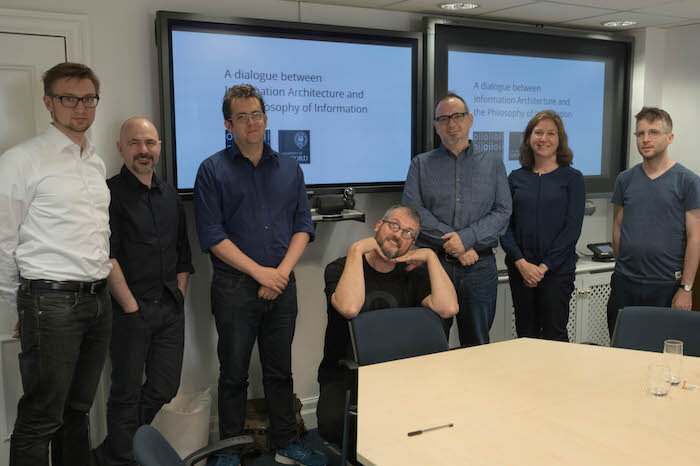
Information Architecture meets the Philosophy of Information - The Policy and Internet Blog
Advancing the practical and theoretical basis for how we conceptualise and shape the infosphere.
Everything is miscellaneous : the power of the new digital disorder
Includes bibliographical references (p. [235]-257) and index; Prologue : information in space -- The new order of order -- Alphabetization and its discontents -- The geography of knowledge -- Lumps and splits -- The laws of the jungle -- Smart leaves -- Social knowing -- What nothing says -- Messiness as a virtue -- The work of knowledge -- Coda : misc; Philosopher Weinberger shows how the digital revolution is radically changing the way we make sense of our lives. Human beings constantly collect, label, and organize data--but today, the shift from the physical to the digital is mixing, burning, and ripping our lives apart. In the past, everything had its one place--the physical world demanded it--but now everything has its places: multiple categories, multiple shelves. Everything is suddenly miscellaneous. Weinberger charts the new principles of digital order that are remaking business, education, politics, science, and culture. He examines how Rand McNally decides what information not to include in a physical map (and why Google Earth is winning that battle), how Staples stores emulate online shopping to increase sales, why your children's teachers will stop having them memorize facts, and how the shift to digital music stands as the model for the future.--From publisher description; From A to Z, Everything Is Miscellaneous will completely reshape the way you think - and what you know - about the world. Includes information on alphabetical order, Amaxon.com, animals, Aristotle, authority, Bettmann Archive, blogs (weblogs), books, broadcasting, British Broadcasting Corporation (BBC), business, card catalog, categories and categorization, clusters, companies, Colon Classification, conversation, Melvil Dewey, Dewey Decimal Classification system, Encyclopaedia Britannica, encyclopedia, essentialism, experts, faceted classification system, first order of order, Flickr.com, Google, Great Books of the Western World, ancient Greeks, health and medical information, identifiers, index, inventory tracking, knowledge, labels, leaf and leaves, libraries, Library of Congress, links, Carolus Linnaeus, lumping and splitting, maps and mapping, marketing, meaning, metadata, multiple listing services (MLS), names of people, neutrality or neutral point of view, New York Public Library, Online Computer Library Center (OCLC), order and organization, people, physical space, everything having place, Plato, race, S.R. Ranganathan, Eleanor Rosch, Joshua Schacter, science, second order of order, simplicity, social constructivism, social knowledge, social networks, sorting, species, standardization, tags, taxonomies, third order of roder, topical categorization, tree, Uniform Product Code (UPC), users, Jimmy Wales, web, Wikipedia, etc

The Information Pathology
November 2018 When I write, my aim is to learn more about a subject, to start conversations, and to serve as a point of departure for further exploration (rather than a point of reference or conclu…
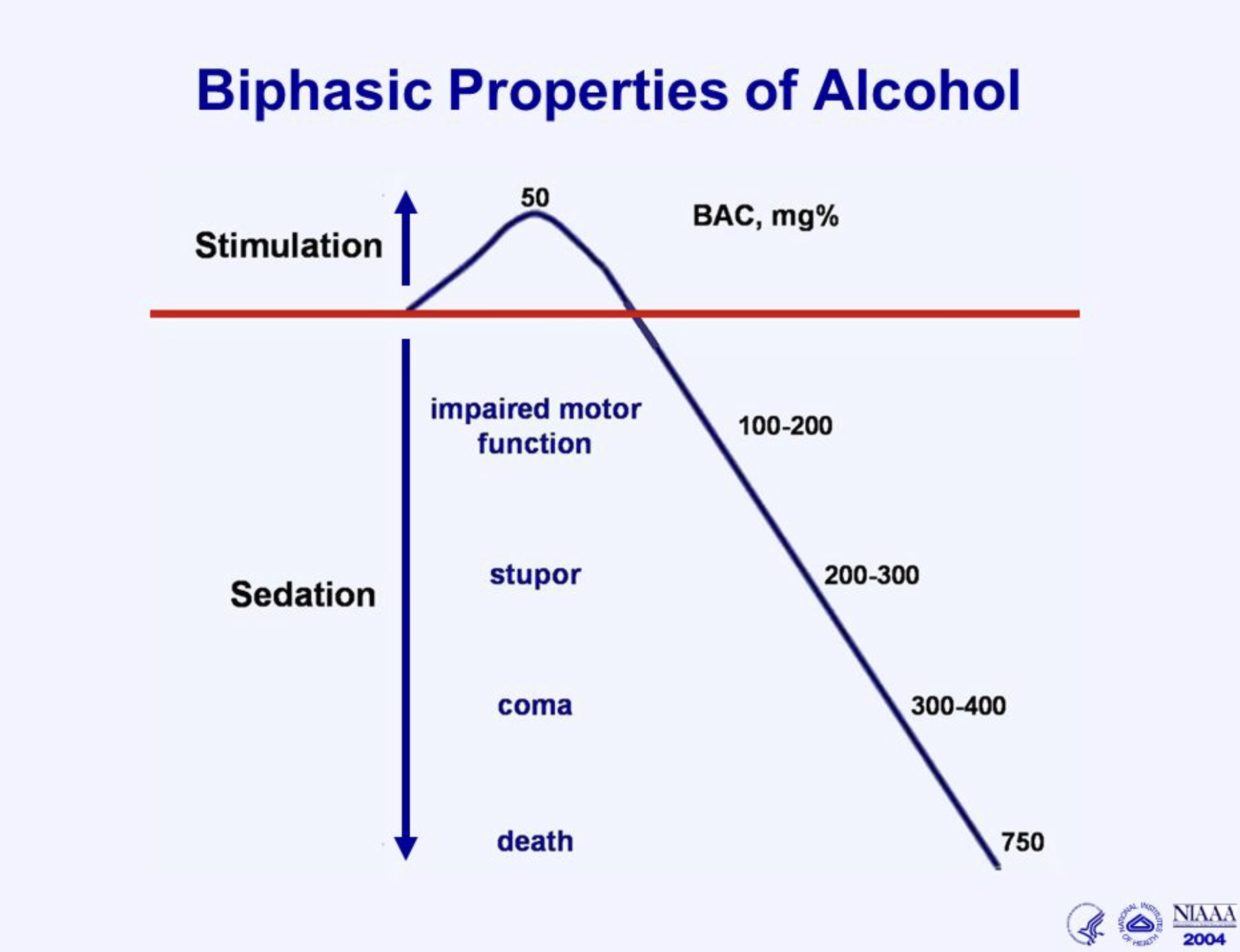
The History of Library and Information Science: A Commentary | JSTOR
Robert M. Hayes, The History of Library and Information Science: A Commentary, The Journal of Library History (1974-1987), Vol. 20, No. 2, Spring, 1985
The Information Philosopher - dedicated to the new information philosophy
Information Philosopher is dedicated to the new Information Philosophy, with explanations for Freedom, Values, and Knowledge.
Neo-Documentation and the End of Information
Ronald Day’s Neo-Documentation and the End of Information critiques the modern conception of information as representational “content.” The...
Redressing the Balance: A Yin-Yang Perspective on Information Technology
Information is an essential aspect of how we interact with the world around us. We acquire information and then integrate it to build knowledge, understanding, and trust, which in turn serve in preparing actions. Information technology (IT) is supposed to support all these phases of information processing. But does it? An assessment of IT through the yin-yang lens from Chinese philosophy shows that over the last decades, support for the yin processes of building knowledge, understanding, and trust has been neglected, the focus of most research and development having been on the yang processes of acting. IT shares this imbalance with other aspects of Western and globalized culture. I discuss possible directions for re-establishing a yin-yang balance in IT, as a small contribution to redressing the balance in the world at large.

Living in Data: A Citizen's Guide to a Better Information Future (Paperback)
Jer Thorp’s analysis of the word “data” in 10,325 New York Times stories written between 1984 and 2018 shows a distinct trend: among the words most closely associated with “data,” we find not only its classic companions “information” and “digital,” but also a variety of new neighbors—from “scandal” and “misinformation” to “ethics,” “friends,” and “play.”To live in data in the twenty-first century

From instrument to institution: generative AI and the epistemic dispossession of the academic library
Purpose. This paper analyses the emergence of generative artificial intelligence (AI) not as a further tool in the automation of search but as an epistemic institution that produces, validates and distributes knowledge. It examines the structural mechanisms through which this transition marginalises academic libraries, displacing them from the epistemic functions of synthesis, evaluation and curation they have historically performed. Against the assumption that marginalisation is a technological inevitability, the paper argues that it is conditional and articulates the institutional conditions under which academic libraries can recover epistemic agency and reposition themselves as active participants in the knowledge infrastructure of the AI era.Design/methodology/approach. The paper adopts a conceptual, abductive approach, employing the Tron film trilogy as an analytical model of epistemic infrastructure transition rather than as a cultural metaphor. It integrates Science and Technology Studies, the philosophy of technology and library and information science scholarship. The historical reconstruction proceeds inductively, deriving three phases of library infrastructure development from particular technologies, from card catalogues to commercial scholarly platforms. The diagnosis proceeds deductively, deriving specific mechanisms of marginalisation from the premise that generative AI internalises epistemic functions. The recovery programme then translates that diagnosis into the institutional conditions under which academic libraries can respond.Findings. Generative AI constitutes a qualitative break in the history of knowledge infrastructure, crossing from the category of retrieval tool to that of epistemic institution that organises the conditions under which knowledge is produced and validated. Three mechanisms drive library marginalisation: disintermediation of the institutional mediator, dependency on training infrastructures beyond library governance and the transfer of epistemic authority from accountable institutions to opaque algorithmic systems. Scenario analysis yields three possible futures, full marginalisation, coexistence and co-authorship of epistemic infrastructure. The third is not inevitable but contingent on libraries claiming roles in data stewardship, AI governance and critical AI literacy.Research limitations/implications. As a conceptual contribution, the paper develops an analytical framework rather than empirical findings; its three mechanisms and three scenarios are theoretically derived and await empirical testing. The evidence base draws substantially on Anglophone, predominantly US LIS scholarship, which may limit transferability to other national and institutional contexts. Future research should operationalise and empirically validate the proposed mechanisms of marginalisation, assess the conditions for epistemic recovery across diverse library settings and examine longitudinally whether libraries that invest in data stewardship, AI governance and critical AI literacy realise the co-authorship scenario the framework identifies.Practical implications. Academic libraries should pursue three mutually reinforcing strategies. First, they should reposition themselves as active participants in the governance of the data ecosystems on which AI systems are trained, extending research data management towards stewardship of training corpora. Second, they should secure inclusion in university AI governance structures, from which information professionals are frequently absent despite directly relevant competencies in information ethics, source evaluation and quality assurance. Third, they should reconceptualise critical AI literacy, the capacity to evaluate not only what AI produces but how, as a defining institutional mission rather than a supplementary digital skill.Social implications. If generative AI becomes the default mediator of scholarly knowledge, the consequences extend beyond libraries to the epistemic commons on which science, scholarship and democratic deliberation depend. Unaccountable, non-transparent knowledge production risks normalising narrow epistemic positions, eroding epistemic pluralism and widening inequalities in knowledge access already stratified by institutional wealth. Positioning academic libraries as public-interest guarantors of accountable curation, epistemic equity and critical AI literacy helps safeguard citizens' capacity to evaluate AI-generated knowledge, sustains diverse knowledge traditions and protects the reliability of the shared information environment on which informed public life increasingly rests.Originality/value. The paper offers a novel integrative framework that combines Science and Technology Studies, the epistemology of AI and library and information science scholarship. Its central contribution is to reframe library marginalisation not as a contingent service challenge to be met by incremental adaptation, but as a structural consequence of AI's emergence as an epistemic institution. Methodologically, it advances the use of the Tron trilogy as an analytical model rather than an illustrative metaphor. It provides one of the first systematic articulations of academic libraries as potential co-architects, rather than residual beneficiaries, of the knowledge infrastructure of the AI era.

A Beginner's Guide To Information Architecture in UX [2025]
What is information architecture? Why is it so important, and how does it relate to UX design? Find out why IA is so crucial in this expert guide.

Fachreferent*in für das Fachgebiet Medizin und weitere naturwissenschaftliche Fachgebiete sowie Open Access Publikationsberatung und Publikationsmonitoring // Universität Oldenburg
Als Zentrale Einrichtung ist das Bibliotheks- und Informationssystem (BIS) ein leistungsstarker Partner für Forschung, Studium und Lehre. Sie sichert die wissenschaftliche Informationsversorgung und ist aktiv in die Gestaltung des digitalen Transformationsprozesses wissenschaftlicher Kommunikation eingebunden.
Computing, Complexity and Degrowth : Systemic Considerations for Digital De-escalation
Research on digital degrowth predominantly critiques digital expansion or presents alternative digital practices. Yet, analyzing the link between digital technologies and complexity is crucial to overcome systemic obstacles hindering digital de-escalation. This article presents the different types of links between complexity and computing observed in the literature: the infrastructural complexity inherent in digital technologies, the socio-political complexity induced by them, and finally, the ontological complexity (individual’s ways of relating to their environment) hindered by digitization. The paper explores these links to identify ways to reduce infrastructural and socio-political complexities, and to move away from the reductionist paradigm, in order to support digital degrowth. Its development shows that complexity induces ratchet effects (i.e. irreversibilities in the development of a technique in a society), rendering degrowth efforts difficult to handle by individuals. Therefore, strategies to overcome these barriers are proposed, suggesting that bottom-up simplification approaches stand a greater chance of making alternatives emerge from different stakeholders (including users). This digital shift assumes the development of methods and technical tools that enable individuals to disengage from their attachments to digital habits and infrastructure, opening a substantial field of study.
What Libraries Actually Do – Libraries as Epistemic Institutions
One of the biggest challenges for libraries telling their story is that the library means something different depending on who’s in the room. For a student, it’s a place to study and a staff full of people who want them to succeed. For a faculty member, it might be the invisible infrastructure that delivers electronic articles or the subject liaison who visits their class each year. For a graduate student, it’s often something more: a research partner, a data collaborator, a guide through the methodological expectations of a discipline. And that’s before accounting for the larger information environment that those users are already swimming in, where disciplines publish at high rates; trade publications and newsletters and Substacks produce sense-making content daily; and social media, messaging apps, and community channels add still more. The information environment is a flood around us, and the library is one stream of that flow.
“‘Information’ is a relational concept that assumes meaning only when related to the cognitive structure of the observer.” -- Heinz von Foerster
Control Information Theory: The “Missing Link” In the Science Of Cybernetics | Institute for the Study of Complex Systems
complexsystems.orgScience in the Digital Era

How does scientific research adapt to digital media and automated information processing? What are the opportunities, what are the risks?
Leibniz book
Konrad Hinsen's blog
Konrad Hinsen's blog
Konrad Hinsen's blog
Konrad Hinsen's blog
Konrad Hinsen's blog

