

A Philosopher’s One-Word Theory to Explain Why the World Feels So Weird
Once you learn what the "uni-context" is, you won't stop seeing it everywhere

Assemblage (philosophy)
Assemblage (from everyday French: agencement, – arrangement, layout, "a collection of things which have been gathered together or assembled") is a philosophical concept developed by Gilles Deleuze and Félix Guattari[1] and subsequently taken up by other theorists, such as Bruno Latour and Michel Callon who developed actor-network theory,[2] Manuel DeLanda in his work on assemblage theory,[3] and Jane Bennett who combines Latour with Deleuze and Guattari forming her own assemblage theory.[4][5][6] Bennett’s assemblage thinking has influenced environmental philosophy (e.g. Timothy Morton’s Hyperobjects), political theory (e.g. William Connolly’s work on complexity and politics), and new materialism (e.g. Rosi Braidotti, Karen Barad).
Reflexive discourse analysis: A methodology for the practice of reflexivity
How to implement reflexivity in practice? Can the knowledge we produce be emancipatory when our discourses recursively originate in the world we aim to challenge? Critical International Relations (IR) scholars have successfully put reflexivity on the agenda based on the theoretical premise that discourse and knowledge play a socio-political role. However, academics often find themselves at a loss when it comes to implementing reflexivity due to the lack of adapted methodological and pedagogical material. This article shifts reflexivity from meta-reflections on the situatedness of research into a distinctive practice of research and writing that can be learned and taught alongside other research practices. To do so, I develop a methodology based on discourse: reflexive discourse analysis (RDA). Based on the discourse analysis of our own discourse and self-resocialisation, RDA aims to reflexively assess and transform our socio-discursive engagement with the world, so as to render it consistent with our intentional socio-political objectives. RDA builds upon a theoretical framework integrating discourse theory to Bourdieu’s conceptual apparatus for reflexivity and practices illustrated in the works of Comte and La Boétie. To illustrate this methodology, I used this very article as a recursive performance. I show how RDA enabled me to identify implicit discriminative mechanisms within my discourse and transform them into an alternative based on love, to produce an article more in line with my socio-political objectives. Overall, this article turns reflexivity into a critical methodology for social change and demonstrates how to integrate criticality methodologically into research and writing.

Re-Engineering Wimsatt for Limited Beings
Science is the best way to produce facts about reality. The best, at least, that limited human beings have devised so far. Yet, not even scientists quite seem to understand how scientific knowledge is generated. This is not only a philosophical but also a practical problem, as our misunderstandings affect the quality of our research and limit the directions it can take. In light of this, it may be good if we reflected a bit more on how we do science — to become better researchers through philosophy. Here, I provide an accessible introduction to a philosophical approach that achieves precisely this: William Wimsatt’s multi-perspectival realism. It disabuses us of widespread but misleading myths and idealizations about science, such as the idea that everything in the world can be reduced to a fundamental level, or that we can approach a “view from nowhere” — complete and objectively detached knowledge of the world. Wismatt proposes an alternative view based on his thorough studies of actual research practice. It cuts deeply into the layered yet messy structure of reality, and the improvised but potent tools we have available, as limited and evolved beings, to explore it. Wimsatt reframes science as an irregular yet adaptive process rather than a cumulative repository of unalterable facts. His philosophy provides a workable and grounded middle way between radical skepticism and naïve belief in the objective truth of science. It explains how knowledge is conceptually constructed by humans, but still connects us to reality in a trustworthy way. We need such a new view of science, not only to improve our research practices and outcomes but, more generally, to gain a more realistic understanding of ourselves, the world, and our place and role within it.
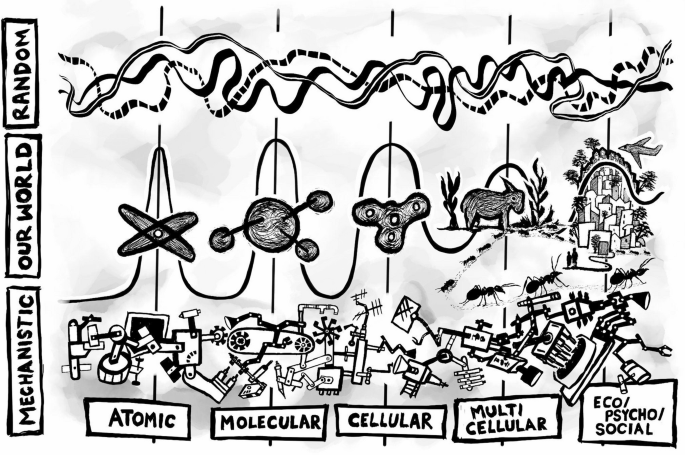
Ancient Indian texts reveal the liberating power of metaphysics | Psyche Ideas
Indian metaphysics presented a philosophical route to a higher level of existence beyond limits of space and time

The Master and His Emissary: The Divided Brain and the Making of the Western World
In a book of unprecedented scope--now available in a larger format-Iain McGilchrist presents a fascinating exploration of the differences between the brain's left and right hemispheres, and how those differences have affected society, history, and culture. McGilchrist draws on a vast body of recent research in neuroscience and psychology to reveal that the difference is profound: the left hemisphere is detail oriented, while the right has greater breadth, flexibility, and generosity. McGilchrist then takes the reader on a journey through the history of Western culture, illustrating the tension between these two worlds as revealed in the thought and belief of thinkers and artists from Aeschylus to Magritte. "A landmark new book. . . . It tells a story you need to hear, of where we live now."-Bryan Appleyard, Sunday Times "A very remarkable book. . . . McGilchrist, who is both an experienced psychiatrist and a shrewd philosopher, looks at the relation between our two brain-hemispheres in a new light, not just as an interesting neurological problem but as a crucial shaping factor in our culture . . . splendidly thought-provoking. . . . I couldn't put it down."-Mary Midgley, The Guardian Named one of the best books of 2010 by The Guardian
- 1000-Word Philosophy: An Introductory Anthology
Welcome to 1000-Word Philosophy: An Introductory Anthology, an ever-growing set of essays on philosophical questions, theories, figures, and arguments.

What Makes a Good Theory, and How Do We Make a Theory Good?
I present an ontology of criteria for evaluating theory to answer the titular question from the perspective of a scientist practitioner. Set inside a formal account of our adjudication over theories, a metatheoretical calculus, this ontology comprises the following: (a) metaphysical commitment, the need to highlight what parts of theory are not under investigation, but are assumed, asserted, or essential; (b) discursive survival, the ability to be understood by interested non-bad actors, to withstand scrutiny within the intended (sub)field(s), and to negotiate the dialectical landscape thereof; (c) empirical interface, the potential to explicate the relationship between theory and observation, i.e., how observations relate to, and affect, theory and vice versa; (d) minimising harm, the reckoning with how theory is forged in a fire of historical, if not ongoing, abuses—from past crimes against humanity, to current exploitation, turbocharged or hyped by machine learning, to historical and present internal academic marginalisation. This work hopes to serve as a possible beginning for scientists who want to examine the properties and characteristics of theories, to propose additional virtues and vices, and to engage in further dialogue. Finally, I appeal to practitioners to iterate frequently over such criteria, by building and sharing the metatheoretical calculi used to adjudicate over theories.
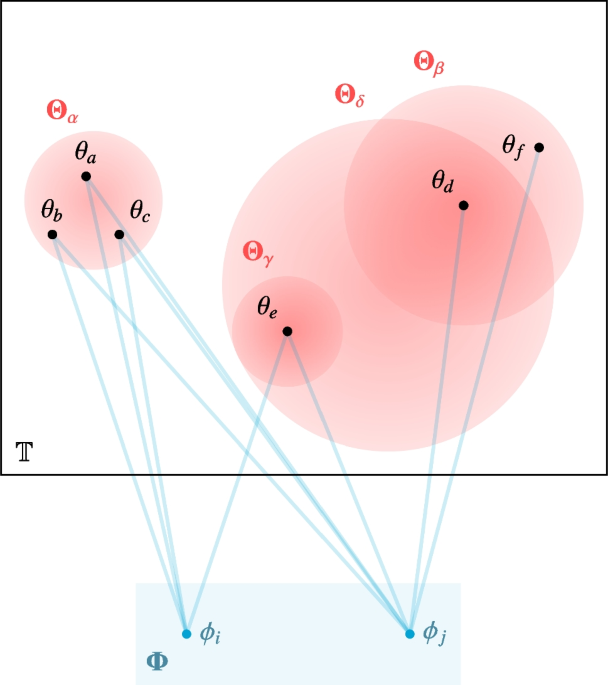
Imperialism | The Paper Pilot
The Paper Pilot's digital garden of thoughts on philosophy, politics, and sociology
Fear of Knowledge: Against Relativism and Constructivism
In recent times, relativist and constructivist conceptions of truth and knowledge have become orthodoxy in vast stretches of the academic world. In this unique volume, Paul Boghossian critically examines such views and exposes their fundamental flaws. This short, lucid, witty book shows that philosophy provides rock-solid support for common sense against the relativists; it is provocative reading throughout the discipline and beyond.

The Origins Of <br>‘Planetary Realism’ And <br>‘Whole Earth’ Thinking | NOEMA
There is no escaping an interconnected world.

Inégalités : à la recherche des racines de l'exceptionnalisme américain
Traduction française de « A la recherche of the roots of US inequality “exceptionalism”» de Branko Milanovic

Prescriptivism vs Descriptivism | The Paper Pilot
The Paper Pilot's digital garden of thoughts on philosophy, politics, and sociology
Theories of Truth: A Critical Introduction
Theories of Truth provides a clear, critical introduction to one of the most difficult areas of philosophy. It surveys all of the major philosophical theories of truth, presenting the crux of the issues involved at a level accessible to nonexperts yet in a manner sufficiently detailed and original to be of value to professional scholars. Kirkham's systematic treatment and meticulous explanations of terminology ensure that readers will come away from this book with a comprehensive general understanding of one of philosophy's thorniest set of topics.Included are discussions of the correspondence, coherence, pragmatic, semantic, performative, redundancy, appraisal, and truth-as-justification theories. There are also chapters or sections of chapters on the liar paradox, three-valued logic, Field's critique of Tarski, Davidson's program, Dummett's theory of linguistic competence, satisfaction, recursion, the extension/intension distinction, and an explanation of how theories of justification, properly understood, differ from theories of truth.A persistent theme is that philosophers have too often failed to recognize that not all theories of truth are intended to answer the same question. When the various questions are made distinct, it is apparent that many of the "debates" in this field are really cases of philosophers talking past one another. There is much less disagreement within the field than has commonly been thought.

Post-Structuralism | The Paper Pilot
The Paper Pilot's digital garden of thoughts on philosophy, politics, and sociology

Why were so many luminaries of European philosophy — such as Bergson, Heidegger, Husserl, Merleau-Ponty, and Sartre, even Marx and Freud — kept out of the philosophy curriculum of Anglo-American universities for most of the 20th century? Why were the schools of philosophy they founded derided as continental philosophy and deemed more suitable for the departments of literature and psychology than philosophy? This book argues that the institutionally sanctioned contrast between allegedly legitimate philosophy and its spurious continental counterpart became entrenched thanks to two intertwined metaphysical presuppositions at the heart of positivism. The first is the principle that higher-level complex systems are epiphenomenal. The second is that all causes are mechanical. In contrast to their continental European counterparts, Anglo-American metaphysicians and philosophers of science repeatedly resisted the idea that higher level phenomena might be, ontologically-speaking, relational. This book proposes that, had the alternative path that emphasizes context-dependence been selected, a scientifically respectable relational ontology might have come to inform Anglo-American metaphysics and epistemology as well as the actual practice of science — without falling prey to non-natural deus ex machina proposals. Four female British philosophers at Oxford during WWII attempted to do exactly that. Anscombe, Foot, Midgley, and Murdoch raised serious objections to Oxbridge’s Newton-inspired Positivism as early as the 1940s. The four good friends advocated for a context-dependent worldview. This book situates the four women philosophers’ valiant challenge to the entrenched paradigm as a case study of exactly why and how context matters. Click this link for a discussion/interview with the author on The Complexity Lounge Also, see this podcast interview with the author. Paperback 165 pp. £14.95
epistemic infrastructure

Explores a variety of topics around epistemological tools, especially the web, with the aim to discuss epistemic closure in two ways: 1/ the complete understanding of a subject 2/ the entrapment of the user
Do we actually need to write research papers at all?
God, Human, Animal, Machine by Meghan O'Gieblyn: 9780525562719 | PenguinRandomHouse.com: Books
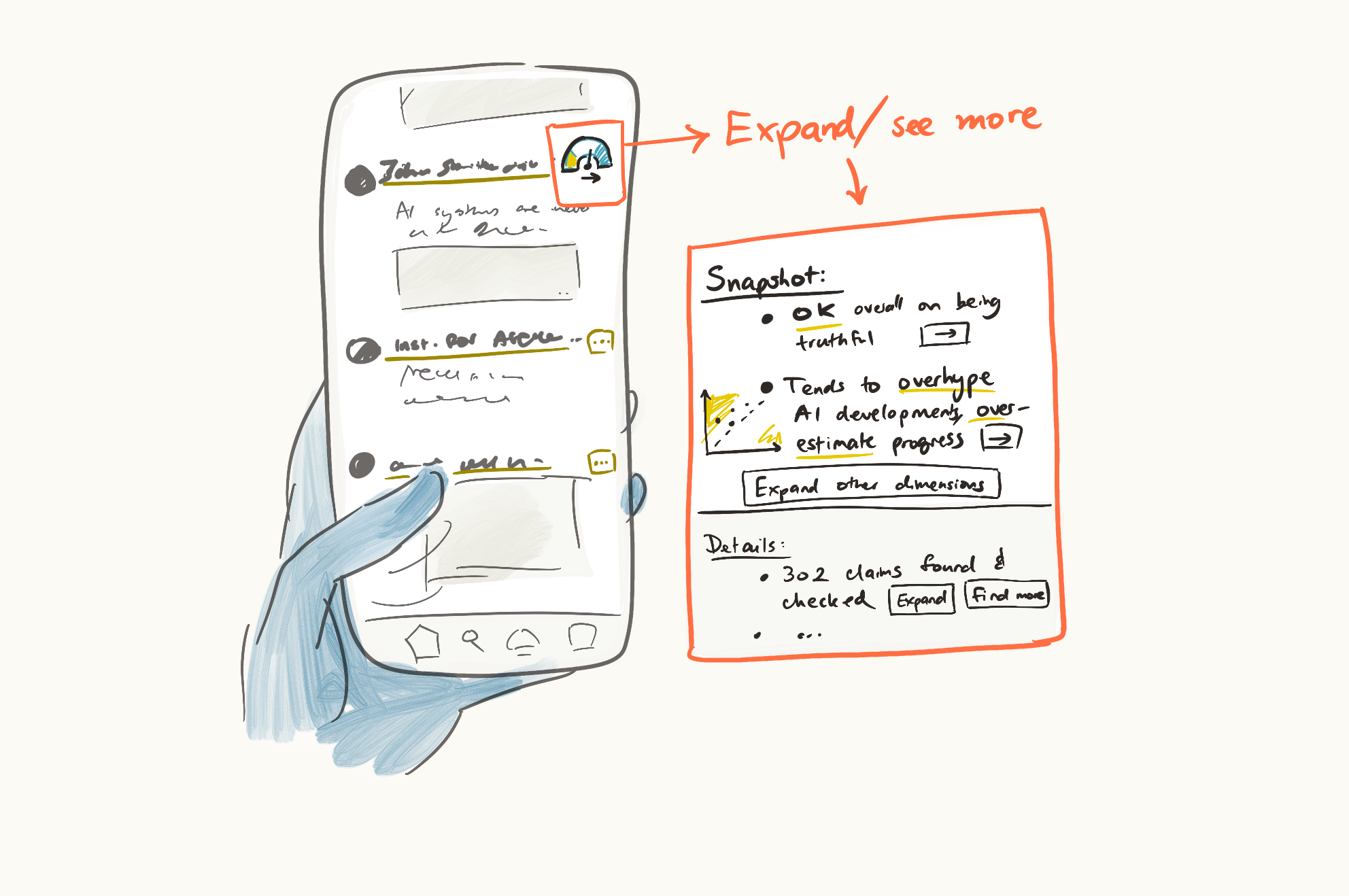
AI Tools for Trust: Community Notes, Rhetoric Detection & More
Can generative artificial intelligence be considered a cognitive subject? An analytic analysis
What Libraries Actually Do – Libraries as Epistemic Institutions

Epistemic Infrastructure: Building Shared Truth in an Era of Disaggregation