

If you’ve not already read this piece by Matt Stoller challenging the conventional wisdom that airline deregulation in the 1970s has been a great success, you should. See also this 2012 piece by Phillip Longman and Lina Khan, and this 2015 piece by Longman. Thanks to Matt Ygesias and Marshall Steinbaum for pointers.
Why I'm Worried About Job Loss + Thoughts on Comparative Advantage — LessWrong
David Oks published a well-written essay yesterday arguing that the current panic about AI job displacement is overblown. I agree with a few of his p…
Thoughts on narratives and the role of AI and validators going forward
I wanted to quickly share some reflections and connect some dots around ongoing work with Prashant on causal claims and language in Economics. We have extended

interfluidity » The great game of global public goods provision
War is bad. Excuses should not be made for it. All sides should work to end this and every war as quickly as possible and shift to modes of bargaining and competition that are not profoundly destructive.
Aeropolis – Queering Air in Toxicpolluted Worlds
Check out Aeropolis – Queering Air in Toxicpolluted Worlds - How do we get to know air? <i>Aeropolis: Queering Air in Toxicpolluted Worlds</i> offers a speculative and interdisciplinary framework to reorient common understandings of air and air pollution as matter “out there.” <i>Aeropolis</i> contests regimes of managing air which ultimately operate toward upholding dominant modes of world-making that are dependent on forms of exclusion and inequity. Instead, <i>Aeropolis</i> proposes that air is thought of as a city, to center its social, cultural, political, ecological entanglements. Drawing upon feminist technoscience and queer ecological frameworks, <i>Aeropolis</i> moves away from solutions toward a methodology of “designing-thinking-making” that redirects and connects our understandings of air—as designers, as citizens—with ongoing struggles for just futures. <br /><br />Moving through a series of design interventions, histories of air, and theoretical coordinates, <i>Aeropolis</i> thinks with air across its many forms—through smog and dust, bodies and breath, pollen and weeds, and from urban design to geopolitics, polluted environments to open data, parks to aerial infrastructures. It insists that we acknowledge the diversity of air and its relation to humans, non-humans, and environments, both physically and affectively. That we become sensible to air by following its unruliness—by living, breathing, seeing, holding, touching, queering airs.<br /><br />With contributions from María Puig de la Bellacasa and Timothy K. Choy. by Nerea Calvillo on Bookshop.org UK!

Everything you always wanted to know about migrations - Slidev
"A deep dive into Atmosphere account migrations, even adversarial migrations\n"
The Road to Resegregation by Alex Schafran - Paper
Scholarship is a powerful tool for changing how people think, plan, and govern. By giving voice to bright minds and bold ideas, we seek to foster understanding and drive progressive change.

Laws of Tech: Commoditize Your Complement
A classic pattern in technology economics, identified by Joel Spolsky, is layers of the stack attempting to become monopolies while turning other layers into perfectly-competitive markets which are commoditized, in order to harvest most of the consumer surplus; discussion and examples.

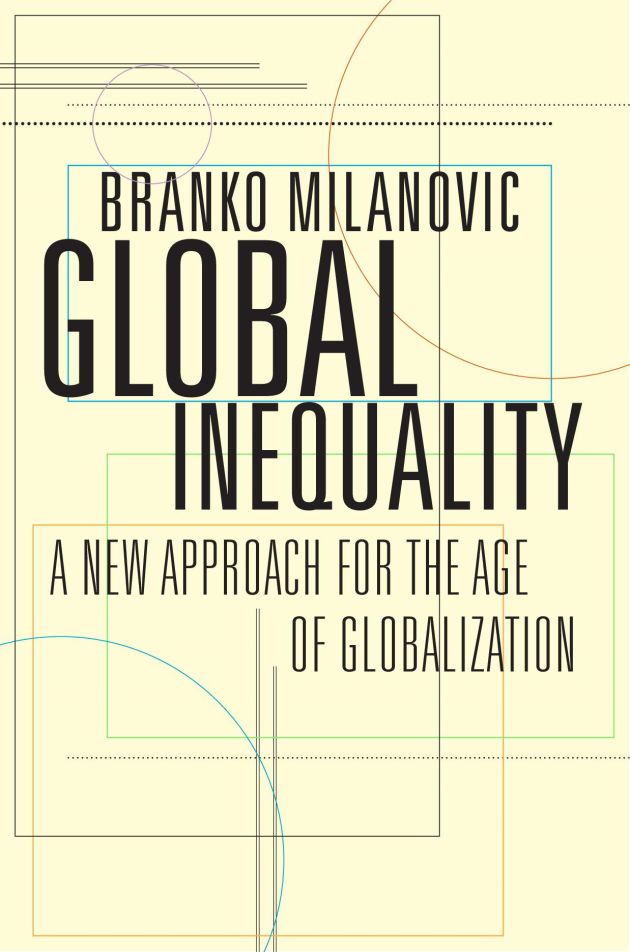
Global Inequality — Harvard University Press
Winner of the Bruno Kreisky Prize, Karl Renner InstitutA Financial Times Best Economics Book of the Year An Economist Best Book of the Year A Livemint Best Book of the YearOne of the world’s leading economists of inequality, Branko Milanovic presents a bold new account of the dynamics that drive inequality on a global scale. Drawing on vast data sets and cutting-edge research, he explains the benign and malign forces that make inequality rise and fall within and among nations. He also reveals who has been helped the most by globalization, who has been held back, and what policies might tilt the balance toward economic justice.“The data [Milanovic] provides offer a clearer picture of great economic puzzles, and his bold theorizing chips away at tired economic orthodoxies.”—The Economist“Milanovic has written an outstanding book…Informative, wide-ranging, scholarly, imaginative and commendably brief. As you would expect from one of the world’s leading experts on this topic, Milanovic has added significantly to important recent works by Thomas Piketty, Anthony Atkinson and François Bourguignon…Ever-rising inequality looks a highly unlikely combination with any genuine democracy. It is to the credit of Milanovic’s book that it brings out these dangers so clearly, along with the important global successes of the past few decades.—Martin Wolf, Financial Times
The Next Great Divergence: How AI could split the world again if we don’t intervene | Brookings
Michael Muthukrishna and Philip Schellekens argue that AI, like past general-purpose technologies, could drive a new global divergence unless deliberate action ensures its benefits are broadly shared rather than geographically concentrated.

A Multiscale Logic of Collective Intelligence" by Donald Hoffman and Chetan Prakash
The Great Simplification with Nate Hagens
The Great Simplification with Nate Hagens explores money, energy, economy, and the environment with world experts and leaders to understand how everything fits together, and where we go from here

This one starts off a little slow but makes some really good points about the pressure to not work on the “middle part” (and how “infrastructure gravity” often means people do unnecessary innovation too low in the stack).

Aleksey Skorobogaty
Excellent article on positioning domain engineering between product engineering and infrastructure engineering. I fully agree with the financial model section. However, I prefer to call it ‘platform engineering: the hard parts,’ simply because in the middle, we face more volatile semantics.
finally posted thoughts about the atmosphere conf (along with an illustration and a bunch of tweaks to the blog) macwright.com/2026/04/05/in-the-atmosphere

In the Atmosphere
macwright.com
The Viscous Frontier
open.substack.comEd Zitron and the AI bubble thesis

Source citations for thread making sense of Ed Zitron's arguments against the AI boom (April 22, 2026). Covers bio, core thesis, data center economics, OpenAI financing, bubble framing, and IPO question.

OpenAI、評価額$852Bで過去最高の$122Bの資金調達を完了

Meet Ed Zitron, AI’s original prophet of doom - Fast Company
Why the man behind 'The Hater's Guide to the AI Bubble' thinks Wall Street's hottest trade will go bust

AI skeptic Ed Zitron says Industry is scamming us into poverty

Ed Zitron on big tech, backlash, boom and bust: ‘AI has taught us that people are excited to replace human beings’

How To Argue With An AI Booster
Landslide/Holdfast

Citations and background for my talk at Atmosphere Conf 2026

Sources on social media: Information context collapse and volume of content as predictors of source blindness - George Pearson, 2021

Pacific kelp forests are far older than we thought - Berkeley News
Illusion of knowledge through Facebook news? Effects of snack news in a news feed on perceived knowledge, attitude strength, and willingness for discussions
No Sense of Place by Joshua Meyrowitz | Open Library
A perspective on friction interventions to curb the spread of misinformation

The social media context interferes with truth discernment


