

J Notation as a Tool of Thought
Kenneth Iverson’s 1964 language, APL, won him the Turing Award. His award lecture, Notation as a Tool of Thought, argued that better notations would lead people to deeper insights about mathematics. He provided a number of examples ranging across linear algebra, arithmetic, probability, and logic. Unfortunately, most of the mathematics he covers isn’t relevant to programming. However, his core idea still applies, and changing how we describe programs changes how we think about them.
Thoughts on thinking | Hacker News
The process of forming expressions just is the process of conceptual and rational articulation (as per Brandom). Those who misunderstand this -- believing that concepts are ready made, then encoded and decoded from permutations of tokens, or, worse, who have no room to think of reasoning or conceptualization at all -- they will be automated away.

Position: Stop Anthropomorphizing Intermediate Tokens as Reasoning/Thinking Traces!
Intermediate token generation (ITG), where a model produces output before the solution, has become a standard method to improve the performance of language models on reasoning tasks. These intermediate tokens have been called \say{reasoning traces} or even \say{thinking traces} -- implicitly anthropomorphizing the traces, and implying that these traces resemble steps a human might take when solving a challenging problem, and as such can provide an interpretable window into the operation of the model's thinking process to the end user. In this position paper, we present evidence that this anthropomorphization isn't a harmless metaphor, and instead is quite dangerous -- it confuses the nature of these models and how to use them effectively, and leads to questionable research. We call on the community to avoid such anthropomorphization of intermediate tokens.

Position: Stop Anthropomorphizing Intermediate Tokens as Reasoning/Thinking Traces!
Intermediate token generation (ITG), where a model produces output before the solution, has become a standard method to improve the performance of language models on reasoning tasks. These intermediate tokens have been called \say{reasoning traces} or even \say{thinking traces} -- implicitly anthropomorphizing the traces, and implying that these traces resemble steps a human might take when solving a challenging problem, and as such can provide an interpretable window into the operation of the model's thinking process to the end user. In this position paper, we present evidence that this anthropomorphization isn't a harmless metaphor, and instead is quite dangerous -- it confuses the nature of these models and how to use them effectively, and leads to questionable research. We call on the community to avoid such anthropomorphization of intermediate tokens.
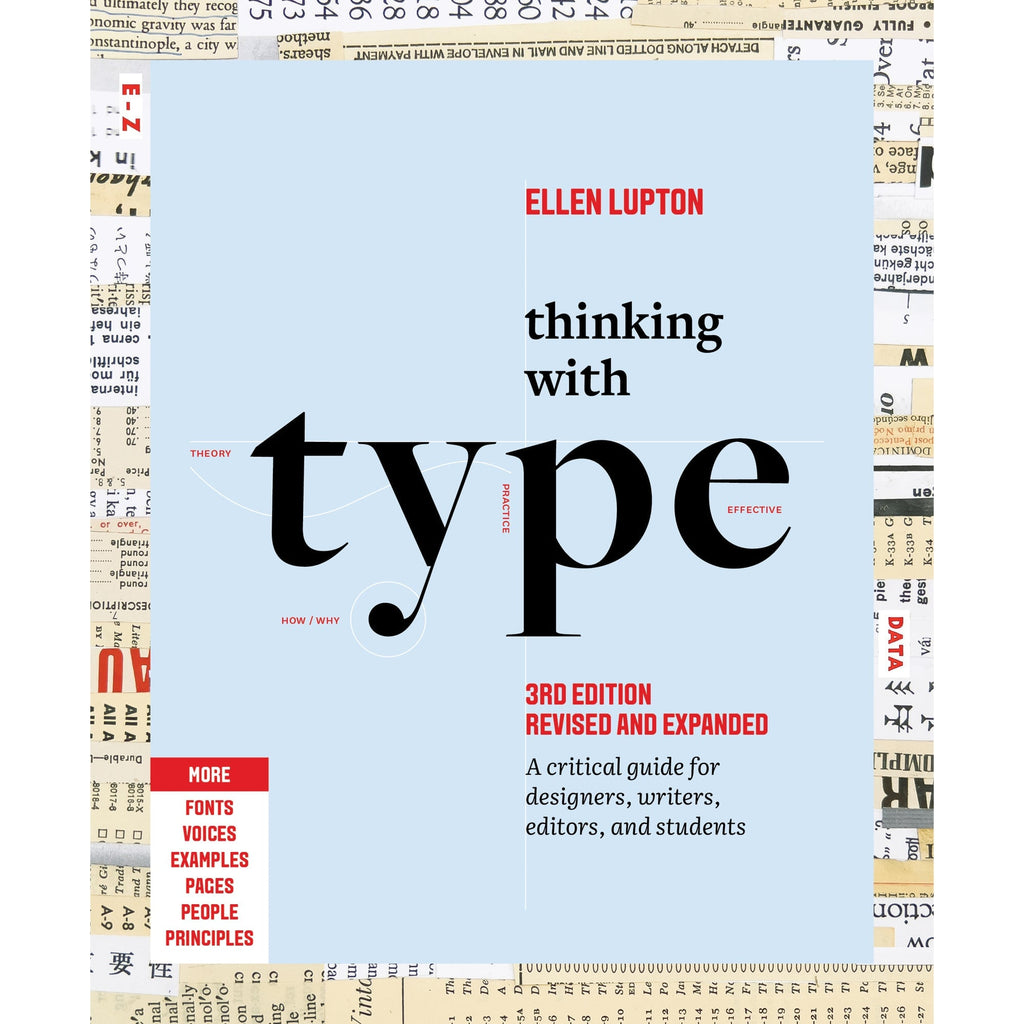
Thinking with Type
The essential and bestselling guide to typography from beloved design educator Ellen Lupton—revised and expanded to include new and additional voices, examples, and principles, and a wider array of typefaces. "Thinking with Type is to typography what Stephen Hawking's A Brief History of Time is to physics."—I Love TypographyThe bestselling Thinking with Type in a revised and expanded third edition: This is the definitive guide to using typography in visual communication. Covering the essentials of typography, this book explores everything from typefaces and type families to kerning and tracking to grids and layout principles.Ellen Lupton provides clear and focused guidance on how letters, words, and paragraphs should be aligned, spaced, ordered, and shaped. Historical and contemporary examples of graphic design show how to learn the rules and how to break them. Critical essays, eye-opening diagrams, helpful exercises, and dozens of examples and illustrations show readers how to be inventive within systems that inform and communicate.Featuring 32 pages of new content, the third edition is revised and refined from cover to cover: More fonts: old fonts, new fonts, weird fonts, libre fonts, Google fonts, Adobe fonts, fonts from independent foundries, and fonts and lettering by women and BIPOC designersIntroductions to diverse writing systems, contributed by expert typographers from around the worldDemonstrations of basic design principles, such as visual balance, Gestalt grouping, and responsive layoutCurrent approaches to typeface design, including variable fonts and optical sizes; tips for readability, legibility, and accessibility; and stunning reproductions from the Letterform Archive Thinking with Type is the typography book for everyone: designers, writers, editors, students, anyone who works with words on page or screen, and enthusiasts of type and lettering. Readers will also love Ellen Lupton's book Extra Bold: A Feminist, Inclusive, Anti-racist, Nonbinary Field Guide for Graphic Designers. Ellen Lupton is a designer, writer, and educator. She has written numerous books about graphic design, including Thinking with Type, Graphic Design Thinking, and Extra Bold: A Feminist, Inclusive, Anti-racist, Nonbinary Field Guide for Graphic Designers. She teaches in the Graphic Design MFA program at Maryland Institute College of Art in Baltimore (MICA), where she proudly serves as the Betty Cooke and William O. Steinmetz Design Chair. She is Curator Emerita at Cooper Hewitt, Smithsonian Design Museum in New York City, where her exhibitions included Herbert Bayer: Bauhaus Master and The Senses: Design Beyond Vision. Lupton loves reading, writing, teaching, and learning new things about design.
Tinkered Thinking
Daily, snackable writings to spur changes in thinking.Building a blueprint for a better brain by tinkering with the code.
Embracing AI and formalization: Experimenting with tomorrow’s mathematical tools
Embracing AI and formalization: Experimenting with tomorrow’s mathematical tools. By Jarod Alper
Tools for Thought as Cultural Practices, not Computational Objects
On seeing tools for thought through a historical and anthropological lens
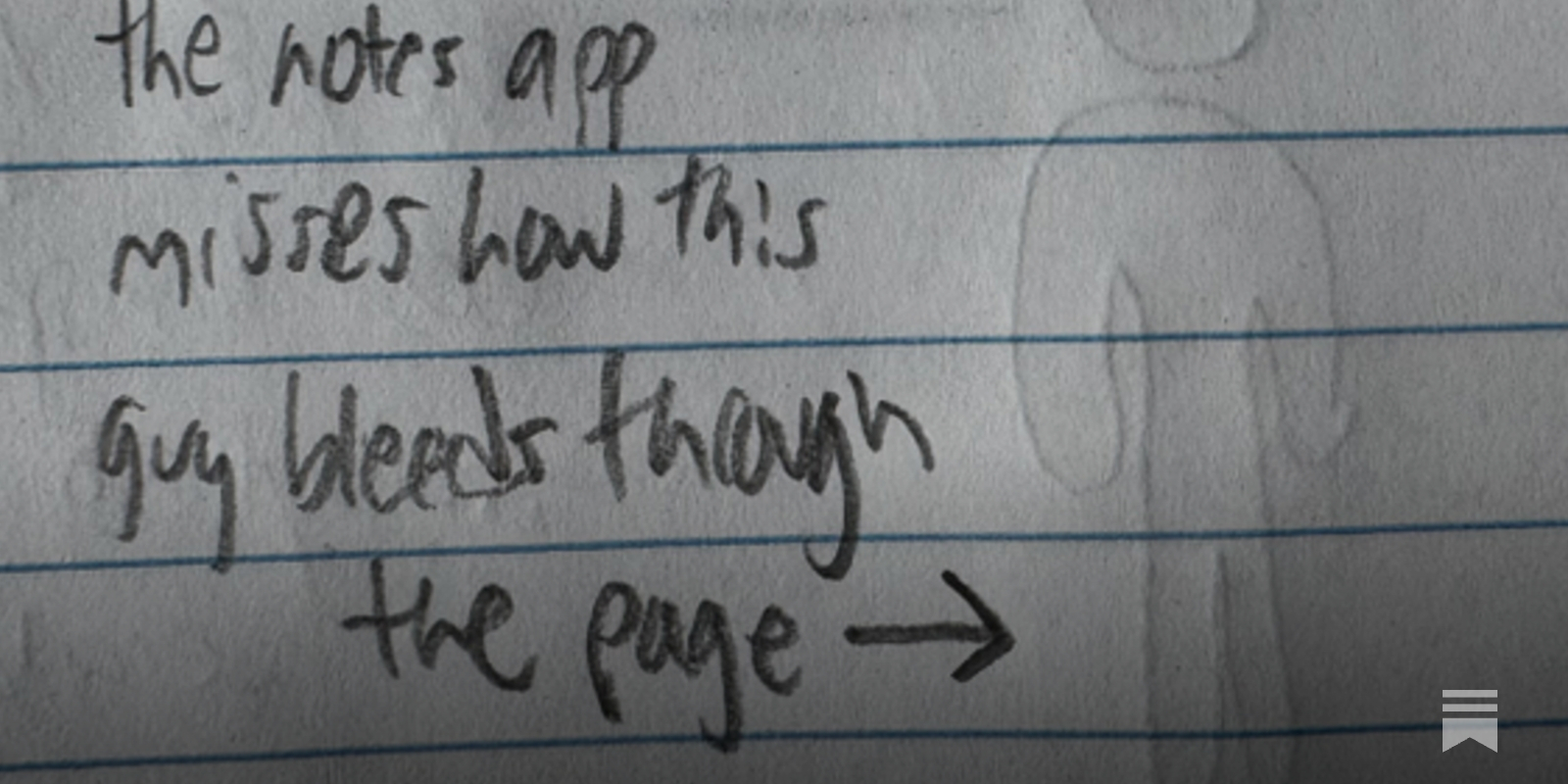
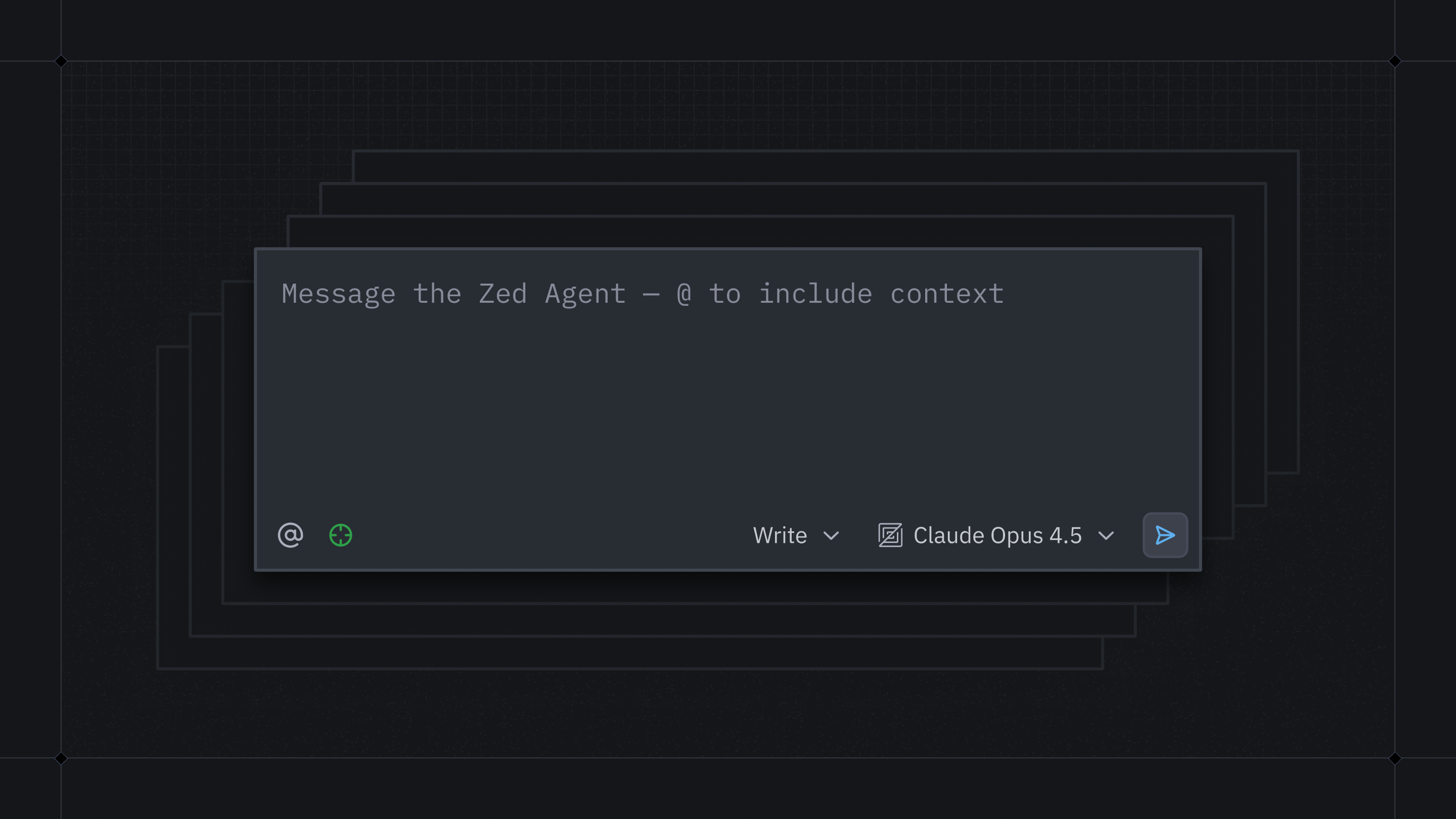
On Programming with Agents
From the Zed Blog: Agents handle typing so we can focus on thinking.

Kill Math
The power to understand and predict the quantities of the world should not be restricted to those with a freakish knack for manipulating abstract symbols.
Notation as a Tool of Thought

Notation is not a way of writing thoughts down — it is a technology that determines which thoughts are available to be had. Starting from Iverson's 1979 Turing Award lecture, this collection gathers the argument's ancestors, elaborations, and its opponents: Nielsen and Matuschak on media as cognitive infrastructure, Bret Victor's case against symbol manipulation, and empirical work on representation as a cognitive tool. Open to contributions.
The Technological Turn in Mathematics
J Notation as a Tool of Thought

Prof. Judy Fan: Cognitive Tools for Making the Invisible Visible
Media for Thinking the Unthinkable
Kill Math
Using spaced repetition systems to see through a piece of mathematics