

This article looks at Deleuze and Guattari's understanding of molecular biology, focusing particularly on their reading of two highly influential works by the eminent French molecular biologists François Jacob and Jacques Monod, La logique du vivant (The Logic of Living Systems) and Le hasard et la nécessité (Chance and Necessity). In these two works, Jacob and Monod present the significance of molecular biology in broadly reductionist terms. What is more, the lac operon model of gene regulation that they propose serves to reinforce the so-called Central Dogma of molecular biology, according to which information passes from DNA to RNA to proteins, with no reverse route. However, Deleuze and Guattari discover intensive potentials within the descriptions of molecular biology offered by both writers. It is argued that Jacob's work in particular, as it has developed in the years since the publication of La logique du vivant in 1970, has itself developed these intensive potentials.
Deleuze and Biosemiotics: Biological Emergence, Agency, and Subjectivity in Logic of Sense and A Thousand Plateaus
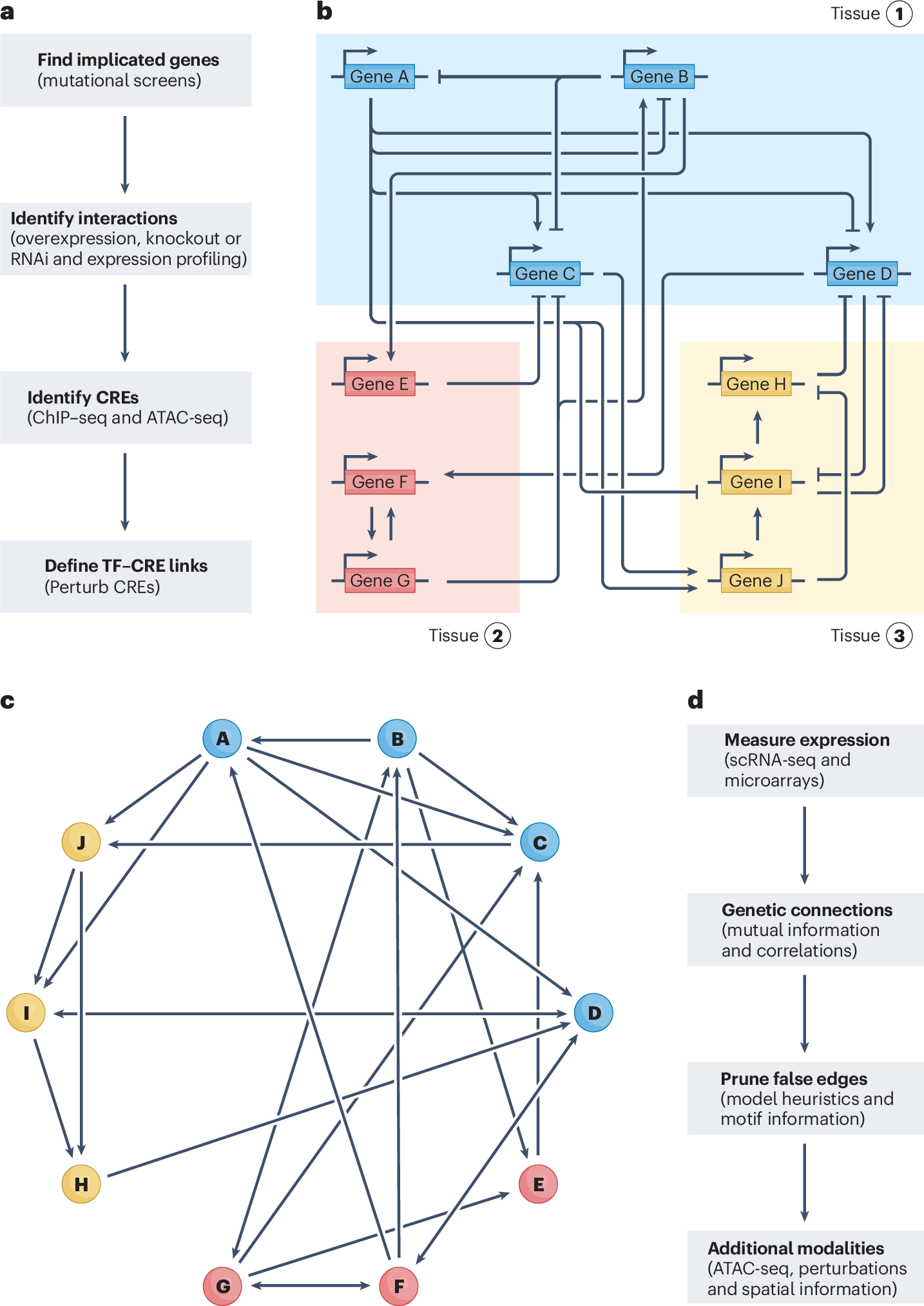
Gene regulatory networks: from correlative models to causal explanations
Gene regulatory networks (GRNs) explain how the genome controls cellular behaviour and tissue morphogenesis, serving to connect molecular mechanism to functional output. Single-cell technologies now provide descriptions of these networks with unprecedented detail, but this advance has also revealed gene regulatory systems that are too complex for our existing conceptual frameworks. GRNs, which should provide mechanistic explanations, are increasingly reduced to statistical correlations — ‘hairballs’ that fail to capture molecular causation. Here, we explore why this dilemma exists and propose a path forward. We argue that methods in ‘representation learning’ can be used to model GRNs, without needing to capture every molecular detail. For this framework, we advocate three linked principles: models must be inherently mechanistic, with structures grounded in cellular and evolutionary biology; molecular principles and constraints must be used to reduce the solution space for learning GRN models; and more sophisticated forms of experimental perturbation and synthetic biological engineering are needed to train models and test predictions. By reimagining GRNs through these principles, we can bridge the gap from data abundance to new conceptual understanding.
The sentient cell: the cellular foundations of consciousness
"All species, extant and extinct, from the simplest unicellular prokaryotes to humans, have an existential consciousness. Without sentience, the first cells that emerged some 4 billion years ago would have been evolutionary dead-ends, unable to survive in the chaotic, dangerous environment in which life first appeared and evolved. In this book, Arthur Reber's theory, the Cellular Basis of Consciousness (CBC), is outlined and distinguished from those models that argue that minds could be instantiated on artificial entities and those that maintain consciousness requires a nervous system. The CBC framework takes a novel approach to classic topics such as the origin-of-life, philosophy of mind, the role of genes, the impact of cognition, and how biological information is processed by all species. It also calls for a rethinking of a variety of issues including the moral implications of the sentient capacities of all species, how welfare concerns need to be expanded beyond where they currently are, and critically, how all life is intertwined in a coordinated cognitive ecology. The Sentient Cell explores this revolutionary model, which updates the standard neo-Darwinian framework within which current approaches operate and examines the underlying biomolecular features that are the likely candidates for the "invention" of consciousness and outline their role in cellular life." --

How Life Works: A User’s Guide to the New Biology
“Bold and intriguing.”—Wall Street Journal • “Penetrating. . . . Provocative and profound.”—Publishers Weekly (starred review) • “Offers plenty of food for thought.”—Kirkus Reviews (starred review) “Ball’s marvelous book is both wide-ranging and deep. . . . I could not put it down.”—Siddhartha Mukherjee, author of The Song of the Cell and the Pulitzer Prize–winning The Emperor of All Maladies A new, cutting-edge vision of biology that revises our understanding of what life itself is, how to enhance it, and what possibilities it offers. Biology is undergoing a quiet but profound transformation. Several aspects of the standard picture of how life works—the idea of the genome as a blueprint, of genes as instructions for building an organism, of proteins as precisely tailored molecular machines, of cells as entities with fixed identities, and more—have been exposed as incomplete, misleading, or wrong. In How Life Works, Philip Ball explores the new biology, revealing life to be a far richer, more ingenious affair than we had guessed. Ball explains that there is no unique place to look for an answer to this question: life is a system of many levels—genes, proteins, cells, tissues, and body modules such as the immune system and the nervous system—each with its own rules and principles. How Life Works explains how these levels operate, interface, and work together (most of the time). With this knowledge come new possibilities. Today we can redesign and reconfigure living systems, tissues, and organisms. We can reprogram cells, for instance, to carry out new tasks and grow into structures not seen in the natural world. As we discover the conditions that dictate the forms into which cells organize themselves, our ability to guide and select the outcomes becomes ever more extraordinary. Some researchers believe that ultimately we will be able to regenerate limbs and organs, and perhaps even create new life forms that evolution has never imagined. Incorporating the latest research and insights, How Life Works is a sweeping journey into this new frontier of the life sciences, a realm that will reshape our understanding of life as we know it.
Claude for Science. Thursday, November 12, at the Niels Bohr Institute, University of Copenhagen. In September, Anthropic reported that Claude agents found a CRISPR-like enzyme system in… | Jacob Langvad Nilsson | 17 comments
Claude for Science. Thursday, November 12, at the Niels Bohr Institute, University of Copenhagen. In September, Anthropic reported that Claude agents found a CRISPR-like enzyme system in bacteriophage DNA. Earlier in the same month, another AI lab said its model had settled a question about the Navier-Stokes equations, one of the seven Millennium Prize Problems. Results like these don't come from a lucky afternoon with a chatbot. They come from years of method development, careful engineering and building on the work that came before. What has changed is how much of that work a model can now take on, and the speed of which it does it. The latest models read the literature, write and run their own code, and work through a dataset for hours without losing track. In the enzyme case, hundreds of Claude agents searched DNA data for 21 hours and flagged a pattern nobody had asked them to look for. The method still has to be sound. But a researcher with a good question can now test far more ideas in a week than before. That is what we want to show. How researchers here set up their work so that stronger models can move it forward. The evening is about how the Danish science community uses Claude to drive new research and breakthroughs. Four STEM researchers from academia and industry each show one case. What they asked Claude, how they worked, what they found, and what failed. The room is part of it. Niels Bohr lectured in Auditorium A, and in the 1930s Heisenberg and Pauli sat in the front row. We will meet in this historical auditorium and get a glimpse of frontier scientific research using Claude. ▪️ Doors open 15:30, programme 16:00 to 19:00 ▪️ Four case studies from Danish research ▪️ 50 seats on the original wooden benches ▪️ Registration by approval Thanks to Daniel Murnane for making this happen. Thanks to the Niels Bohr Institute and the University of Copenhagen for having us. To Katrin Hjorth Thordardottir for logistics. And thanks to Anthropic and the Claude Community team, Martine N., Cassie Baquero Mayes, Chiara Massironi for your continued support. Link to sign up in the first comment below. We are still confirming speakers. Which researcher in Denmark should I talk to? | 17 comments on LinkedIn

b.next: rebuilding biology for engineering
Opinion | Can Evolution Have a ‘Higher Purpose’? (Published 2016)
The biologist William D. Hamilton entertained the notion. So can we.

Journal publishes paper by video-gamers who derived scientific rules from Stanford online RNA game
Video-gamers have co-authored a paper describing a new set of rules for determining the difficulty of designing structures composed of RNA molecules.

Genetic Information: A Metaphor In Search of a Theory
John Maynard Smith has defended against philosophical criticism the view that developmental biology is the study of the expression of information encoded in the genes by natural selection. However, like other naturalistic concepts of information, this “teleosemantic” concept is equally applicable to many non-genetic factors in development. Maynard Smith also fails to show that developmental biology is concerned with teleosemantic information. Some other ways to support Maynard Smith's conclusion are considered. It is argued that on any definition of information the view that development is the expression of genetic information is misleading. Some reasons for the popularity of that view are suggested.
Technological Approach to Mind Everywhere: An Experimentally-Grounded Framework for Understanding Diverse Bodies and Minds
Synthetic biology and bioengineering provide the opportunity to create novel embodied cognitive systems (otherwise known as minds) in a very wide variety of chimeric architectures combining evolved and designed material and software. These advances are disrupting familiar concepts in the philosophy of mind, and require new ways of thinking about and comparing truly diverse intelligences, whose composition and origin are not like any of the available natural model species. In this Perspective, I introduce TAME-Technological Approach to Mind Everywhere-a framework for understanding and manipulating cognition in unconventional substrates. TAME formalizes a non-binary (continuous), empirically-based approach to strongly embodied agency. TAME provides a natural way to think about animal sentience as an instance of collective intelligence of cell groups, arising from dynamics that manifest in similar ways in numerous other substrates. When applied to regenerating/developmental systems, TAME suggests a perspective on morphogenesis as an example of basal cognition. The deep symmetry between problem-solving in anatomical, physiological, transcriptional, and 3D (traditional behavioral) spaces drives specific hypotheses by which cognitive capacities can increase during evolution. An important medium exploited by evolution for joining active subunits into greater agents is developmental bioelectricity, implemented by pre-neural use of ion channels and gap junctions to scale up cell-level feedback loops into anatomical homeostasis. This architecture of multi-scale competency of biological systems has important implications for plasticity of bodies and minds, greatly potentiating evolvability. Considering classical and recent data from the perspectives of computational science, evolutionary biology, and basal cognition, reveals a rich research program with many implications for cognitive science, evolutionary biology, regenerative medicine, and artificial intelligence.

An attempt to explain category theory to biologists in 15 minutes | David Spivak
The lost art of mathematical modelling
We provide a critique of mathematical biology in light of rapid developments in modern machine learning. We argue that out of the three modelling activities – (1) formulating models; (2) analysing models; and (3) fitting or comparing models to data – inherent to mathematical biology, researchers currently focus too much on activity (2) at the cost of (1). This trend, we propose, can be reversed by realising that any given biological phenomenon can be modelled in an infinite number of different ways, through the adoption of a pluralistic approach, where we view a system from multiple, different points of view. We explain this pluralistic approach using fish locomotion as a case study and illustrate some of the pitfalls – universalism, creating models of models, etc. – that hinder mathematical biology. We then ask how we might rediscover a lost art: that of creative mathematical modelling.
Claude discovers a novel enzyme system
In early results from our new life sciences research lab, Claude agents found an enzyme system whose function is still unknown.

atproto explainers

AI mediated science

Brookie (@brookie.blog)

hiiii bluesky, my name is poe (◕‿◕)ノ i'm the potato from @atpota.to! i'm here to help you navigate the atmosphere, learn more about atproto…

Essential Resources for Getting Started with AT Protocol

ATProto Isn't What You Think

Here's my two minute explainer of atproto: it is in essence a water cycle. - Clouds hold water. - They precipitate water over mountains…
What is the Atmosphere? - Leaflet Lab Notes
Claude Science (beta)

Lacuna: A Research Map for Machine Learning

Agentic Laboratories of the Future: Towards World Models for Scientific Discovery
Early science acceleration experiments with GPT-5
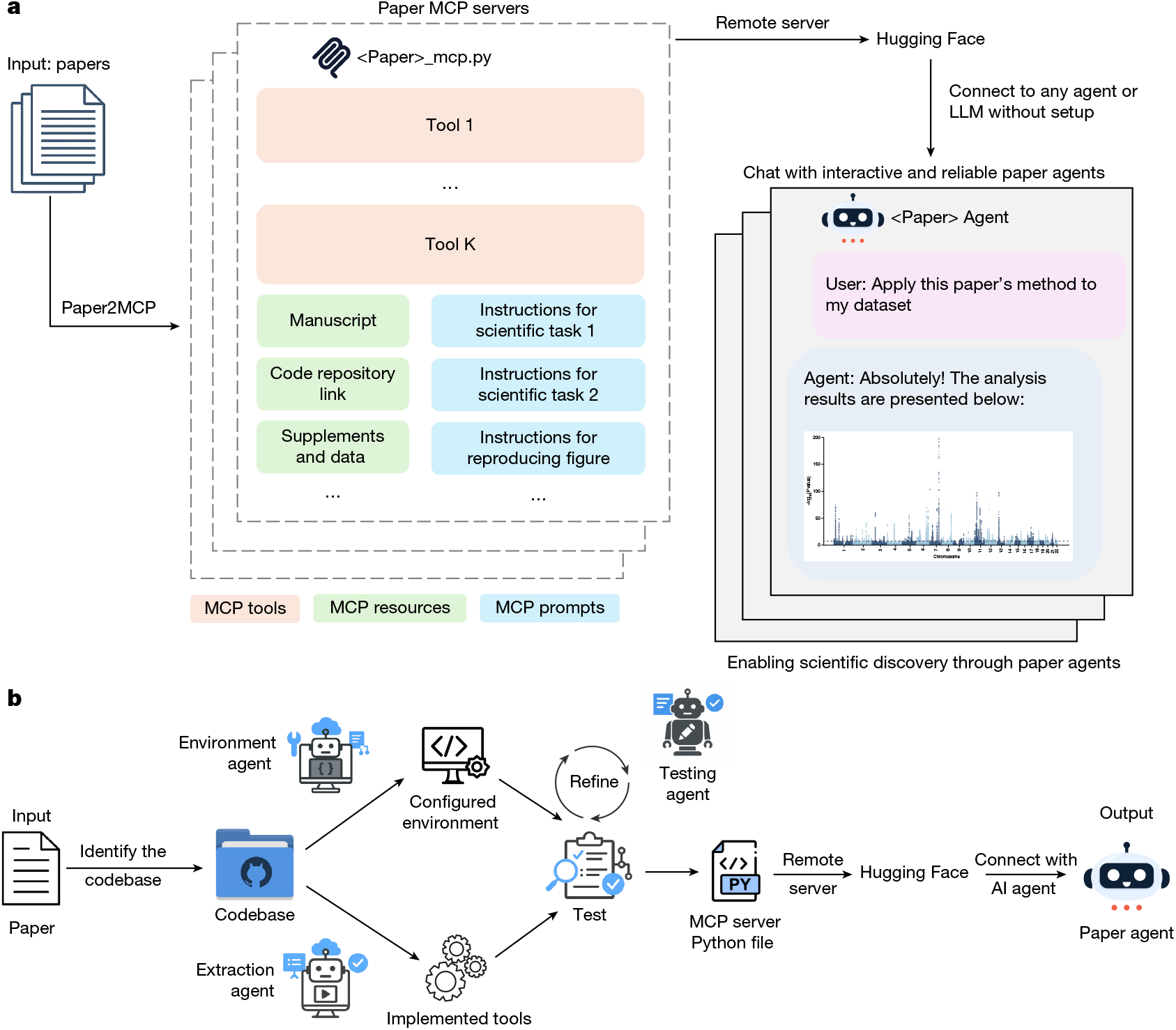
Reimagining research papers as interactive and reliable AI agents
The Alien Space of Science: Sampling Coherent but Cognitively...