


Ecosystems in the Anthropocene are shaped by rapid environmental change, species loss and disturbance. Many ecological interactions depend on specific combinations of species and environmental conditions, forming feasible interacting sets that cannot be represented by simple links. Here we review the role of hypergraphs, which capture higher-order interactions among biotic, abiotic and anthropogenic components, as a framework for describing such systems. Hypergraphs clarify how ecological structure forms, fragments and reorganizes across time and space, and connect these dynamics to conservation applications including rewilding, habitat connectivity and restoration.
The shock of the anthropocene: the earth, history and us
Dissecting the new theoretical buzzword of the "Anthrop…

'The apparent chaos of the Anthropocene is turbocharging evolution itself': Plants are finding ways to survive and thrive in the climate crisis — if we let them
In this excerpt from "Despite it All," author Fred Pearce explores the ways plants are adapting and evolving in the face of climate change — and how we need to recognize this reality and foster its potential boost to biodiversity, rather than holding steadfast to our notions of what types of nature should and shouldn't be allowed to thrive.

Anthropocene Epistemology: Political, Ecological, and Economic Entanglements
This essay critically explores the connection between epistemology, political ecology, economy, and technological developments in the Anthropocene, understood a

L’anthropocène, un objet frontière qui signifie plus qu’une tranche de temps géologique
Même si le groupe de travail officiel a refusé la proposition de créer une nouvelle époque géologique nommée anthropocène, le débat n’est pas clos pour autant.

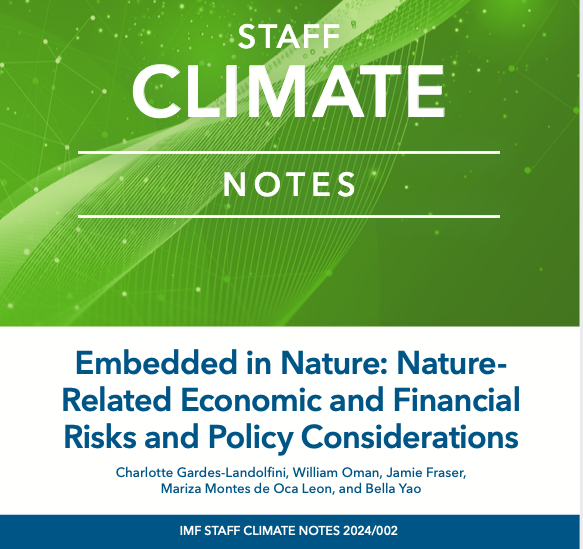
La Nature au cœur du raisonnement économique : l’émergence d’une nouvelle macroéconomie. - Chroniques de l'Anthropocène
Quand le FMI révolutionne la macroéconomie en présentant un cadre conceptuel original dans lequel la Nature se trouve au cœur du système économique.
The ultrasocial origin of the Anthropocene
The current geological epoch has been dubbed the Anthropocene—the age of humans. We argue that the roots of the Anthropocene lie in the agricultural revolution that began some 8000years ago. Unique human psychological and cultural characteristics were present in our distant hunter–gatherer past, but in terms of the biophysical impact of our species, agricultural represented an unequivocal and decisive evolutionary break. With the transition to agriculture human society began to function as a superorganism functioning as a single unit designed by social natural selection to produce economic surplus. Where environmental conditions were permitted, early human agricultural societies followed the same pattern as a few social insects and exhibited explosive population growth, complex and detailed division of labor, intensive resource exploitation, territorial expansion, and a social organization favoring the survival and growth of the supergroup over the well-being of individuals within the group. Similar economic forces lie behind ultrasociality in social insects and humans—increased productivity from the division of labor, increasing returns to scale, and the exploitation of stocks of productive resources. Exploring the evolutionary mechanisms behind ultrasociality offers insights into the growth imperative that threatens the stability of the earth's life support systems.
Think Entangled, Act Spooky
I like the concept of the Anthropocene. It finesses or postpones at least some of the conflict around the idea of climate change, broadens the conversation to…

Weecology
Interdisciplinary Ecology Research Group at University of Florida studying ecological dynamics and forecasting

How May the ‘Anthropocene’ Enable and Constrain Cybersystemic Governance? The ‘Anthropocene Problematique’
A growing awareness of the need for cybernetics and systems thinking (cybersystemic) in praxes of governance to improve human-biosphere relationships in the Anthropocene has become apparent. Nonetheless, mainstream governance informed by linear-causality seems to perpetuate an increasingly inadequate paradigm of dominant first-order/systematic thinking in governing complex interactions between humans and their natural environments. This conundrum is explored through the second-order lens of a systemic inquiry, using an integrative literature review. We discuss limitations of the Anthropocene metaphor and make the case for a reframing of our situation (humans’ co-evolutionary dynamic with the biosphere) as the ‘Anthropocene problematique’. This reframing as a systemic-duality offers more conducive affordances for trajectory-shifting cybersystemic governance to emerge. Aligning with a body of literature evidencing the influence of language on human cognition, we argue that by joining up the strengths of both ideas, ‘Anthropocene problematique’ may form a conceptual device amenable to changing worldviews and guiding practical action in governing human-biosphere relationships. We suggest a conceptual framework for practitioners to design and enact purposeful systems of cybersystemic governance with potential to improve situated Anthropocene problematiques. This framing and theoretical proposal are motivated by a need for shifts towards a social purpose of healing human-biosphere relationships in current governance systems in the Anthropocene-world.



Combating ecosystem collapse from the tropics to the Antarctic
Abstract Globally, collapse of ecosystems—potentially irreversible change to ecosystem structure, composition and function—imperils biodiversity, human health and well‐being. We examine the current state and recent trajectories of 19 ecosystems, spanning 58° of latitude across 7.7 M km 2 , from Australia's coral reefs to terrestrial Antarctica. Pressures from global climate change and regional human impacts, occurring as chronic ‘presses’ and/or acute ‘pulses’, drive ecosystem collapse. Ecosystem responses to 5–17 pressures were categorised as four collapse profiles—abrupt, smooth, stepped and fluctuating. The manifestation of widespread ecosystem collapse is a stark warning of the necessity to take action. We present a three‐step assessment and management framework (3As Pathway Awareness , Anticipation and Action ) to aid strategic and effective mitigation to alleviate further degradation to help secure our future.

Manage derailment risks to avoid Hothouse Earth
The risk of a ‘Hothouse Earth’ trajectory has become increasingly prominent in debates about Earth system stability and climate overshoot. Existing analyses primarily focus on biophysical feedbacks that may amplify warming beyond direct anthropogenic forcing. We argue the concept has not previously incorporated how social destabilisation lowers the effective threshold at which biophysical tipping dynamics become self-sustaining, independently of further anthropogenic forcing and so undermines the capacity for planetary stewardship. We define ‘derailment risk’ as the possibility that escalating Earth system disruption weakens the social, political, and economic conditions required to sustain mitigation, adaptation, and ecological restoration. Such risks emerge when climate impacts contribute to a wide range of challenges, including debt crises, institutional erosion, political fragmentation, supply-chain instability, and declining public support for environmental action. These reinforcing feedbacks may reduce humanity’s capacity to respond even before biophysical tipping thresholds are crossed. We therefore extend the Hothouse Earth framework by incorporating social dynamics into the Earth system stability landscape. We propose a three-stage framework for assessing and managing derailment risks: conceptual mapping of socio-biophysical feedbacks; anticipatory resilience-building interventions; responsive governance strategies for periods of escalating instability. We conclude that planetary stewardship should prioritise maintaining and expanding collective agency under worsening Earth system stress.
Anthropocène? Capitalocène? Quels enjeux? - les économistes atterrés
Si l’anthropocène est aujourd’hui d’usage courant pour désigner la période présente marquée par les transformations qui affectent de plus en plus notre planète, une autre tendance se fait jour chez […]
Is There Need for “The New Wild”?: The New Ecological Quarrels | Los Angeles Review of Books
Pearce takes aim at the edifice that has coalesced around conservation efforts in the face of invasion.
Ecological Media

Interconnected, relational, emergent. Socially networked media rooted in ecological relationalities.

We Need To Rewild The Internet
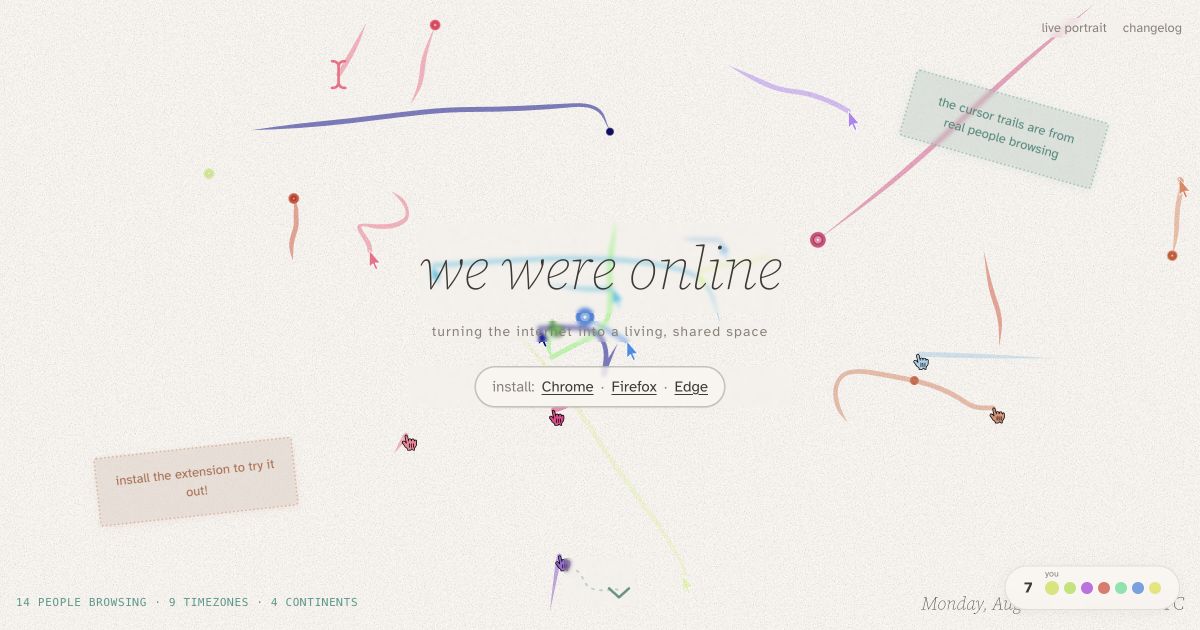
we were online
The information flaneur: a fresh look at information seeking
Trails and public spaces — Rafael M. Batista

It was a huge honor to present the opening keynote address at #SIGIR2026 and to talk about the need for IR to resist uncritical adoption of…
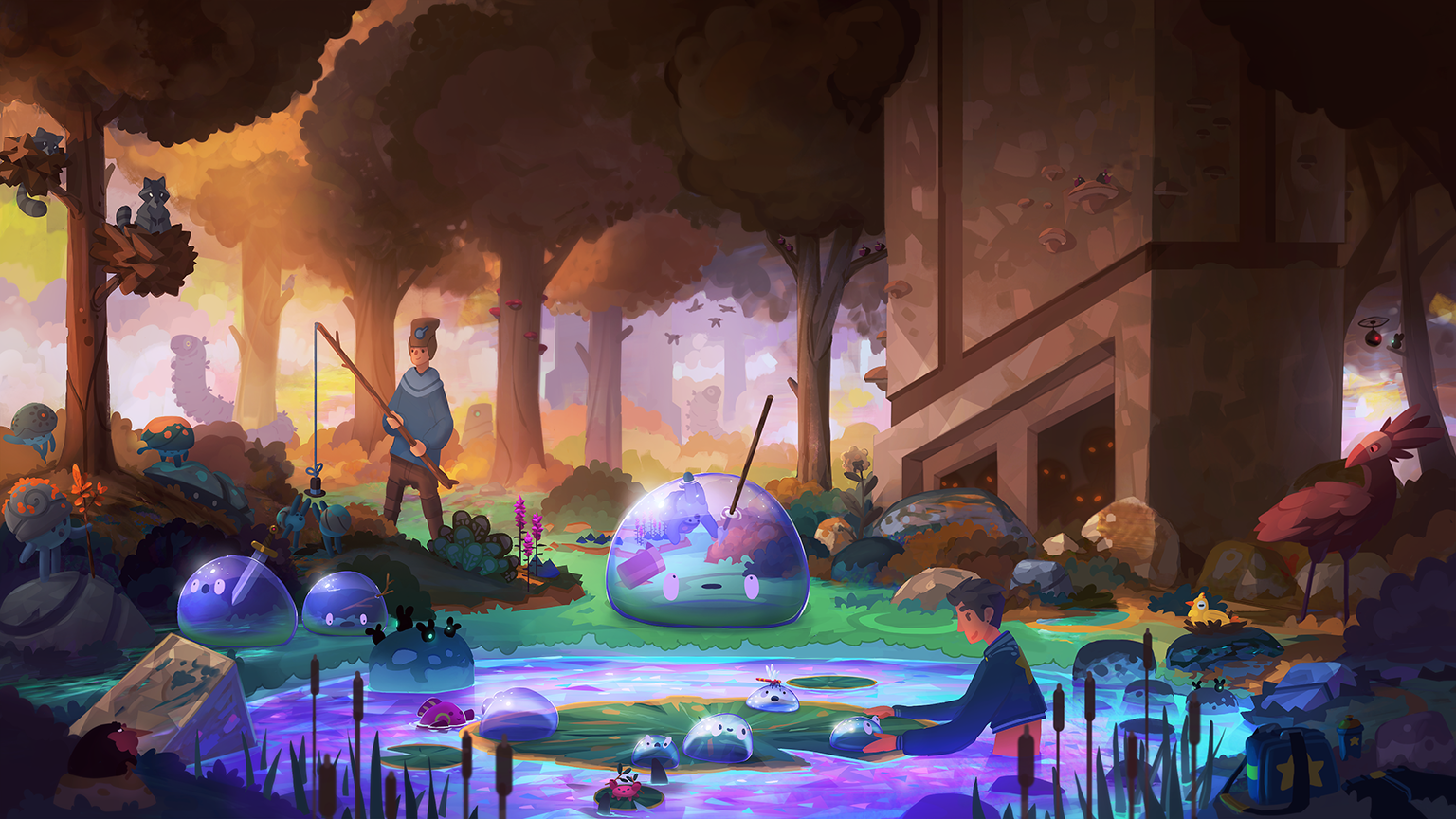
Chatty Community Gardens