


Sociologists have shown that “third places” such as neighborhood cafés help people maintain and use their network ties. Do they help local entrepreneurs, for whom networks are important? We examine whether the introduction of Starbucks cafés into U.S. neighborhoods with no coffee shops increased entrepreneurship. When compared to census tracts that were scheduled to receive a Starbucks but did not get one, tracts that received a Starbucks saw an increase in the number of startups of 9.1% to 22.5% (or 2.9 to 6.4 firms) per year, over the subsequent 7 years. A partnership between Starbucks and Magic Johnson focused on underprivileged neighborhoods produced larger effects. Analyses suggest a networks mechanism is at play.
McDonald's: you can sneer, but it's the glue that holds communities together
When many lower-income Americans feel isolated and empty, they yearn for physical social networks. All across US, this happens organically at McDonald’s

Natalia Emanuel on Twitter / X
Coffee shops boost innovation. 10% more Starbucks in an area --> 3-4% more inventions. People gather over a cuppa. They share ideas, discuss how to untangle a knotty problem, help see an issue from another perspective. These conversations lead to breakthroughs and inventions.… pic.twitter.com/3LwKtrgG5E— Natalia Emanuel (@NataliaHEmanuel) October 9, 2026

Communities are not fungible
There's a default assumption baked into how Silicon Valley builds products, and it tracks against how urban planners redesign neighbourhoods: that communities are interchangeable, and if you "lose" one, you can manufacture a replacement; that the value of a group of people who share space and history can be captured

When Community Becomes Your Competitive Advantage
If a company can transition from simply delivering a product to building a community, they can unlock extraordinary competitive advantages and create a superior business model. In fact, strong communities help support the ideal business model. Specifically: • Enthusiastic members help acquire new members, resulting in lower customer acquisition costs and a tight viral loop. • Members of a community are loath to abandon it, resulting in increased member retention and therefore improved lifetime value. • Members of a community support other members in that community, resulting in high gross margins due to a lower cost of service. The result of this are very real network effects: as engagement grows, the community gets smarter, faster to respond, more globally available, and generates more value.

The Everywhere Millionaire: Who Is Really Rich in America and How They Got There
From two leading economists comes a groundbreaking new portrait of the hidden fortunes of Main Street business owners—ordinary Americans who built extraordinary wealth and are quietly rewriting the rules of money and power. Most people think the path to great wealth runs through Wall Street or Silicon Valley. We’re told you must be a Zuckerberg, a Musk, or a Jamie Dimon to get rich. But this story is wrong. Drawing on unprecedented data from a decade of research and vivid real-life stories of entrepreneurs—from a self-made hot-dog stand billionaire to the heirs of an auto dealer—Zidar and Zwick reveal a surprising truth: prosperity is more attainable, more widely distributed, and closer to home than we imagine. A multitude of Americans have built staggering fortunes by running often unglamorous businesses far from the spotlight. A quiet revolution in the business world—the rise of “pass-through” firms like S-corporations and partnerships—supercharged this wealth, channeling vast income directly to business owners rather than traditional corporations.Part economic detective story, part roadmap to riches, this book reveals: —The Hidden 1%: They might be a local beer distributor, a dentist with a regional network of practices, a commercial HVAC contractor with trucks around town, or a restaurateur who keeps opening new locations. For every public company CEO, more than a thousand private business owners each have transformational wealth.— The Blueprint for Wealth: Zidar and Zwick describe where Main Street Millionaires come from, how they grew rich, and how much money they make. Their stories suggest the American Dream is not dead and many paths to prosperity remain open today. — Power Brokers: Armed with their fortunes, Main Street Millionaires wield power in city halls, statehouses, and Washington, often bending policy to protect what they’ve built. They are both growing the economic pie and grabbing bigger slices for themselves.The Everywhere Millionaire celebrates the stories of entrepreneurs who seized opportunities while asking hard questions about how concentrated wealth and power shape society. It is an essential guide to seeing the economy as it really is and recognizing the surprising paths to prosperity—and influence—everywhere.
The Disappearance of Third Places
Nearly half as many people are launching businesses as 20 years ago
According to a study conducted by BDC in collaboration with the Université de Montréal, not enough people are starting businesses to replace those closing their doors
Why Cities Boom While Towns Struggle
The jobs gap is also a jobs map: Places that succeed have a critical mass of creativity.

Is America Encouraging the Wrong Kind of Entrepreneurship?
In a 1990 paper, “Entrepreneurship: Productive, Unproductive, and Destructive,” late economist William Baumol argued that not all entrepreneurs are equal: there are both “productive” and “unproductive” endeavors. Most people think of all entrepreneurship to be what Baumol referred to as the “productive” kind, where the companies that founders launch commercialize something new or better, benefiting society and themselves in the process. Baumol was worried, however, by a very different sort of entrepreneur, the “unproductive” ones who exploit special relationships with the government to construct regulatory moats, secure public spending for their own benefit, or bend specific rules to their will — in the process, stifling competition to create advantage for their firms. Two recent trends indicate that this may be happening in the U.S. today: rising profits, especially those earned by the largest businesses in the economy, and suggestive evidence of an increase in efforts to shape the rules of the game. Baumol may have been ahead of his time. If the U.S. is going to tackle its many problems, we are going to have to find ways to encourage would-be entrepreneurs to start innovative, productive businesses, rather than dedicating their efforts to co-opting government in order to secure economic advantage.
Nowhere to Go: The Loss of Third Places
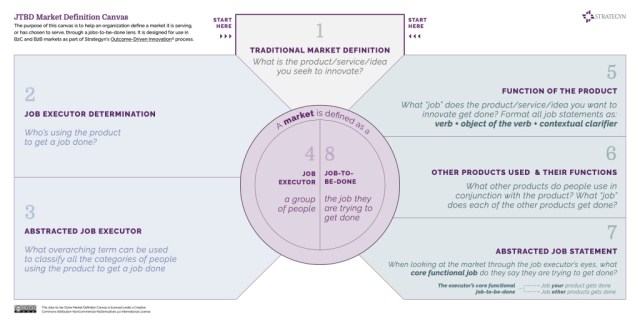
Steve Blank How to Find a Market? Use Jobs-To-Be-Done as the Front End of Customer Discovery
Modern entrepreneurship began at the turn of the 21st century with the observation that startups aren’t smaller versions of large companies – large companies at their core execute known business mo…
Putting Post Growth Theory Into Practice
The Post Growth Entrepreneurship Incubator helps founders break free from traditional business models and implement sustainable…

America's Growth Ponzi Scheme | Strong Towns
The American pattern of development creates the illusion of wealth. Today we are in the process of seeing that illusion destroyed…and with it the prosperity we have come to take for granted.

Capitalism and markets are closely connected, but they aren't exactly the same thing. And once we recognize that it opens up a huge new terrain for different types of social organization. J.K. Gibson Graham wrote on this a lot. en.wikipedia.org/wiki/J._K._Gibson-Graham
J. K. Gibson-Graham - Wikipedia
en.wikipedia.org
