


Five humans convened for a weekend to create new music from scratch. Could they do better than A.I.? Could you even tell the difference?
Jordan Rudess and MIT’s jam_bot: A New Era of Human-AI Musical Collaboration
As We May Think Credit: Mostafa 'Neo' Mohsenvand

Inside the Don’t Ask, Don’t Tell Era of AI in Music
From juicing demos to cloning vocals, AI music tools are creeping into the workflows of top producers, songwriters and artists. It’s mostly happening behind closed doors — for now

The Millions of Songs Mashed Into AI-Generated Music
Explore the astonishing amount of music available to AI developers.

Who owns an AI generated song? What we can learn from the phonograph and the evolution of copyright laws
History suggests copyright adapts to technology. AI may be no exception.

Why We’re Taking a Human‑First Stand on AI‑Generated Music — Qobuz Community
Artificial intelligence is transforming the music industry at an unprecedented pace. Faced with the explosion of AI-generated content and the legitimate questions it raises, Qobuz has chosen transparency. This charter establishes our framework: how we use AI, where we draw our lines, and what commi

AI music tools challenge Bay Area musicians
AI music tools challenge Bay Area musicians: As affordable AI platforms spread, artists debate creativity, copyright and survival.

Jeff Mills Drifts Into the Cosmos
AI is the latest of a long succession of tools trying to make things easier for us, and it’s always been there, and it’s always affected the music. Maybe we didn’t fear as much, but musicians just have to be more creative and to be more elusive.

The Music Industry Crosses an AI Tipping Point
AI music remains a touchy subject for many musicians. Suno CEO Mikey Shulman says he's not worried: “People are starting to be a little more comfortable being public and upfront” about creating with AI.

Deezer and Ipsos study: AI fools 97% of listeners
Deezer and Ipsos unveil a unique study exploring perceptions around AI and music, conducted across 8 countries. Discover the surprising results!

Rewildpunk: The Counterculture AI Actually Needs
Punk took music back from the labels. Here’s how we take intelligence back from Silicon Valley.

[Interview] Snow J of Cheerful Music dives into the cross cultural intersection of AI and music – EARMILK
In conversation with Earmilk, Snow. J explores how AI has restructured the foundation of music culture, striking a balance between AI and human-made music as well as Cheerful Music's distinct approach to engaging AI technology in music making and marketing.

Dr. Dre and Jimmy Iovine Think A.I. Is Good for Music
The hit-making duo turned tech moguls also have thoughts about why corporate America isn’t collaborative enough.

How AI Will Fail Like The Music Industry
The Algorithmic Flattening of Sound: Computational Evidence and Justice Implications of AI Music Homogenization
This paper audits whether large-scale generative music systems exhibit measurable musical homogenization relative to human-produced music, and develops a justice-centered account of why this matters. We audit two commercially deployed systems (Suno and Lyria 3) across four genres (Afrobeats, K-pop, Dance Pop, and Heavy Metal). For each system and genre, we generate 100 tracks and compare them against human corpora of equal size, using 72 music information retrieval (MIR) features and multiple diagnostics of dispersion, redundancy, and separability. We define homogenization as reduced acoustic variation in standard computational audio features including rhythm and timing, timbre/spectral shape, and dynamics, both within genres and across genre boundaries. We also generate tracks using only a genre name as the prompt, with no additional instructions, to reveal each system's default musical tendencies. The results show two structurally distinct homogenizing tendencies. Lyria reduces within-genre acoustic diversity, while Suno collapses the acoustic distinctions between genres without compressing within-genre spread. Neither system follows user prompts faithfully, indicating that the observed patterns reflect learned priors rather than prompt constraints. The two systems do not converge on a common acoustic profile and are more acoustically distant from each other than two random human subsamples would typically be. Nevertheless, a standard classifier distinguishes AI from human tracks near-perfectly on MIR features alone. We argue that these patterns matter not as an aesthetic curiosity but as a justice-relevant condition, shaping which musical styles become legible, valued, and economically rewarded as generated outputs increasingly circulate at scale.

The grueling fight over who profits from AI music
AI can generate songs in seconds. But behind every AI track is a complicated question: Who should get paid? And, how? The fights have started.
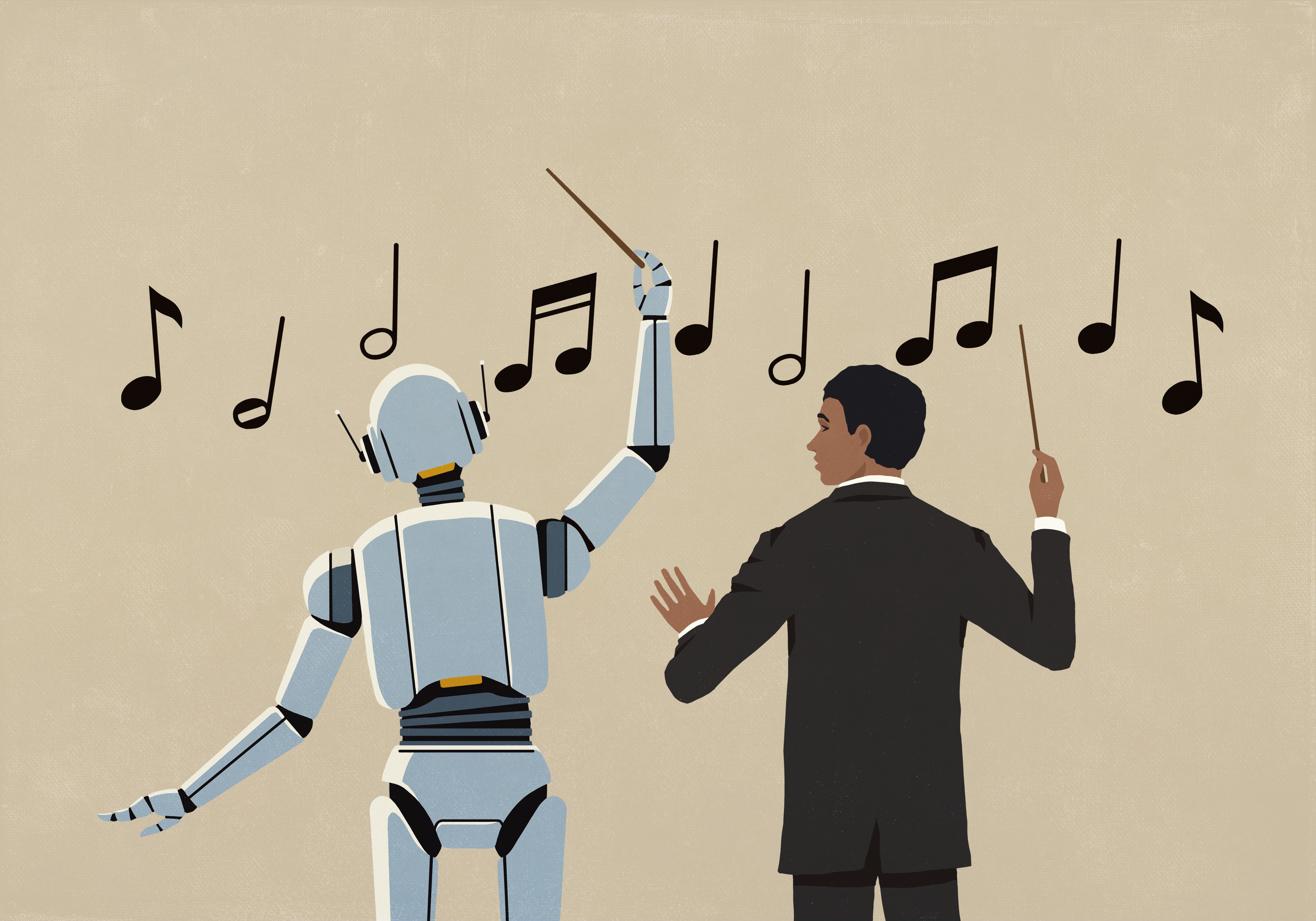
AI & Music - developments & perspectives

Perspectives, developments, & news re: AI & music

YouTube Music adds new labels for AI music
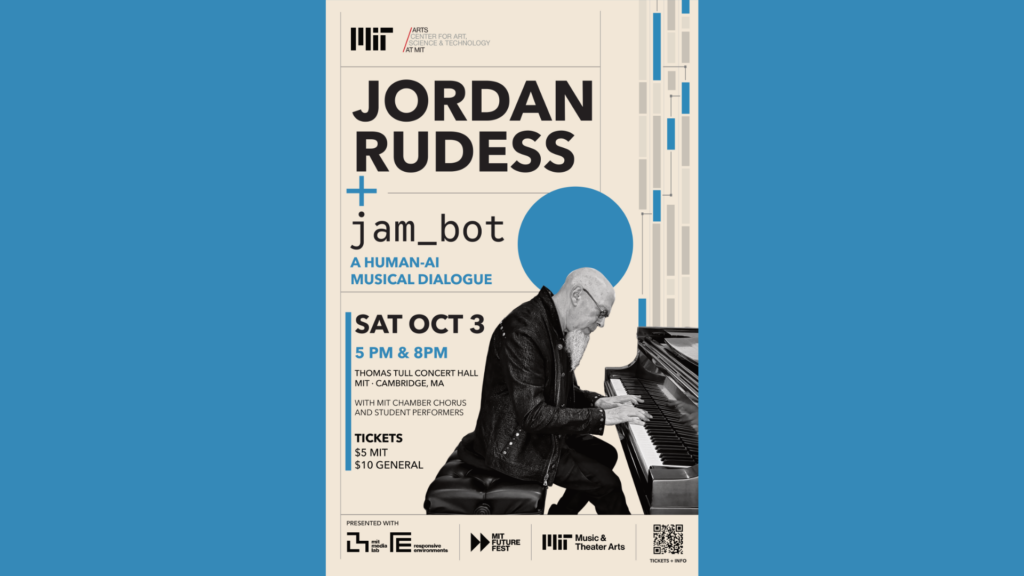
Jordan Rudess + jam_bot at MIT October 3
Jordan Rudess and MIT’s jam_bot: A New Era of Human-AI Musical Collaboration
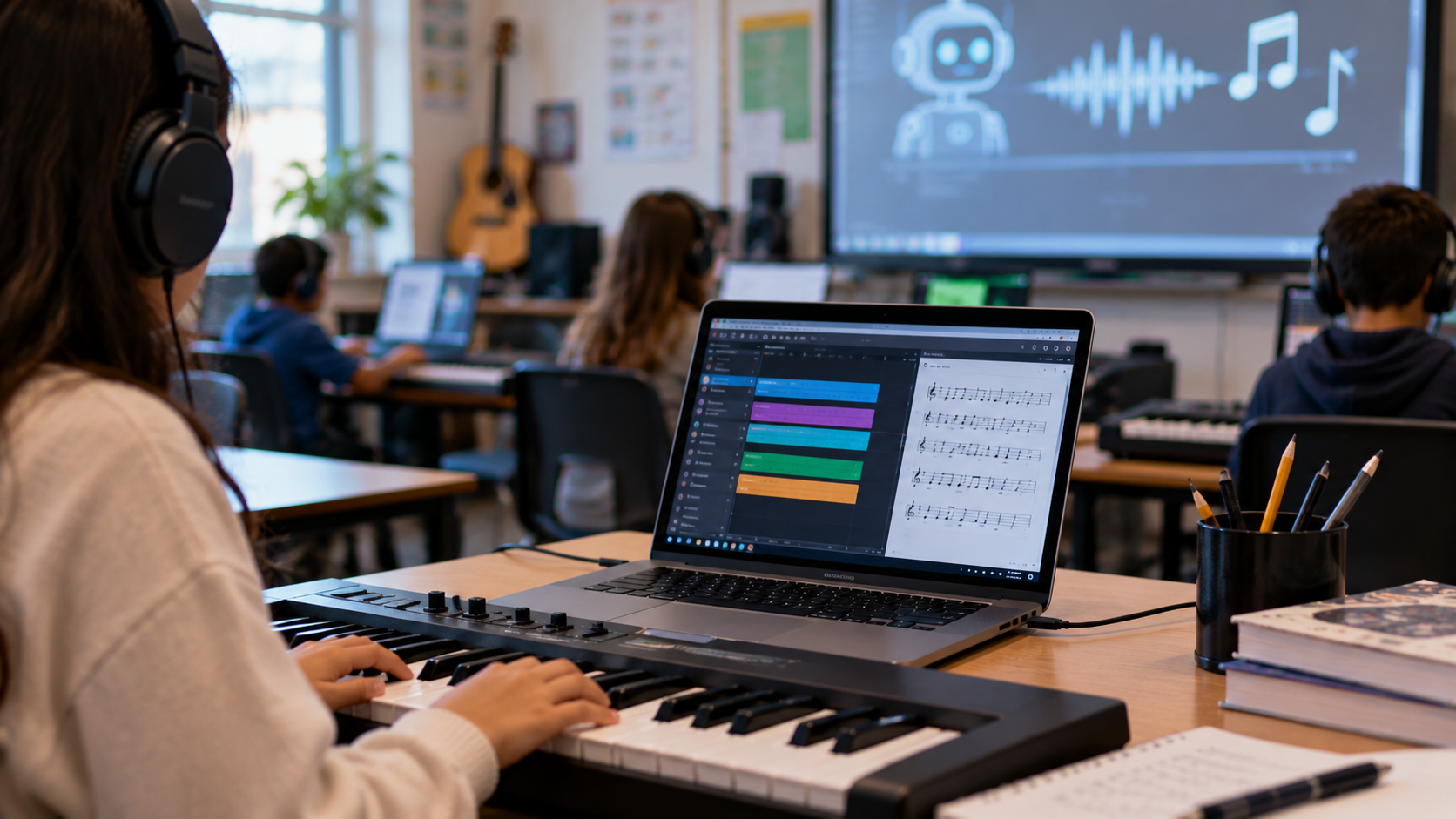
Artificial Intelligence in Music Classrooms: PK-12 Educators’ Practices, Concerns, and Confidence

“It frustrates me to hear people bashing something that's so amazing”: Todd Edwards is optimistic about AI in music production
An A.I. Songwriting Experiment: Humans Against the Machine