


My research investigates the intersection of computing, human-system interfaces, and emancipatory politics. I am interested in the potential of computing as a medium for thought, as a tool for collective action, and as a means of emancipation.
Human-Computer Insurrection: Notes on an Anarchist HCI
As part of the Digital Library's transition to Open Access, new features for researchers are available in the Premium Edition. Click here to learn more.

Human-Computer Insurrection: Notes on an Anarchist HCI
The HCI community has worked to expand and improve our consideration of the societal implications of our work and our corresponding responsibilities. Despite this increased engagement, HCI continues to lack an explicitly articulated politic, which we argue re-inscribes and amplifies systemic oppression. In this paper, we set out an explicit political vision of an HCI grounded in emancipatory autonomy - an anarchist HCI, aimed at dismantling all oppressive systems by mandating suspicion of and a reckoning with imbalanced distributions of power. We outline some of the principles and accountability mechanisms that constitute an anarchist HCI. We offer a potential framework for radically reorienting the field towards creating prefigurative counterpower - systems and spaces that exemplify the world we wish to see, as we go about building the revolution in increment.

Human-Computer Insurrection: Notes on an Anarchist HCI
The HCI community has worked to expand and improve our consideration of the societal implications of our work and our corresponding responsibilities. Despite this increased engagement, HCI continues to lack an explicitly articulated politic, which we argue re-inscribes and amplifies systemic oppression. In this paper, we set out an explicit political vision of an HCI grounded in emancipatory autonomy - an anarchist HCI, aimed at dismantling all oppressive systems by mandating suspicion of and a reckoning with imbalanced distributions of power. We outline some of the principles and accountability mechanisms that constitute an anarchist HCI. We offer a potential framework for radically reorienting the field towards creating prefigurative counterpower - systems and spaces that exemplify the world we wish to see, as we go about building the revolution in increment.
Emancipatory Information Retrieval
Our world today is facing a confluence of several mutually reinforcing crises each of which intersects with concerns of social justice and emancipation. This paper is a provocation for the role of computer-mediated information access in our emancipatory struggles. We define emancipatory information retrieval as the study and development of information access methods that challenge various forms of human oppression, and situates its activities within broader collective emancipatory praxis. The term "emancipatory" here signifies the moral concerns of universal humanization of all peoples and the elimination of oppression to create the conditions under which we can collectively flourish. To develop an emancipatory research agenda for information retrieval (IR), in this paper we speculate about the practices that the community can adopt, enumerate some of the projects that the field should undertake, and discuss provocations to spark new ideas and directions for research. We challenge the field of IR research to embrace humanistic values and commit to universal emancipation and social justice. We also invite scholars from fields such as human-computer interaction, information sciences, media studies, design, science and technology studies, social and political sciences, philosophy, law, environmental sciences, public health, educational sciences, as well as legal and policy experts, civil rights advocates, social justice activists and movement organizers, and artists to join us in realizing this transformation. In this process, we must both imagine post-oppressive worlds, and reimagine the role of IR in that world and in the journey that leads us there.
Anarchist Cybernetics
The Paper Pilot's digital garden of thoughts on philosophy, politics, and sociology. Reading time: ~14 minute read | Published: Aug 12, 2026 | Updated: Sep 6, 2026

Emancipatory Information Retrieval (Invited Talk at UCC)
Feeling of Computing — Conversations
Information Access of the Oppressed: Freirean Design for Emancipatory Information Access
Online information access (IA) platforms are targets of authoritarian capture. We explore the question of how to safeguard our platforms and ensure emancipatory outcomes through the lens of Paulo Freire's theories of emancipatory pedagogy. Freire's theories provide a radically different lens for exploring IA's sociotechnical concerns relative to the current dominating frames of fairness, accountability, and transparency. We make explicit, with the intention to challenge, the technologist-user dichotomy in IA platform development that mirrors the teacher-student relation in Freire's analysis. By extending Freire's analysis to IA, we critique the technologists-as-liberator frame where it is the burden of (altruistic) technologists to mitigate the risks of emerging technologies for marginalized communities. Instead, we advocate for Freirean Design whose goal is to structurally expose the platform for co-option and co-construction by community members in aid of their emancipatory struggles.
SimPolitics
For more than six decades, the public has been promised that computers will revolutionize politics, both nationally and internationally. In SimPolitics, Fenw...

Reclaiming the Computing Commons
Resisting the commodification of information is a political struggle, not a technical one.

Technocracy | The Paper Pilot
The Paper Pilot's digital garden of thoughts on philosophy, politics, and sociology
Decentralized Identity | The Paper Pilot
The Paper Pilot's digital garden of thoughts on philosophy, politics, and sociology
Liberatory Computing

A community seeking to catalyze discontent with the state of computing by understanding the roles of production, labor, and power in shaping the foundations of digital systems. libcomp.org
Politics of computing
Feminist Computing

Rewildpunk: The Counterculture AI Actually Needs
Phil Agre's Home Page

It was a huge honor to present the opening keynote address at #SIGIR2026 and to talk about the need for IR to resist uncritical adoption of…
We Refuse, We Want, We Commit: Volume 1

Informatics of the Oppressed

On The Enshittification of Audre Lorde: "The Master's Tools" in Tech Discourse
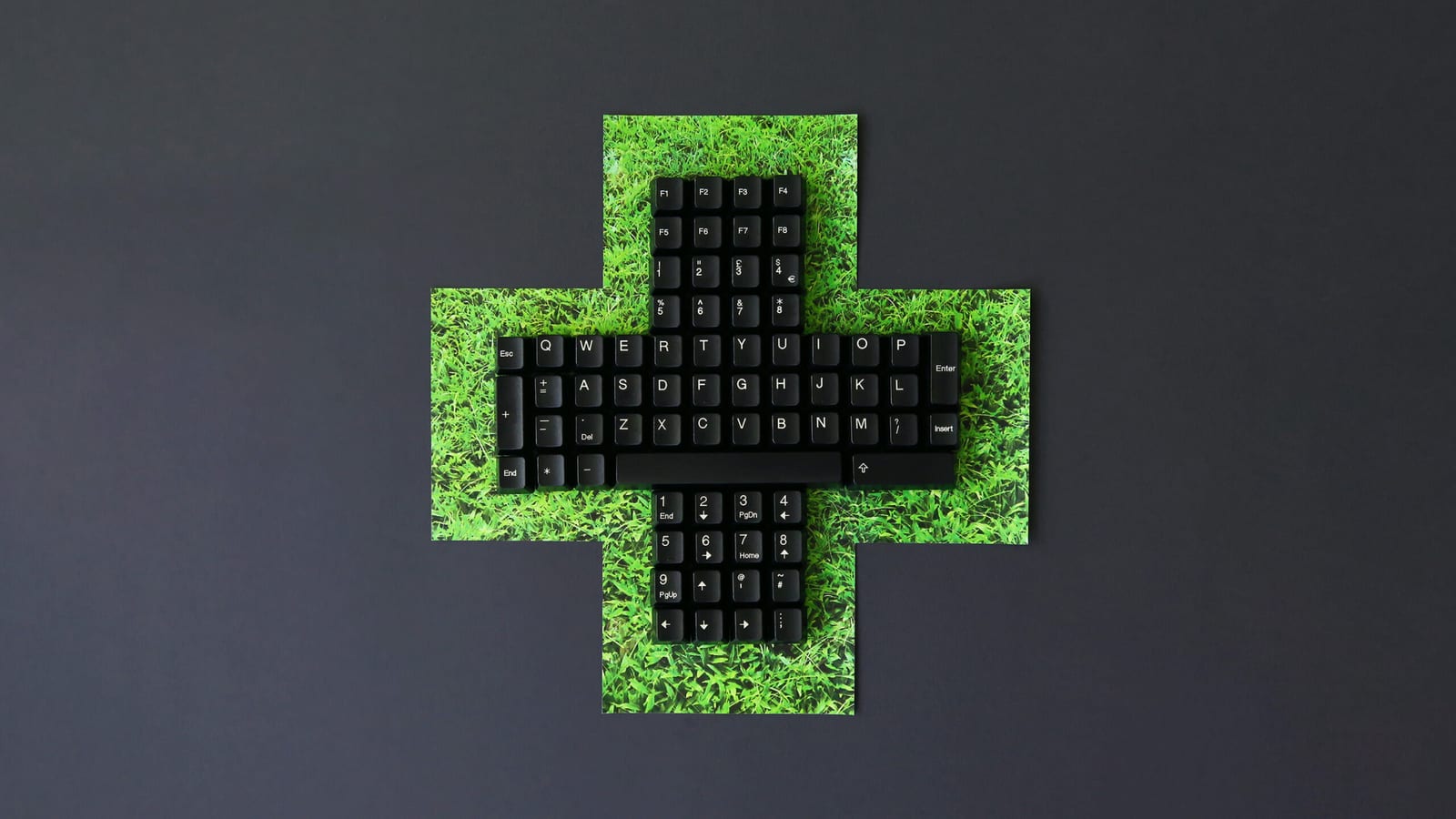
Technology is Not Values Neutral: Ending the Reign of Nihilistic Design

Cyber-Marx

‘Headed for technofascism’: the rightwing roots of Silicon Valley

📏 When machines start calling the shots

Information Civics

Data Feminism

Men in tech #YesAllMen - EMF 2026
Data Feminism for AI
quod.lib.umich.edu

Wired women : gender and new realities in cyberspace
www.bloomsbury.com

Programmed Inequality