Collection
Open
Liberatory Computing

Updated 26d
A community seeking to catalyze discontent with the state of computing by understanding the roles of production, labor, and power in shaping the foundations of digital systems. libcomp.org
Collection
Updated 26d
A community seeking to catalyze discontent with the state of computing by understanding the roles of production, labor, and power in shaping the foundations of digital systems. libcomp.org
Rewildpunk: The Counterculture AI Actually Needs
Punk took music back from the labels. Here’s how we take intelligence back from Silicon Valley.

Phil Agre's Home Page
Phil Agre is no longer a professor at UCLA. This page and others by him are being provided as a record of his writings and are no longer actively maintained.
We Refuse, We Want, We Commit: Volume 1
Informatics of the Oppressed
An inquiry into the rich history of radical experiments to reorganize information.

On The Enshittification of Audre Lorde: "The Master's Tools" in Tech Discourse
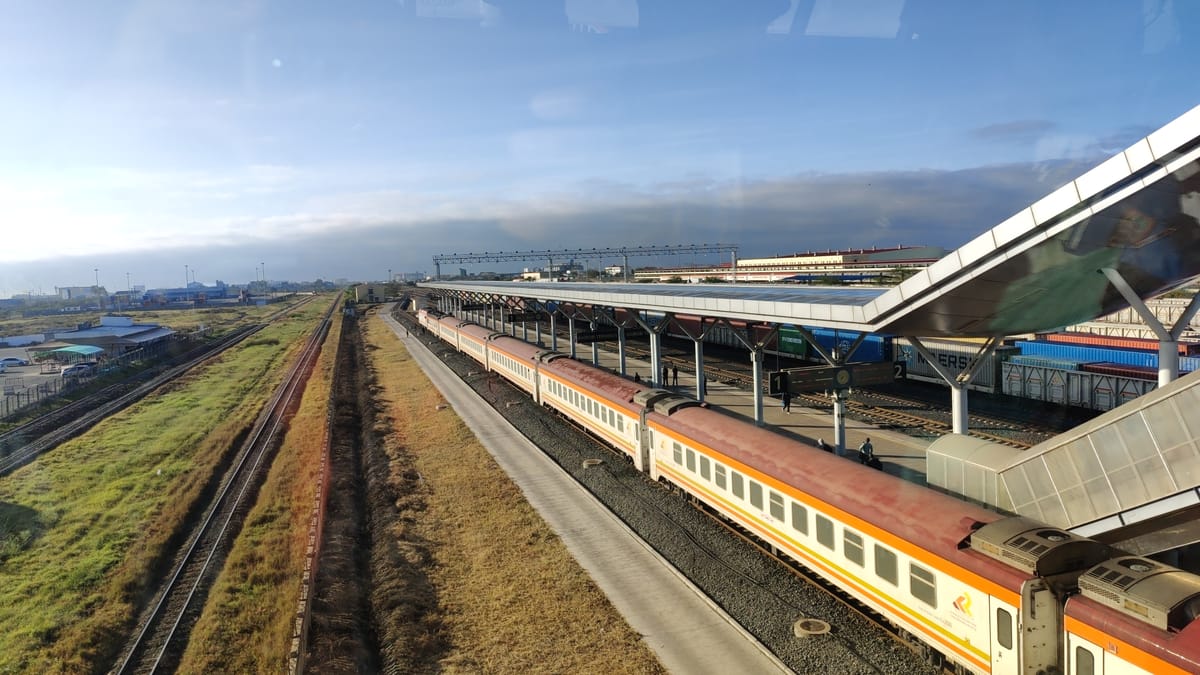
🖼️Cover Photo: Train at the Nairobi terminus of the Mombasa–Nairobi Standard Gauge Railway. It runs parallel to the Uganda Railway that was completed in 1901. The first fare-paying passengers boarded the "Madaraka Express" on Madaraka Day (1 June 2017), the 54th anniversary of Kenya's attainment of self-rule from Great
Digital Topology & Economic Power
The autonomous file, once the basic unit of user agency in personal computing, was first hollowed out through proprietary formats and data internalization, then abolished entirely by cloud platforms, relocating control toward incumbents at each stage. Enclosure succeeds not by offering users less, but by bundling genuine capability gains with topological restructuring, so that the user cannot accept the improvement without accepting the new relationship of power.

Information Civics
An exploration of computer-network architectures as civic structures.

Appropriating Technology | Public Sphere Project — Liberating Voices Pattern Language
Dematerialization, Participatory Design, Techno-Criticism, Intermediate Technologies, Users' IT Quality Network, Wholesome Design for Wicked Problems, Labor Visions, Community Inquiry, Tactical Media
Data Feminism
Today, data science is a form of power. It has been used to expose injustice, improve health outcomes, and topple governments. But it has also been used to d...

Information Access of the Oppressed: A Problem-Posing Framework for Envisioning Emancipatory Information Access Platforms
Online information access (IA) platforms are targets of authoritarian capture. These concerns are particularly serious and urgent today in light of the rising levels of democratic erosion worldwide, the emerging capabilities of generative AI technologies such as AI persuasion, and the increasing concentration of economic and political power in the hands of Big Tech. This raises the question of what alternative IA infrastructure we must reimagine and build to mitigate the risks of authoritarian capture of our information ecosystems. We explore this question through the lens of Paulo Freire's theories of emancipatory pedagogy. Freire's theories provide a radically different lens for exploring IA's sociotechnical concerns relative to the current dominating frames of fairness, accountability, confidentiality, transparency, and safety. We make explicit, with the intention to challenge, the dichotomy of how we relate to technology as either technologists (who envision and build technology) and its users. We posit that this mirrors the teacher-student relationship in Freire's analysis. By extending Freire's analysis to IA, we challenge the notion that it is the burden of the (altruistic) technologists to come up with interventions to mitigate the risks that emerging technologies pose to marginalized communities. Instead, we advocate that the first task for the technologists is to pose these as problems to the marginalized communities, to encourage them to make and unmake the technology as part of their material struggle against oppression. Their second task is to redesign our online technology stacks to structurally expose spaces for community members to co-opt and co-construct the technology in aid of their emancipatory struggles. We operationalize Freire's theories to develop a problem-posing framework for envisioning emancipatory IA platforms of the future.

Emancipatory Information Retrieval
Our world today is facing a confluence of several mutually reinforcing crises each of which intersects with concerns of social justice and emancipation. This paper is a provocation for the role of computer-mediated information access in our emancipatory struggles. We define emancipatory information retrieval as the study and development of information access methods that challenge various forms of human oppression, and situates its activities within broader collective emancipatory praxis. The term "emancipatory" here signifies the moral concerns of universal humanization of all peoples and the elimination of oppression to create the conditions under which we can collectively flourish. To develop an emancipatory research agenda for information retrieval (IR), in this paper we speculate about the practices that the community can adopt, enumerate some of the projects that the field should undertake, and discuss provocations to spark new ideas and directions for research. We challenge the field of IR research to embrace humanistic values and commit to universal emancipation and social justice. We also invite scholars from fields such as human-computer interaction, information sciences, media studies, design, science and technology studies, social and political sciences, philosophy, law, environmental sciences, public health, educational sciences, as well as legal and policy experts, civil rights advocates, social justice activists and movement organizers, and artists to join us in realizing this transformation. In this process, we must both imagine post-oppressive worlds, and reimagine the role of IR in that world and in the journey that leads us there.
Technically Radical
Over 2024, we saw major tech investors and company owners overtly turn toward the right, overtly backing Donald Trump in his electoral campaign. This group of individuals, which commentators have taken to calling the “Tech Right”, are motivated by various concerns like the attempts by the Biden administration to regulate them and a general backlash against “wokeness”. Representative individuals and their respective justifications can be found in things like Marc Andreessen's essay The Techno-Optimist Manifesto or books like Balaji Srinivasan’s The Network State, and Alexander Karp and Nicholas Zamiska’s The Technological Republic.
That's the meaning: You cannot just take tools whose purpose and politics is dominance and violence and "make them liberatory". This goes deeper than "just" embedded politics or lofty talks about ethics, it comes down to what kind of relations you believe do and should and must not define the world.
It was a huge honor to present the opening keynote address at #SIGIR2026 and to talk about the need for IR to resist uncritical adoption of AI and to safeguard information access from corporate and authoritarian capture. Slides: bhaskar-mitra.github.io/files/emancipatory-ir-sigir20… cc: @acmsigir.bsky.social
This is what I’m talking about when I talk about technologies of liberation This required careful measurement and design

Phil Lewis
“Historians call this passageway a masterwork of deliberate concealment, designed to be absolutely invisible to slave catchers or city marshals during the 19th-century”
Disability-driven Development
Disability-driven Development is a practice that reimagines computing from a disabled perspective.
Intersectional Computing
Politics of computing
Social construction of technology
other futures: tech, resistance & imagining otherwise

Black Software

Movement Data Science: Practices for Working in Solidarity with Social Justice Efforts

DJS F26 W03A Data Origins
Solidarity Infrastructures

Origin Stories: Plantations, Computers, and Industrial Control

Inclusive Design 24 #id24

say eugenics, say it again

Why AI is exposing design’s craft crisis

tech isn’t the future it’s just capitalism faster

The Dunning-Kruger effect in accessibility - Craig Abbott
Against Technoableism
AI Science Fiction Versus Reality

The Racialization of Print

Decoding Liberation: The Promise of Free and Open Source Software

They Thought What?
quod.lib.umich.edu

Social construction of technology

Technology is Not Values Neutral: Ending the Reign of Nihilistic Design

Cyber-Marx
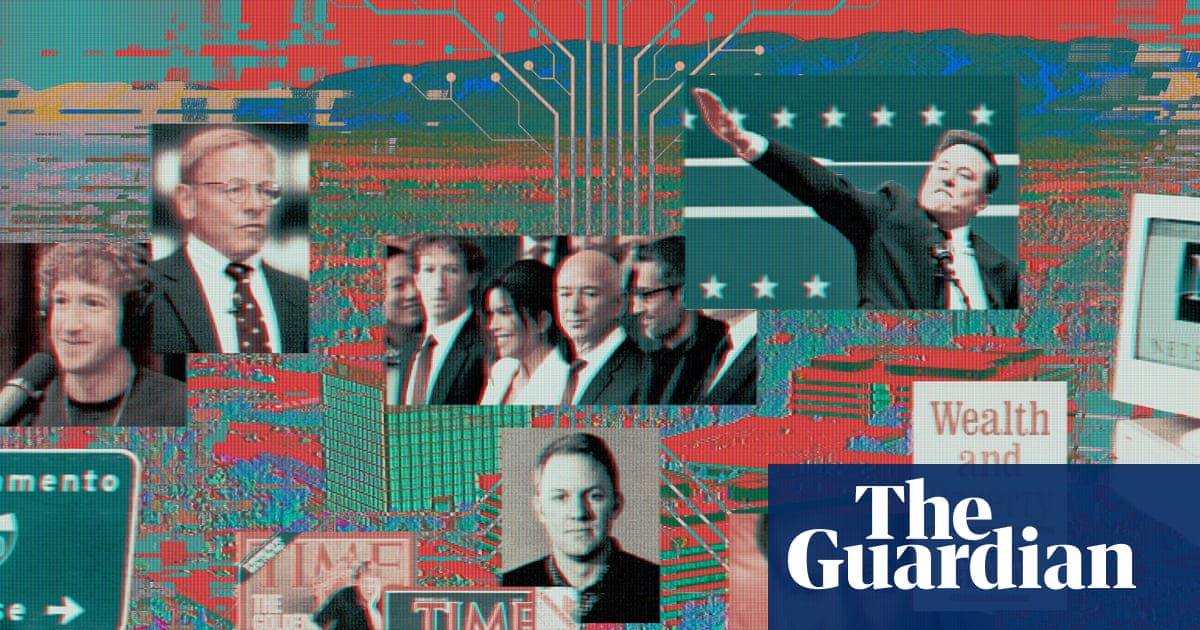
‘Headed for technofascism’: the rightwing roots of Silicon Valley

📏 When machines start calling the shots
Information Civics
Data Feminism


