

The differences across cultures in the enforcement of conformity may reflect their specific histories. , With data from 33 nations, we illustrate the differences between cultures that are tight (have many strong norms and a low tolerance of deviant behavior) versus loose (have weak social norms and a high tolerance of deviant behavior). Tightness-looseness is part of a complex, loosely integrated multilevel system that comprises distal ecological and historical threats (e.g., high population density, resource scarcity, a history of territorial conflict, and disease and environmental threats), broad versus narrow socialization in societal institutions (e.g., autocracy, media regulations), the strength of everyday recurring situations, and micro-level psychological affordances (e.g., prevention self-guides, high regulatory strength, need for structure). This research advances knowledge that can foster cross-cultural understanding in a world of increasing global interdependence and has implications for modeling cultural change.
Norm Dynamics: Interdisciplinary Perspectives on Social Norm Emergence, Persistence, and Change
Social norms are the glue that holds society together, yet our knowledge of them remains heavily intellectually siloed. This article provides an interdisciplinary review of the emerging field of norm dynamics by integrating research across the social sciences through a cultural-evolutionary lens. After reviewing key distinctions in theory and method, we discuss research on norm psychology—the neural and cognitive underpinnings of social norm learning and acquisition. We then overview how norms emerge and spread through intergenerational transmission, social networks, and group-level ecological and historical factors. Next, we discuss multilevel factors that lead norms to persist, change, or erode over time. We also consider cultural mismatches that can arise when a changing environment leads once-beneficial norms to become maladaptive. Finally, we discuss potential future research directions and the implications of norm dynamics for theory and policy.

Thinking through other minds: A variational approach to cognition and culture
The processes underwriting the acquisition of culture remain unclear. How are shared habits, norms, and expectations learned and maintained with precision and reliability across large-scale sociocultural ensembles? Is there a unifying account of the mechanisms involved in the acquisition of culture? Notions such as “shared expectations,” the “selective patterning of attention and behaviour,” “cultural evolution,” “cultural inheritance,” and “implicit learning” are the main candidates to underpin a unifying account of cognition and the acquisition of culture; however, their interactions require greater specification and clarification. In this article, we integrate these candidates using the variational (free-energy) approach to human cognition and culture in theoretical neuroscience. We describe the construction by humans of social niches that afford epistemic resources called cultural affordances. We argue that human agents learn the shared habits, norms, and expectations of their culture through immersive participation in patterned cultural practices that selectively pattern attention and behaviour. We call this process “thinking through other minds” (TTOM) – in effect, the process of inferring other agents’ expectations about the world and how to behave in social context. We argue that for humans, information from and about other people's expectations constitutes the primary domain of statistical regularities that humans leverage to predict and organize behaviour. The integrative model we offer has implications that can advance theories of cognition, enculturation, adaptation, and psychopathology. Crucially, this formal (variational) treatment seeks to resolve key debates in current cognitive science, such as the distinction between internalist and externalist accounts of theory of mind abilities and the more fundamental distinction between dynamical and representational accounts of enactivism.
Reimagining Ourselves at the End of Our World: Kinship, Interconnection, and Spirituality in the Metacrisis - The Great Simplification
Over the past decade, the world has become increasingly chaotic and uncertain – and so, too, has our cultural vision for the future. While the events we face now may feel unprecedented, they are rooted in much deeper patterns, which humanity has been playing out for millennia. If we take the time to understand past trends, we can also employ practices and philosophies that might counteract them – such as focusing on kinship, intimacy, and resilience – to help pave the way for a better future. How might we nurture the foundations of a different kind of society, even while the end of our current civilization plays out around us?

The evolution of cultural adaptations: Fijian food taboos protect against dangerous marine toxins
The application of evolutionary theory to understanding the origins of our species' capacities for social learning has generated key insights into cultural evolution. By focusing on how our psychology has evolved to adaptively extract beliefs and practices by observing others, theorists have hypothesized how social learning can, over generations, give rise to culturally evolved adaptations. While much field research documents the subtle ways in which culturally transmitted beliefs and practices adapt people to their local environments, and much experimental work reveals the predicted patterns of social learning, little research connects real-world adaptive cultural traits to the patterns of transmission predicted by these theories. Addressing this gap, we show how food taboos for pregnant and lactating women in Fiji selectively target the most toxic marine species, effectively reducing a woman's chances of fish poisoning by 30 per cent during pregnancy and 60 per cent during breastfeeding. We further analyse how these taboos are transmitted, showing support for cultural evolutionary models that combine familial transmission with selective learning from locally prestigious individuals. In addition, we explore how particular aspects of human cognitive processes increase the frequency of some non-adaptive taboos. This case demonstrates how evolutionary theory can be deployed to explain both adaptive and non-adaptive behavioural patterns.

Metanorms generate stable yet adaptable normative social order in a politically decentralized society
Abstract Norms are essential for social stability but can hinder adaptability in changing environments. Yet human societies have found ways to modify existing norms or create new ones in response to novel challenges. This paper proposes a framework for understanding adaptive norm evolution. First, drawing on a theory of legal order, we posit that societies balance normative stability and adaptability through metanorms—rules that govern the process by which norms are interpreted, changed and enforced. Second, we test this idea in the context of customary dispute resolution by elders among the Turkana, a pastoralist society in Kenya. Based on vignette experiments with 369 participants, we found that community members were significantly more willing to enforce decisions when elders aligned their conduct with metanorms. Elders are constrained in their ability to alter long-standing customs, but by following metanorms, they can create new rules for novel situations. These findings support our proposed mechanism: in the absence of centralized authority, metanorms governing normative institutions allow for adaptive norm change while preserving cultural continuity. We conclude by suggesting that group-level selection acts on cultural variation in metanorms, shaping the evolvability of normative systems and enabling societies to sustain adaptive legal order without coercive centralized power. This article is part of the theme issue ‘Transforming cultural evolution research and its application to global futures’.
The Psychology of Normative Cognition
From an early age, humans exhibit a tendency to identify, adopt, andenforce the norms of their local communities. Norms are the socialrules that mark out what is appropriate, allowed, required, orforbidden in different situations for various community members. Theserules are informal in the sense that although they are sometimesrepresented in formal laws, like the rule governing which side of theroad to drive on, they need not be explicitly codified to effectivelyinfluence behavior. There are rules that forbid theft or the breakingof promises, but also rules that govern how close it is appropriate tostand to someone while talking to them, or how loud one should talkduring the conversation. Thus understood, norms regulate a wide rangeof activity. They exhibit cultural variability in their prescriptionsand proscriptions, but the presence of norms in general appears to beculturally universal. Some norms exhibit characteristics that areoften associated with morality, such as a rule that applies toeveryone and prohibits causing unnecessary harm. Other norms applyonly to certain people, such as those that delimit appropriateclothing for members of different genders, or those concerning theexpectations and responsibilities ascribed to individuals who occupypositions of leadership. The norms that prevail in a community can bemore or less fair, reasonable, or impartial, and can be subject tocritique and change.
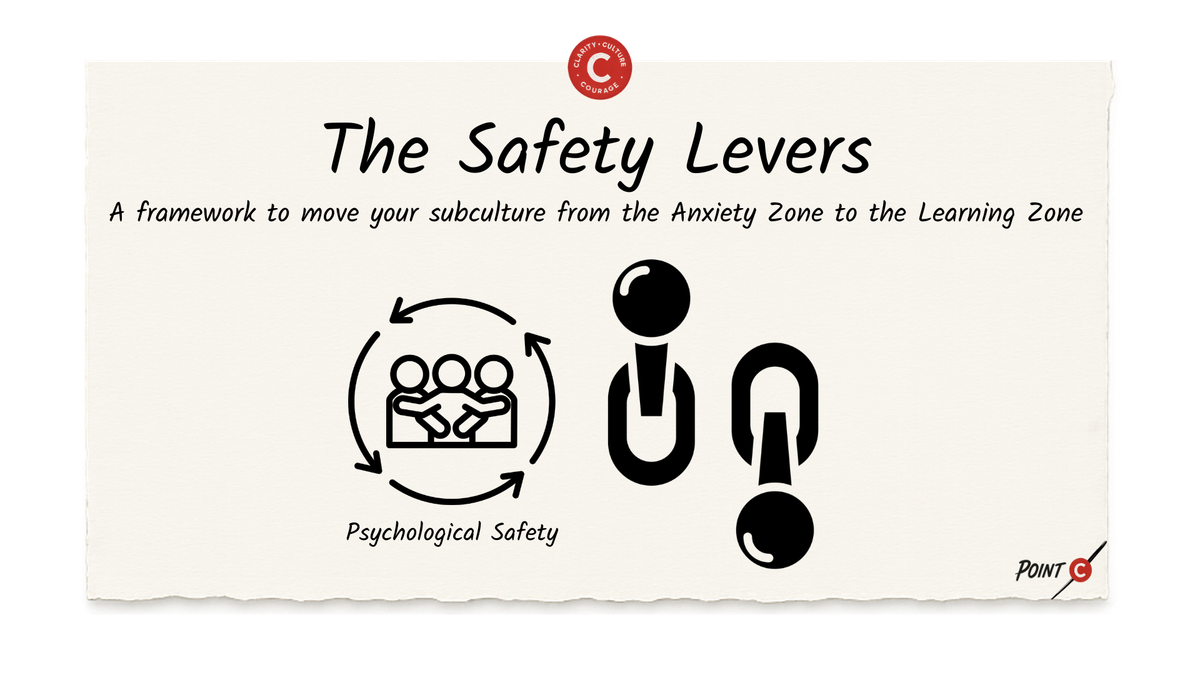
The Safety Levers
A framework to move your subculture from the Anxiety Zone to the Learning Zone
Rethinking Norm Psychology
Norms permeate human life. Most of people’s activities can be characterized by rules about what is appropriate, allowed, required, or forbidden—rules that are crucial in making people hyper-cooperative animals. In this article, I examine the current cognitive-evolutionary account of “norm psychology” and propose an alternative that is better supported by evidence and better placed to promote interdisciplinary dialogue. The incumbent theory focuses on rules and claims that humans genetically inherit cognitive and motivational mechanisms specialized for processing these rules. The cultural-evolutionary alternative defines normativity in relation to behavior—compliance, enforcement, and commentary—and suggests that it depends on implicit and explicit processes. The implicit processes are genetically inherited and domain-general; rather than being specialized for normativity, they do many jobs in many species. The explicit processes are culturally inherited and domain-specific; they are constructed from mentalizing and reasoning by social interaction in childhood. The cultural-evolutionary, or “cognitive gadget,” perspective suggests that people alive today—parents, educators, elders, politicians, lawyers—have more responsibility for sustaining normativity than the nativist view implies. People’s actions not only shape and transmit the rules, but they also create in each new generation mental processes that can grasp the rules and put them into action.

A Beginner's Guide to Culture Science
Also known as "memetics", it's the study of the narratives that shape human behavior, and how they propagate & evolve

Does modernisation erase cultural difference – or amplify it? | Psyche Ideas
We understandably fear the flattening effect of modernity. But global data from China to Peru tells a hopeful story

Redefining Culture Fit
Moving beyond superficial 'culture fit' towards shared values for building truly inclusive and effective teams.

As diversity increases, people paradoxically perceive social groups as more similar
With globalization and immigration, societal contexts differ in sheer variety of resident social groups. Social diversity challenges individuals to think in new ways about new kinds of people and where their groups all stand, relative to each other. However, psychological science does not yet specify how human minds represent social diversity, in homogeneous or heterogenous contexts. Mental maps of the array of society’s groups should differ when individuals inhabit more and less diverse ecologies. Nonetheless, predictions disagree on how they should differ. Confirmation bias suggests more diversity means more stereotype dispersion: With increased exposure, perceivers’ mental maps might differentiate more among groups, so their stereotypes would spread out (disperse). In contrast, individuation suggests more diversity means less stereotype dispersion, as perceivers experience within-group variety and between-group overlap. Worldwide, nationwide, individual, and longitudinal datasets ( n = 12,011) revealed a diversity paradox: More diversity consistently meant less stereotype dispersion. Both contextual and perceived ethnic diversity correlate with decreased stereotype dispersion. Countries and US states with higher levels of ethnic diversity (e.g., South Africa and Hawaii, versus South Korea and Vermont), online individuals who perceive more ethnic diversity, and students who moved to more ethnically diverse colleges mentally represent ethnic groups as more similar to each other, on warmth and competence stereotypes. Homogeneity shows more-differentiated stereotypes; ironically, those with the least exposure have the most-distinct stereotypes. Diversity means less-differentiated stereotypes, as in the melting pot metaphor. Diversity and reduced dispersion also correlate positively with subjective wellbeing.

Learning how to behave: cognitive learning processes account for asymmetries in adaptation to social norms
Changes to social settings caused by migration, cultural change or pandemics force us to adapt to new social norms. Social norms provide groups of individuals with behavioural prescriptions and therefore can be inferred by observing their behaviour. This work aims to examine how cognitive learning processes affect adaptation and learning of new social norms. Using a multiplayer game, I found that participants initially complied with various social norms exhibited by the behaviour of bot-players. After gaining experience with one norm, adaptation to a new norm was observed in all cases but one, where an active-harm norm was resistant to adaptation. Using computational learning models, I found that active behaviours were learned faster than omissions, and harmful behaviours were more readily attributed to all group members than beneficial behaviours. These results provide a cognitive foundation for learning and adaptation to descriptive norms and can inform future investigations of group-level learning and cross-cultural adaptation.

Cultural Homogenization

Links about how our societal structures are contributing to the homogenization of culture.
Social Norms and Cultural Evolution

A collection of ideas to do with social norms, cultural evolution, and how we learn from others
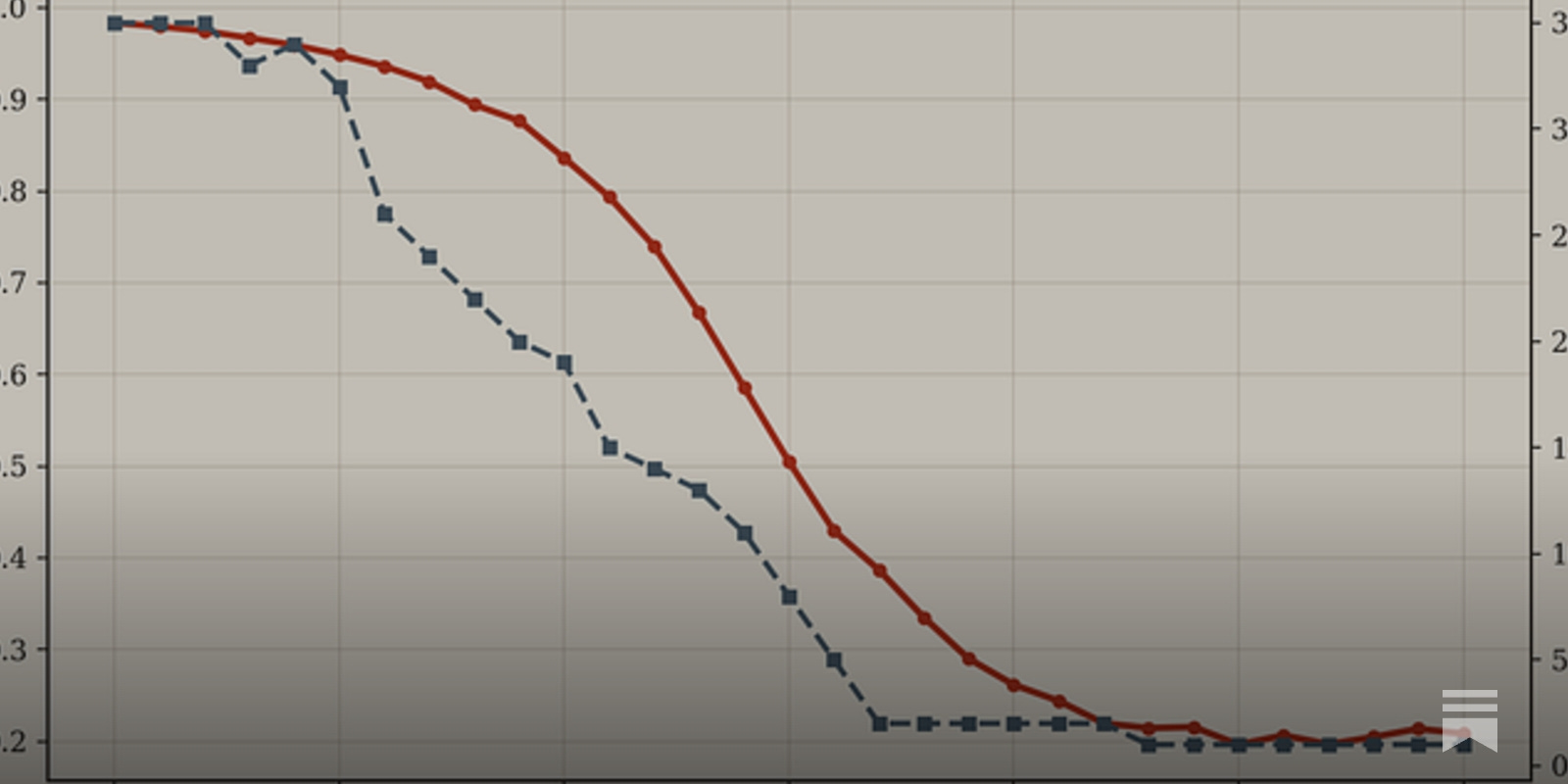
Temperature Zero for Culture: Why Everything Is Starting to Look the Same

AI as Social Technology: Astor Lecture by Professor Henry Farrell

Bayesian Inference of Social Norms as Shared Constraints on Behavior

What people learn from punishment: A cognitive model

Spurious normativity enhances learning of compliance and enforcement behavior in artificial agents

Deference, Dissent, and Dispute Resolution: An Experimental Intervention Using Mass Media to Change Norms and Behavior in Rwanda
How Does Media Influence Social Norms? Experimental Evidence on the Role of Common Knowledge