

Institute of AI for Industries, Chinese Academy of Sciences, Nanjing 211135, China
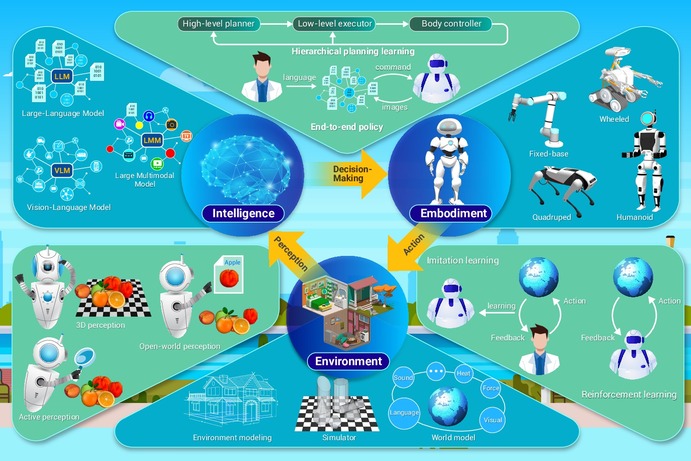
Embodied AI: China’s Big Bet on Smart Robots
Beijing believes that true AI dominance will come from systems capable of autonomous operation in the physical world—AI-powered robotics, or embodied AI.
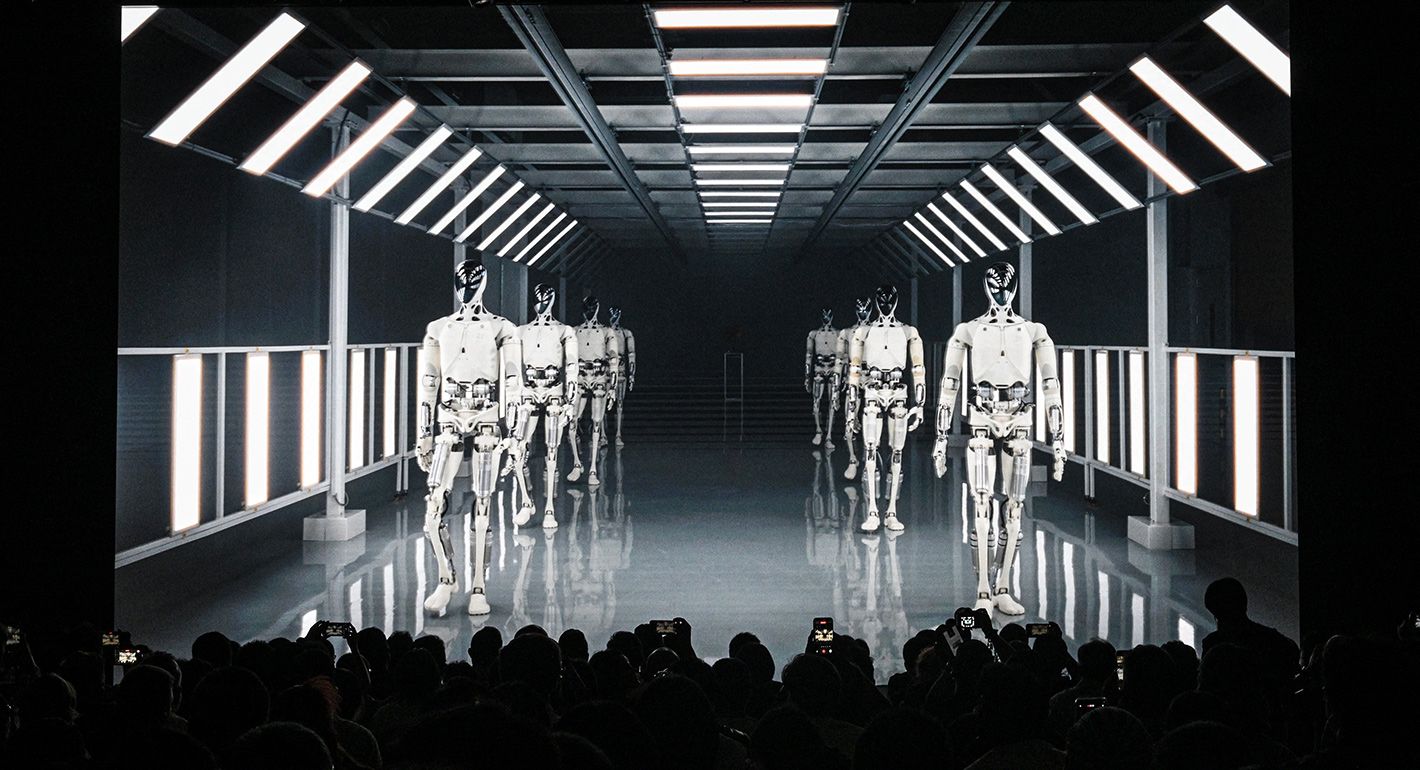
Embodied AI: China’s Big Bet on Smart Robots
Beijing believes that true AI dominance will come from systems capable of autonomous operation in the physical world—AI-powered robotics, or embodied AI.
Why A Neurotech VC Bet On Anthropic: Intelligence, Interpretability, and the NeuroAI Stack — Kaleida Capital
Why would a neurotech VC bet on Anthropic? This article examines how frontier AI, neuroscience, model behavior, and intelligent systems intersect within Kaleida Capital’s NeuroAI thesis and the infrastructure shaping next-generation intelligence.

AI is not superhuman
What metaphor should drive the field of AI research?


Wuhan’s AI Development | Center for Security and Emerging Technology
Wuhan, China’s inland metropolis, is paving the way for a nationwide rollout of “embodied” artificial intelligence meant to fast-track scientific discovery, optimize production, streamline commerce, and facilitate state supervision of social activities. Grounded in real-world data, the AI grows smarter, offering a pathway to artificial “general” intelligence that will reinforce state ideology and boost economic goals. This report documents the genesis of Wuhan’s AGI initiative and its multifaceted deployment.
Kimi K3: The open-weights escalation
The global implications on the AI ecosystem.
Augmented human intelligence goes beyond the AGI mirage
This paper argues that contemporary Artificial General Intelligence (AGI) approaches face significant challenges that make Augmented Human Intelligence (AHI) a more promising and practically beneficial alternative. Drawing on phenomenological insights from Peter-Paul Verbeek’s technological mediation theory and comprehensive empirical evidence from decades of AI development, we argue that current AGI projects encounter recurring difficulties that may stem from attempting to replace rather than enhance human intelligence. Through analysis of mediation theory’s core concepts, systematic examination of recent AI performance data, and comprehensive review of human–AI collaboration studies, we show why augmentation approaches consistently outperform replacement attempts across domains requiring creativity, judgment, and contextual understanding. Prioritizing sophisticated AHI development over AGI pursuit represents not a compromise but a fundamental reorientation toward more effective and ethically sound approaches to artificial intelligence that better serve human flourishing.
AI and democracy: the right to resist optimization
Taiwan's cyber-ambassador Audrey Tang on why the real danger of AI isn't that machines imitate humans, but that humans adapt to machines.

AI Economy Institute - Microsoft Research
The AI Economy Institute (AIEI) is Microsoft’s flagship think tank dedicated to shaping an inclusive, trustworthy AI economy. We building a network of scholars and convening that network with our subject matter experts to explore how artificial intelligence is transforming work, education, and productivity – and making this knowledge base available to policy-makers, educators, and […]

AI Offers Lifeline to Developing Economies in an Era of Weak Growth
Press release regarding the launch of the World Bank World Development Report 2026: Artifical Intelligence.
Home
Taiwan’s cyber-ambassador Audrey Tang on why the real danger of AI isn’t that machines imitate humans, but that humans adapt to machines.
Our minds did not evolve for AI
AI is mental junk food: tasty and tempting, but ultimately unhealthy — a cognitive hot dog

Denizen
What is embodied leadership? Learn how the Post Growth Institute combines an asset-based approach with sociocracy and lean processes to establish a radically progressive, post growth organization.
AI

AI research, critical perspectives, agent design, digital humanities. How AI systems work, their embedded values, and the thinking around building agentic systems.

Agency and Agents
ГАЛЬВАНИЗАЦИЯ АВТОРА, ИЛИ ЭКСПЕРИМЕНТ С НЕЙРОННОЙ ПОЭЗИЕЙ. Борис Орехов. «Новый мир» №6, 2018

Personal Online RL | 🌱 | Offprint
Approaching an unknown communication system by latent space exploration and causal inference | Royal Society Open Science | The Royal Society
Surya Narreddi

Permutation: Issue One