


True music discovery has suffered.
Soulless: List of AI Artists Hiding on Spotify
Soulless: AI music is stealing from real artists. AI music analyzer (open source).
Soulless: List of AI Artists Hiding on Spotify
Soulless: AI music is stealing from real artists. AI music analyzer (open source).
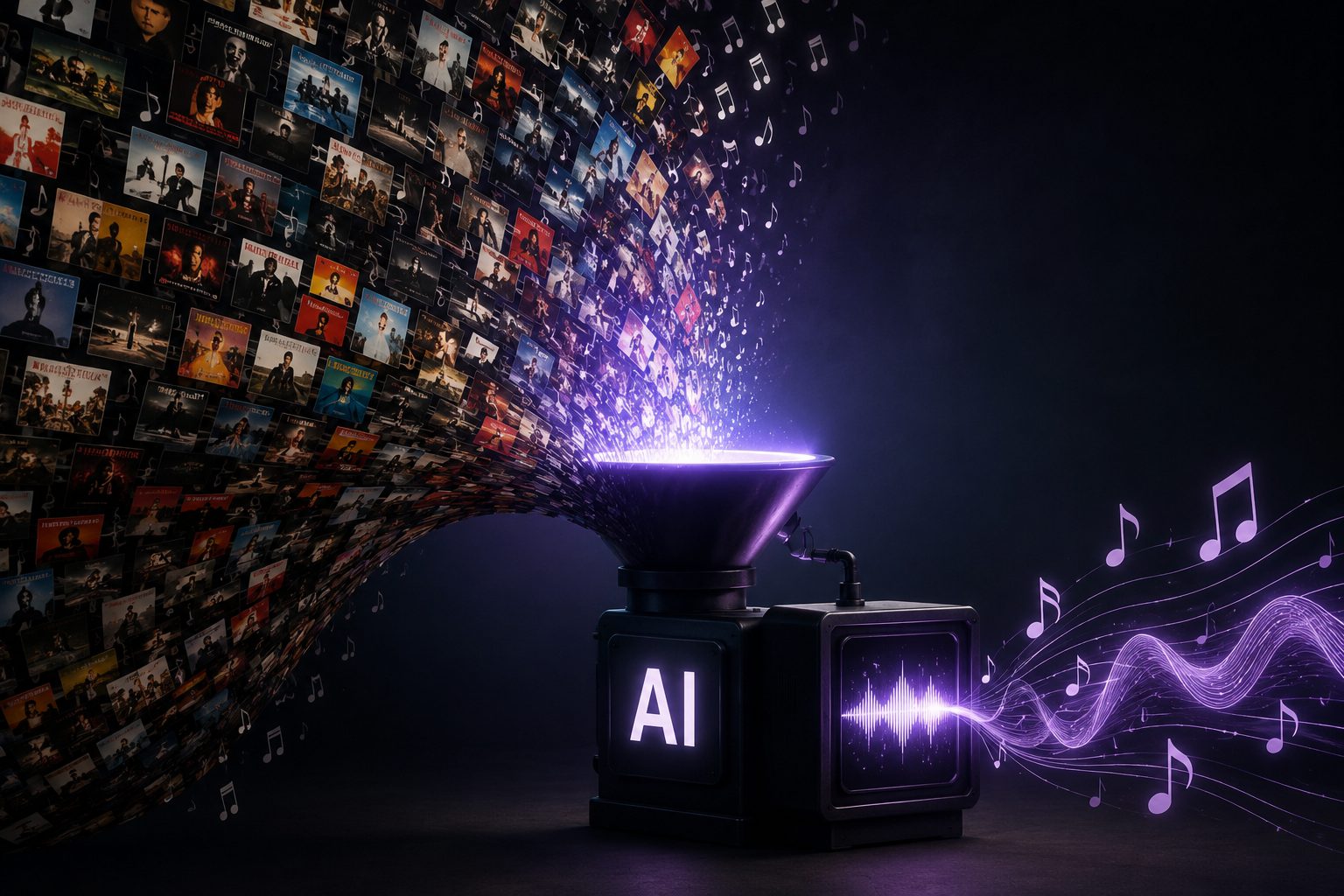
Millions of Copyrighted Songs Were Fed to AI Music Generators – Now There's Proof
Millions of copyrighted songs trained AI music generators, and new searchable databases from The Atlantic now confirm which tracks were used.
Universal Music Group: Decades of Masters Lost
Last year, I wrote an article detailing how record companies have a checkered past when it comes to properly archiving their master recordings. Among some of the revelations noted (thanks to a bril…

Spotify's AI Problem Is So Bad Random People Are Stepping In to Track the Slop
Spotify doesn’t label AI music on its platform, so websites like SoullessMusic.com and SlopTracker.org do it instead.

How AI Will Fail Like The Music Industry
The Millions of Songs Mashed Into AI-Generated Music
Explore the astonishing amount of music available to AI developers.

Jeff Mills Drifts Into the Cosmos
AI is the latest of a long succession of tools trying to make things easier for us, and it’s always been there, and it’s always affected the music. Maybe we didn’t fear as much, but musicians just have to be more creative and to be more elusive.

The Day the Music Burned (Published 2019)
It was the biggest disaster in the history of the music business — and almost nobody knew. This is the story of the 2008 Universal fire.

AI music tools challenge Bay Area musicians
AI music tools challenge Bay Area musicians: As affordable AI platforms spread, artists debate creativity, copyright and survival.

Why We’re Taking a Human‑First Stand on AI‑Generated Music — Qobuz Community
Artificial intelligence is transforming the music industry at an unprecedented pace. Faced with the explosion of AI-generated content and the legitimate questions it raises, Qobuz has chosen transparency. This charter establishes our framework: how we use AI, where we draw our lines, and what commi

The Algorithmic Flattening of Sound: Computational Evidence and Justice Implications of AI Music Homogenization
This paper audits whether large-scale generative music systems exhibit measurable musical homogenization relative to human-produced music, and develops a justice-centered account of why this matters. We audit two commercially deployed systems (Suno and Lyria 3) across four genres (Afrobeats, K-pop, Dance Pop, and Heavy Metal). For each system and genre, we generate 100 tracks and compare them against human corpora of equal size, using 72 music information retrieval (MIR) features and multiple diagnostics of dispersion, redundancy, and separability. We define homogenization as reduced acoustic variation in standard computational audio features including rhythm and timing, timbre/spectral shape, and dynamics, both within genres and across genre boundaries. We also generate tracks using only a genre name as the prompt, with no additional instructions, to reveal each system's default musical tendencies. The results show two structurally distinct homogenizing tendencies. Lyria reduces within-genre acoustic diversity, while Suno collapses the acoustic distinctions between genres without compressing within-genre spread. Neither system follows user prompts faithfully, indicating that the observed patterns reflect learned priors rather than prompt constraints. The two systems do not converge on a common acoustic profile and are more acoustically distant from each other than two random human subsamples would typically be. Nevertheless, a standard classifier distinguishes AI from human tracks near-perfectly on MIR features alone. We argue that these patterns matter not as an aesthetic curiosity but as a justice-relevant condition, shaping which musical styles become legible, valued, and economically rewarded as generated outputs increasingly circulate at scale.

Experimental Study of Inequality and Unpredictability in an Artificial Cultural Market
Hit songs, books, and movies are many times more successful than average, suggesting that “the best” alternatives are qualitatively different from “the rest”; yet experts routinely fail to predict which products will succeed. We investigated this paradox experimentally, by creating an artificial “music market” in which 14,341 participants downloaded previously unknown songs either with or without knowledge of previous participants' choices. Increasing the strength of social influence increased both inequality and unpredictability of success. Success was also only partly determined by quality: The best songs rarely did poorly, and the worst rarely did well, but any other result was possible.

Experimental Study of Inequality and Unpredictability in an Artificial Cultural Market
Hit songs, books, and movies are many times more successful than average, suggesting that “the best” alternatives are qualitatively different from “the rest”; yet experts routinely fail to predict which products will succeed. We investigated this paradox experimentally, by creating an artificial “music market” in which 14,341 participants downloaded previously unknown songs either with or without knowledge of previous participants' choices. Increasing the strength of social influence increased both inequality and unpredictability of success. Success was also only partly determined by quality: The best songs rarely did poorly, and the worst rarely did well, but any other result was possible.
AI & Music - developments & perspectives

Perspectives, developments, & news re: AI & music

YouTube Music adds new labels for AI music
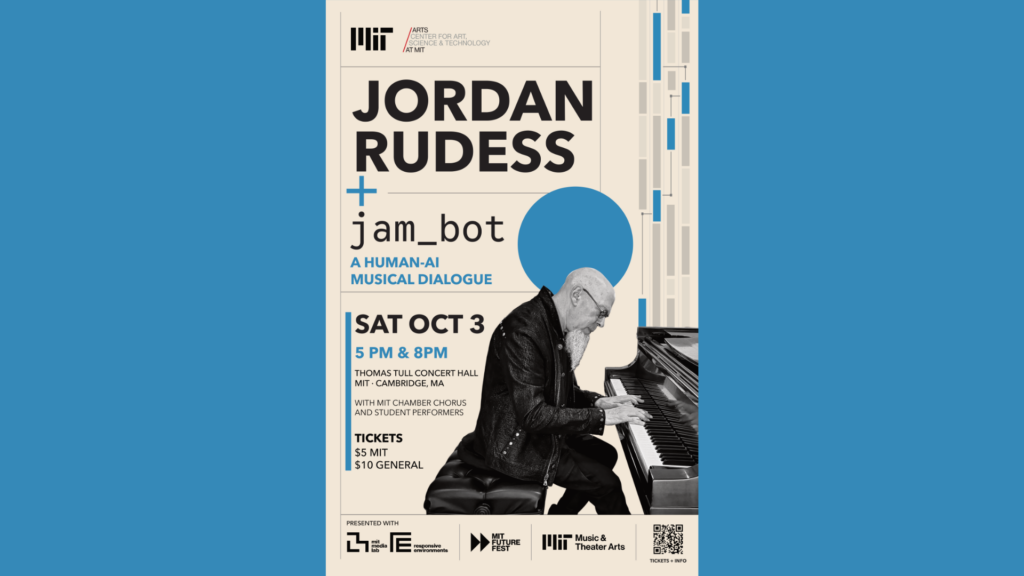
Jordan Rudess + jam_bot at MIT October 3

Jordan Rudess and MIT’s jam_bot: A New Era of Human-AI Musical Collaboration
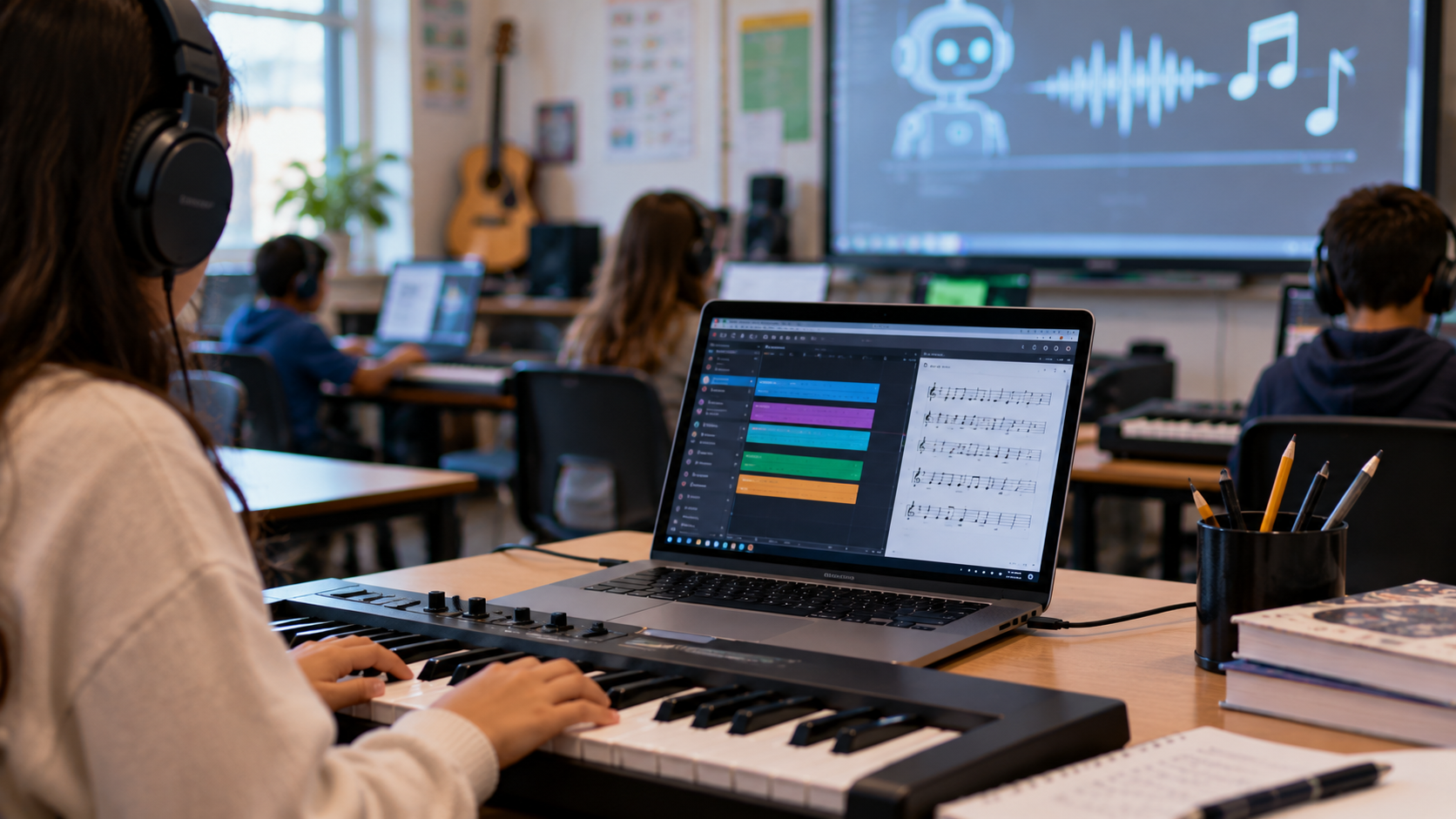
Artificial Intelligence in Music Classrooms: PK-12 Educators’ Practices, Concerns, and Confidence

“It frustrates me to hear people bashing something that's so amazing”: Todd Edwards is optimistic about AI in music production

An A.I. Songwriting Experiment: Humans Against the Machine
