

Anne Ishii on Susie Ibarra's impactful practice
Susie Ibarra: Hybrid Culture - New Music USA
Susie Ibarra's collaborative approach has informed her work with jazz, classical, indie rock, and traditional Philippine musicians.

Divining an Afrofuturist Music Education – ACT
Published in Action, Criticism, and Theory for Music Education 22 (4): 131–58. [pdf] https://doi.org/10.22176/act22.4.131
REIMAGINING INCLUSIVE MUSIC EDUCATION: REFLECTIONS FROM A BLACK MUSIC EDUCATOR - ProQuest
Explore millions of resources from scholarly journals, books, newspapers, videos and more, on the ProQuest Platform.
Articles i-iv, by The Wyndham Research Institute
Intersections in Music Education: Implications of Universal Design for Learning, Culturally Responsive Education, and Trauma-Informed Education for P–12 Praxis
To increase equity in music education, teachers can strive to know each student as a whole child, proactively remove barriers to learning, and seek to honor students’ multifaceted and intersectional identities. In this article, we first define intersectionality and examine demographics in music education. Then, we summarize three asset-based pedagogical approaches (Universal Design for Learning, Culturally Responsive Education, and Trauma-Informed Education) and synthesize their similarities. Finally, we present implications in the form of generative ideas for music educator praxis, or values-guided action. We hope our suggestions help music educators create music experiences where students (and families) feel seen, safe, welcomed, and valued as musicians and people. We also hope our suggestions can contribute to music teacher collegiality and collaboration by providing educators with tools to develop positive relationships with colleagues who are different from themselves.

Black Music, White Halls: Toward a Black American Music Curriculum – ACT
Published in Action, Criticism, and Theory for Music Education 25 (1): 52–76 [pdf]. https://doi.org/10.22176/act25.1.52
[Interview] Snow J of Cheerful Music dives into the cross cultural intersection of AI and music – EARMILK
In conversation with Earmilk, Snow. J explores how AI has restructured the foundation of music culture, striking a balance between AI and human-made music as well as Cheerful Music's distinct approach to engaging AI technology in music making and marketing.

When We're Born We Forget Everything: A Memoir
From the creator of the internationally acclaimed singer-songwriter project Girls in Trouble, a memoir following her journey from a secular Jewish childhood to becoming a modern queer woman owning ancient teachings and finding her own meanings in them, refracted through feminist interpretations of the lives of Biblical women.“Alicia Jo Rabins writes as if she’s in conversation with the divine itself. . . .This isn’t merely a book to be read—it’s a scripture for the searching heart, a reminder that the border between the human and the holy is, and always has been, porous.” —Reza Aslan, author of Zealot: The Life and Times of Jesus of NazarethAs a self-described ‘90s suburban high school weirdo, Alicia Jo Rabins spent her time practicing violin and smoking cigarettes behind the mall while secretly dreaming of setting out on a spiritual quest no one around her seemed to understand. She often found herself drawn to the more ritualistic and rigorous Judaism that her parents had abandoned to assimilate and “become American.” In college, a chance meeting led her on a pilgrimage to Jerusalem to study rabbinical texts (and play bluegrass fiddle on the street for cash). But that two years of immersing herself in traditional observance was only the start of a journey full of twists and turns.When We’re Born We Forget Everything follows Alicia’s relentless, often embarrassing, sometimes enlightening search for the sacred in everyday life as she tours America playing with a klezmer-punk band, falls in and out of love, scrapes through the initiations of motherhood, and witnesses the beauty—and danger—of mysticism. Rabins braids this personal narrative with the hidden stories of biblical women, uncovering a path of queer identity, feminist awakening, and spiritual self-invention. This lyrical, searching memoir is a meditation on longing, lineage, and what it takes to find meaning in a fractured world.
Rethinking the Large Ensemble Paradigm: Moving Toward Epistemic Justice
In this paper, I center the epistemic dimensions of musics and musicking to consider the ways in which the band/orchestra/choir paradigm of music education prevalent in the U.S. and Canada may be implicated in epistemic injustice. Drawing in particular on the work of Fricker (Epistemic injustice: power and the ethics of knowing, Oxford University Press, New York, 2007), Dotson (Hypatia 26(2):236–257, 2011), and The Routledge Handbook of Epistemic Injustice (Kidd et al., The Routledge handbook of epistemic injustice, Routledge, New York, 2017), I explore facets of epistemic injustice and apply these ideas to music education school contexts in Canada and the U.S. I further explore aspects of school music that may amount to “testimonial smothering” (Dotson 2011) and “cognitive imperialism” (Battiste in Can J Native Educ 22:16–27, 1998). Ultimately, building on existing literature on epistemic justice (Kidd et al. 2017; Fricker 2007), I theorize an epistemically just music education for school music in alignment with culturally responsive, anti-racist, and anti-colonial teaching.
Positive obsession: the life and times of Octavia E. Butler
"A magnificent cultural biography that charts the life of one of our greatest writers, situating her alongside the key historical and social moments that shaped her work"--

Listen | Lily Henley Music
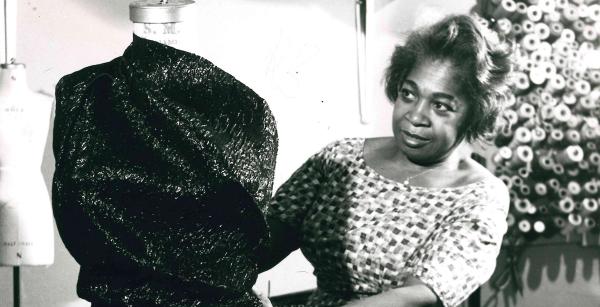
Defying Gravity - The Metropolitan Museum of Art
Learn about the transformative collaboration between the designer Zelda Wynn Valdes and the entertainer Joyce Bryant.
The Concept of Cultural Humility as It Relates to Instructional Practices in the General Music Classroom
A framework of cultural humility includes three main tenets: (a) commitment to lifelong, critical self-reflection; (b) recognition and mitigation of power imbalances; and (c) accountability to individuals and institutions. In this article, I aim at applying the concept of cultural humility to frame my analysis of musical diversity in music education. Through a cultural humility lens, music teachers may acknowledge their own beliefs, values, biases, and prejudices in relation to diverse musics. A commitment to lifelong introspection through self-reflection and critique may help teachers continue to investigate new ways to redress power imbalances inherent in music education, as well as build their relationships with students and communities bidirectionally.
Susie Ibarra: Music & Nature

Resources related to Susie Ibarra’s music & thinking related to nature & sustainability
AI & Music - developments & perspectives
Perspectives, developments, & news re: AI & music
Susie Ibarra: Hybrid Culture - New Music USA
Life Forms with Music: On Susie Ibarra — United States Artists

Water Rhythms | Susie Ibarra
The sound of the trees

YouTube Music adds new labels for AI music

Jordan Rudess + jam_bot at MIT October 3

Jordan Rudess and MIT’s jam_bot: A New Era of Human-AI Musical Collaboration

Artificial Intelligence in Music Classrooms: PK-12 Educators’ Practices, Concerns, and Confidence

“It frustrates me to hear people bashing something that's so amazing”: Todd Edwards is optimistic about AI in music production

An A.I. Songwriting Experiment: Humans Against the Machine