

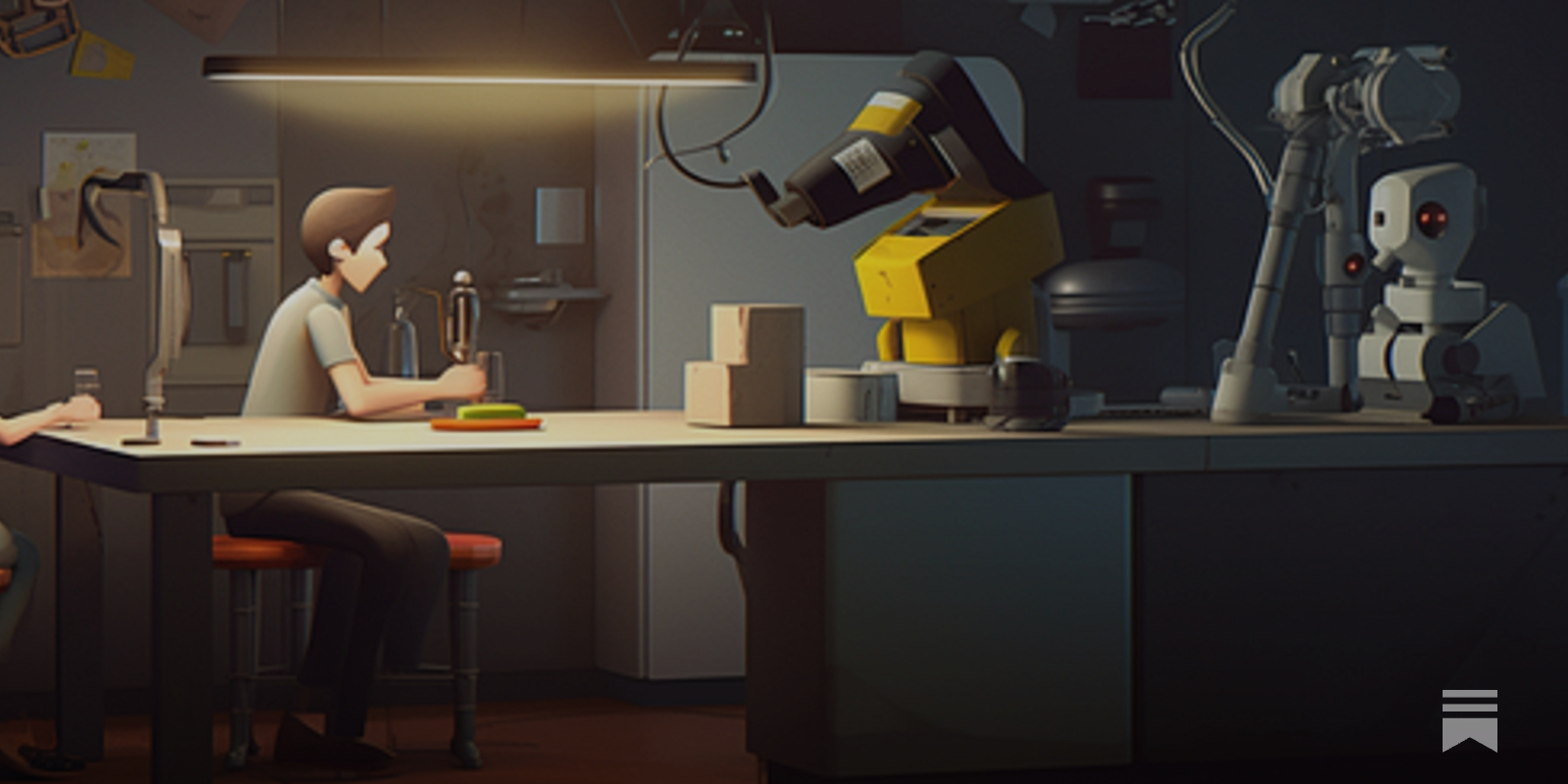
AI co-created tools and social spaces as a new medium
Stop saying that AI is just a tool and it only matters how it is used
I’m tired of this phrase and this simple way of thinking about tools. This blog post is a wandering train of thought on the topic of what tools are and why it matters to be even slightly more mature in how we think about them.
We build AI that works for humans
Imbue builds AI to help people think, create, and build. We share our tools openly because we believe progress in AI should be collaborative and developer-driven

More Than a Tool
What We Learned from a Year of Conversations About AI
Beyond Slop
Visions for humane creative AI tools based on craft, process, and emergence.

AI Is a Waste of Time
The newest AI tools are accelerating basic research and scaring the general public. But many people are simply using them as toys.
Human–AI Collaboration at Scale: Task Criticality, Agency, and Friction Across 250,000 Conversations
Stanford University researchers analyzed nearly 250,000 real-world human-AI conversations from Claude.ai to understand collaborative dynamics, finding that over half of interactions involve...
AI | 2025 Stack Overflow Developer Survey
84% of respondents are using or planning to use AI tools in their development process, an increase over last year (76%). This year we can see 51% of professional developers use AI tools daily.
From Genius Science to Scenius Science - Cosmik Labs
Why personal AI tools might not be all we need to revolutionize science
AI, Ethics, and Society — Home
Human-Centered Artificial Intelligence: Three Fresh Ideas
Human-Centered AI (HCAI) is a promising direction for designing AI systems that support human self-efficacy, promote creativity, clarify responsibility, and facilitate social participation. These human aspirations also encourage consideration of privacy, security, environmental protection, social justice, and human rights. This commentary reverses the current emphasis on algorithms and AI methods, by putting humans at the center of systems design thinking, in effect, a second Copernican Revolution. It offers three ideas: (1) a two-dimensional HCAI framework, which shows how it is possible to have both high levels of human control AND high levels of automation, (2) a shift from emulating humans to empowering people with a plea to shift language, imagery, and metaphors away from portrayals of intelligent autonomous teammates towards descriptions of powerful tool-like appliances and tele-operated devices, and (3) a three-level governance structure that describes how software engineering teams can develop more reliable systems, how managers can emphasize a safety culture across an organization, and how industry-wide certification can promote trustworthy HCAI systems. These ideas will be challenged by some, refined by others, extended to accommodate new technologies, and validated with quantitative and qualitative research. They offer a reframe -- a chance to restart design discussions for products and services -- which could bring greater benefits to individuals, families, communities, businesses, and society.
AI Slop is Killing Online Communities
Like a young child coming home from kindergarten with their latest crayon scrawls, the internet is currently awash with people sharing their AI-generated work. And just like the young child’s drawings, much of that work should be proudly put up on the walls within the artist’s house—and no further.
‘There’s a Value in What We Produce Because We Feel – and an AI Chatbot Can’t Feel’
Byline Times' Editor in Chief meets Kate Devlin, Professor of AI and Society at King’s College London, to explore how relationships with AI companions aren’t particularly new, why she believes the under-16s social media ban is flawed, and why human creativity can't be matched
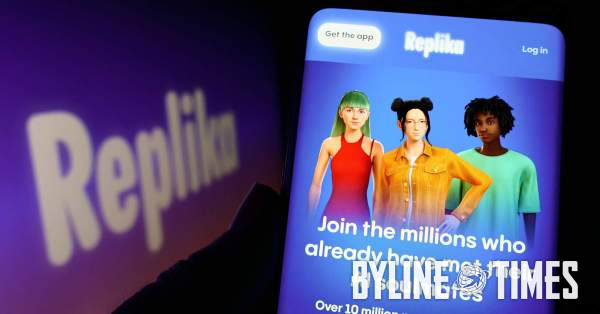
What Does 'Human-Centred AI' Mean?
While it seems sensible that human-centred artificial intelligence (AI) means centring "human behaviour and experience," it cannot be any other way. AI, I argue, is usefully seen as a relationship...

AI

AI research, critical perspectives, agent design, digital humanities. How AI systems work, their embedded values, and the thinking around building agentic systems.

Agency and Agents
ГАЛЬВАНИЗАЦИЯ АВТОРА, ИЛИ ЭКСПЕРИМЕНТ С НЕЙРОННОЙ ПОЭЗИЕЙ. Борис Орехов. «Новый мир» №6, 2018

Personal Online RL | 🌱 | Offprint
Approaching an unknown communication system by latent space exploration and causal inference | Royal Society Open Science | The Royal Society
Surya Narreddi

Permutation: Issue One