Software may be the defining cultural artifact of our time. So why isn’t there a culture of critical analysis around it?
Convivial design heuristics for software systems
The theme of this workshop is the proliferation of ideas about calling into question the cultural roots of our current programming languages, and the search for alternative paradigms with other cultural bases.
Dependency Cultures - Richard Feldman | SSW 2026
The Federation Fallacy
Throughout the free software community, an unbridled aura of justified mistrust fills the air: mistrust of large corporations, mistrust of governments, and of course, mistrust of proprietary software. Each mistrust is connected by a critical thread: centralisation.
Ten FOSS Development Fallacies For User Facing Software
This is a list, inspired by the Five Geek Social Fallacies, of common patterns or behaviours that developers of free/open source software (FOSS) fall into when they try to develop software for users who are not technical, or for whom non-technical users would be the most obvious userbase. Hopefully writing these down (which frankly is cathartic more than anything) is helpful to some in recognising these thought patterns and avoiding them when developing software - I’ve got some of my own thoughts on this at the bottom.
Local-first software: pragmatism vs idealism
The Evolutionary Ecology of Software: Constraints, Innovation, and the AI Disruption
This chapter investigates the evolutionary ecology of software, focusing on the symbiotic relationship between software and innovation. An interplay between constraints, tinkering, and frequency-dependent selection drives the complex evolutionary trajectories of these socio-technological systems. Our approach integrates agent-based modeling and case studies, drawing on complex network analysis and evolutionary theory to explore how software evolves under the competing forces of novelty generation and imitation. By examining the evolution of programming languages and their impact on developer practices, we illustrate how technological artifacts co-evolve with and shape societal norms, cultural dynamics, and human interactions. This ecological perspective also informs our analysis of the emerging role of AI-driven development tools in software evolution. While large language models (LLMs) provide unprecedented access to information, their widespread adoption introduces new evolutionary pressures that may contribute to cultural stagnation, much like the decline of diversity in past software ecosystems. Understanding the evolutionary pressures introduced by AI-mediated software production is critical for anticipating broader patterns of cultural change, technological adaptation, and the future of software innovation.

AI and the Destruction of the Creative Commons
The balance of software copyright protection and openness has always been fraught with minutiae and detail that bores all but the most nerdy of pedants. Yet, through much effort and 40 years of debate we had reached an equilibrium. Now AI has thrown that out the window.
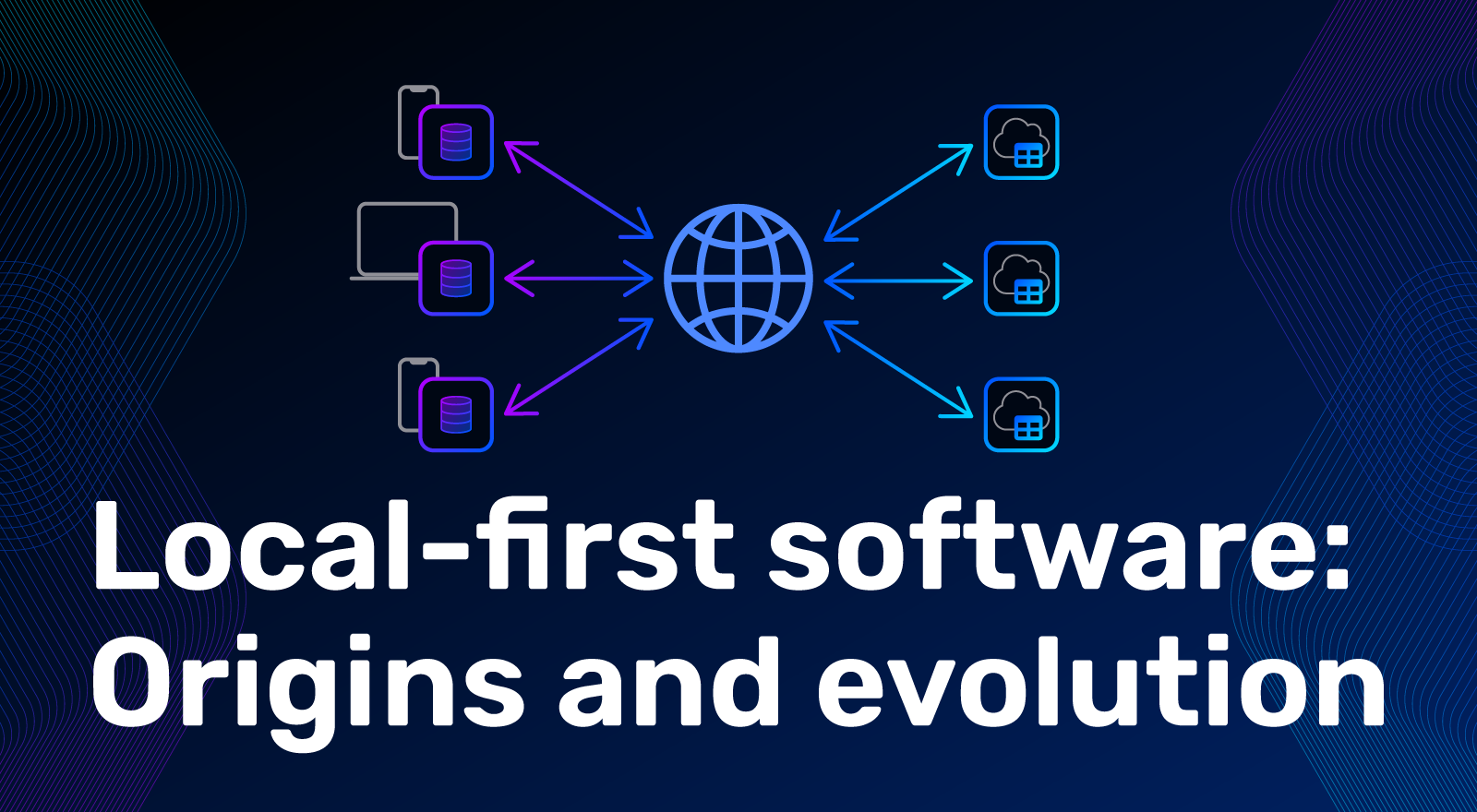
Local-First Software: Origins And Evolution
Developer interest in local-first software is continuing to grow rapidly in 2024. At the same time, it’s also apparent that developers currently have different views on what they consider to be ‘local-first software’, ranging from narrower to broader definitions. This prompted us to take a closer look at the origins and evolution of local-first.
Deconstructing the algorithmic sublime
This special theme contextualizes, examines, and ultimately works to dispel the feelings of “sublime”—of awe and terror that overrides rational thought—that much of the contemporary public discourse on algorithms encourages. Employing critical, reflexive, and ethnographic techniques, these authors show that while algorithms can take on a multiplicity of different cultural meanings, they ultimately remain closely connected to the people who define and deploy them, and the institutions and power relations in which they are embedded. Building on a conversation we began at the Algorithms in Culture conference at U.C. Berkeley in December 2016, we collectively study algorithms as culture (Seaver, this special theme), fetish (Thomas et al.), imaginary (Christin), bureaucratic logic (Caplan and boyd), method of governance (Coletta and Kitchin; Lee; Geiger), mode of inquiry (Baumer), and mode of power (Kubler). [Box: see text]

Why We Can't Have Nice Software - Andrew Kelley
The problem with software is that it's too powerful. It creates so much wealth so fast that it's virtually impossible to not distribute it.
The Next Two Years of Software Engineering
Exploring five critical questions shaping software engineering through 2026, with contrasting scenarios for each. These lenses help prepare for the evolving ...

AI is removing the middle class of software engineering
AI makes projects with weak engineering culture fail much faster.
Konrad Hinsen's blog
At the recent SciCodes Symposium, I brought up the question of reviewing research software during the panel discussion. One panelist then raised the question of why we should review research software. I found this question surprising at first, but I do agree that it deserves an answer. Here is mine.
Theory and Memory: Two Forces Shaping Software Team Knowledge
How insights from cognitive science and social psychology explain why software knowledge is so hard to preserve

The Case for Software Craftsmanship in the Era of Vibes
From the Zed Blog: Working toward genuine, quality software in an era where code production is not the constraint anymore.