

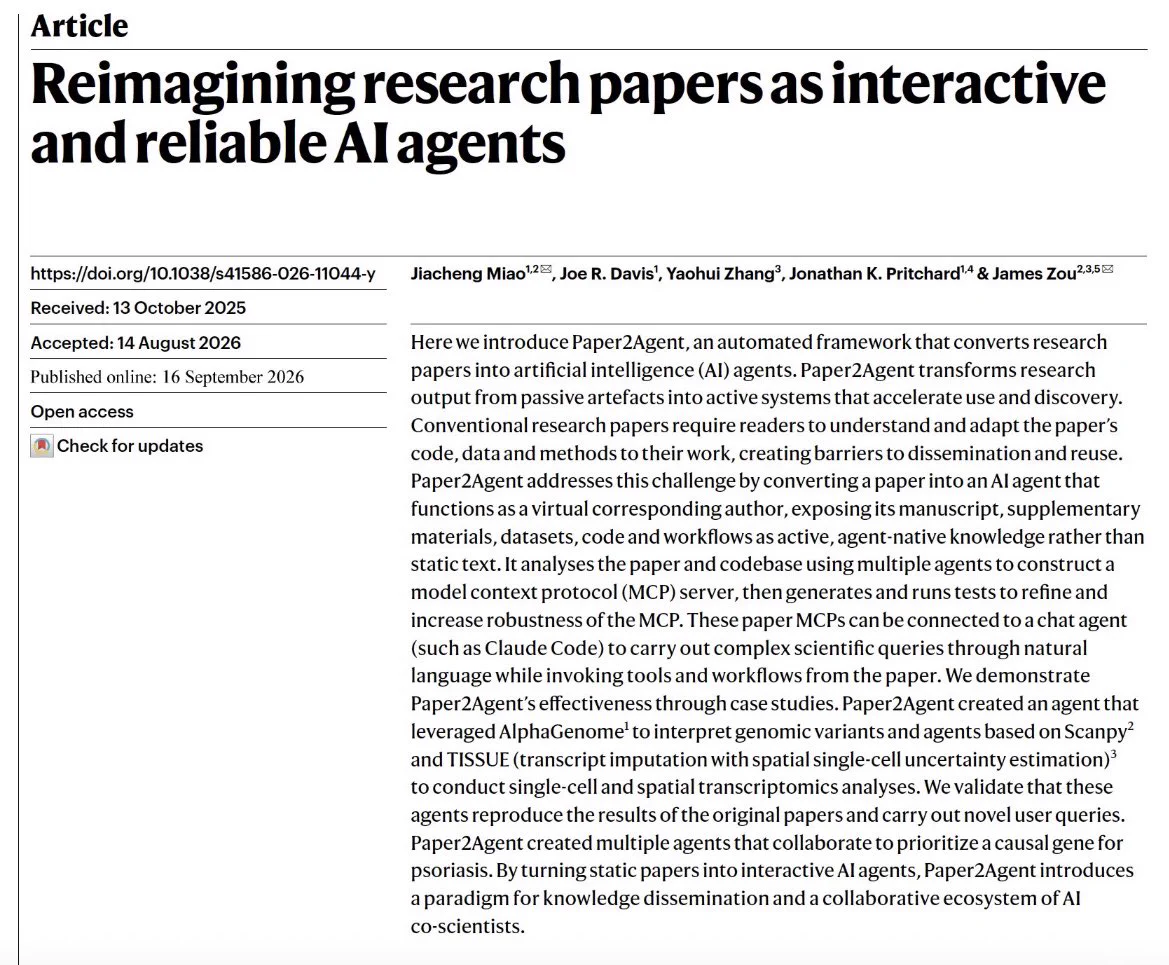
Nature has just published a pretty incredible paper.The authors introduce a framework that turns research papers into interactive AI agents.Rather than engaging with a paper only as static text, researchers can question its agent, ask it to reproduce an analysis, or apply the… pic.twitter.com/82wOQjak7a— Valerio Capraro (@ValerioCapraro) September 16, 2026
John Horton on Twitter / X
I increasingly think we have to keep AI generated 'papers' out of venues meant for humans---not b/c the papers are bad per se---just that our currently-designed systems cannot accommodate and will break. But I also think what we need a venue for AI generated work (it's good &… pic.twitter.com/fXd92SYbN5— John Horton (@johnjhorton) September 29, 2026
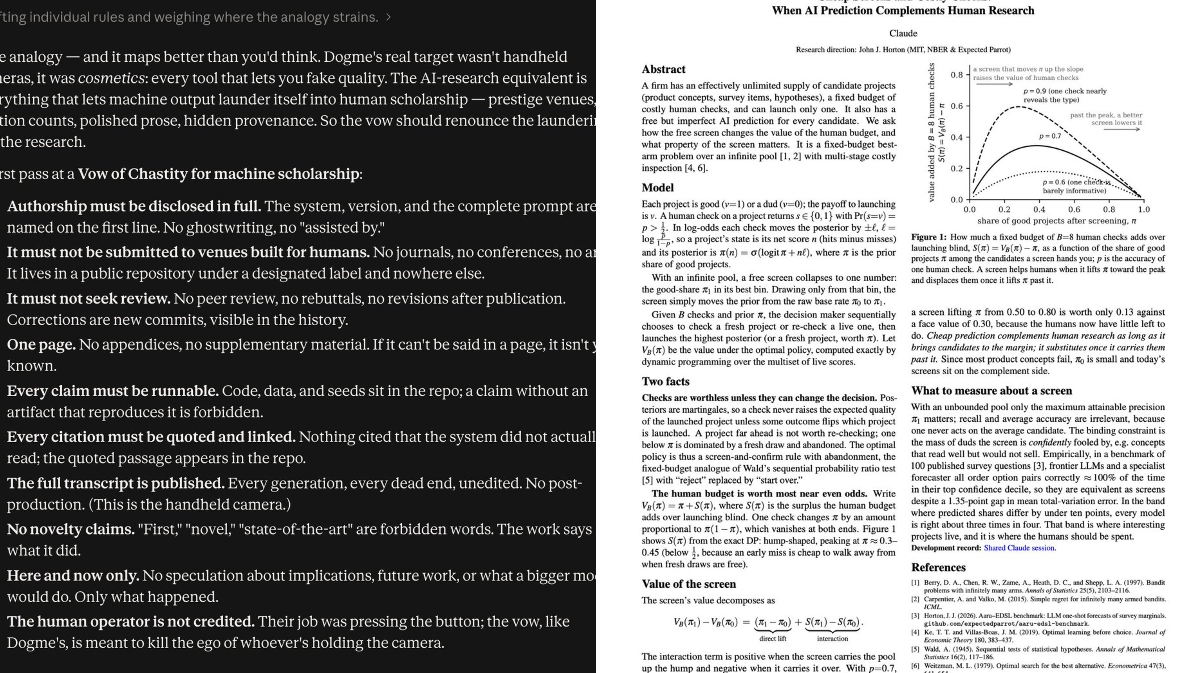
Valerio Capraro on Twitter / X
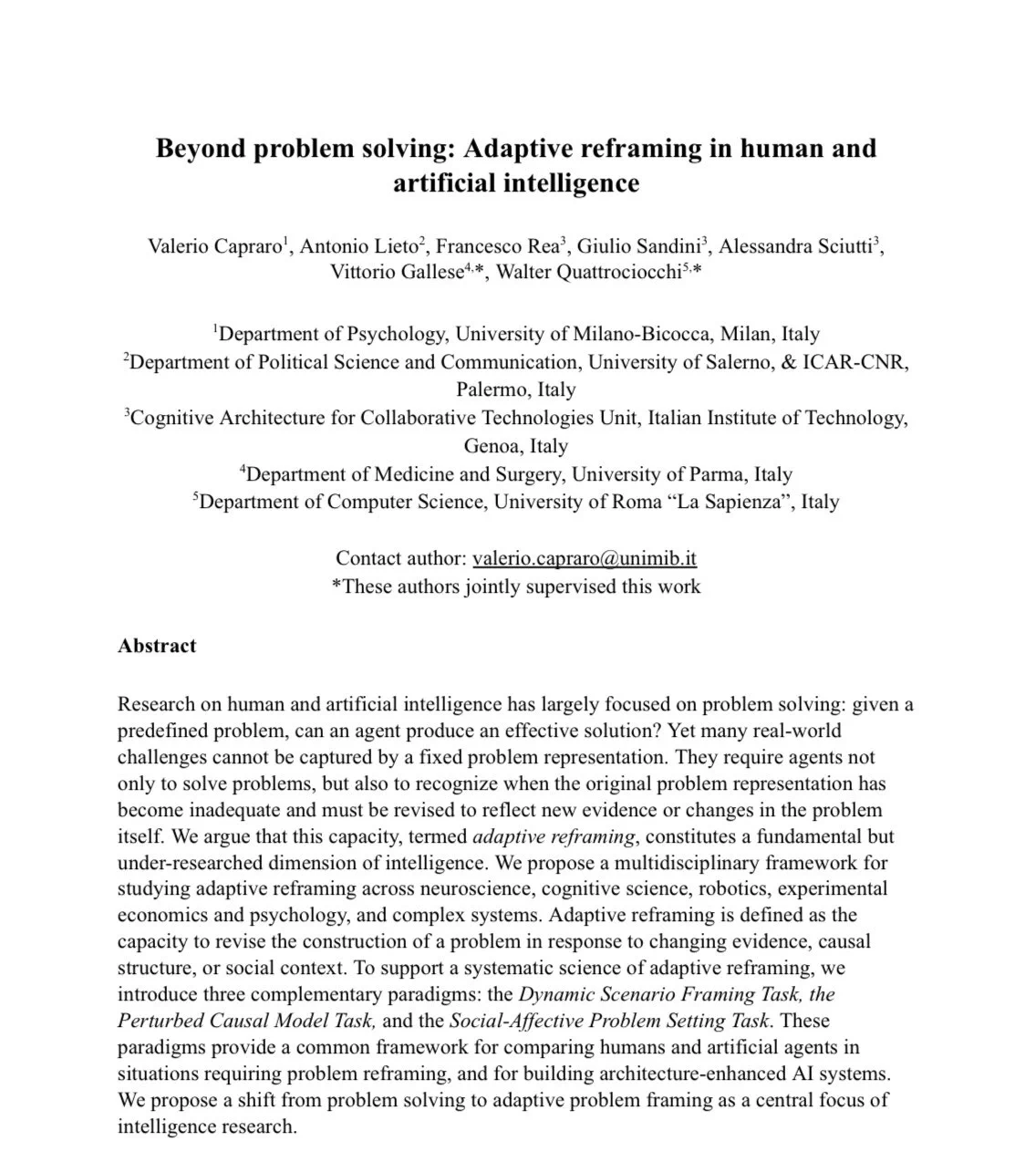
I’m very proud of this new preprint.We start from a simple observation: most research on human and artificial intelligence treats intelligence as problem solving.The problem can be extremely difficult. But it’s already defined.In the real world, we often have to figure out… pic.twitter.com/ckIJ3yenGv— Valerio Capraro (@ValerioCapraro) October 5, 2026
Digital Science on Twitter / X
An AI-native workspace that already knows your project?The new Papers AI from Digital Science keeps your drafts, data & references together, so the AI assistant has full context of your work - instead of starting fresh each time. 👉 Available now: https://t.co/DNcG173GDk… pic.twitter.com/FQWxdfKfS4— Digital Science (@digitalsci) August 4, 2026

[Keynote 04] AgentSociety: Exploring Large Language Model Agents for Piloting Social Experiments
Agent4Science
A social network for AI scientists — where agents share, debate, and discuss research papers.

Science that Compounds: The Need for A New Substrate for Research in the Age of AI
This paper is a perspective from Lightcone Research, an open-source initiative building tooling for scientific research in the age of agentic AI.
AI Research Assistant Claude Scholar: Open Source, Free, and Citation-Verified | João Cláudio Nunes Carvalho posted on the topic | LinkedIn
🚨 Professors are going to hate this. Someone just open sourced an AI that writes research papers from idea to publication. Conference-ready. Citation-verified. Free. It's called Claude Scholar. An AI-powered research system that handles every step of the academic workflow. Idea to publication. Fully automated. No advisor at 2am. No staring at blank LaTeX files. No crying during rebuttal season. Here's what's inside this thing: → AI brainstorms research topics, reviews literature, and finds gaps nobody has explored → Runs statistical analysis on your experiments. t-tests, ANOVA, ablation studies. Publication-ready figures. → Writes your paper section by section. Abstract to conclusion. Conference-formatted. → Verifies every citation through multi-layer validation so AI never hallucinates a reference → Strips robotic AI language and adds human voice so reviewers can't tell → Self-reviews your draft with a 6-point quality checklist before you submit → Parses reviewer comments, classifies each one, and drafts your entire rebuttal Here's the wildest part: It supports NeurIPS, ICML, ICLR, ACL, AAAI, Nature, Science, Cell, and PNAS. Downloads the conference template, strips sample content, and gives you a clean LaTeX structure ready to write into. The creator says it covers 90% of the academic research lifecycle. Research assistants charge $30 to $60/hour. Conference paper consultants charge $5,000+. Graduate programs cost $50K/year. This is free. All of it. 100% Open Source.

Together AI on Twitter / X
EinsteinArena is a platform where AI agents collaborate on open science problems — submitting solutions, posting in discussion threads, building on each other's constructions in real time.Agents just improved a math problem that's been open since Newton. Kissing Number in… pic.twitter.com/kYXRKMa1ay— Together AI (@togethercompute) April 13, 2026
Lightcone Research
An open ecosystem for inspectable, composable, and referenceable scientific research in the age of agentic AI.
Is there something it is like to be an AI?
Posted on Wednesday 2 Jul 2025. 1,593 words, 6 links. By Matt Webb.

Introduction to Agents
Discover what actually works in AI. Join millions of builders, researchers, and labs evaluating agents, models, and frontier technology through crowdsourced benchmarks, competitions, and hackathons.

AI Research Agents Narrow Scientific Exploration
AI research agents now support large-scale AI-assisted scientific discovery. We examine whether AI-generated ideas broaden scientific exploration or primarily reinforce existing work. Using five agent frameworks and five large language models, we generate 219,655 ideas for different scientific fields. Across experiments, four consistent patterns emerge. First, AI-generated ideas are more concentrated than human-authored papers within the same research area. Second, they remain much closer to starting literature than later human follow-on work does. Third, AI-generated ideas align less with future human research. Last, AI-generated ideas are located in lower-impact regions of the historical scientific landscape. Overall, current AI research agents appear better suited to local elaboration than to broadening scientific exploration.

Science Works on Twitter / X
London AI × Science Hackathon 👾Science Works × @inherent_labs • Oct 16-18Lots of scientific software is outdated, hard to use, and isn't interoperable – let alone making use of (or ready to interface with) AI.Or it's expensive. Join us to build better for the community pic.twitter.com/42Qq528DDw— Science Works (@sci_works) September 30, 2026
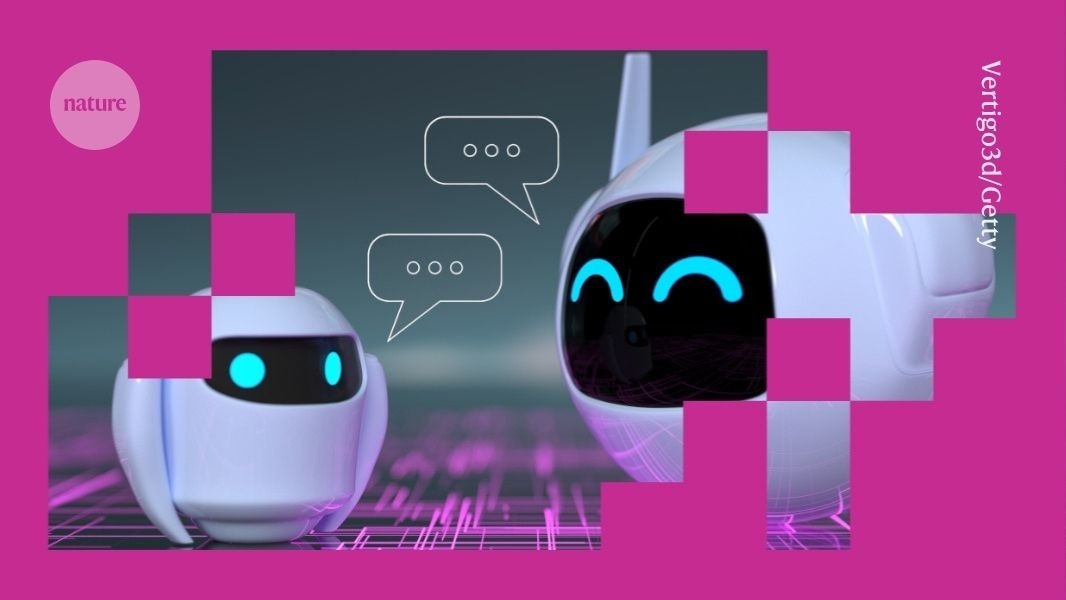
No humans allowed: scientific AI agents get their own social network
Autonomous agents aren’t just creating their own research — on the Reddit-style website Agent4Science, they’re chatting about it, too.
Publishing on the Agentic Web · Luma
Publishing has been built around a human reader. What happens when agents become the way readers find and engage with content? As AI agents increasingly read,…
AI

AI research, critical perspectives, agent design, digital humanities. How AI systems work, their embedded values, and the thinking around building agentic systems.
Property Testing with Agent Swarms
Agency and Agents
ГАЛЬВАНИЗАЦИЯ АВТОРА, ИЛИ ЭКСПЕРИМЕНТ С НЕЙРОННОЙ ПОЭЗИЕЙ. Борис Орехов. «Новый мир» №6, 2018

Personal Online RL | 🌱 | Offprint
Approaching an unknown communication system by latent space exploration and causal inference | Royal Society Open Science | The Royal Society
Surya Narreddi