

This is a ~1.5 hour talk + discussion, titled "A Multiscale Logic of Collective Intelligence" by Donald Hoffman (https://sites.socsci.uci.edu/~ddhoff/) and Chetan Prakash (https://www.researchgate.net/profile/Chetan-Prakash-2), with Robert Chis-Ciure (https://scholar.google.com/citations?user=7V9C7skAAAAJ&hl=en) and Chris Fields (https://chrisfieldsresearch.com/) and me.
All intelligence is collective intelligence
Author: Falandays, J. Benjamin et al.; Genre: Journal Article; Published online: 2023-04-28; Open Access; Keywords: Collective intelligence, self-organization, multicellularity, neural Darwinism, behavioral coordination, cultural evolution; Title: All intelligence is collective intelligence
The network science of collective intelligence
In the last few years, breakthroughs in computational and experimental techniques have produced several key discoveries in the science of networks and human collective intelligence. This review presents the latest scientific findings from two key fields of research: collective problem-solving and the wisdom of the crowd. I demonstrate the core theoretical tensions separating these research traditions and show how recent findings offer a new synthesis for understanding how network dynamics alter collective intelligence, both positively and negatively.

Education for collective intelligence
Collective Intelligence (CI) is important for groups that seek to address shared problems. CI in human groups can be mediated by educational technologies. The current paper presents a framework to ...

The knowledge layer for collective intelligence
A portable data substrate for humans and their tools to think together.

The knowledge layer for collective intelligence
A portable data substrate for humans and their tools to think together.
The knowledge layer for collective intelligence
A portable data substrate for humans and their tools to think together.
The knowledge layer for collective intelligence
A portable data substrate for humans and their tools to think together.
Beyond the Individual: Understanding the Evolution of Collective Intelligence
This chapter outlines the evolution of collective intelligence, starting from its ancient roots and concluding with modern digital platforms. It discusses intelligence theories, project examples, and the impact of technology on collaborative efforts. Key focuses include the role of the internet and online communities in boosting our collective IQ, with a particular emphasis on Douglas Engelbart's contributions and the open-source movement, as exemplified by Linux's development. The chapter examines how digital transformation has facilitated new forms of community and knowledge sharing, significantly influencing fields such as management, decision-making, and organizational learning. Various scholars and their definitions of CI are discussed, including Pierre Lévy's vision of universally distributed intelligence and the concept of swarm intelligence in biological sciences. We then move on to practically implemented CI projects, exploring crowdsourcing as a manifestation of CI in business and social projects and examining possibilities of harnessing the wisdom of crowds for problem-solving and innovation. The chapter concludes with a presentation of the current state of collective intelligence academic research.

Harnessing Crowds: Mapping the Genome of Collective Intelligence
Over the past decade, the rise of the Internet has enabled the emergence of surprising new forms of collective intelligence. Examples include Google, Wikipedia,

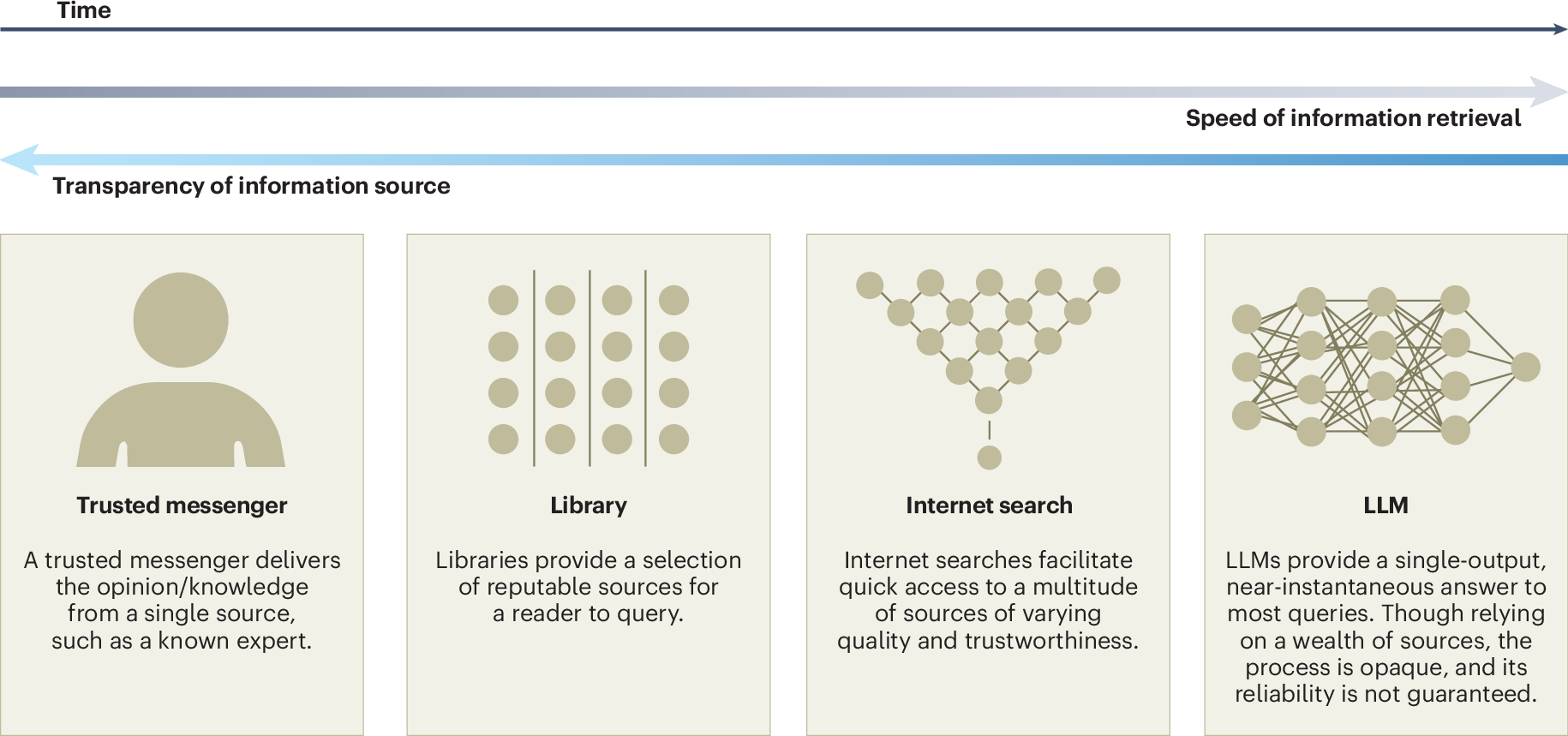
How large language models can reshape collective intelligence
Collective intelligence underpins the success of groups, organizations, markets and societies. Through distributed cognition and coordination, collectives can achieve outcomes that exceed the capabilities of individuals—even experts—resulting in improved accuracy and novel capabilities. Often, collective intelligence is supported by information technology, such as online prediction markets that elicit the ‘wisdom of crowds’, online forums that structure collective deliberation or digital platforms that crowdsource knowledge from the public. Large language models, however, are transforming how information is aggregated, accessed and transmitted online. Here we focus on the unique opportunities and challenges this transformation poses for collective intelligence. We bring together interdisciplinary perspectives from industry and academia to identify potential benefits, risks, policy-relevant considerations and open research questions, culminating in a call for a closer examination of how large language models affect humans’ ability to collectively tackle complex problems.
How large language models can reshape collective intelligence
Collective intelligence underpins the success of groups, organizations, markets and societies. Through distributed cognition and coordination, collectives can achieve outcomes that exceed the capabilities of individuals—even experts—resulting in improved accuracy and novel capabilities. Often, collective intelligence is supported by information technology, such as online prediction markets that elicit the ‘wisdom of crowds’, online forums that structure collective deliberation or digital platforms that crowdsource knowledge from the public. Large language models, however, are transforming how information is aggregated, accessed and transmitted online. Here we focus on the unique opportunities and challenges this transformation poses for collective intelligence. We bring together interdisciplinary perspectives from industry and academia to identify potential benefits, risks, policy-relevant considerations and open research questions, culminating in a call for a closer examination of how large language models affect humans’ ability to collectively tackle complex problems.

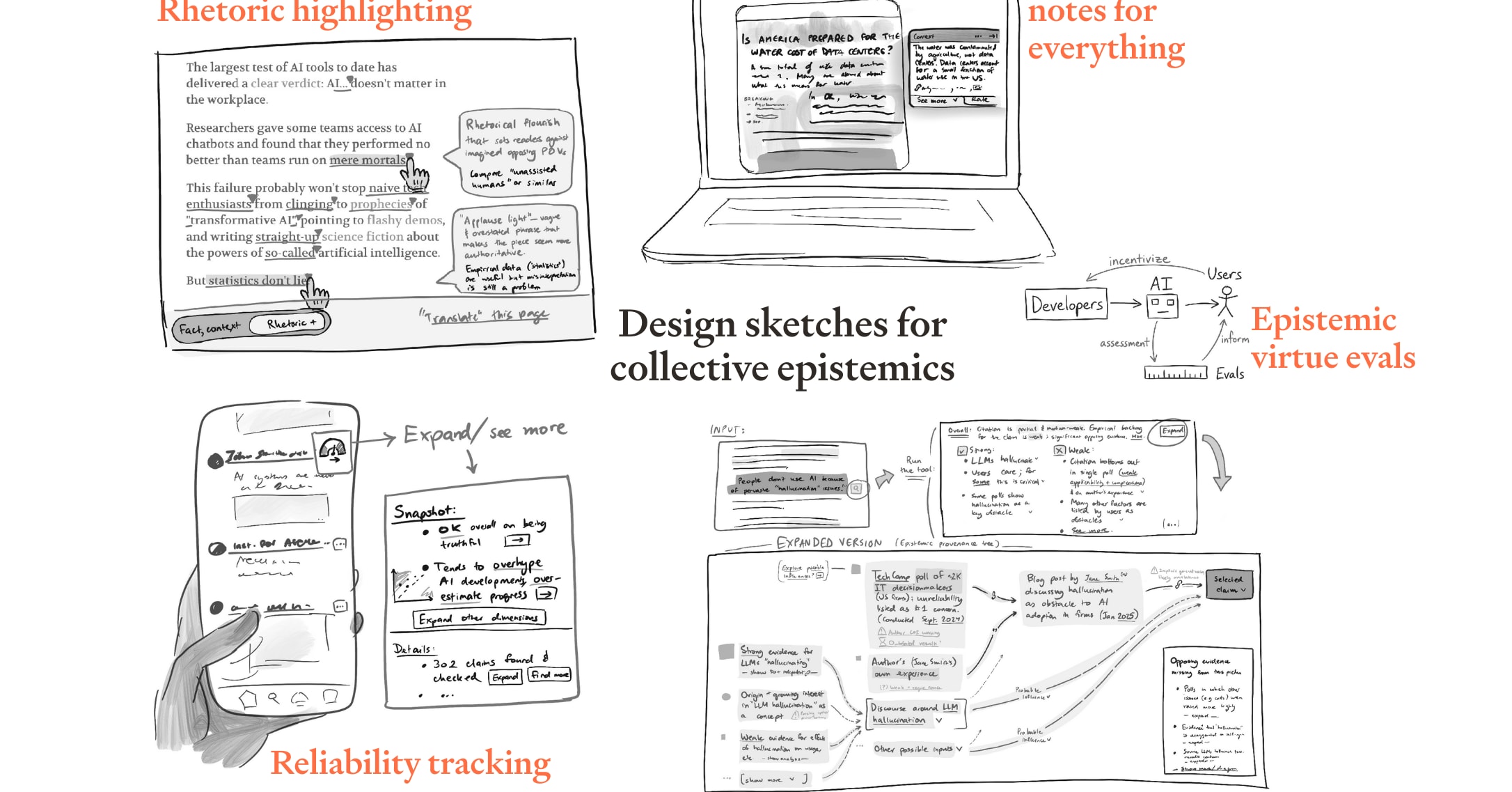
Some tools for collective epistemics
We’ve recently published a set of design sketches for AI tools that help with collective epistemics. …
All intelligence is collective intelligence

Collective Intelligence Research

Explorations into the idea that a group of humans is "more intelligent" than the sum of their "IQ" (i.e. "groups of individuals doing things collectively that seem intelligent")
Collective Intelligence

How large language models can reshape collective intelligence

Sharing Notes about Collective Intelligence — Pop Junctions

Socially Minded Intelligence: How Individuals, Groups, and Artificial Intelligence Can Make Each Other Smarter (or Not)

Profile: Adrien Treuille

NOVA | The Wisdom of the Crowds | Season 45 | Episode 6
Mapping Citizen Science through the Lens of Human-Centered AI
A Collectivist, Economic Perspective on AI

Hazel Weakly (@hazelweakly.me)

Built on Shared Knowledge: What the World Wants from AI Wealth
All intelligence is collective intelligence
Research – Open Heart Mind

Agora Citizen Network
Polis

Science Communication as a Collective Intelligence Endeavor: A Manifesto and Examples for Implementation
'Generative CI' through Collective Response Systems
The knowledge layer for collective intelligence