How the hypercuriosity of ADHD may have helped humans thrive | Aeon Essays
ADHD isn’t merely a dysfunction. It’s best understood as an impulsive motivational drive for novel information

How the hypercuriosity of ADHD may have helped humans thrive | Aeon Essays
ADHD isn’t merely a dysfunction. It’s best understood as an impulsive motivational drive for novel information
Palantir’s billionaire CEO says only two kinds of people will succeed in the AI era: trade workers — ‘or you’re neurodivergent’ | Fortune
Billionaire Alex Karp tells Gen Z to skip elite college degrees, as one-fifth of Fortune 500 companies recruit more neurodivergent talent by 2027.

Stories of Hope: The richest man in the world has autism - The Behavior Exchange
Our new monthly blog series, Stories of Hope, can help! This month you’ll read about the journey of a famous person who, despite ASD, is arguably one of the most influential people in the world. Hint: You might own one of his cars!

Geniuses with Autism & Asperger's | Hidden Talents ABA
Discover 15 inspiring figures with Autism or Asperger's, showcasing their contributions and resilience throughout history.

Could Shades of Asperger’s be the Secret to Becoming a Billionaire?
Success always leaves clues…
Bill Gates Exclusive: I'm On The Autism Spectrum, It Never Goes Away
Microsoft co-founder Bill Gates has told NDTV that were he a young boy growing up in today's world, he would "probably be diagnosed on the autism spectrum".

BitTorrent's Bram Cohen Isn't Limited by Asperger's
Bram Cohen has Asperger's, which makes it hard to deal with everyday life. Even so, he started his own company, BitTorrent

It’s Not Just Elon Musk — These Billionaires Are Also Neurodivergent
Some billionaires say their conditions helped them succeed in business.

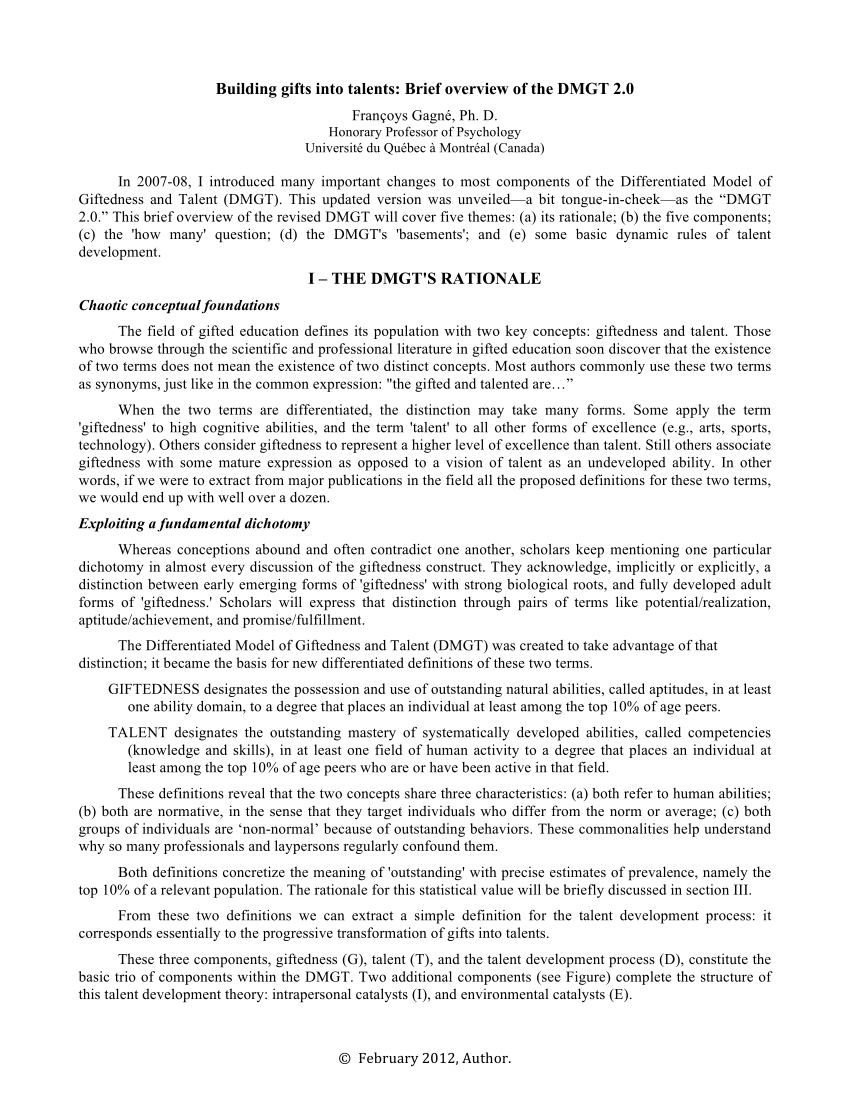
(PDF) Building gifts into talents: Detailed overview of the DMGT 2.0
PDF | On Jan 1, 2009, F. Gagné published Building gifts into talents: Detailed overview of the DMGT 2.0 | Find, read and cite all the research you need on ResearchGate
ADHD and giftedness: a neurocognitive consideration of twice exceptionality
Current models of cognition and behavioral diagnosis emphasize categorical classification over continuous considerations of function and promote the "differential diagnosis" of various conditions according to observational criteria. However, an overemphasis on a purely behavioral, categorical approach to understanding human function fails to address the comorbidity of different disorders and does not include a consideration of overlapping levels of function, from "pathological" through "normal," to "gifted" or exceptional. The frequent co-occurrence of "gifted" and "pathological" function is thus difficult to understand from a corticocentric and purely behavioral and observational point of view. This article reviews "giftedness" in relation to the diagnosis of attention-deficit hyperactivity disorder, coexistence of which is termed "twice exceptional." It additionally considers problems in assessing these functions using current neuropsychological tests and methodologies that are presumably based upon a corticocentric model of cognition.
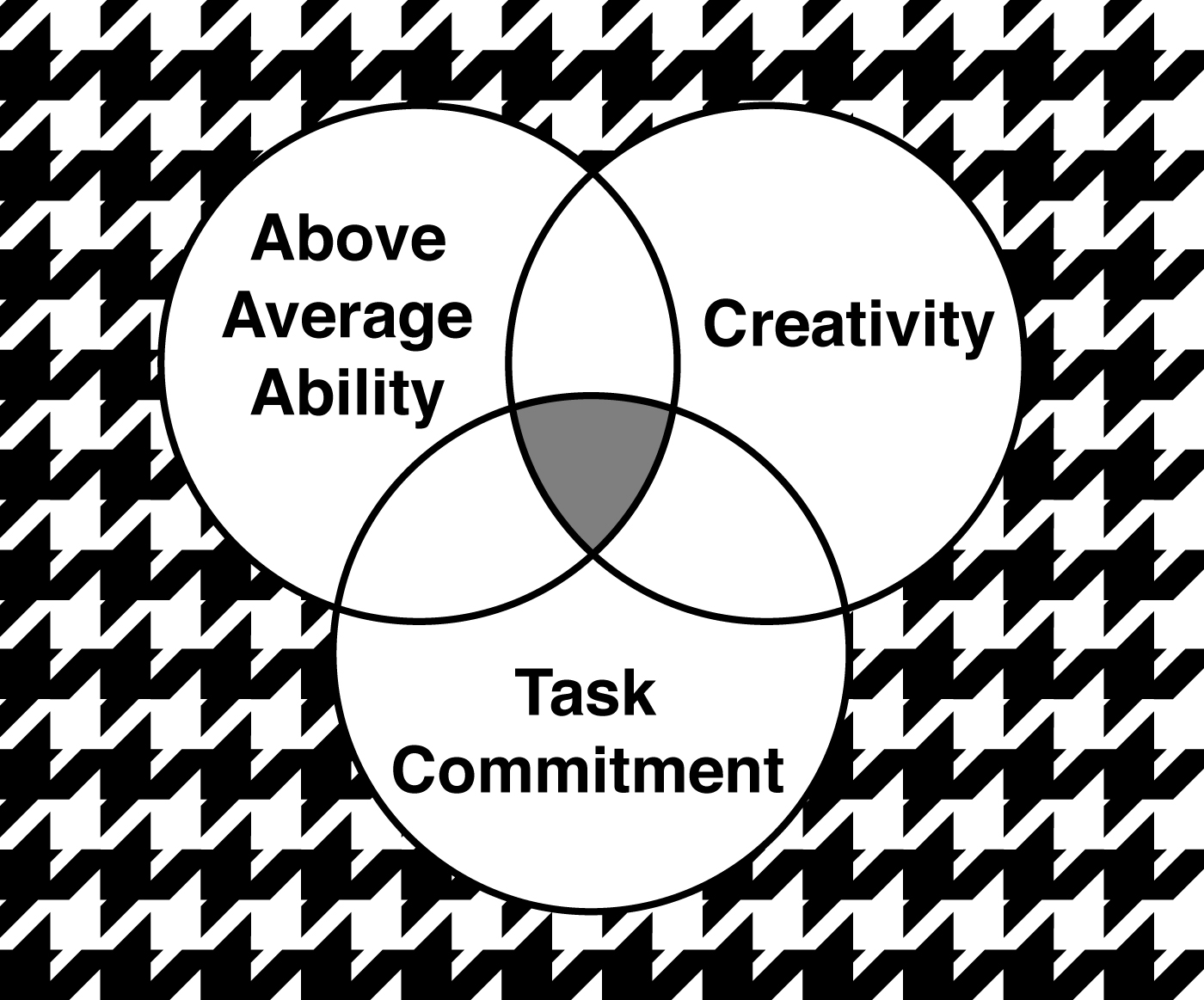
Three-Ring Conception of Giftedness | Renzulli Center for Creativity, Gifted Education, and Talent Development | Neag School of Education | University of Connecticut
In Baum, S. M., Reis, S. M., & Maxfield, L. R. (Eds.). (1998). Nurturing the gifts and talents of primary grade students. Mansfield Center, CT: Creative ...
NCBI - WWW Error Blocked Diagnostic
Your access to the NCBI website at www.ncbi.nlm.nih.gov has been temporarily blocked due to a possible misuse/abuse situation involving your site. This is not an indication of a security issue such as a virus or attack. It could be something as simple as a run away script or learning how to better use E-utilities, http://www.ncbi.nlm.nih.gov/books/NBK25497/, for more efficient work such that your work does not impact the ability of other researchers to also use our site. To restore access and understand how to better interact with our site to avoid this in the future, please have your system administrator contact info@ncbi.nlm.nih.gov.
Successful People With ADHD Superpowers
Explore stories of successful people who have harnessed their ADHD superpowers to achieve greatness.

Blog | Online Therapy NYC | New York City 11096 | The Keely Group
Struggling with self-doubt at work? Click here to explore therapy for imposter syndrome in Manhattan, NY, tailored for twice-exceptional professionals.

The 2e Advantage: A Systemic Guide for Understanding & Unlocking Twice-Exceptional Talent in the Modern Workplace
In today's competitive landscape, overlooking talent is a critical error. Twice-exceptional (2e) and neurodivergent individuals represent a significant pool of often untapped potential, possessing unique strengths alongside specific challenges.

Understanding Twice-Exceptional (2e) in Adulthood
What Does “Twice-Exceptional” Mean, and How Does it Affect Adults in Professional Settings?
ADHD and Entrepreneurship: Unlocking the Potential of Those Who Break the Mold
Having symptoms related to the hyperactive-impulsive presentation of ADHD can spur innovativeness, proactiveness and risk-taking.

Entrepreneurship and ADHD: Fast Brain, Fast Company?
Entrepreneurship and ADHD are connected in research — and the anecdotal success of businesses ranging from JetBlue to Kinko’s and beyond. Here, entreprene…

High intelligence: A risk factor for psychological and physiological overexcitabilities
High intelligence is touted as being predictive of positive outcomes including educational success and income level. However, little is known about the difficulties experienced among this population. Specifically, those with a high intellectual capacity (hyper brain) possess overexcitabilities in various domains that may predispose them to certain psychological disorders as well as physiological conditions involving elevated sensory, and altered immune and inflammatory responses (hyper body). The present study surveyed members of American Mensa, Ltd. (n=3715) in order to explore psychoneuroimmunological (PNI) processes among those at or above the 98th percentile of intelligence. Participants were asked to self-report prevalence of both diagnosed and/or suspected mood and anxiety disorders, attention deficit hyperactivity disorder (ADHD), autism spectrum disorder (ASD), and physiological diseases that include environmental and food allergies, asthma, and autoimmune disease. High statistical significance and a remarkably high relative risk ratio of diagnoses for all examined conditions were confirmed among the Mensa group 2015 data when compared to the national average statistics. This implicates high IQ as being a potential risk factor for affective disorders, ADHD, ASD, and for increased incidence of disease related to immune dysregulation. Preliminary findings strongly support a hyper brain/hyper body association which may have substantial individual and societal implications and warrants further investigation to best identify and serve this at-risk population.
Seeming to belong: Camouflaging and pragmatic self-perception in twice-exceptional adults across neurodivergent profiles
Background and objective Social camouflaging and pragmatic self-perception are key aspects of communication in neurodivergent populations. However, little is known about how these processes manifest in adults with autism, high intellectual ability (HIA), or twice-exceptionality (2e: HIA+autism). This study aimed to examine group-based differences in communicative adaptation and perceived pragmatic competence across these profiles. Materials and methods A total of 109 Spanish-speaking adults participated. Social camouflaging was assessed using the Camouflaging Autistic Traits Questionnaire (CAT-Q), and pragmatic self-perception was measured with the Communicative Competence Profile (CCP). Statistical analyses explored differences across groups and by gender. Results Significant differences emerged in all CAT-Q dimensions. Autistic participants reported the highest levels of camouflaging, followed by the 2e group, while only the compensation subscale distinguished autism from 2e. Regarding pragmatic self-perception, the HIA group scored highest, suggesting stronger communicative confidence, whereas autistic adults scored lowest. The 2e profile consistently occupied an intermediate position, though closer to autism, especially in subtle pragmatic aspects. Gender effects were limited overall but more noticeable within the Autism group. Conclusions Findings reveal distinct patterns of social camouflaging and pragmatic self-perception across neurodivergent profiles. Twice-exceptional adults show intermediate but autism-leaning traits, underscoring the complexity of their communicative adaptation. Results emphasize the need for inclusive frameworks that account for diverse communication styles within neurodivergence. Resumen Antecedentes y objetivo El camuflaje social y la autopercepción pragmática son aspectos clave de la comunicación en poblaciones neurodivergentes. Sin embargo, se sabe poco sobre cómo se manifiestan estos procesos en adultos con autismo, alta capacidad intelectual (HCI) o doble excepcionalidad (2e: HCI+autismo). Este estudio tuvo como objetivo examinar las diferencias entre grupos en la adaptación comunicativa y la competencia pragmática percibida en estos perfiles. Material y métodos Un total de 109 adultos hispanohablantes participaron en el estudio. El camuflaje social se evaluó mediante el Camouflaging Autistic Traits Questionnaire (CAT-Q), y la autopercepción pragmática se midió con el Communicative Competence Profile (CCP). Los análisis estadísticos exploraron diferencias entre grupos y por género. Resultados Se encontraron diferencias significativas en todas las dimensiones del CAT-Q. Los participantes autistas reportaron los niveles más altos de camuflaje, seguidos por el grupo 2e, mientras que solo la subescala de compensación distinguió al autismo del 2e. En cuanto a la autopercepción pragmática, el grupo HCI obtuvo las puntuaciones más altas, lo que sugiere mayor confianza comunicativa, mientras que los adultos autistas puntuaron más bajo. El perfil 2e se situó de manera consistente en una posición intermedia, aunque más cercana al autismo, especialmente en aspectos pragmáticos sutiles. Los efectos de género fueron en general limitados, pero más notables dentro del grupo con autismo. Conclusiones Los hallazgos revelan patrones diferenciados de camuflaje social y autopercepción pragmática en los distintos perfiles neurodivergentes. Los adultos con doble excepcionalidad muestran características intermedias pero con tendencia hacia el autismo, lo que subraya la complejidad de su adaptación comunicativa. Los resultados enfatizan la necesidad de marcos inclusivos que contemplen estilos de comunicación diversos dentro de la neurodivergencia.
