Liberatory Computing
We live under a capitalist mode of computing. The tools, languages, techniques, and assumptions of digital systems are structured by economic forces that shape not just what we can do, but what we can imagine doing. By separating production from use, producing inflexible software, and slicing up computing into siloed apps, your agency is held back by a tech industry that profits from a population rendered computationally passive.
Cyber-Marx: Cycles and circuits of struggle in high technology capitalism - Nick Dyer-Witheford
The complete text of Nick Dyer-Witheford's 1999 book, which provides an analysis of information-age capitalism and the movements currently dissolving it. In PDF format.

softer computing club
a cozy community of humans and computers on the planet earth
Orion Reed
My research investigates the intersection of computing, human-system interfaces, and emancipatory politics. I am interested in the potential of computing as a medium for thought, as a tool for collective action, and as a means of emancipation.

feeling of computing, london
💞 welcome to the london branch of the feeling of computing community. 💞

Governing Together: Toward Infrastructure for Community-Run Social Media | Proceedings of the 2026 CHI Conference on Human Factors in Computing Systems
Collaborative and social computing theory, concepts and paradigms

Digital Degrowth: Radically Rethinking our Digital Futures
We are fast approaching the point of “peak digital”, with the continued mass production and excessive consumption of digital technologies set to become a key driver of climate crisis, ecological breakdown and ongoing societal instability.<br /> <br /><i>Digital Degrowth</i> is a call to completely rethink our digital futures in these fast-changing times. It explores how degrowth thinking and alternate forms of “radically sustainable computing” might support ambitions of sustainable, scaled-down and equitable ways of living with digital technologies. Neil Selwyn proposes a rebalancing of digital technology use: digital degrowth is not a call for simply making reduced use of the digital technologies that we already have – rather it is an argument to reimagine digital practices that maximise societal benefits with minimal environmental and social impact. Drawing on illustrative examples from across computer science, hacker and environmental activist communities, this book examines how core degrowth principles of conviviality, autonomy and care are already being used to reimagine alternate forms of digital technology.<br /> <br />Original and stimulating, this is essential reading for students and scholars of media and communication, sustainability studies, political ecology, computer/data sciences, and across the social sciences.


Indigitalization: Indigenous Computing Theory - Jon Corbett
Feeling of Computing
Feeling of Computing is an online community with a welcoming, cooperative, and revolutionary spirit. We are unified in the belief that the computer is tragically less humane than it could be. There’s a world of possibilities that get more beautiful the further away from the norm you go. We’re here to explore this world together, to discuss ideas about theory and practice, and to champion and support our members’ research and development efforts to reimagine the computer.

What might degrowth computing look like?
The past few years have seen various attempts within computing, programming and hacker communities to apply ‘degrowth’ principles to their work – i.e. sketching out ways to de-couple digital techno…

Reclaiming the Computing Commons
Resisting the commodification of information is a political struggle, not a technical one.

Thoughts on Cyberpositionality: The Construction of Digital Communities in Digital Spaces, Damien Patrick Williams
I found Rebecca Monteleone, Martin Perez Comisso, and Elma Hajric’s “Cyberpositionality: Sociotechnical Location in the Digital Age” (2024) to be an extremely timely and important article which can…

A community seeking to catalyze discontent with the state of computing by understanding the roles of production, labor, and power in shaping the foundations of digital systems. libcomp.org
Reticulum Network
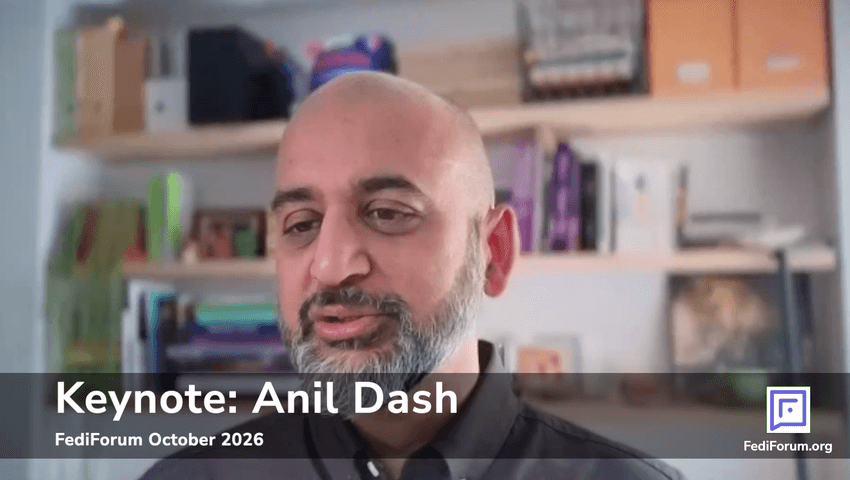
FediForum Keynote: Anil Dash

Rewildpunk: The Counterculture AI Actually Needs
Phil Agre's Home Page
It was a huge honor to present the opening keynote address at #SIGIR2026 and to talk about the need for IR to resist uncritical adoption of…
We Refuse, We Want, We Commit: Volume 1
Tech's right turn : the rise of reactionary politics in Silicon Valley and online

Coalition Politics: Turning the Century

Men in tech #YesAllMen - EMF 2026
Data Feminism for AI
quod.lib.umich.edu

Wired women : gender and new realities in cyberspace
Tech's right turn : the rise of reactionary politics in Silicon Valley and online

Technology is Not Values Neutral: Ending the Reign of Nihilistic Design

Cyber-Marx

‘Headed for technofascism’: the rightwing roots of Silicon Valley

📏 When machines start calling the shots

Information Civics