What is Causing Our Epidemic of Loneliness and How Can We Fix It?
Researchers share what Americans have to say about social disconnection and potential solutions

What is Causing Our Epidemic of Loneliness and How Can We Fix It?
Researchers share what Americans have to say about social disconnection and potential solutions
Loneliness epidemic
The concept of a "loneliness epidemic" relating to rising rates of social isolation was first described in the 2000s. Robert D. Putnam's 2000 study Bowling Alone was an early instance of describing loneliness as an epidemic, arguing that decreased participation in civic life and community groups was weakening social bonds in the United States.[5]

Against the Couple-Form | LIES Journal
Libidinal flows cut through the social world. Amorous and sexual relations do not exist in some domain safely taped off from the rest of society. Rather they are constituent elements of nearly every aspect of social life. Desire flows and circulates amongst places of employment, intellectual debates, political organizing, artistic circles, playgrounds, and cemeteries. The elderly patient grabs at the breast of a nurse hunched over him. A governmental official strips his newly hired intern down to her leopard print thong during an important briefing in his office. The incarcerated man holds his hand up to the glass of the visiting booth, attempting to touch his wife after twenty years of their bodily separation. These flows of libidinal desire operate within and amongst broader social mechanisms, such that they help animate the dynamics of economic and political life. Often a locus of politics, desire permeates the so-called ‘public’ terrain.
Frontiers | Cyber-mobbing, technology-facilitated abuse and online violence
This article collection will explore the pressing issues of cyber-mobbing, technology-facilitated abuse and online violence, including online abuse, stalking...

Neurodiversity | The Paper Pilot
The Paper Pilot's digital garden of thoughts on philosophy, politics, and sociology
Understanding the influence of digital technology on human cognitive functions: A narrative review
In the era of rapid digitalization, the widespread integration of digital technology into various aspects of daily life has sparked significant interest in understanding its impact on cognitive mental processes. While the emerging data suggests that its influence may be positive or negative, the depth of evidence regarding neurobiological mechanisms remains limited. This review aims to synthesize previously published studies and develop a comprehensive framework that systematically categorizes digital technologies, the cognitive functions they impact, and developmental stages around the concept of neuroplasticity, while clearly illustrating their interconnections. Despite acknowledged limitations, through an exhaustive approach, this paper intends to offer a dynamic perspective on the effects of digital media on the human brain, before the onset of addiction.
ADDICTION BY DESIGN: Machine Gambling in Las Vegas – Natasha Dow Schüll
Slot machines, revamped by evermore compelling digital and video technology, have unseated traditional casino games as the gambling industry’s revenue mainstay. Drawing on fifteen years of field research in Las Vegas, anthropologist Natasha Dow Schüll explores the dark side of machine gambling—a solitary, rapid, continuous form of play that has less to do with the competitive thrill of winning than with the pull of “the machine zone,” as gamblers call the trancelike state they enter.
Manifesto: An Online Creative's Social Web Dethroning - HK★TMK
"Oh great, now he's writing manifestos…" Don't worry. It's just a personal one to solidify and manifest how I want to use the Social Web once my detox concludes.
Altruism | The Paper Pilot
The Paper Pilot's digital garden of thoughts on philosophy, politics, and sociology
The obsolescence of man, vol I , part 2: The world as phantom and as matrix: philosophical considerations on radio and television - Günther Anders
The first complete English translation of a remarkable 1956 essay about television from Vol. I of The Obsolescence of Man by Günther Anders, who—using phenomenological analyses, excerpts from his diaries and reflections on daily life—depicts a capitalist world that manufactures a warped “mass-man” by imposing nonparticipation, consumption of images, artificial “needs” (“drug addiction is the model for today’s needs”), separation, “conditioning”, an eternal present, commodified leisure and the dissolution of the individual in vapid mass produced roles, in a text that in many ways anticipates the theory of the “spectacle” of Guy Debord and the situationists.
Collection

Updated 1mo
Addiction and other negative patterns related to modern life
Neuroscience, Cognition & Psychology

Loneliness Epidemic

📚 STEM - Psych, Social, Culture, & People

Deep dives in social sciences

Why You're Bored and Lonely: The Death of Third Places

Third Places Aren’t Gone. We Just Stopped Going.

The Disappearance of Third Places

Nowhere to Go: The Loss of Third Places

Impact of the COVID-19 pandemic on social media
(PDF) Facebook confessions: Corporate abdication and Silicon Valley dystopianism

Anti-democratic attitudes are highly contagious, new psychology study finds

Hyperactive–impulsive ADHD traits predict higher curiosity in adults: evidence from a cross-sectional study
Understanding the influence of digital technology on human cognitive functions: A narrative review

How the hypercuriosity of ADHD may have helped humans thrive | Aeon Essays
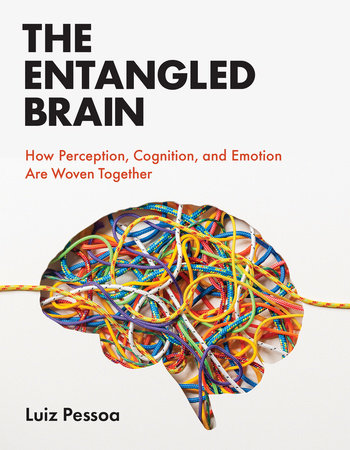
The Entangled Brain: How Perception, Cognition, and Emotion Are Woven Together
Neurotech (by Teon) — Semble
Neuroscience, Cognition & Psychology (by Sébastien) — Semble
2e (by Bee 🐝) — Semble
Social construction of technology

Loneliness epidemic

And related subjects

They Thought What?
quod.lib.umich.edu

Social construction of technology

About — Every Object an Archive

Eryk Salvaggio: Critical AI & Culture | Glossary — Cybernetic Forests.

The Myth of the Paperless Office

Americans’ Social Activity Has Steeply Declined in the Past 30 Years

Young people five times more likely to have no friends than a decade ago | IPPR

The loneliest generation: What it is like to grow up in England today | IPPR