Creativity through Recomposition in the Music Ensemble
Musical creativity is an essential component of a robust music education. There are many ways to invite and develop the creative capacities of K–12 music students. In this article, we propose the idea that recomposing within and around repertoire can be a creative starting point for student composition in an ensemble music classroom. We share examples of potential recomposition projects, questions to prompt student reflection, and other pedagogical considerations as a springboard for compositional projects with students. We hope that the open-ended nature of this mindset will encourage more creative musical spaces.

Improvisation in Ensembles: Conduction - #ImaginingPossibilities
How might we support creativity in large ensembles? What if students could co-create music with a conductor without staff notation or written music altogether? Perhaps novel in K-12 settings, ensemble-based improvisation exists in diverse musical cultures. What might we learn from conduction, a sophisticated gestural system that Butch Morris developed to facilitate improvisation and creation […]

Listening To Music May Be Damaging Your Creativity - Slashdot
The results of a new study suggest that listening to music can significantly impair your ability to perform creative tasks. Whilst music was found to disrupt creative processes, ambient "library noise" was found to have no significant effect. From a report: The first experiment saw volunteers comple...

Fostering Twenty-First-Century Competencies Through Collective Free Music Improvisation
This article proposes collective free music improvisation (CFMI) pedagogical strategies that support the development of twenty-first-century competencies (21CCs) among young, diverse learners. It highlights the educational benefits of integrating CFMI into music learning and outlines three key pedagogical dimensions that facilitate CFMI: socio-musical interaction, personal musical vocabulary, and shared understanding. Drawing on authentic classroom examples, the article illustrates how these dimensions can be developed to meaningfully engage learners in CFMI and foster core 21CCs—particularly communication, collaboration, and inventive thinking. These insights offer practical guidance for educators aiming to implement CFMI with similarly profiled student populations.

Student-Centered Music Education - #ImaginingPossibilities
Many music educators speak about student-centered or learner-centered music programs, but what do these terms mean? What is a student-centered ensemble or a learner-centered music class? These resources will support you in fostering and facilitating learner-centered music programs! (Some of the resources below are affiliate links – see the affiliate policy language here if you […]
Intersections in Music Education: Implications of Universal Design for Learning, Culturally Responsive Education, and Trauma-Informed Education for P–12 Praxis
To increase equity in music education, teachers can strive to know each student as a whole child, proactively remove barriers to learning, and seek to honor students’ multifaceted and intersectional identities. In this article, we first define intersectionality and examine demographics in music education. Then, we summarize three asset-based pedagogical approaches (Universal Design for Learning, Culturally Responsive Education, and Trauma-Informed Education) and synthesize their similarities. Finally, we present implications in the form of generative ideas for music educator praxis, or values-guided action. We hope our suggestions help music educators create music experiences where students (and families) feel seen, safe, welcomed, and valued as musicians and people. We also hope our suggestions can contribute to music teacher collegiality and collaboration by providing educators with tools to develop positive relationships with colleagues who are different from themselves.

The Impact of Listening to Music on Cognitive Performance
Listening to music for relaxation is common among students to counter the effects of stress or anxiety while completing difficult academic tasks. Some studies supporting this technique have shown that background music promotes cognitive performance...

Teaching Improvisation in Choir: Moving from “Recreative” to “Creative” Choral Artistry
This article describes a research study in which a collegiate choral ensemble learned vocal improvisation techniques as part of their regular rehearsals. While learning to improvise, singers had the opportunity to provide real-time feedback of their perceptions and experiences learning a new skill in a traditional choral setting. In this article, we share what we learned, including the rewards and challenges of teaching improvisation, our reflections as instructors, and perspectives from some of the singers. We also describe the activities we tried and offer strategies for other choir teachers who want to bring improvisation into their own classrooms.

Malleable Music Ensembles
A framework using generalized algebraic theories and categorical lenses to enable interoperable, local-first networked music ensembles.
Combinatorial Creativity
Combinatorial creativity recombines existing ideas to spark novel, valuable innovations in cognition, AI, and design.

Music Theory that isn't boring - Lightnote
Interactive lessons for learning Music Theory.

Conducting smarter intelligences than me: new orchestras | Notion
So what did I do?


Teaching Improvisation in Choir: Moving from “Recreative” to “Creative” Choral Artistry

Improvisation in Ensembles: Conduction - #ImaginingPossibilities

Fostering Twenty-First-Century Competencies Through Collective Free Music Improvisation

Susie Ibarra: Hybrid Culture - New Music USA
Life Forms with Music: On Susie Ibarra — United States Artists

Water Rhythms | Susie Ibarra
The sound of the trees

Creativity through Recomposition in the Music Ensemble

Owners of Elvis Presley’s Music Sue Anthropic for Copyright Infringement

YouTube Music adds new labels for AI music

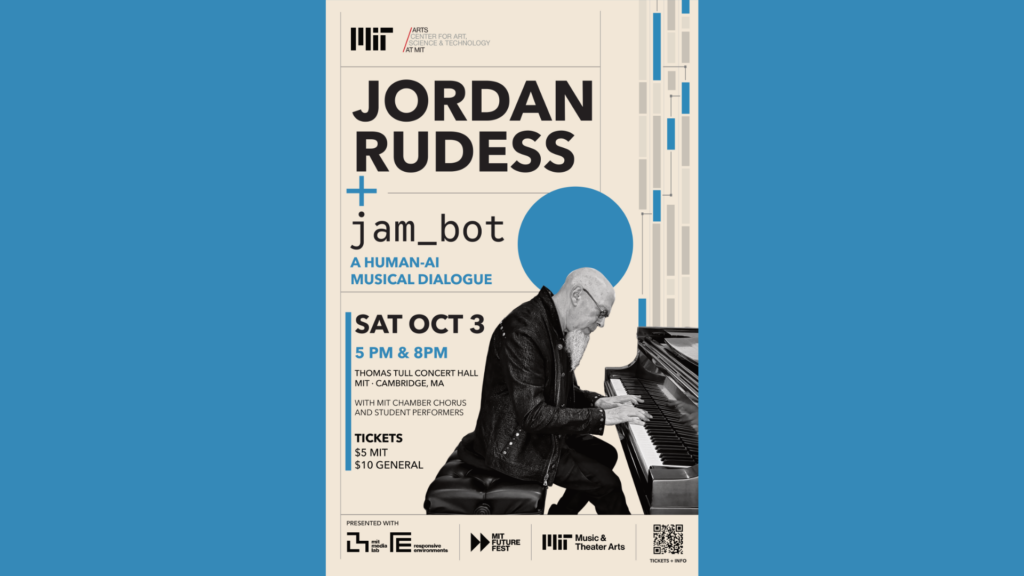
Jordan Rudess + jam_bot at MIT October 3

Jordan Rudess and MIT’s jam_bot: A New Era of Human-AI Musical Collaboration

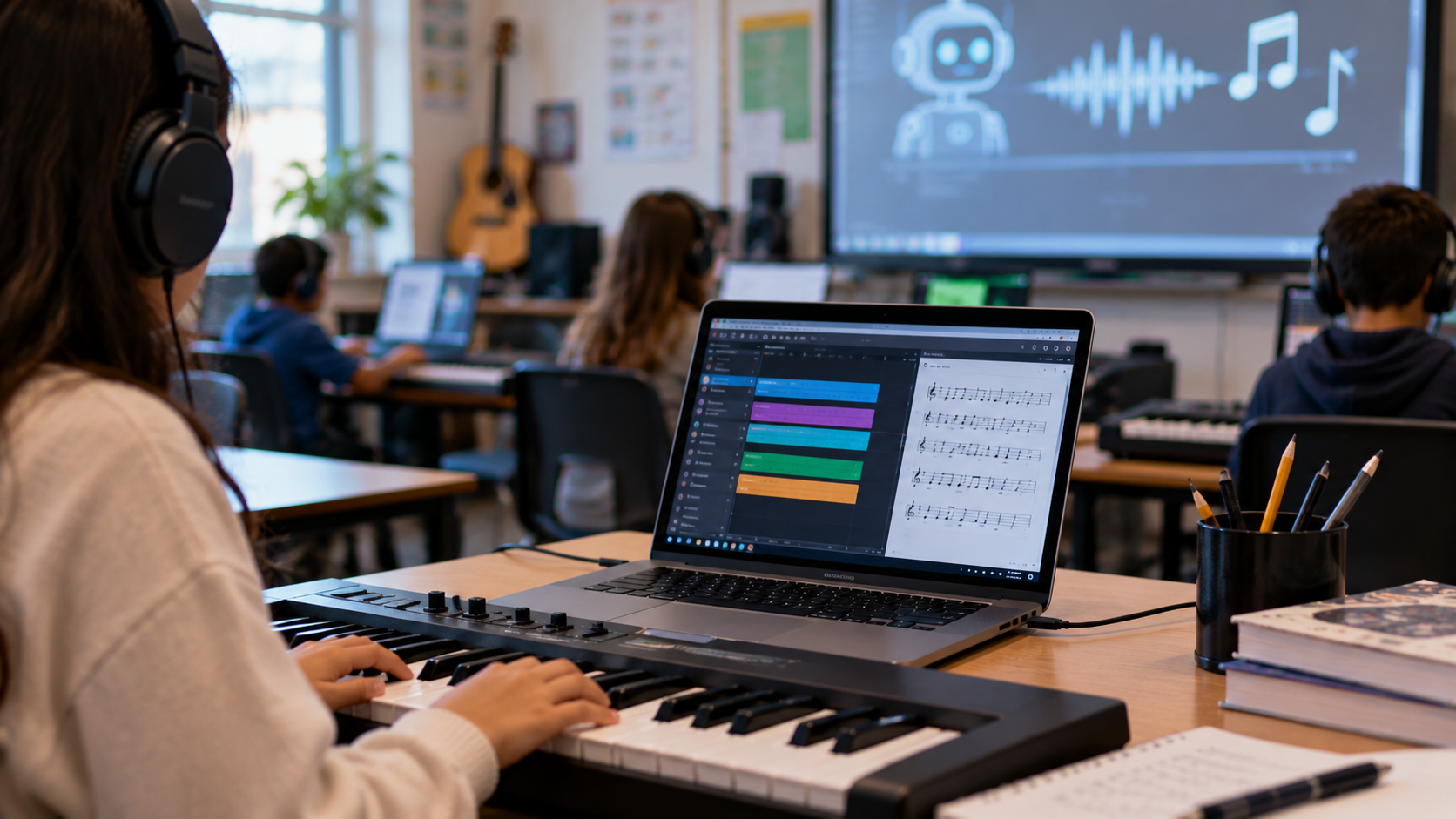
Artificial Intelligence in Music Classrooms: PK-12 Educators’ Practices, Concerns, and Confidence

“It frustrates me to hear people bashing something that's so amazing”: Todd Edwards is optimistic about AI in music production