Houston Board of Food Security
Empowering Houstonians with knowledge, resources, and connections for food security in their own neighborhoods and backyards.
Living Systems Network – Living Systems Network
Holding space to build and celebrate community to #coGrow and #coCook. coFood Vancouver catalyzes neighbours and projects doing good work in our food communities. Together we practice collaborative urban farming through a #permaculture lens, and convene dinners & dialogues on #foodwaste - #foodsupply - #foodjustice - #foodtech - #foodeducation
INVESTING IN REGENERATIVE AGRICULTURE AND FOOD
THE INVESTING IN REGENERATIVE AGRICULTURE AND FOOD PODCASTThrough 400+ interviews with farmers, investors, scientists, and entrepreneurs, the podcast puts the spotlight on the pioneers in the regenerative food and agriculture space to learn more on how to put our money to work to regenerate soil, people, local communities and ecosystems while making an appropriate and fair return.
HOME
We are committed to growing year-round, ecologically sound, nutrient dense food for our local community.
Houston Board of Food Security
Empowering Houstonians with knowledge, resources, and connections for food security in their own neighborhoods and backyards.
National Black Food & Justice Alliance
The National Black Food and Justice Alliance represents hundreds of Black urban and rural farmers, organizers, and land stewards based nationwide working together towards an intergenerational, urban/rural movement to map, assess, train and deepen the organizing, institution building and advocacy work protecting Black land and work towards food sovereignty.

Home Page : 11th Hour Project
We work with farmers and food systems workers to develop technology that is responsive to the needs of small-holder producers.
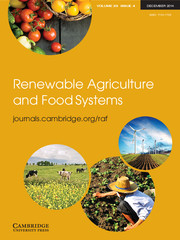
A social-ecological framework for analyzing and designing integrated crop–livestock systems from farm to territory levels
Integrated crop–livestock systems are often considered a promising way to address agricultural sustainability issues. Many authors claim that complementarities and synergies between crops and livestock can improve nutrient cycling and delivery of ecosystem services (ES) in agricultural systems. They have analyzed effects of interactions at the farm level and affirmed the potential advantage of developing crop–livestock interactions at the territory level. However, potential benefits of developing synergies beyond the farm level have not been clearly identified. Thus, we developed a conceptual framework that can be used to analyze, design and perform integrated assessment of crop–livestock systems at the territory level. To address crop–livestock interaction issues, we define it as a social-ecological system called the territorial crop–livestock system (TCLS). The ecological system is represented as three interacting components, crops, grasslands and animals, allowing description of various land uses and their potential effects on nutrient cycling and ES. The social system, represented as farmers interacting with natural-resource managers and agro-food chain actors, determines land use and the nature and intensity of ES delivered. We highlight the importance of coordination and learning among actors to support implementation of complex adaptive systems such as TCLSs. We illustrate the expressive power of our conceptual framework through development of a generic typology of crop–livestock systems. Then we show how our conceptual framework can be used as an intermediary object with stakeholders in participatory design approaches. We illustrate this process by representing four archetypal TCLSs. We provide an example of the design approach implemented in Southwestern France to address severe recurrent water shortages, which includes analysis of land use in the current crop–livestock system and the associated key metabolic and ES issues, identification of options for change and multi-criteria analysis of these options. We conclude that this framework shows great potential to support development of sustainable farming systems at the territory level.
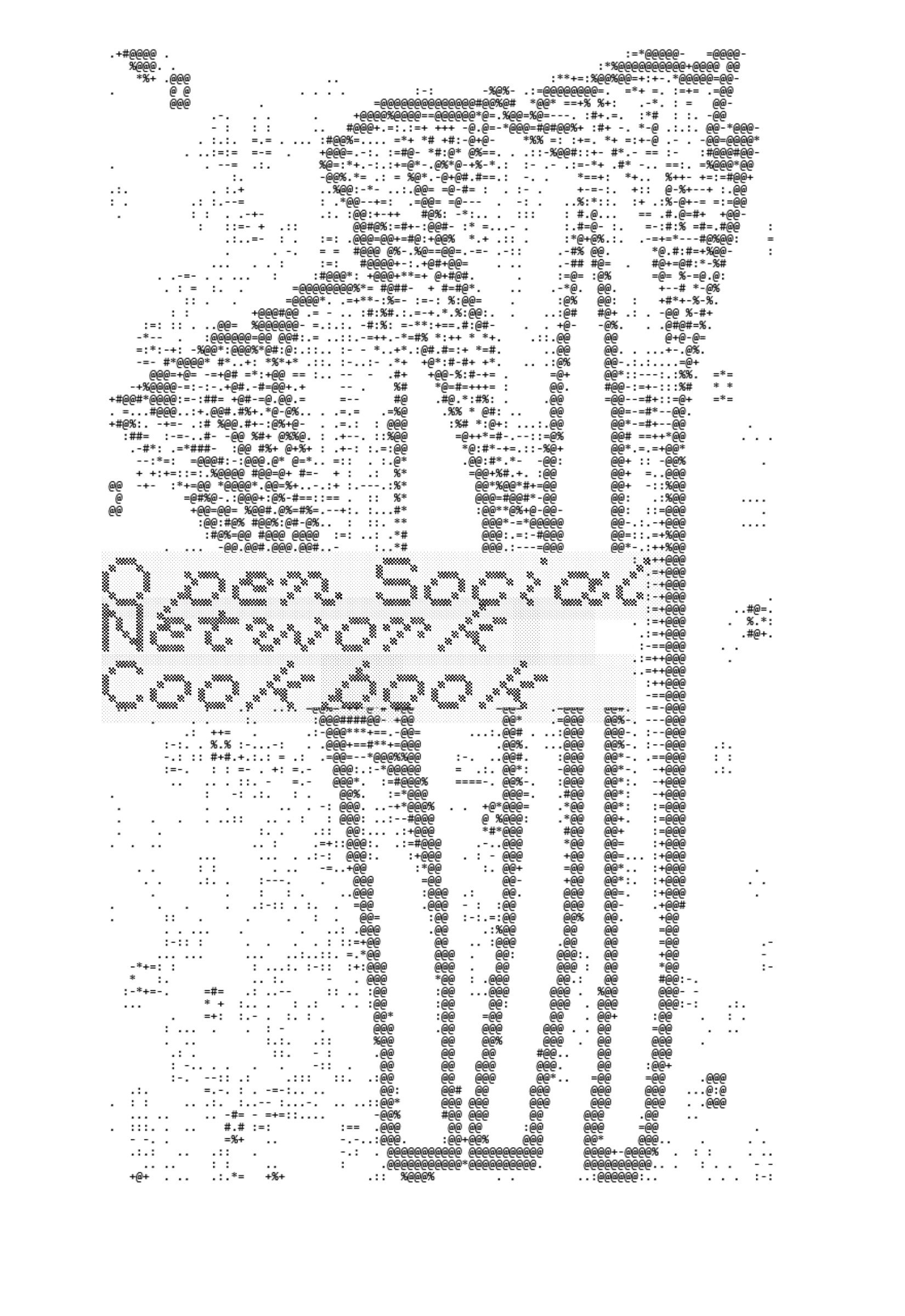
Open Social Network Cookbook
The Open Social Network Cookbook is the collective product of the Open Social Incubator, a cohort that MEDLab hosted from Fall 2024 to Spring 2025. At the heart of our work together was the question: How can the online communities that we participate in use tools that truly reflect our values?
PantryAI – Import Recipes, Generate Meals, Track Food Stock
Import recipes from anywhere, generate meals from what you already have, and stop wasting money on groceries with AI-powered food stock tracking. Join the Creator Program.
Growstuff - Growstuff
Growstuff is a community of food gardeners. Let's learn to grow food together.
The Sifter - A Food History Research Tool
The Sifter is a public database, free to all users. It is a tool for finding and comparing historical and contemporary writing on food and food-related topics. It is overseen by an advisory board composed of members from The Oxford Symposium on Food and Cookery as well as other friends of food history. As with Wikipedia, the Sifter will be populated by its users. All entries will have an English translation, enabling users to search languages they cannot read. Soon, we will have over 100 languages represented. Registered users will be able to make corrections and add new information. Future releases will include a data visualization component. We also plan to include more resources linking to digitized photographs, artworks, television and film. With the aid of this tool, it is our hope that what has been invisible will come into focus.
Recipe Exchange Community Feed (@forum.recipe.exchange)
A stream of public recipes shared by the @recipe.exchange community. All interactions sync between Bluesky and recipe.exchange.
The SAGE Community Coordinator: A Demonstration
Sustainable polyculture gardens thrive more effectively when they are designed with an awareness of other gardens in the community, as opposed to as individual gardens. However, the complex characteristics of plants, and their relations to other plant species in terms of needs and capacities, require a complex knowledge base not easily acquired by novice gardeners. We contribute a demonstration of our project, called the Software for Agricultural Ecosystems (SAGE) Community Coordinator, that helps manage the complexities of plant relationships and provides planting suggestions based on existing plants in adjacent garden sites. The research team collected the requirements and developed a preliminary demonstration of this system. This demonstration shows the feasibility of the idea and lays the foundation for a more comprehensive implementation of the SAGE Community Coordinator. By doing so, this paper explores the use of technology to foster the establishment of complex plant assemblages in urban and suburban areas to address the current and future limits of material resources derived from plants.
Collection

Updated 2mo
This is a collection of links/resources that are about community driven and community located approaches to regenerative or democratic food systems
Code may be easier now, but running infrastructure and building community are still hard. I wrote for the @newpublic.org newsletter this week, exploring how atproto + llms could make a great pair to restore agency and empower communities in a sustainable way. newpublic.substack.com/p/ai-that-helps-communities-t…

✨🙌 AI that helps communities thrive on their own terms
newpublic.substack.comCommunity Building, Management, & Moderation

Resources, tools, & references
Exosphere

Using Ozone - AT Protocol Docs - AT Protocol
roostorg/osprey
Community owned infra (by Ronen Tamari) — Semble

Introducing Acorn: Community Infrastructure That Grows With You

Open Source
