
Updated 10d
Updated 10d
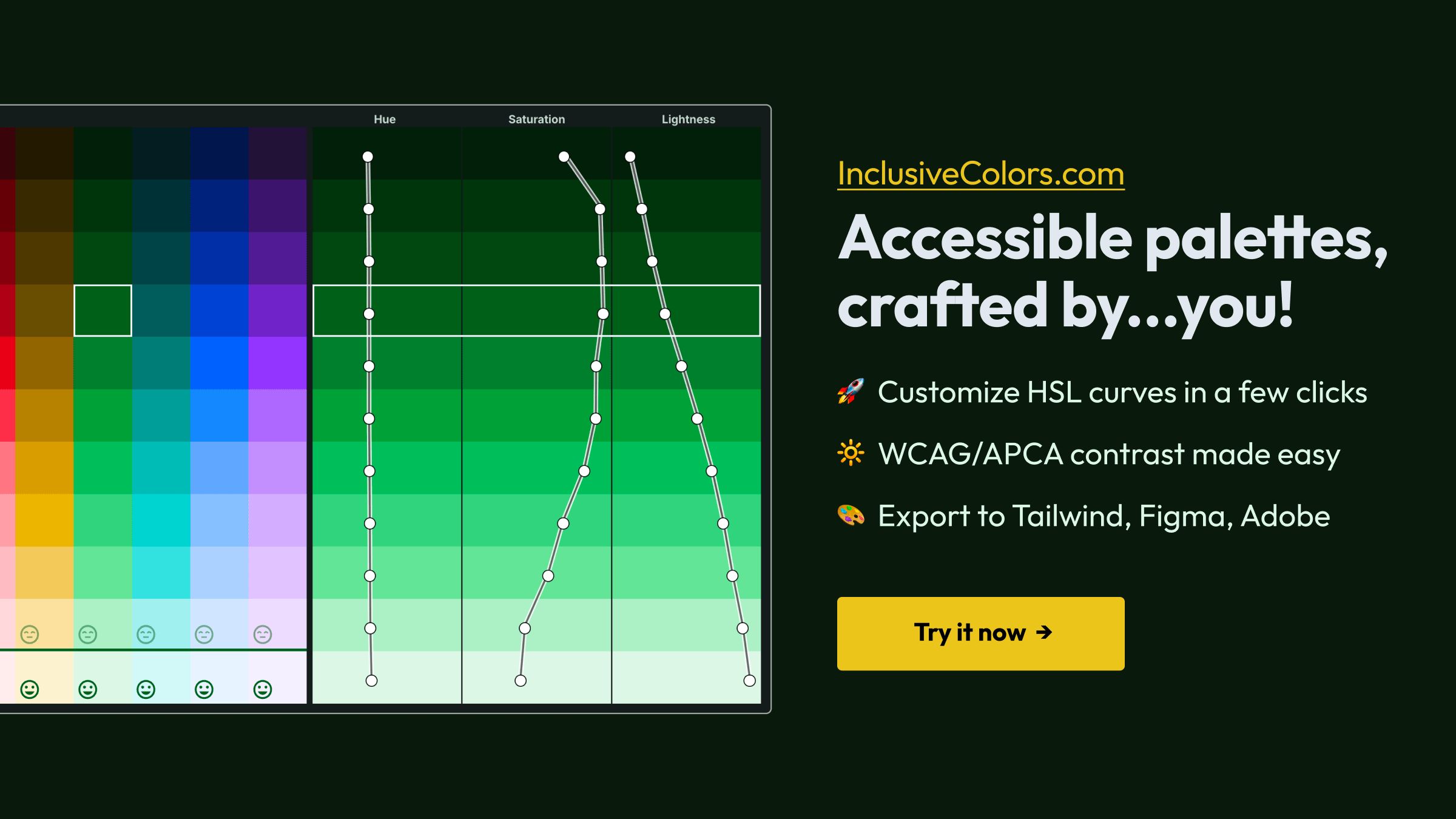
InclusiveColors - Accessible color palette creator
Try it now to create your own color palettes!

This is a modern motherfucking website.
Zero of the bullshit.
WebAIM: Resources
Utah State University 6807 Old Main Hill Logan, UT 84322-6807 435.797.7024
AI Doesn't Fix Accessible Systems. It Depends on Them. — Anna E. Cook
Why AI depends on the foundation accessible design systems build — and how "AI will fix accessibility" is producing the opposite outcome at industry scale.

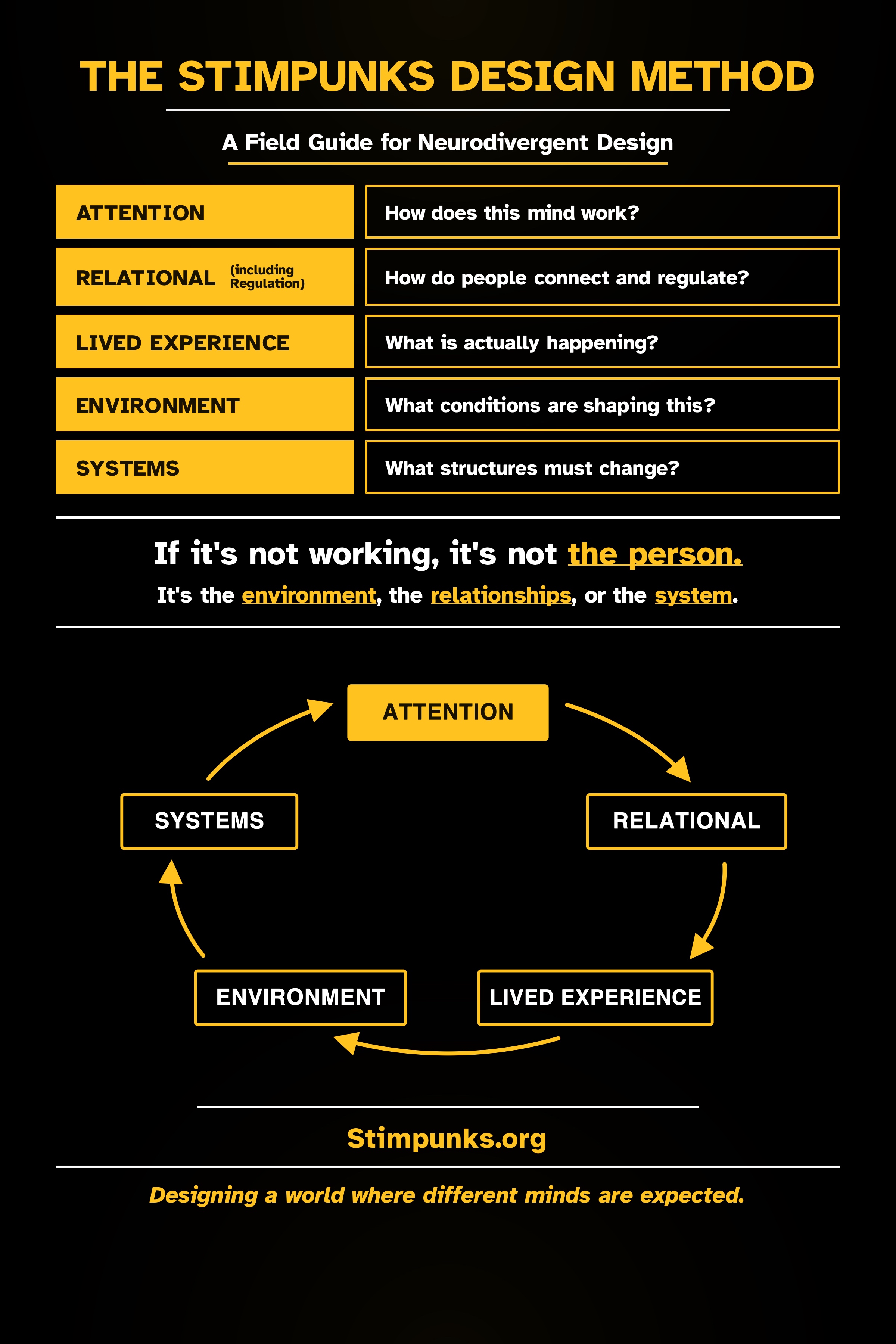
The Stimpunks Design Method
Most institutions try to fix people. Stimpunks redesigns environments. The Stimpunks Design Method uses pattern language to help people design environments where neurodivergent minds can thrive. The Stimpunks Design Method is a practical framework for building systems that work for real human minds. It begins with attention and nervous system safety, builds shared language, redesigns […]
Co-Design
Co-design means the people affected by a design hold power over it — from the beginning, not at the end. Co-design isn't consultation at the testing stage. It is power-sharing at the architecture stage.

Substrates 2025 - Proceedings
This initial workshop of the Substrates community was held on June 3rd, 2025, hosted at the ‹Programming› 2025 Conference at Prague, Czechia.
Substrates via Accessibility
The social model of disability holds that disability is produced by environments, not by bodies — that when software fails to accommodate a person’s needs, the environment is disabling them. We argue that the dominant organization of computing produces such interaction mismatches structurally: the commodity form of software requires a standardized consumer, and everyone whose needs diverge from this imagined subject is disabled by the software environment. The substrates research community has identified properties — disclosure, composability, malleability — that would address this, but the commodity form actively selects against these properties because they dissolve the boundaries on which exchange value depends. This raises a question: how can infrastructure organized against the grain of commodity logic be made durable? We find a precedent in accessibility infrastructure — sustained not by patronage but by the organized counter-power of disability rights movements. Through Allio, a system for cross-application augmentation built on accessibility APIs, we illustrate both what this foundation makes possible and where its limits lie. We argue that the accessibility case reframes the substrates programme’s central challenge as political-economic: the question of who sustains substrate infrastructure, and through what social mechanisms, is as important as the question of what properties it should have.
Computing Substrates

Disability-driven Development
Disability-driven Development is a practice that reimagines computing from a disabled perspective.
Inclusive Design 24 #id24

say eugenics, say it again

Why AI is exposing design’s craft crisis

tech isn’t the future it’s just capitalism faster
The Dunning-Kruger effect in accessibility - Craig Abbott
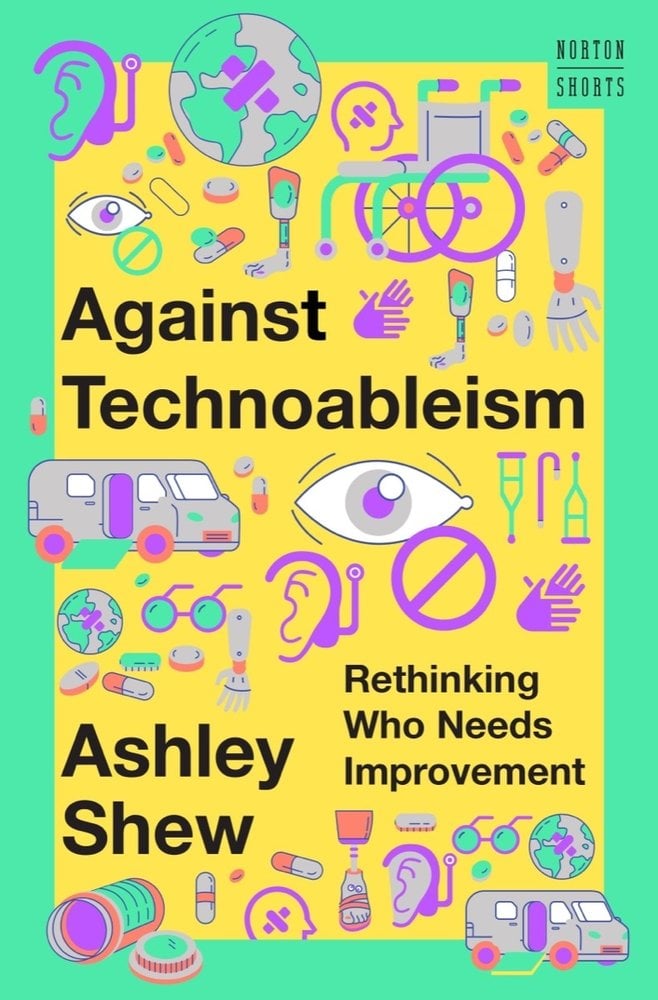
Against Technoableism

Introducing Patchwork-26
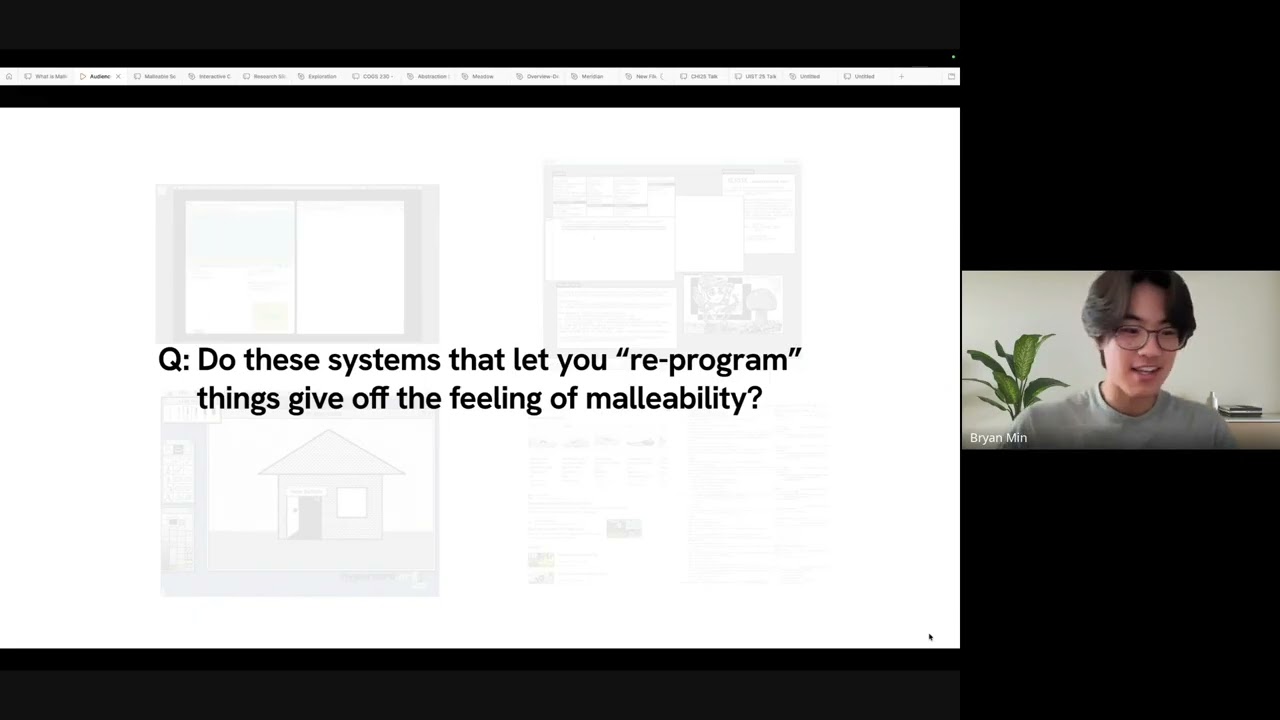
What is Malleable Software Now | Bryan Min (02-27-2026)
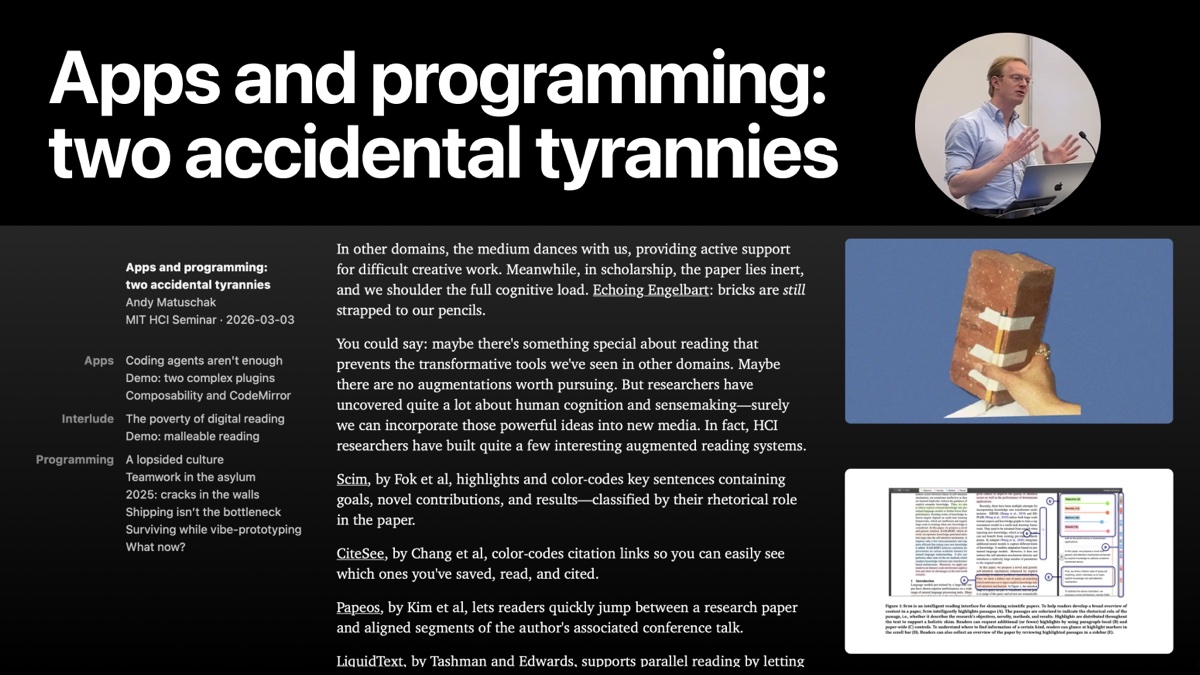
Apps and programming: two accidental tyrannies
Substrates 2025 - Proceedings
pure.au.dk

𝕮 (@chrisshank.com)