

Probably collecting links on Semble right now (semble.so/profile/miftah.tngl.sh) miftah.tngl.sh
Probably collecting links on Semble right now (semble.so/profile/miftah.tngl.sh) miftah.tngl.sh

About legal framework not recognizing male victims <=> includes the prevalence of disabled male victims of sexual abuse
About the same thing
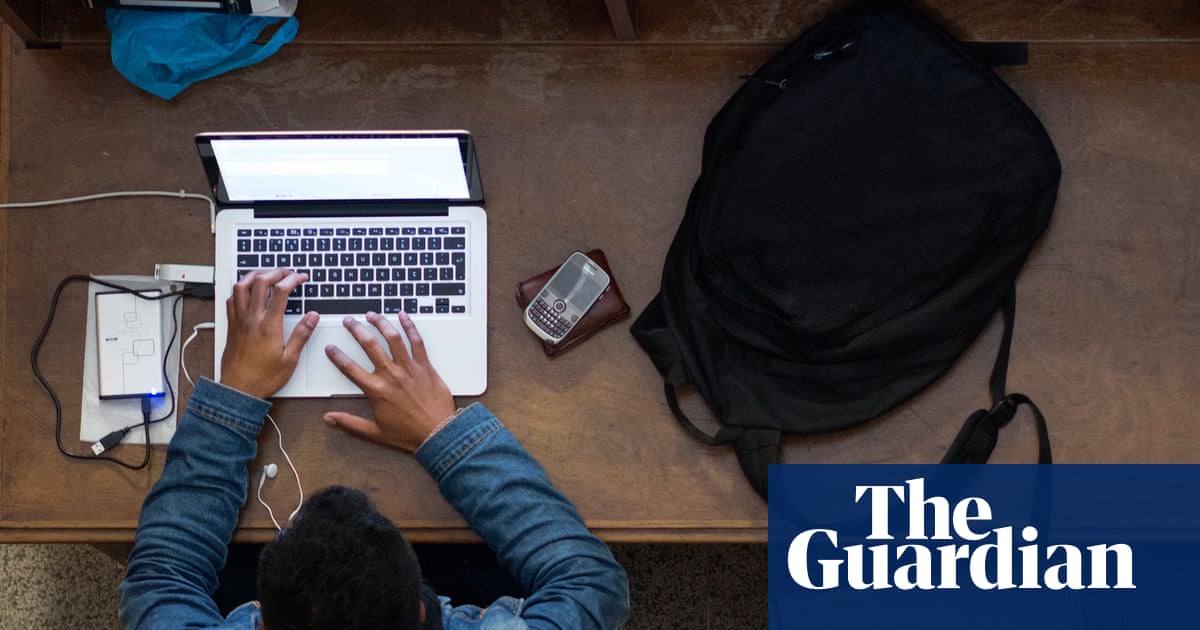
Online ads weaponised to deliver ‘zero-click’ spyware, researchers say
Discover-Tech’s Controlium software lets clients mass-profile internet users then covertly hack targets, say researchers at University of Toronto
ADINT: Weaponized Ad Tech for Zero-Click Spyware and Mass Identity Vacuuming
Confiant Threat Intelligence - security@confiant.com
Online ads weaponised to deliver ‘zero-click’ spyware, researchers say
Discover-Tech’s Controlium software lets clients mass-profile internet users then covertly hack targets, say researchers at University of Toronto
Exposing AdFection: How Discover-Tech Turned Targeted Ads Into a Pipeline for Zero-Click Mercenary Spyware - The Citizen Lab
This is the first-ever public confirmation of zero-click mercenary spyware delivered via targeted ads. We call the technique AdFection, and show how it was used to infect devices at Al Jazeera with Candiru’s spyware. We also uncover Discover-Tech, and show how the company helps mercenary surveillance vendors track and hack devices around the world.
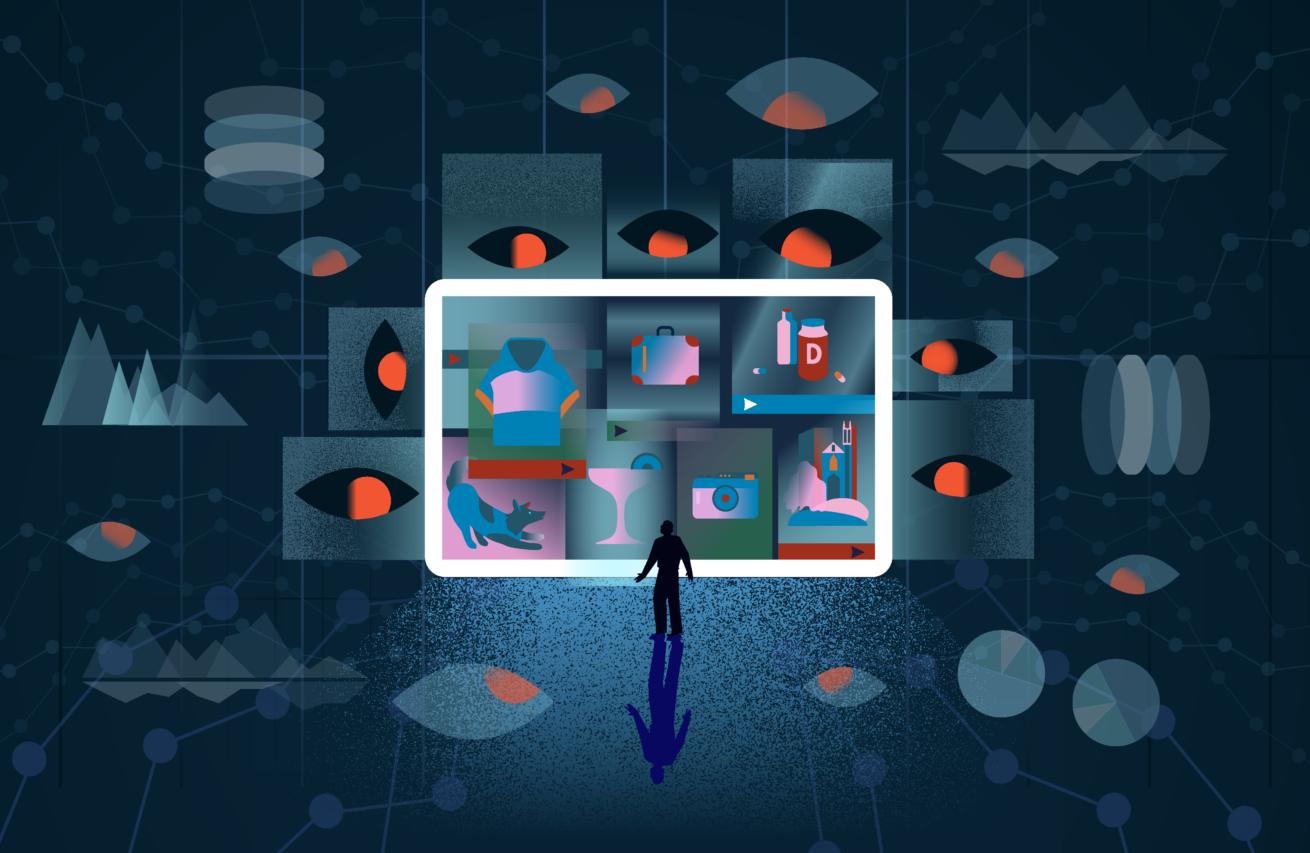
Dispute over fate of Kenyan workers who saw Meta AI glasses films
Meta and its subcontractor disagree over why over 1000 Kenya-based workers were made redundant.

Imran Hossain
দেশে নতুন এক প্রজাতির কনটেন্ট ক্রিয়েটর বের হয়েছে— এরা মেটা-রে ব্যান গ্লাস (ভিডিও করা যায় এমন চশমা) পরে সুপারশপে গিয়ে উল্টাপাল্টা প্রোডাক্ট নিয়ে সেলসম্যান বা কাউন্টারে থাকা ক্যাশিয়ারের সাথে মজা নেয়।...
How data centres are draining water and energy from the Global South
The story started in Georgia, US—not with a law being broken in some faraway place, but with residents noticing something wrong in their own homes: the water pressure kept dropping unusually.

Marxism & the Global South
A critical history of imperialism and dependency theory, from Marx on colonialism and Eurocentrism to Baran, Frank, Wallerstein, and Samir Amin.
Essays in Indian History: Towards a Marxist Perception ; With, The Economic History of Medieval India: a Survey
This volume brings together, for the first time, several of Professor Habib's essays, representing three decades of scholarship and providing an insightful interpretation of the main currents in Indian history from the standpoint of Marxist historiography. The collection examines the role played by the peasantry and caste in Indian history; explores the forms of class struggle and the stage of Indian economic development in Mughal India; analyses the impact of colonialism on the Indian economy; and chronicles the changes in Marx's perception of India. These painstakingly researched and erudite essays form a volume that is indispensable for scholars and students of Indian history.
Marxism & the Global South
A critical history of imperialism and dependency theory, from Marx on colonialism and Eurocentrism to Baran, Frank, Wallerstein, and Samir Amin.
Marxism & the Global South
A critical history of imperialism and dependency theory, from Marx on colonialism and Eurocentrism to Baran, Frank, Wallerstein, and Samir Amin.
A Modern Guide to Thinking, Fast and Slow - Critikid
A chapter-by-chapter analysis of Kahneman's text with a focus on the replication crisis, clarifying which findings remain solid and which have not held up to scrutiny.
Thinking, Fast and Slow
Thinking, Fast and Slow is a 2011 popular science book by the Israeli-American psychologist Daniel Kahneman. Its main thesis is a differentiation between two modes of thought: "System 1" is fast, instinctive and emotional; "System 2" is slower, more deliberative, and more logical.

You Don’t Own the Word “Freedom”: A Full-Burn Response to the GNU/Linux Comment That Tried to Gatekeep Me Off My Own Machine — fireborn
I woke up this morning to a comment on the first post in the 'I Want to Love Linux' series. Congratulations, random internet user: you earned a full-length blog post in response. Not because you're special, but because your comment is the perfect storm of everything that’s wrong with the self-righteous, gatekeeping corner of this ecosystem—the part that cloaks cruelty in the language of freedom, then acts shocked when people stop showing up.
I Want to Love Linux. It Doesn’t Love Me Back: Post 1 – Built for Control, But Not for People — fireborn
It’s responsive—sometimes. Some things just work plain better. Settings being stored in actual config files instead of opaque registries? That’s an accessibility win. When something breaks, you don’t have to reinstall the whole OS like you would on Windows. Most importantly: it’s mine. To do with as I please. To fix, break, rebuild, and own.
WebAIM: The WebAIM Million - The 2026 report on the accessibility of the top 1,000,000 home pages
For the eighth consecutive year, WebAIM conducted an accessibility evaluation of the home pages for the top 1,000,000 web sites. The evaluation was conducted using the WAVE stand-alone API (with additional tools to collect site technology and category data). The results provide an overview of and insight into the current state of web accessibility for individuals with disabilities as well as trends over time.
The Code of Shame: Stigmatisation of Male Rape Victims in Bangladesh | OHRH
Image credit: Yosi Prihantoro via Unsplash: https://unsplash.com/photos/man-in-gray-long-sleeve-shirt-and-black-pants-sitting-on-white-floor-tiles-gXUEQEtpjMs

Prevalence and experience of violence against persons with disabilities in Bangladesh: findings from a nationwide mixed-method study
Current prevalence of disability in Bangladesh stands at 7.14%. Due to various misconceptions, stigma, and lack of policies, they are more vulnerable to violence and abuse from perpetrators. However, there is a paucity of research on the prevalence of emotional, physical, and sexual violence in the country. To address this knowledge gap, the current study aims to estimate the prevalence and explore the experiences of emotional abuse, physical, and sexual violence of persons with disabilities with their coping strategies. This study adopted a mixed-method sequential design comprising qualitative and quantitative components. A total of 5000 persons with disabilities were interviewed during the survey, and mini-ethnographic case studies were conducted with 51 purposively selected persons with disabilities from all eight administrative divisions of Bangladesh. Descriptive and bivariate statistical analysis was performed for quantitative data. Qualitative data were analysed through thematic analysis. The study concludes that the lifetime prevalence of emotional, physical, and sexual abuse is 68.9%, 26.6%, and 11.5%, respectively. Male participants were more prone to experience sexual abuse than females for both lifetimes (male: 12.7% & female: 10.3%) and within the last 12 months before the survey (male: 6.6% & female: 5.1%). Neighbours and close family members were found to be perpetrators of emotional and physical violence, whereas immediate family members were the perpetrators of sexual violence. Even though participants shared several coping mechanisms, equal to or less than 0.5% sought help from a counsellor to cope with the trauma. Results from the study correspond to the earlier studies with implications for future research and urgent policy reform. Although women are more vulnerable to experiencing different forms of violence, men with disabilities are no different. However, this remains unseen and unheard. To reduce the prevalence of violence against this marginalised group, a coordinated and collaborative approach is required targeting nationwide sensitisation, easy access to help-seeking centres, and adequate policy implementation.

Prevalence and experience of violence against persons with disabilities in Bangladesh: findings from a nationwide mixed-method study
Current prevalence of disability in Bangladesh stands at 7.14%. Due to various misconceptions, stigma, and lack of policies, they are more vulnerable to violence and abuse from perpetrators. However, there is a paucity of research on the prevalence of emotional, physical, and sexual violence in the country. To address this knowledge gap, the current study aims to estimate the prevalence and explore the experiences of emotional abuse, physical, and sexual violence of persons with disabilities with their coping strategies. This study adopted a mixed-method sequential design comprising qualitative and quantitative components. A total of 5000 persons with disabilities were interviewed during the survey, and mini-ethnographic case studies were conducted with 51 purposively selected persons with disabilities from all eight administrative divisions of Bangladesh. Descriptive and bivariate statistical analysis was performed for quantitative data. Qualitative data were analysed through thematic analysis. The study concludes that the lifetime prevalence of emotional, physical, and sexual abuse is 68.9%, 26.6%, and 11.5%, respectively. Male participants were more prone to experience sexual abuse than females for both lifetimes (male: 12.7% & female: 10.3%) and within the last 12 months before the survey (male: 6.6% & female: 5.1%). Neighbours and close family members were found to be perpetrators of emotional and physical violence, whereas immediate family members were the perpetrators of sexual violence. Even though participants shared several coping mechanisms, equal to or less than 0.5% sought help from a counsellor to cope with the trauma. Results from the study correspond to the earlier studies with implications for future research and urgent policy reform. Although women are more vulnerable to experiencing different forms of violence, men with disabilities are no different. However, this remains unseen and unheard. To reduce the prevalence of violence against this marginalised group, a coordinated and collaborative approach is required targeting nationwide sensitisation, easy access to help-seeking centres, and adequate policy implementation.
Violating own policy, Meta monetized 19 Facebook pages of Bangladeshi law enforcement agencies
Under Meta's own policy, Facebook pages belonging to government agencies and institutions are not eligible for monetization. Yet at least 19 Facebook pages belonging to Bangladesh's law enforcement agencies were found to have access to earning opportunities on the platform. Under Meta's own policy, Facebook pages belonging to government agencies and institutions are not eligible for monetization. Yet at least 19 Facebook pages belonging to Bangladesh's law enforcement agencies were found to have access to earning opportunities on the platform.
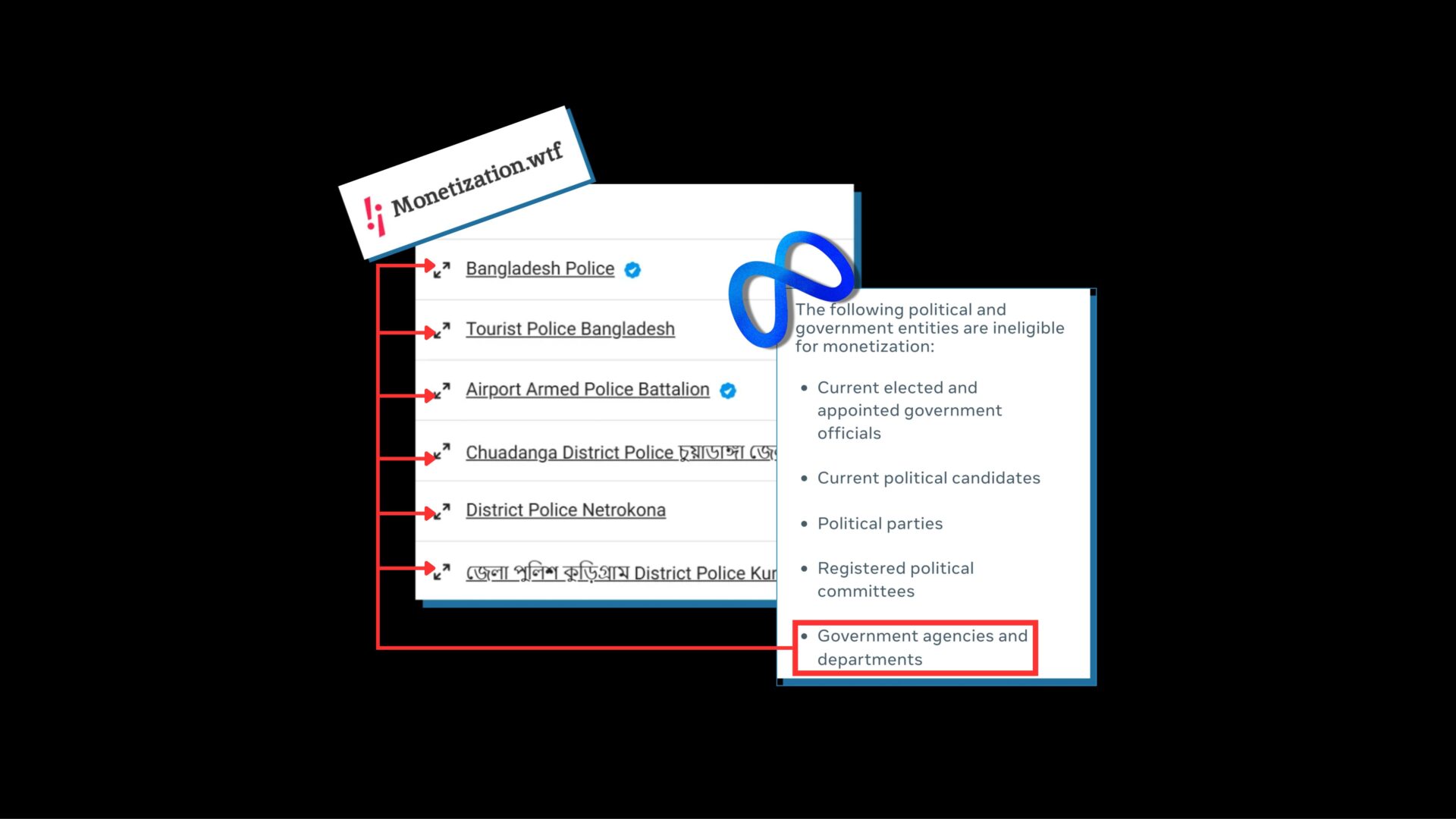
আইনশৃঙ্খলা বাহিনীর ফেসবুক পেজে মনিটাইজেশন, মেটার নীতি লঙ্ঘনের অভিযোগ
অনুসন্ধানে দেখা গেছে, কয়েকটি পেজকে মেটা বারবার মনিটাইজেশন কর্মসূচি থেকে সরিয়ে পরে আবার যুক্ত করেছে।

Meta cuts contractors who reported seeing Ray-Ban Meta users have sex
Meta said the Kenyan workers didn't "meet our standards."

Dispute over fate of Kenyan workers who saw Meta AI glasses films
Meta and its subcontractor disagree over why over 1000 Kenya-based workers were made redundant.
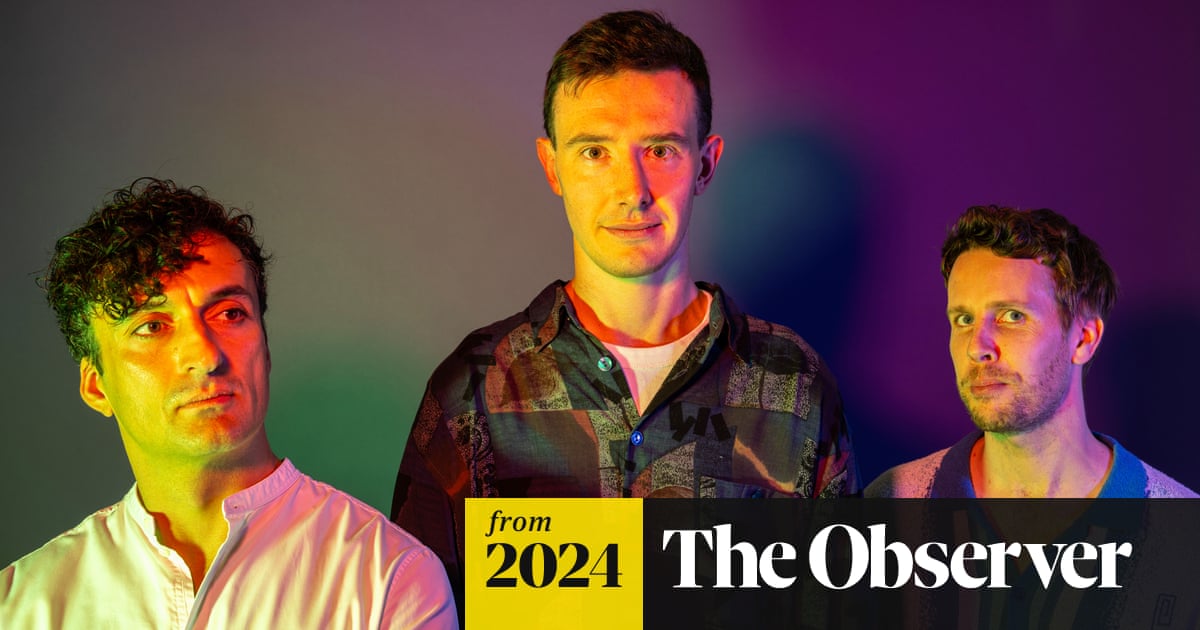
James Muldoon, Mark Graham and Callum Cant: ‘AI feeds off the work of human beings’
The Fairwork trio talk about their new book on the ‘extraction machine’, exposing the repetitive labour, often in terrible conditions, that big tech is using to create artificial intelligence
Feeding the Machine: The Hidden Human Labour Powering AI

Seven Theses from Feeding the Machine
New Book – Publication 18 July 2024 (UK) / 8 August 2024 (US)

Feeding the Machine: The Hidden Human Labour Powering AI