Collection
Household Finance and Financial Decision-Making

Updated 23d
Ideas mostly around financial judgment and decision-making. More broadly, household finance and personal finance.
Collection
Updated 23d
Ideas mostly around financial judgment and decision-making. More broadly, household finance and personal finance.
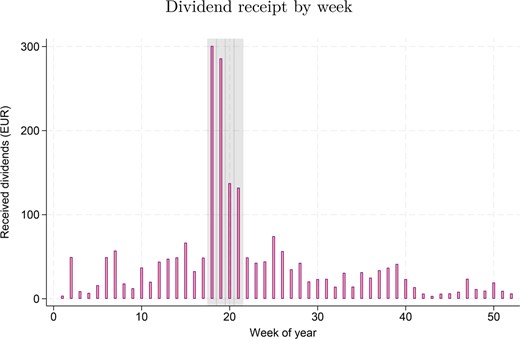
Educating Investors about Dividends
Abstract We educate investors about the benefits of dividend reinvestment and costs of misperceiving dividends as free income. The intervention increases planned dividend reinvestment in survey responses. Using trading records, we observe a causal increase in dividend reinvestment in the field of roughly 50 cents for every euro received. This holds relative to investors’ prior behavior and various control samples. Investors who learned the most from the intervention update their trading the most. The results suggest the free dividends fallacy is a significant source of dividend demand. Our study demonstrates that simple, targeted, and focused educational interventions can affect investment behavior.
The Dividend Disconnect
ABSTRACT Many individual investors, mutual funds, and institutions trade as if dividends and capital gains are disconnected attributes, not fully appreciating that dividends result in price decreases. Behavioral trading patterns (e.g., the disposition effect) are driven by price changes instead of total returns. Investors rarely reinvest dividends, and trade as if dividends are a separate, stable income stream. Analysts fail to account for the effect of dividends on price, leading to optimistic price forecasts for dividend‐paying stocks. Demand for dividends is systematically higher in periods of low interest rates and poor market performance, leading to lower returns for dividend‐paying stocks.

The Red and the Black: Mental Accounting of Savings and Debt
In the standard economic account of consumer behavior the cost of a purchase takes the form of a reduction in future utility when expenditures that otherwise could have been made are forgone. The reality of consumer hedonics is different. When people make purchases, they often experience an immediate pain of paying, which can undermine the pleasure derived from consumption. The ticking of the taxi meter, for example, reduces one's pleasure from the ride. We propose a “double-entry” mental accounting theory that describes the nature of these reciprocal interactions between the pleasure of consumption and the pain of paying and draws out their implications for consumer behavior and hedonics. A central assumption of the model, which we call prospective accounting, is that consumption that has already been paid for can be enjoyed as if it were free and that the pain associated with payments made prior to consumption (but not after) is buffered by thoughts of the benefits that the payments will finance. Another important concept is coupling, which refers to the degree to which consumption calls to mind thoughts of payment, and vice versa. Some financing methods, such as credit cards, tend to weaken coupling, whereas others, such as cash payment, produce tight coupling. Our model makes a variety of predictions that are at variance with economic formulations. Contrary to the standard prediction that people will finance purchases to minimize the present value of payments, our model predicts strong debt aversion—that they should prefer to prepay for consumption or to get paid for work after it is performed. Such pay-before sequences confer hedonic benefits because consumption can be enjoyed without thinking about the need to pay for it in the future. Likewise, when paying beforehand, the pain of paying is mitigated by thoughts of future consumption benefits. Contrary to the economic prediction that consumers should prefer to pay, at the margin, for what they consume, our model predicts that consumers will find it less painful to pay for, and hence will prefer, flat-rate pricing schemes such as unlimited Internet access at a fixed monthly price, even if it involves paying more for the same usage. Other predictions concern spending patterns with cash, charge, or credit cards, and preferences for the earmarking of purchases. We test these predictions in a series of surveys and in a conjoint-like analysis that pitted our double-entry mental accounting model against a standard discounting formulation and another benchmark that did not incorporate hedonic interactions between consumption and payments. Our model provides a better fit of the data for 60% of the subjects; the discounting formulation provides a better fit for only 29% of the subjects (even when allowing for positive and negative discount rates). The pain of paying, we argue, plays an important role in consumer self-regulation, but is hedonically costly. From a hedonic perspective the ideal situation is one in which payments are tightly coupled to consumption (so that paying evokes thoughts about the benefits being financed) but consumption is decoupled from payments (so that consumption does not evoke thoughts about payment). From an efficiency perspective, however, it is important for consumers to be aware of what they are paying for consumption. This creates a tension between hedonic efficiency and what we call decision efficiency. Various institutional arrangements, such as financing of public parks through taxes or usage fees, play into this tradeoff. A producer developing a pricing structure for their product or service should be aware of these two conflicting objectives, and should try to devise a structure that reconciles them.

A Mega-Replication of the Effect of Cash Versus Card Payment on Pain of Paying: Magnitude, Behavioral Outcomes, and Moderators
Abstract We revisit the widely accepted finding that paying with cash is more painful than paying with card by conducting the first systematic mega-replication (including 13 large-scale preregistered replications; a total of 32,371 participants, 65 products, and 57 price points ranging from $1.09 to $400). The aggregate evidence reveals four insights: (1) leveraging a broad set of established paradigms, we replicate the finding that paying with cash is more psychologically painful than paying with card, even among today’s consumers who own multiple cards, digital wallets, and virtual currencies; (2) comparing two outcome variables—amount spent and willingness-to-pay (WTP), we find a more reliable and larger overall direct effect of payment method on amount spent than on WTP; (3) these direct effects of payment method on outcome variables are mediated by pain of paying; (4) the mode-of-payment effect on pain of paying (and thereby on outcome variables) is moderated by individual differences, particularly the relative frequency of using cash versus card. We outline actionable guidance and future directions for researchers and practitioners interested in examining mode-of-payment effects, and discuss the value of and suitable approaches for future theory-driven large-scale replications.

Credit Access in the United States
We measure differences in US households’ access to credit and explore the mechanisms driving such differences using newly constructed population-level linked credit bureau and Census data. We find large differences in credit scores by race, class, and hometown that emerge in one’s 20s and persist throughout the life cycle. These gaps are primarily driven by differences in delinquencies that emerge in young adulthood. By age 30, 73% of Black individuals, 62% of those from low-income families, and 51% of those from Appalachia and the South have a 90+ day delinquency on their credit report, in contrast to 36% for White individuals, 20% for high-income families, and 31% for those from the upper Midwest. These delinquencies are correlated with income and wealth, but observed income profiles and wealth account for at most 10–35% of the gaps in delinquencies across groups. In contrast, movers-based estimates of hometown effects imply that childhood exposure accounts for around 50% of the differences in delinquencies across hometowns. Counties that promote repayment also promote upward income mobility, but adult income mediates only a small fraction of this relationship: growing up in a place where others are likely to repay improves credit outcomes even for those who do not have higher income in adulthood. We provide suggestive evidence on the mechanisms driving these patterns. JEL Codes: G5, H0.

Artificial intelligence and personal finance
Artificial intelligence (AI) is transforming how consumers access and use financial information, education and advice for personal financial decision making. While consumers’ increasing use of AI tools and AI-generated content for personal finance brings opportunities in terms of accessibility, personalisation and decision making, it also increases risks related to bias, hallucinations, commercial influence, data privacy and exclusion, with uncertain benefits on long-term financial well-being. This policy paper provides policymakers and stakeholders with an overview of current trends, opportunities and risks in the use of AI in personal finance and in the design and delivery of financial education. It also proposes a set of financial literacy competencies to support the use of AI in personal financial decision making.

Disclosing the costs of co-holding liquid assets and high-interest debt has limited impact on behavior
Abstract Why do consumers simultaneously maintain low-yield liquid assets and high-interest revolving debt? This behavior, known as ``co-holding,'' affects 23\% of credit card users in our sample from a major international bank and costs the typical co-holder hundreds of dollars annually in unnecessary interest charges. Our analysis of 38 months of detailed banking records reveals that co-holding is remarkably persistent, with typical co-holders maintaining this behavior for most months observed. Our analysis also reveals that co-holding is not a static financial position: co-holders regularly deposit and withdraw from asset accounts while simultaneously making new credit card purchases. To test whether co-holding could be addressed through information disclosure, we conducted a large-scale field experiment (n = 125,328), providing clear information about co-holding behavior and its costs. Customers received targeted messages through their bank's mobile app, where they could easily transfer money from assets to pay down debt. Despite sufficient power to detect economically small effects, we found no meaningful changes in debt repayment amount, though customers did respond in other ways---making more frequent repayments and paying above required minimums. These results challenge explanations based on limited attention or information gaps and suggest that simple information disclosure, even when carefully designed and delivered through trusted channels, may not effectively address costly financial behaviors.

A Yale Professor’s Investment Formula Says You Need More Stocks. See How It Works.
A new way to allocate assets in your portfolio takes another look at factors like age, income and risk tolerance—whether you are young, middle-aged or retired.

Double Mental Discounting: When a Single Price Promotion Feels Twice as Nice
This research finds that when a single gain has strong associations with multiple costs, consumers often mentally deduct that gain from perceived costs multiple times. For example, with some price promotions (e.g., spend $200 now and receive a $50 gift card to spend in the future), consumers mentally deduct the value of the price promotion from the cost of the first purchase when they receive the promotion, as well as from the cost of the second purchase when they use the promotion. Multiple mental deductions based on a single gain result in consumers' perceptions that their costs are lower than they actually are, which can trigger higher expenditures. This mental accounting phenomenon, referred to as “double mental discounting,” is driven by the extent to which gains feel associated, or coupled, with multiple purchases. This article also documents methods to decouple promotional gains from purchases, thus mitigating double mental discounting.

Should Artists Shop or Stop Shopping? | Affidavit | Sheila Heti
Am I still capable of looking slowly, as if coming in from the side? Or have I ruined myself? Can I now only buy?
Credit Cards as Spending Facilitating Stimuli: A Conditioning Interpretation
Abstract. Four experiments and one study were conducted to test the hypothesis that stimuli associated with spending can elicit spending responses. In all
Payment Rewards and Credit Card Debt: Experimental Evidence
We report on a controlled laboratory experiment in which participants make consumption, saving, and credit card repayment decisions when credit card purchases e

HMDA - Home Mortgage Disclosure Act
Global Data on Financial Inclusion | FinDev Gateway
Explore our curated list of data sources relevant for microfinance and financial inclusion.
I will be presenting in the NBER Household Finance Summer Institute session this Friday at 1pm on "Using AI in Household Finance Research: A Practical Guide." nber.org/conferences/si-2026-household…

SI 2026 Household Finance
www.nber.org