Household Finance
Household financial decisions are complex, interdependent, and heterogeneous, and central to the functioning of the financial system. We present an overview of the rapidly expanding literature on household finance (with some important exceptions) and suggest directions for future research. We begin with the theory and empirics of asset market participation and asset allocation over the life cycle. We then discuss household choices in insurance markets, trading behavior, decisions on retirement saving, and financial choices by retirees. We survey research on liabilities, including mortgage choice, refinancing, and default, and household behavior in unsecured credit markets, including credit cards and payday lending. We then connect the household to its social environment, including peer effects, cultural and hereditary factors, intra-household financial decision-making, financial literacy, cognition, and educational interventions. We also discuss literature on the provision and consumption of financial advice.
Consumer Financial Decision Making: Where We’ve Been and Where We’re Going
When making purchasing decisions, consumers consider their available budget and determine what payment method they will use as well as how they will finance the purchase. Consumers must also plan for long-term consumption by considering short- and long-term savings objectives, taking into account how they will invest money saved, as well as how they will borrow needed money and repay outstanding loans. This issue of the Journal of Association of Consumer Research explores financial decision making, which we define as the accumulation and use of resources across time, as reflected by consumers’ behavior and choices.

Household Financial Transaction Data
The growth of the availability and use of detailed household financial transaction micro data has dramatically expanded the ability of researchers to understand both household decision making and aggregate economic fluctuations across a wide range of fields. This class of transaction data is derived from a myriad of sources, including financial institutions, FinTech apps, and payment intermediaries. We review how these detailed data have been utilized in finance and economics research and analyze both their benefits and limitations as compared to more traditional measures of income, spending, and wealth. Finally, we discuss the future potential of this flexible class of data in firm-focused research, real-time policy analysis, and macro statistics.

Behaviorally Informed Policies for Household Financial Decisionmaking
Low incomes, limited financial literacy, fraud, and deception are just a few of the many intractable economic and social factors that contribute to the financial difficulties that households face today. Addressing these issues directly is difficult and costly. But poor financial outcomes also result from systematic psychological tendencies, including imperfect optimization, biased judgments and preferences, and susceptibility to influence by the actions and opinions of others. Some of these psychological tendencies and the problems they cause may be countered by policies and interventions that are both low cost and scalable. We detail the ways that these behavioral factors contribute to consumers’ fiancial mistakes and suggest a set of interventions that the federal government, in its dual roles as regulator and employer, could feasibly test or implement to improve household financial outcomes in a variety of domains: retirement, short-term savings, debt management, the take-up of government benefits, and tax optimization.

5: Behavioural biases in personal finance
Behavioural economics merges psychology and economics to explore systematic deviations in financial decision-making from traditional economic models. This chapter examines key biases such as mental accounting, present bias, planning fallacy, and misunderstanding of risk, which influence spending, saving, investing, and insuring decisions. Demonstrating the interplay of cognitive biases and heuristics highlights why individuals make suboptimal choices despite financial literacy and resource capacity. Strategies like goal-setting, commitment devices, and education interventions are evaluated, focusing on their limitations and potential for addressing these biases. The chapter concludes by emphasising the need for systemic changes, such as policy-level interventions and financial regulation, to complement behavioural interventions and address structural barriers to better financial decisions. Future research directions are suggested, including tailoring interventions, exploring technology's role, and integrating systemic solutions to support sustainable financial well-being.
Cash versus Debit Card: The Role of Budget Control
Due to the financial crisis, an increasing number of households face financial problems. This may lead to an increasing need for monitoring spending and budgets. We demonstrate that both cash and the debit card are perceived as helpful in this respect. We show that, on average, consumers responsible for financial decision making within a household find cash and the debit card equally helpful for monitoring their household finances. Individuals differ in major respects, however. In particular, low earners and the liquidity‐constrained prefer cash as a budgeting tool. Finally, we present evidence that at an aggregated level, such preferences strongly affect consumer payment behavior. These findings suggest that the substitution of cash by cards may slow down because of the financial crisis.

Co-holding behaviour: unlocking the puzzle
This article seeks to explain why households decide to simultaneously hold both credit and savings products. Beyond the arguments of ignorance or behavioural biases commonly used in the literature,...

Household Debt: Facts, Puzzles, Theories, and Policies
Borrowing decisions affect most households, with large stakes and implications for research subfields as varied as macroeconomics and industrial organization. I review theoretical and empirical work on household debt: its prevalence, level, growth, and composition, as well as various measures of consumer choice and market (in)efficiency, elasticities, and prices, including new evidence on how borrowing heterogeneity affects the distribution of the opportunity cost of consumption. I also discuss opportunities and challenges in policy evaluation. A key takeaway is that puzzles abound, and I highlight numerous avenues for further research.

Artificial intelligence and personal finance
Artificial intelligence (AI) is transforming how consumers access and use financial information, education and advice for personal financial decision making. While consumers’ increasing use of AI tools and AI-generated content for personal finance brings opportunities in terms of accessibility, personalisation and decision making, it also increases risks related to bias, hallucinations, commercial influence, data privacy and exclusion, with uncertain benefits on long-term financial well-being. This policy paper provides policymakers and stakeholders with an overview of current trends, opportunities and risks in the use of AI in personal finance and in the design and delivery of financial education. It also proposes a set of financial literacy competencies to support the use of AI in personal financial decision making.

The Co-holding Puzzle: New Evidence from Transaction-Level Data
Using detailed and highly disaggregated data on household finances, we examine the<br>tendency of consumers to “co-hold” savings and debt simultaneously. The di
The Coholding Puzzle: New Evidence from Transaction-Level Data
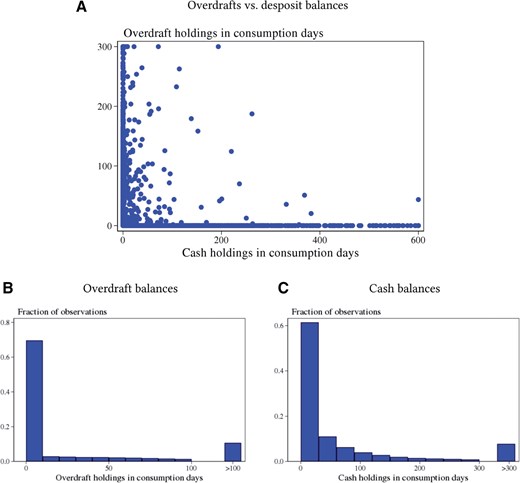
Abstract Why do individuals pay debt interest when they could use their savings to pay down the debt? We explore why individuals “cohold” debt and savings using detailed and highly disaggregated daily-level data on household finances. We find that coholding mostly occurs in short spells within the month and the level of coholding is typically modest. Periods of coholding are not associated with shocks at the individual level. We show that mental accounting has a role to play in explaining coholding, in particular how individuals allocate different categories of expenditure to accounts in credit and debit.

Household Need for Liquidity and the Credit Card Debt Puzzle
Abstract. In the 2001 U.S. Survey of Consumer Finances, 27% of households report simultaneously revolving significant credit card debt and holding sizeable

The ABCs of Financial Education: Experimental Evidence on Attitudes, Behavior, and Cognitive Biases
This paper uses a large-scale field experiment in India to study attitudinal, behavioral, and cognitive constraints that can stymie the link between financial education and financial outcomes. The study complements financial education with (i) financial incentives on a financial literacy test to affect participant motivation, (ii) financial goal setting to provide a psychological nudge, and (iii) personalized financial counseling to enhance the intensity of treatment. The analysis finds no impact of financial incentives on learning but significant effects of both goal setting and counseling on real financial outcomes. These results identify important complements to financial education that can bridge the gap between financial knowledge and behavior change. Data and the online appendix are available at https://doi.org/10.1287/mnsc.2017.2819 . This paper was accepted by Amit Seru, finance.

Rules of Thumb in Household Savings Decisions: Estimation Using Threshold Regression
The rules of thumb offered by financial advisors regarding how much to hold in liquid reserves vary widely and usually imply far greater sums than low-income ho
The Credit Card Debt Puzzle and Noncognitive Ability
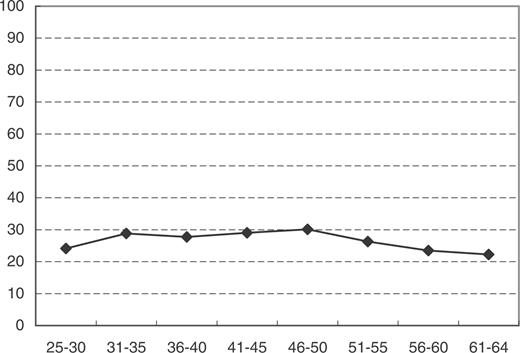
Abstract Many households concurrently hold low-yield liquid assets while incurring costly credit card debt. In our sample, more than 80% of households with credit card debt also have low-yield liquid assets. Using data from the Health and Retirement Study (N = 30,517), we examine the role of noncognitive skills as well as the economic, financial, and demographic factors that affect the likelihood of co-holding. We find that the “Big Five” personality traits have a statistically significant and economically important effect: households with a more agreeable, introvert, and less conscientious head of household are more likely to co-hold. We also examine the role of intra-household dynamics.

Intra-Household Frictions, Anchoring, and the Credit Card Debt Puzzle
Abstract I study how intra-household frictions and anchoring contribute to the credit card debt puzzle, the co-holding of high-cost debt, and low-yield liquid assets. First, I find couples co-hold 42% more as units than as individuals relative to income. Moreover, in a natural experiment, couples do not cooperate to reduce high-cost debt, suggesting that intra-household frictions contribute to co-holding. Second, I find individuals who regularly make credit card debt payments equal to or near the minimum account for 59% of individual co-holding. The evidence suggests anchoring to the minimum payment contributes to co-holding via these low payments.