Collection
Magical Mechanisms

Updated 12d
Empirical papers where magical beliefs lead to real consequences.
Collection
Updated 12d
Empirical papers where magical beliefs lead to real consequences.
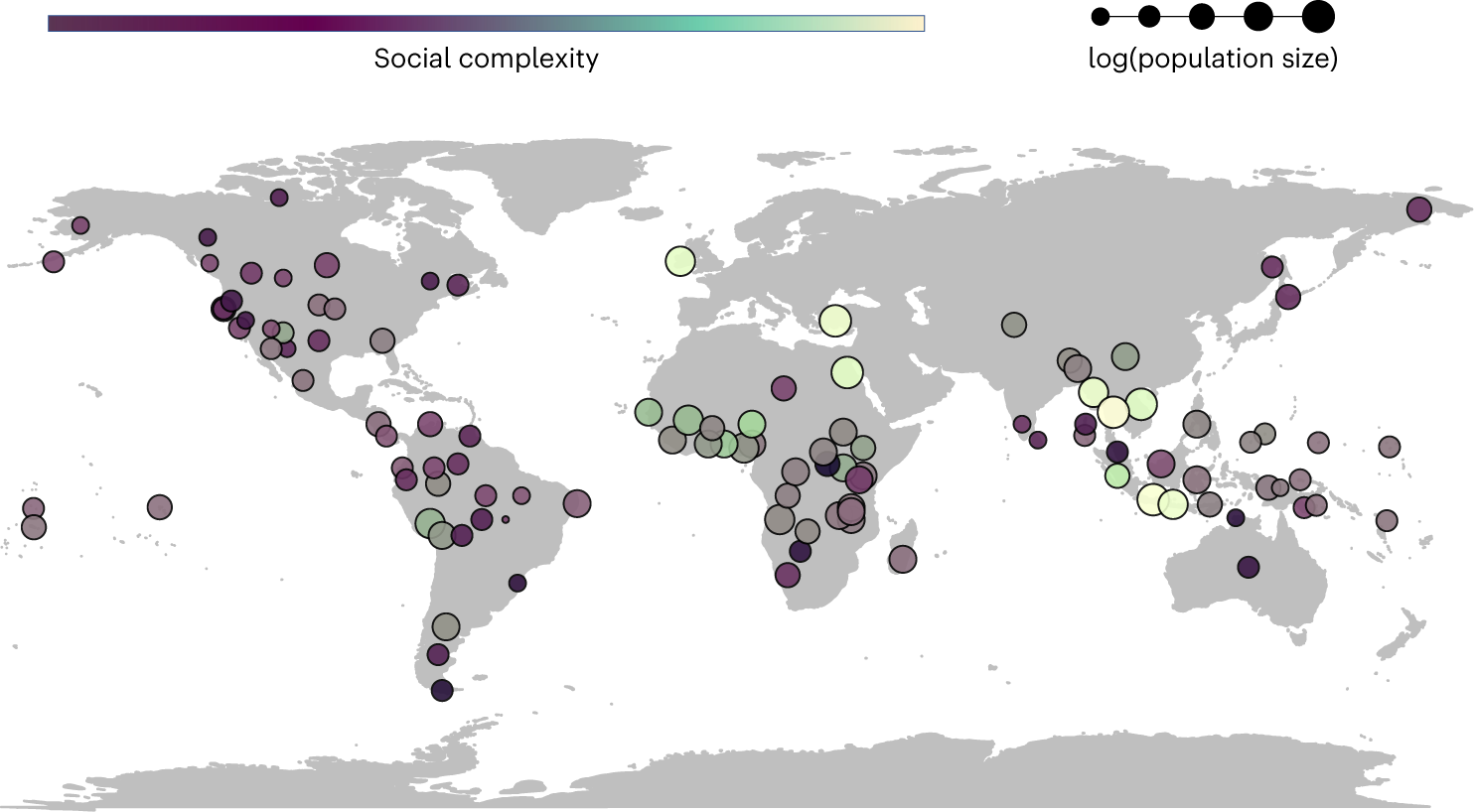
Supernatural explanations across 114 societies are more common for natural than social phenomena
Humans across the globe use supernatural beliefs to explain the world around them. This article explores whether cultural groups invoke the supernatural more to explain natural phenomena (for example, storms, disease outbreaks) or social phenomena (for example, murder, warfare). Quantitative analysis of ethnographic text across 114 geographically and culturally diverse societies found that supernatural explanations are more prevalent for natural than for social phenomena, consistent with theories that ground the origin of religious belief in a human tendency to perceive intent and agency in the natural world. Despite the dominance of supernatural explanations of natural phenomena, supernatural explanations of social phenomena were especially prevalent in urbanized societies with more socially complex and anonymous groups. Our results show how people use supernatural beliefs as explanatory tools in non-industrial societies, and how these applications vary across small-scale communities versus large and urbanized groups.
Why Being Wrong Can Be Right: Magical Warfare Technologies and the Persistence of False Beliefs
Across human societies, one sees many examples of deeply rooted and widely held beliefs that are almost certainly untrue. Examples include beliefs about witchcraft, magic, ordeals, and superstitions. Why are such incorrect beliefs so prevalent and how do they persist? We consider this question through an examination of superstitions and magic associated with conflict in the Eastern Democratic Republic of the Congo. Focusing on superstitions related to bullet-proofing, we provide theory and case-study evidence showing how these incorrect beliefs persist. Although harmful at the individual-level, we show that they generate Pareto efficient outcomes that have group-level benefits.
Niche construction on Bali: the gods of the countryside
Human niche construction encompasses both purely biological phenomena, such as the evolution of lactose tolerance, and dual inheritance theory, which investigates the transmission of cultural information. But does niche construction help to explain phenomena in which conscious intention also plays a role? The creation of the engineered landscape of Balinese rice terraces offers a test case. Population genetic analysis and archaeological evidence are used to investigate whether this phenomenon emerged historically from trial and error by generations of farmers, or alternatively was designed by Bali's rulers. In light of strong support for the former hypothesis, two models are developed to explore the emergence of functional structure at both local and global scales. As time goes forward and selected patterns of irrigation schedules are implemented, local variation in rice harvests influences future decisions by the farmers, creating a coupled human–natural system governed by feedback from the environment. This mathematical analysis received a measure of empirical support when government agricultural policies severed the local feedback channels, resulting in the almost instantaneous collapse of rice harvests. The historical process of niche construction may also have included an evolution of religious consciousness, reflected in the beliefs and practices of the water temple cult.
Emergent Properties of Balinese Water Temple Networks: Coadaptation on a Rugged Fitness Landscape
For over a thousand years, generations of Balinese farmers have gradually transformed the landscape of their island, clearing forests, digging irrigation canals, and terracing hillsides to enable themselves and their descendants to grow irrigated rice. Paralleling the physical system of terraces and irrigation works, the Balinese have also constructed intricate networks of shrines and temples dedicated to agricultural deities. Ecological modeling shows that water temple networks can have macroscopic effects on the topography of the adaptive landscape, and may be representative of a class of complex adaptive systems that have evolved to manage agroecosystems.

Balinese “Water Temples” and the Management of Irrigation
Bali has figured prominently in debates on the question of whether irrigation centralizes state power. New evidence shows that irrigation is actually organized by networks of “water temples” that constitute an institutional system separate from the state. Earlier attempts to identify a discrete system of irrigation management misconceived the problem. For most crops, irrigation simply provides water for the plant's roots. But in a Balinese rice terrace, water is used to construct a complex, pulsed artificial ecosystem. Water temples manipulate the states of the system, at ascending levels in regional hierarchies. The permanence of water temple networks contrasts sharply with the instability of the traditional Balinese states. Since the water temples are real, perhaps it is the Balinese “state” that is chimerical.

Extreme Rituals Promote Prosociality
If you have citation software installed, you can download citation data to the citation manager of your choice

Body Piercing in “Modern Primitivism” and in Thailand's Vegetarian Festival: A Comparative Study
Western “modern primitivists” and spirit mediums at the Vegetarian Festival in southern Thailand are the leading practitioners of body piercing in the contemporary world. This comparative study finds that they share a similar marginal social background and aspirations for individual distinction through body piercing, but differ radically in the cultural context, specific practices, and kinds of objects used for piercing. “Modern primitivists” are pierced by relatively small piercing objects, which combine with tattoos as part of their everyday attire. Entranced spirit mediums, believed to be possessed by Chinese deities, tend to be pierced by spectacular piercing objects, but only during the Chinese shrines' street processions in course of the annual Vegetarian Festival. In contrast to the “modern primitivists,” who are shunned by mainstream society, the spirit mediums are worshipped as deities by devotees, and constitute a major, but ambiguous attraction for foreign tourists: while piercings are “real,” and hence “authentic,” the sight of gruesome self-mutilation by some pierced mediums may offend the tourists' sensibilities. The article concludes with the observation that some “authentic” sights might be too hard for some tourists to bear and will hence repel rather than attract them. “Bearability” is thus a factor mitigating the attractiveness of such sights.
Effects of Extreme Ritual Practices on Psychophysiological Well-Being
Extreme ritual practices involving pain and suffering pose significant risks such as injury, trauma, or infection. Nonetheless, they are performed by millions of people around the world and are often culturally prescribed remedies for a variety of maladies, and especially those related to mental health. What is the actual impact of these practices on health? Combining ethnographic observations and psychophysiological monitoring, we investigated outcomes of participation in one of the world’s most extreme rituals, involving bodily mutilation and prolonged suffering. Performance of this physically demanding ordeal had no detrimental effects on physiological health and was associated with subjective health improvements, and these improvements were greater for those who engaged in more intense forms of participation. Moreover, individuals who experienced health problems and/or were of low socioeconomic status sought more painful levels of engagement. We suggest two potential mechanisms for these effects: a bottom-up process triggered by neurological responses to pain and a top-down process related to increased social support and self-enhancement. These mechanisms may buffer stress-induced pressures and positively affect quality of life. Our results stress the importance of traditional cultural practices for coping with adversity, especially in contexts where psychiatric or other medical interventions are not widely available.

Pain and Sacrifice: Experience and Modulation of Pain in a Religious Piercing Ritual
Fascinating pain-related rituals have been observed throughout the world, but so far no systematic evidence exists to support previous ethnographic reports of analgesic states and dissociative sym...

An investigation into alleged ‘hauntings’
In cases of alleged hauntings, a large number of seemingly trustworthy witnesses consistently report experiencing unusual phenomena (e.g. apparitions, sudden changes in temperature, a strong sense of presence) in certain locations. The two studies reported here explored the psychological mechanisms that underlie this apparent evidence of ‘ghostly’ activity. The experiments took place at two locations that have a considerable reputation for being haunted—Hampton Court Palace (Surrey, England) and the South Bridge Vaults (Edinburgh, Scotland). Both studies involved participants walking around these locations and reporting where they experienced unusual phenomena. Results revealed significantly more reports of unusual experiences in areas that had a reputation for being haunted. This effect was not related to participants' prior knowledge about the reputation of these areas. However, the location of participants' experiences correlated significantly with various environmental factors, including, for example, the variance of local magnetic fields and lighting levels. These findings strongly suggest that alleged hauntings may not necessarily represent evidence for ‘ghostly’ activity, but could be, at least in part, the result of people responding to ‘normal’ factors in their surroundings.

Indigenous Knowledge Systems and Indicators of Rain: Evidence from Rwenzori Region, Western Uganda
This study investigated the abiotic and biotic environmental indicators used among pastoralists and arable farmers to predict the onset and cessation of rain as well as to make short-term and seasonal forecasts in the Rwenzori region of Western Uganda. We used a mixed-methods approach that included surveys of 907 households, focus group discussions, and key informant interviews. The results indicate that resident birds such as white-browed coucals and turacos and migrant birds such as eagles and swallows were important indicators of the onset of rains. Butterflies were an important indicator for the cessation of rains, and red ants were an indicator for the onset of rains. Among the abiotic indicators, winds, clouds, earthquakes, and cloud formation on Mount Rwenzori were important indicators. Behavior of cattle at the onset of rains was important among the pastoralists, and flowering of coffee plants was important among the arable farmers. The behavior of the biotic indicators was driven by the availability of food, water, or other necessities. An attempt to explain the phenology underlying the behavior of biotic indicators and the meteorological science underlying some of the abiotic indicators is made. Although biotic environmental indicators are rudimentary and their accuracy is influenced by external factors such as climate change, they provide climate information within the locality of the farmers. Our results suggest that the indicators used in indigenous forecasting could be incorporated in national meteorological systems in a bid to improve the accuracy of rainfall forecasts and their use among farmers and pastoralists in rural Africa.
Conscious and Nonconscious Components of Superstitious Beliefs in Judgment and Decision Making
Abstract. Despite the large impact that superstitious beliefs have on the marketplace, we currently know very little about their implications for consumer
Believing what we do not believe: Acquiescence to superstitious beliefs and other powerful intuitions.
Things That Go Bump in the Literature: An Environmental Appraisal of “Haunted Houses”
This paper contains a narrative overview of the past 20-years of environmental research on anomalous experiences attributed to “haunted houses.” This exercise served as a much-needed update to an anthology of noteworthy overviews on ghosts, haunts, and poltergeists (Houran & Lange, 2001b). We also considered whether new studies had incorporated certain recommendations made in this anthology. Our search revealed a relative paucity of studies (n = 66) on environmental factors that ostensibly stimulate haunt-type experiences. This literature was diverse and often lacked methodological consistency and adherence to the prior suggestions. However, critical consideration of the content revealed a recurring focus on six ambient variables: embedded (static) cues, lighting levels, air quality, temperature, infrasound, and electromagnetic fields. Their relation to the onset or structure of witness reports showed mostly null, though sometimes inconsistent or weak outcomes. However, such research as related to haunts is arguably in its infancy and new designs are needed to account better for environmental and architectural phenomenology. Future studies should therefore address four areas: (i) more consistent and precise measurements of discrete ambient variables; (ii) the potential role of “Gestalt influences” that involve holistic environment-person interactions; (iii) individual differences in attentional or perceptual sensitivities of percipients to environmental variables; and (iv) the role of attitudinal and normative influences in the interpretation of environmental stimuli. Focused scrutiny on these issues should clarify the explanatory power of evolutionary-environmental models for these and related anomalous experiences.

Effects of carbon monoxid upon the eye
This paper gives a general survey of the subject and includes a graphic description of the subjective and general nutritional effects of carbon monoxid poisoning, by one of the victims; and incidentally throws light on the origin of a story of a haunted house. It gives an account of the ocular symptoms of such poisoning, revealing a distinct tendency of the poison to cause neuritis and especially to affect the optic nerve.
The evolution of cultural adaptations: Fijian food taboos protect against dangerous marine toxins
The application of evolutionary theory to understanding the origins of our species' capacities for social learning has generated key insights into cultural evolution. By focusing on how our psychology has evolved to adaptively extract beliefs and practices by observing others, theorists have hypothesized how social learning can, over generations, give rise to culturally evolved adaptations. While much field research documents the subtle ways in which culturally transmitted beliefs and practices adapt people to their local environments, and much experimental work reveals the predicted patterns of social learning, little research connects real-world adaptive cultural traits to the patterns of transmission predicted by these theories. Addressing this gap, we show how food taboos for pregnant and lactating women in Fiji selectively target the most toxic marine species, effectively reducing a woman's chances of fish poisoning by 30 per cent during pregnancy and 60 per cent during breastfeeding. We further analyse how these taboos are transmitted, showing support for cultural evolutionary models that combine familial transmission with selective learning from locally prestigious individuals. In addition, we explore how particular aspects of human cognitive processes increase the frequency of some non-adaptive taboos. This case demonstrates how evolutionary theory can be deployed to explain both adaptive and non-adaptive behavioural patterns.
Ordeals
AbstractI argue that medieval judicial ordeals accurately assigned accused criminals’ guilt and innocence. They did this by leveraging a medieval superstition called iudicium Dei (judgments of God). According to that superstition, God condemned the guilty and exonerated the innocent through clergy-conducted physical tests. Medieval citizens’ belief in iudicium Dei created a separating equilibrium in which only innocent defendants were willing to undergo ordeals. Conditional on observing a defendant’s willingness to do so, the administering priest knew he or she was innocent and manipulated the ordeal to find this. My theory explains the peculiar puzzle of ordeals: trials of fire and water that should have condemned most persons who underwent them did the reverse. They exonerated these persons instead. Boiling water rarely boiled persons who plunged their arms in it. Burning iron rarely burned persons who carried it. Ordeal outcomes were miraculous, but they were miracles of mechanism design.

Vermin Trials
AbstractFor 250 years insects and rodents accused of committing property crimes were tried as legal persons in French, Italian, and Swiss ecclesiastic courts under the same laws and according to the same procedures used to try actual persons. I argue that the Catholic Church used vermin trials to increase tithe revenues where tithe evasion threatened to erode them. Vermin trials achieved this by bolstering citizens’ belief in the validity of Church punishments for tithe evasion: estrangement from God through sin, excommunication, and anathema. Vermin trials permitted ecclesiastics to evidence their supernatural sanctions’ legitimacy by producing outcomes that supported those sanctions’ validity. These outcomes strengthened citizens’ belief that the Church’s imprecations were real, which allowed ecclesiastics to reclaim jeopardized tithe revenue.