
Researcher & entrepreneur | Co-founder @cosmik.network | Building @semble.so | collective sensemaking | ronentk.me | Ecosystem building @atproto.science @aster.id @cairos.network | Prev- Open Science Fellow @asterainstitute.bsky.social
Researcher & entrepreneur | Co-founder @cosmik.network | Building @semble.so | collective sensemaking | ronentk.me | Ecosystem building @atproto.science @aster.id @cairos.network | Prev- Open Science Fellow @asterainstitute.bsky.social

Goodhart's Singularity is related to the "Problem Problem" concept
This Invisible Committee interview directly addresses the fuel-protest movement chronicled in this Wikipedia article, framing its convergence with the student revolt on Oct 17 as part of the same "vital movement" and explicitly invoking the Yellow Vests lineage this article also describes. (Note: this connection was suggested via AI synthesis of the collection's contents, and manually authorized by me)
This Invisible Committee interview directly addresses the events chronicled in this Wikipedia article — it explicitly rejects both the government's "LFI-instrumentalization" framing and LFI's own attempts to co-opt the movement, arguing instead that the revolt is a "vital" and anti-representative movement in the lineage of the Yellow Vests. (Note: this connection was suggested via AI synthesis of the collection's contents, and manually authorized by me)
Study explores how AI use affects performance on math and reasoning tasks - Berkeley News
A UC Berkeley researcher co-authored a study that raises profound questions about how we interact with artificial intelligence in education — and daily life.

Semble — Make sense of the web, together
A place for mapping the web, connecting ideas, and building shared knowledge.
Rachel Thomas on Twitter / X
"We argue for a reorientation from autonomous to human-centered coding agents: systems designed not only to complete tasks, but to collaborate effectively with people."@ZhiruoW @jyangballin @KLierethttps://t.co/ncWiAUxwbo 1/— Rachel Thomas (@math_rachel) October 20, 2026
Humans are Missing from AI Coding Agent Research
Recent progress in AI coding agent research has led to rapid improvements in agents' ability to autonomously perform complex software engineering tasks, from editing large codebases to executing long-horizon development workflows. As these systems make strides, however, the primary bottleneck to practical usefulness increasingly shifts away from pure task-solving capability, and toward challenges in how users communicate with, supervise, and trust agents. In this position paper, we argue for a reorientation from autonomous to human-centered coding agents: systems designed not only to complete tasks, but to collaborate effectively with people. We identify four core interaction-level dimensions that characterize the human-agent task-solving loop: task alignment, verifiability, steerability, and adaptability. Finally, we outline concrete research directions to advance these dimensions, including user-involved coding environments, comprehensive verification mechanisms, and principled measures of human-agent interaction quality.

The Decoherence Trap: When AI slop drowns out the signal in an endless sea of noise
Of all the forms of tech debt, decoherence is the worst. It compounds exponentially with a system's rate of change, and AI is now producing it faster than ever, leading us deeper and deeper into the abyss...

Autocurricula and the Emergence of Innovation from Social Interaction: A Manifesto for Multi-Agent Intelligence Research
Evolution has produced a multi-scale mosaic of interacting adaptive units. Innovations arise when perturbations push parts of the system away from stable equilibria into new regimes where previously well-adapted solutions no longer work. Here we explore the hypothesis that multi-agent systems sometimes display intrinsic dynamics arising from competition and cooperation that provide a naturally emergent curriculum, which we term an autocurriculum. The solution of one social task often begets new social tasks, continually generating novel challenges, and thereby promoting innovation. Under certain conditions these challenges may become increasingly complex over time, demanding that agents accumulate ever more innovations.
The Decoherence Trap: When AI slop drowns out the signal in an endless sea of noise
Of all the forms of tech debt, decoherence is the worst. It compounds exponentially with a system's rate of change, and AI is now producing it faster than ever, leading us deeper and deeper into the abyss...
A Severe Misalignment of AI in Mathematics
I am proud to be among the list of 25 initial signatories — all Fields Medallists — to the declaration below, which grew out of discussions between ourselves over the last week. We have…

Becoming Alive, Autonomous, and Explosive • Ill Will
Interview with the Invisible Committee on "Survival Manual" and the ongoing uprising in France.

2026 French fuel protests
On 15 September 2026, protests driven by rising fuel prices erupted in France. On 17 October, the fuel protesters joined student protesters in nationwide demonstrations, which descended into the 17 October riots in Paris and other cities.

Becoming Alive, Autonomous, and Explosive • Ill Will
Interview with the Invisible Committee on "Survival Manual" and the ongoing uprising in France.
2026 French student protests
Since 18 September 2026, a series of demonstrations and blockades by lycée students has been taking place in France and later, to a lesser degree, in Belgium, Albania, Greece, and Italy, having originated in Créteil, a commune in the suburbs of Paris.

Alex Colston on Twitter / X
People are complaining about no good leftist analysis on the riots in France. Don’t do that. Read these instead.https://t.co/fkdOrmiygOhttps://t.co/QQZHYl0Fcahttps://t.co/H9atg8mrNA— Alex Colston (@re_colston) October 18, 2026
Becoming Alive, Autonomous, and Explosive • Ill Will
Interview with the Invisible Committee on "Survival Manual" and the ongoing uprising in France.
LLMs are not like manufacturing machines - Ross Wintle
LLMs are not just machines. They are machine-building machines! This comes with way more responsibility. And understanding it may change how you use them.

LLMs are not like manufacturing machines - Ross Wintle
LLMs are not just machines. They are machine-building machines! This comes with way more responsibility. And understanding it may change how you use them.
The Decoherence Trap: When AI slop drowns out the signal in an endless sea of noise
Of all the forms of tech debt, decoherence is the worst. It compounds exponentially with a system's rate of change, and AI is now producing it faster than ever, leading us deeper and deeper into the abyss...
When a Social Media Mob Came for Cornell’s Jane Doe
After a former student named seven men in a lawsuit saying they had sexually assaulted her, a movement gained steam online to reveal her identity.

When a Social Media Mob Came for Cornell’s Jane Doe - The New York Ti…
archived 16 Oct 2026 23:02:31 UTC

Attention and the Relevance Problem
ABSTRACT The relevance problem is the problem of how cognitive systems can be sensitive to what is relevant despite relevance being holistic, open‐ended, and context‐sensitive. The problem has typically been applied to higher‐order cognitive processes. In this paper, I argue that there is a hitherto unrecognized relevance problem for perceptual attention. This problem becomes apparent when considering the functions of attention: attention must not only support ongoing task performance but also remain sensitive to opportunities for task switching, latent learning, and context checking. Existing treatments of the relevance problem have largely focused on its task‐relative form: given a task, what is relevant? I argue that attention faces a more general problem that includes sensitivity to factors relevant to other interests and to cues indicating that another activity may be worth pursuing. For such features of the environment to stand out as salient, salience cannot be determined solely by bottom‐up factors and a limited set of occurrent top‐down factors, such as current goals and intentions. Rather, it must reflect the wider (if not the entire) range of an agent's latent interests in a context‐sensitive way. This motivational unencapsulation of attention poses a challenge for both contemporary accounts of attention and suggests that passive attention is much more intelligent than commonly thought.

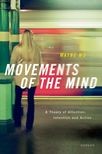
Movements of the Mind: A Theory of Attention, Intention and Action
Abstract. Movements of the Mind explains what it is to be an agent. Focusing on mental agency, the book’s eponymous topic, it investigates an agent’s doing
Democracy as a Scaled Collective Intelligence Process: Points of Vulnerability and Augmentation
As part of the Digital Library's transition to Open Access, new features for researchers are available in the Premium Edition. Click here to learn more.

RJ Moreau 🇧🇹 on Twitter / X
Human Ecology (CIA MKULTRA front) gave behavioral scientist BF Skinner $5K to write Beyond Freedom and Dignity, where he argued to abolish the inner man & control behavior. His methods later reached schools, where researchers & drug companies tested kids w/ learning difficulties. https://t.co/TQilUoMYQv pic.twitter.com/sZkr4fDqFN— RJ Moreau 🇧🇹 (@toxictiramisu) March 18, 2026

The Ascendancy of the Scientific Dictatorship: An Examination of Epistemic Autocracy, from the 19th to the 21st Century
A. In the past, the elite manipulated the population through a more mystical belief system. In particular, there was the institution of Sun worship (typified by deities such as Osiris and Set). However, as antiquity gave way to modern history, this system of control began to lose its effectiveness. During the sixteenth century, the ruling class managed to co-opt a relatively new methodology of truth discernment...science. Over the years, they would contaminate this institution with their own virulent strains of thought...metaphysical naturalism, radical empiricism, Malthusianism, Darwinism, behaviorism, radical environmentalism, etc. Many of these paradigms were derivative of their own occult doctrines, thinly veiled to appear as objective science. All of these concepts correlate in some way and, at some point, coalesce. Together, they are gradually paving the way for the re-introduction of the hidden god of the Ancient Mysteries.
This is normal bad work
[This is a guest post by Sophie Huiberts, being an expanded version of a post on her own blog. This blog post was initially written in a different file format and converted using AI. — T.] Wh…
Great post -- Sophie makes an important point: the results OpenAI announced with great fanfare are "normal for the current state of technology". The credit goes above all to the data -- the communal knowledge of mathematicians they relied to train their LLM

Sophie Huiberts
Guest blog by me
I love the building on this idea here, it’s like using LLMs for code flippantly is this generation’s version of single-use plastics. Convenient, cheap for now, but with many negative externalities

Ross Wintle
Having fun reading and writing today. LLMs are not just machines. They are machine-building machines! This comes with way more responsibility. And understanding it may change how you use them.
In our course and book _Calling Bullshit_, we posit that If something seems too good, or too bad, to be true, it probably is. Now as a college professor I'm pretty confident that overreliance can AI can harm our thinking ability, but just ten minutes of use? Let's dig into this this study a bit.

Using AI for just 10 minutes erodes your ability to persist at hard things - Berkeley News
news.berkeley.eduIn our course and book _Calling Bullshit_, we posit that If something seems too good, or too bad, to be true, it probably is. Now as a college professor I'm pretty confident that overreliance can AI can harm our thinking ability, but just ten minutes of use? Let's dig into this this study a bit.
Using AI for just 10 minutes erodes your ability to persist at hard things - Berkeley News
news.berkeley.eduknowledge tools for orgs
Scuba


