

I have a friend who replicates every study he wants to follow up on before starting his follow up, just to make sure he's not chasing phantoms. what should he do with that information? put it in his papers? it's kind of weird and one-tailed in isolation. funny situation.
Sep 1, 2026 at 12:34 AM
Dispatch
An occasional update on the lab’s latest findings, appearances, and happenings.
Involuntary collaboration: a strategy for decentralized science
How your best co-worker, might be someone you’ll never meet
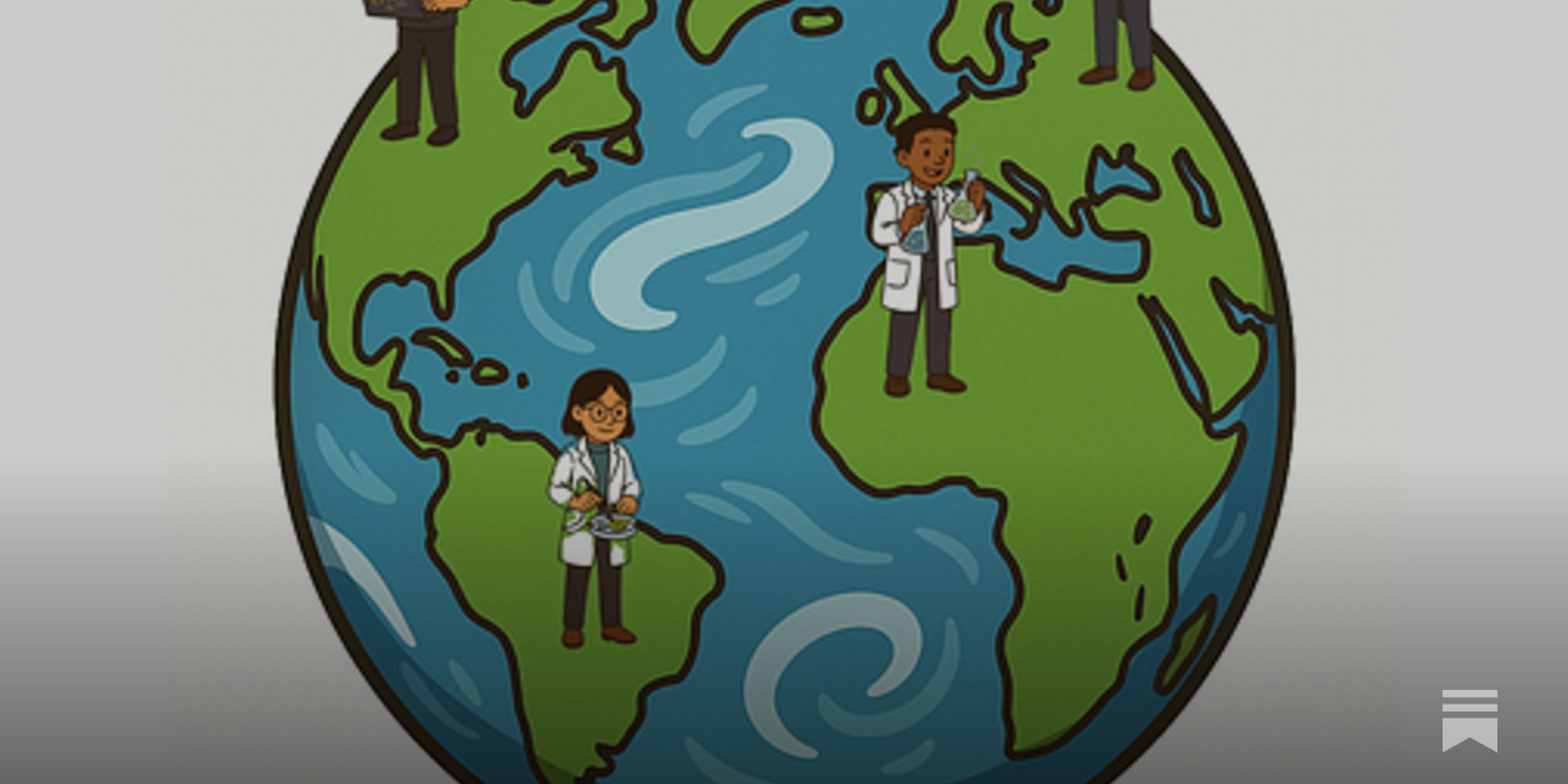
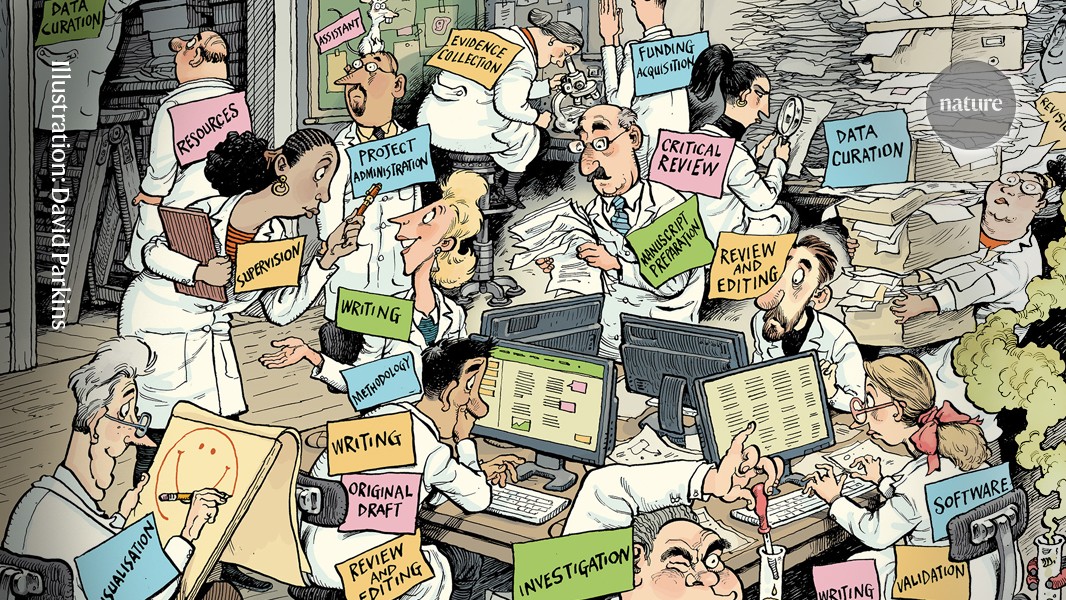
A ten-year drive to credit authors for their work — and why there’s still more to do
Nature - Information about the roles of each author of a paper can help to build trust, integrity and responsible research assessment. Coordinated efforts are needed to consolidate progress.
Fake scientific papers made with AI used names of 3 Japan researchers
TOKYO -- A disreputable scientific journal used generative AI to create bogus papers, using the names of three Japanese researchers without permission

Small Telescopes - Uri Simonsohn, 2015
This article introduces a new approach for evaluating replication results. It combines effect-size estimation with hypothesis testing, assessing the extent to w...

Related work | Data Counterfactuals
Adjacent research areas and starting papers, curated in Semble and synced into the site.
ReproAI: the plugin for reproducible replication packages
An author-facing AI plugin that helps you prepare a cleaner, reproducible replication package before submission.
In a 🔥 post, @jessicahullman.bsky.social follows up on the recent NHB 'High replicability' paper. "It bugs me (though doesn’t not surprise me) to think that whether questionable practices get called out depends on who exactly is in the author list." tinyurl.com/4yr98zvw
The feel-good open science story versus the preregistration (who do you think wins?) | Statistical Modeling, Causal Inference, and Social Science
tinyurl.comAfter reading about ATProto stuff this morning I realised that one possible future for science publishing, within something like @atproto.science, is that every scientist becomes their own journal. The key realisation is that a paper published to my own PDS can be published in many journals.
I am suggesting a game “Find a fake in Scientific Reports” 1. Open nature.com/srep/, peek your section. (Physical sciences for me) 2. Start a timer. 3. Find a faked paper 4. Stop the timer 5. Report your time and PPI* for corresponding author #ResearchIntegrity *PubPeer Index
What can we learn from automating an entire quantitative social science paper, from prompt to finished product? Thread about ongoing work with @natewilmers.bsky.social 1/12 Paper: osf.io/preprints/socarxiv/24xfq
Researcher Pages

All things related to personal pages for researchers on atproto
Coordinated Inauthentic Behavior

A collection of reading and resources around patterns of operations online intended to disrupt networks, scam users, and otherwise affect the health of society and social media Should focus on theory and practice but not tools
Sifa — Portable professional identity on the open web

Lanyards - Researcher Profiles on AT Protocol

Ronen Tamari (@ronentk.me)

Mosh Lee (@mosh.bsky.social)

Uncovering Coordinated Networks on Social Media: Methods and Case Studies
A General Method to Find Highly Coordinating Communities in Social Media through Inferred Interaction Links

Exposing Cross-Platform Coordinated Inauthentic Activity in the Run-Up to the 2024 U.S. Election
Disrupting Dark Networks
Ecosystem or Echo-System? Exploring Content Sharing across Alternative Media Domains

↳ Slopaganda: The Inauthentic YouTube Network Selling Secession to Albertans — Canadian Digital Media Research Network


