


This summary was generated using automated tools and was not authored or reviewed by the article's author(s). It is provided to support discovery, help readers assess relevance, and assist readers from adjacent research areas in understanding the work. It is intended to complement the author-supplied abstract, which remains the primary summary of the paper. The full article remains the authoritative version of record. Click here to learn more.
Unreal Scoop: Data-Driven CVars
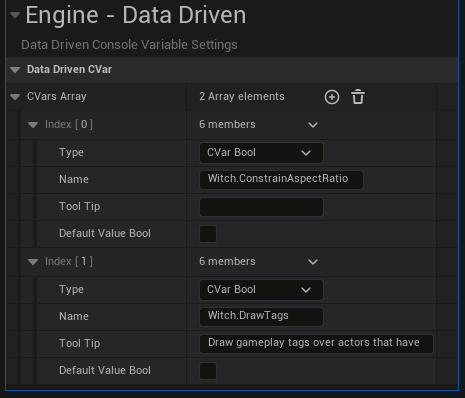
If you use UE5, you might have noticed there’s a new-ish feature called Data-Driven Console Variables, and you might also have noticed that nothing comes up when you Google this. There’s not much to it, but in the interests of having something come up when you Google this, here’s what I’ve figured out about data-driven cvars.
A Coming Revolution in Metaprogramming | Will Crichton
A single programming language is no longer enough. I predict that soon, the best programmers will fluently move between languages and the best languages will interoperate well with others. This interoperability will likely stem from strong metaprogramming facilities. I examine how we might build a programmable compiler and look at recent work toward that end.
LukeW | Common AI Product Issues
At this point, almost every software domain has launched or explored AI features. Despite the wide range of use cases, most of these implementations have been t...
The community-first software era
Some ideas about how to encode our values into the tools we use

R. S. Doiel, Software Engineer/Analyst — Robert's ramblings
By R. S. Doiel, 2026-02-21 (revised: 2026-03-03, epilogue added 2026-03-27)
The Generative Stack - The Phoenix Architecture
Trying to find the best tool or platform for generative software in 2026 is a mistake that could haunt you for decades
Magicoder: Empowering Code Generation with OSS-Instruct
We introduce Magicoder, a series of fully open-source (code, weights, and data) Large Language Models (LLMs) for code that significantly closes the gap with top code models while having no more...

Teaching Programming for First-Year Data Science
This summary was generated using automated tools and was not authored or reviewed by the article's author(s). It is provided to support discovery, help readers assess relevance, and assist readers from adjacent research areas in understanding the work. It is intended to complement the author-supplied abstract, which remains the primary summary of the paper. The full article remains the authoritative version of record. Click here to learn more.

Building personal tools by programming

Malleable Software in the Age of AI - Geoffrey Litt
Denicek: Computational Substrate for Document-Oriented End-User Programming
As part of the Digital Library's transition to Open Access, new features for researchers are available in the Premium Edition. Click here to learn more.

DASL — Data-Addressed Structures & Links
A small set of simple, standard primitives to work on content-addressed data.

DASL — Data-Addressed Structures & Links
A small set of simple, standard primitives to work on content-addressed data.
Malleable Software

Using AI to create your own visualizations, interfaces, and going beyond “apps” bmannconsulting.com/notes/malleable-software/ Other terms: * Regenerative Software semble.so/url?id=https://aicoding.leafl…
A Malleable Diffuse | tokono.ma
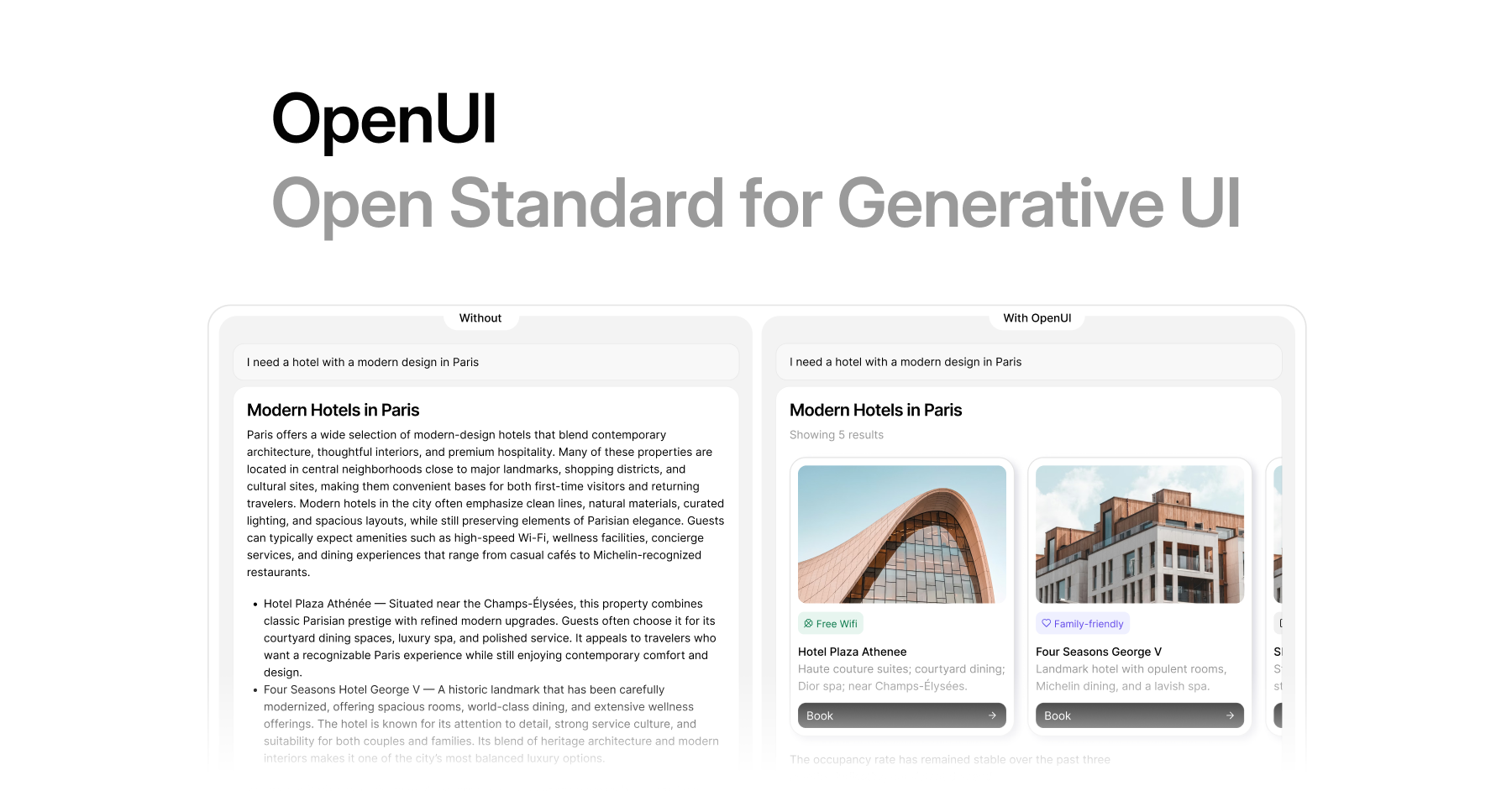
OpenUI - The Open Standard for Generative UI
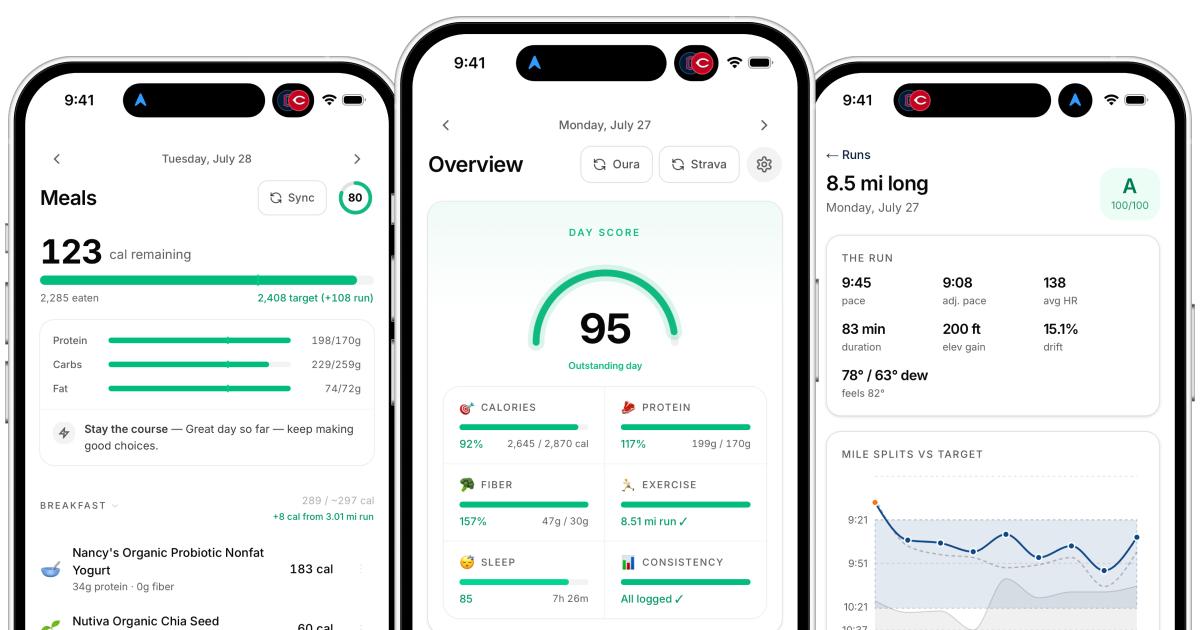
Software for One
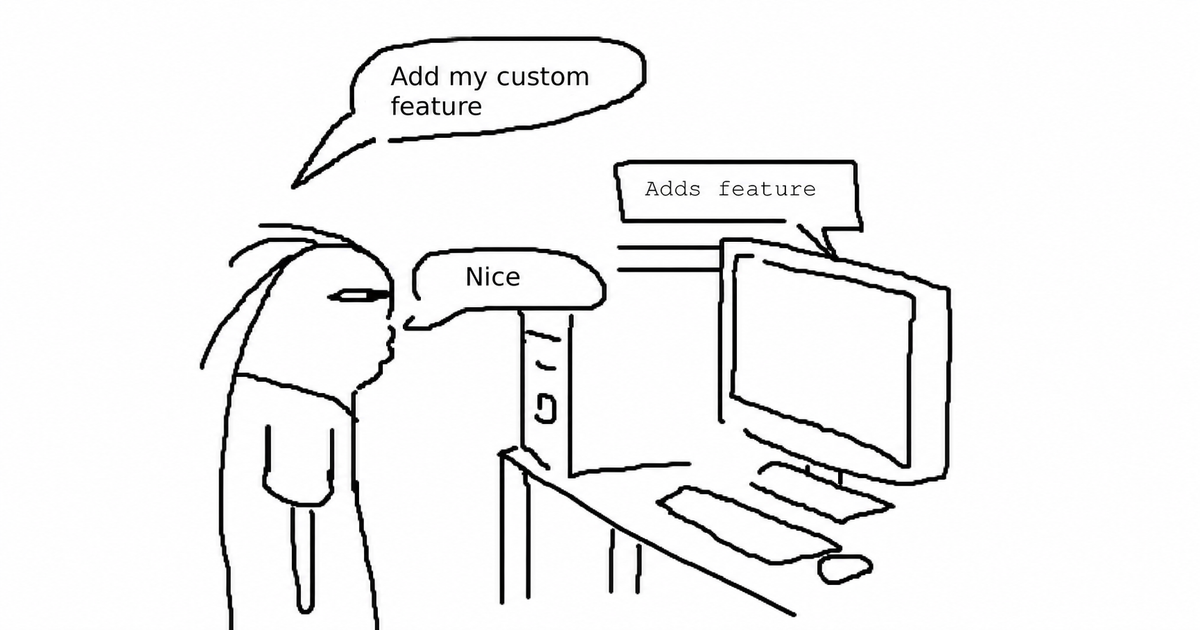
Extensible Software in the age of LLMs | Jeremy Morrell
Ink & Switch malleable software essay
Note · Mikkel Malmberg