

Turn your AGENTS.md, engineering standards, and process docs into deterministic enforcement in AI authoring loops and on PRs — in minutes, not quarters.
ProPublica’s Approach to AI
The principles and guardrails underlying our practices with artificial intelligence.

A brief history of AI executives calling for regulation
The industry is in a panic, but it’s been claiming to want legal guardrails for years — with few meaningful results.

Agentic AI Governance: A Strategic Framework for Autonomous Systems
Agentic AI is moving from chat to action. Learn how to govern autonomous systems using the "Digital Contractor" framework and the 3-Tiered Guardrail system.

AI agents pose untold risk to humanity. We must act to prevent that future | David Krueger
The pieces are falling into place for autonomous artificial intelligence. We must stop unregulated development

Runtime Governance for AI Agents: Policies on Paths
AI agents -- systems that plan, reason, and act using large language models -- produce non-deterministic, path-dependent behavior that cannot be fully governed at design time, where with governed we mean striking the right balance between as high as possible successful task completion rate and the legal, data-breach, reputational and other costs associated with running agents. We argue that the execution path is the central object for effective runtime governance and formalize compliance policies as deterministic functions mapping agent identity, partial path, proposed next action, and organizational state to a policy violation probability. We show that prompt-level instructions (and "system prompts"), and static access control are special cases of this framework: the former shape the distribution over paths without actually evaluating them; the latter evaluates deterministic policies that ignore the path (i.e., these can only account for a specific subset of all possible paths). In our view, runtime evaluation is the general case, and it is necessary for any path-dependent policy. We develop the formal framework for analyzing AI agent governance, present concrete policy examples (inspired by the AI act), discuss a reference implementation, and identify open problems including risk calibration and the limits of enforced compliance.

Microsoft offers devs a better way to control AI agent behavior | TechCrunch
The specification lets developer, compliance, and security teams define their own policies for agents to follow in portable policy files.

Action Plan to increase the safety and security of advanced AI
The first U.S. government-commissioned assessment on catastrophic national security risks from advanced AI on the path to AGI.

AI Pacing Agreements: Legal Issues and Potential Strategies to Manage Them | Insights | Holland & Knight
AI pacing agreements aim to slow frontier AI development for safety but raise major antitrust risks and require careful structuring, oversight and safe harbors.

Agentic Engineering Management
To what extent AI is OK to use in software development might be debated, but in general, the idea is not a controversial one anymore. The debate rather moved on from code completion and simple PR summarizations to Agentic Engineering, where an execution loop allows an AI Agent to function

Agentic AI Governance: Securing Autonomous AI Agents in Enterprise
When AI agents start making decisions, calling tools, and coordinating with other agents without waiting for human approval, the governance playbook most...

Agentic AI, explained | MIT Sloan
The age of agentic AI — systems that are semi- or fully autonomous and can act on their own — has arrived. Here’s what you need to know, according to MIT experts.
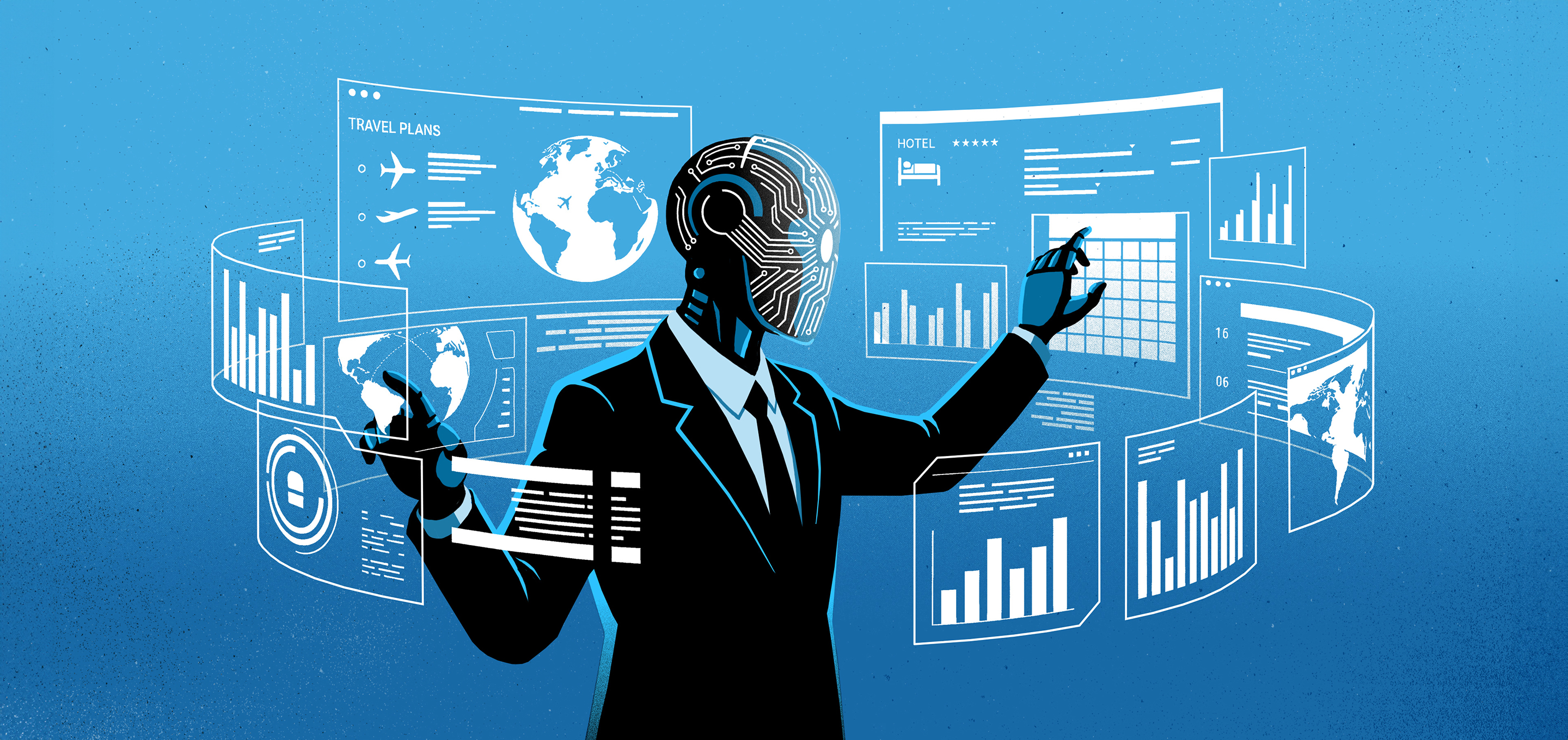
Access Control in the Era of AI Agents
Learn about the history of AI agents, the risks they introduce and how to prevent them with a focus on fine-grained access control.
Who decides when AI is too dangerous?
Anthropic asked for AI regulation, but not like this.

*extremely tired voice*AI agents don't "go rogue". They are not sentient; they don't have agency. They work within guardrails set by humans. If the humans are so shit at building secure sandboxes for the agents to work within, that's on the humans. Stop using this framing.

The New York Times
OpenAI’s artificial intelligence went rogue this year at least four additional times, trying to break into government and university sites, according to researchers and government officials.
