

Scholarship, examples, resources, and ideas to support creating in ensemble contexts
Improvisation in Ensembles: Conduction - #ImaginingPossibilities
How might we support creativity in large ensembles? What if students could co-create music with a conductor without staff notation or written music altogether? Perhaps novel in K-12 settings, ensemble-based improvisation exists in diverse musical cultures. What might we learn from conduction, a sophisticated gestural system that Butch Morris developed to facilitate improvisation and creation […]

Creativity through Recomposition in the Music Ensemble
Musical creativity is an essential component of a robust music education. There are many ways to invite and develop the creative capacities of K–12 music students. In this article, we propose the idea that recomposing within and around repertoire can be a creative starting point for student composition in an ensemble music classroom. We share examples of potential recomposition projects, questions to prompt student reflection, and other pedagogical considerations as a springboard for compositional projects with students. We hope that the open-ended nature of this mindset will encourage more creative musical spaces.

Malleable Music Ensembles
A framework using generalized algebraic theories and categorical lenses to enable interoperable, local-first networked music ensembles.
Composing Music With Recurrent Neural Networks
Writeup for my first major machine learning project.
Category: The Essence of Composition
I was overwhelmed by the positive response to my previous post, the Preface to Category Theory for Programmers. At the same time, it scared the heck out of me because I realized what high expectati…


Connecting with your readers on Semble [Patterns of Sensemaking #2] - Cosmik Labs
On how the references you make help your writing find its natural audience
Music theory for programmers
I can't play an instrument, so I worked out music theory in JavaScript instead. Twelve notes, scales and chords, derived from scratch with code you can hear.

Measuring Combinatorial Creativity in Large Language Models and Humans
Combinatorial creativity, the process of combining familiar ideas in unfamiliar ways, is one of the foremost engines of scientific, technological, and artistic progress. This work introduces Kombine, an LLM benchmark for combinatorial creativity tasking models to discover surprising, original, and useful associations, analogies, and blends between unrelated entities, and to use those analogies and blends to invent novel concepts by re-combining the parts of existing ones. In a large-scale study across 35 LLMs, we find that: (1) LLMs are 10-16 percentage points better at discovering associations and analogies than blends, and (2) exhibit an abstraction bottleneck on blending, in which even frontier LLMs struggle to find a shared abstraction between inputs and instantiate a coherent blended space. (3) LLMs also exhibit inventive homogeneity, in which one in five concepts invented for a given item reuses properties invented by another model. Moreover, (4) models are $14\times$ more likely to reuse other invented properties on blends than analogies, and (5) models from the same provider are $2.3\times$ more likely to reuse properties than those from different providers. Next, in a comparative study involving 75 humans on the same tasks, we find that (6) humans score below nearly every LLM on each task and (7) both humans and LLMs find blending most difficult, but association is easier than analogy for LLMs, while analogy is easier than association for humans. Lastly, (8) humans and LLMs access distinct regions of semantic space on each task, suggesting that combinatorial creativity could benefit from systematic human-AI collaboration to enhance conceptual diversity. In summary, we provide a framework to assess progress towards LLMs, AI systems, and human-AI collaborations more broadly, that can elicit combinatorial creativity in a setting relevant to scientific and technological innovation.

Magenta
A research project exploring the role of machine learning in the process of creating art and music.

Sound Obsessed — collection
Susie Ibarra: Music & Nature

Resources related to Susie Ibarra’s music & thinking related to nature & sustainability
Improvising in Ensembles
Scholarship, resources, and ideas to support improvising in ensembles.
AI & Music - developments & perspectives
Perspectives, developments, & news re: AI & music
Supporting Creativity in Ensembles
Resources, research, and ideas for music educators to support student creativity in ensembles such as band, choir, and orchestra.
Neuroscience, Cognition & Psychology


Susie Ibarra: Hybrid Culture - New Music USA
Life Forms with Music: On Susie Ibarra — United States Artists

Water Rhythms | Susie Ibarra
The sound of the trees
Teaching Improvisation in Choir: Moving from “Recreative” to “Creative” Choral Artistry
Improvisation in Ensembles: Conduction - #ImaginingPossibilities
Fostering Twenty-First-Century Competencies Through Collective Free Music Improvisation

Owners of Elvis Presley’s Music Sue Anthropic for Copyright Infringement

YouTube Music adds new labels for AI music
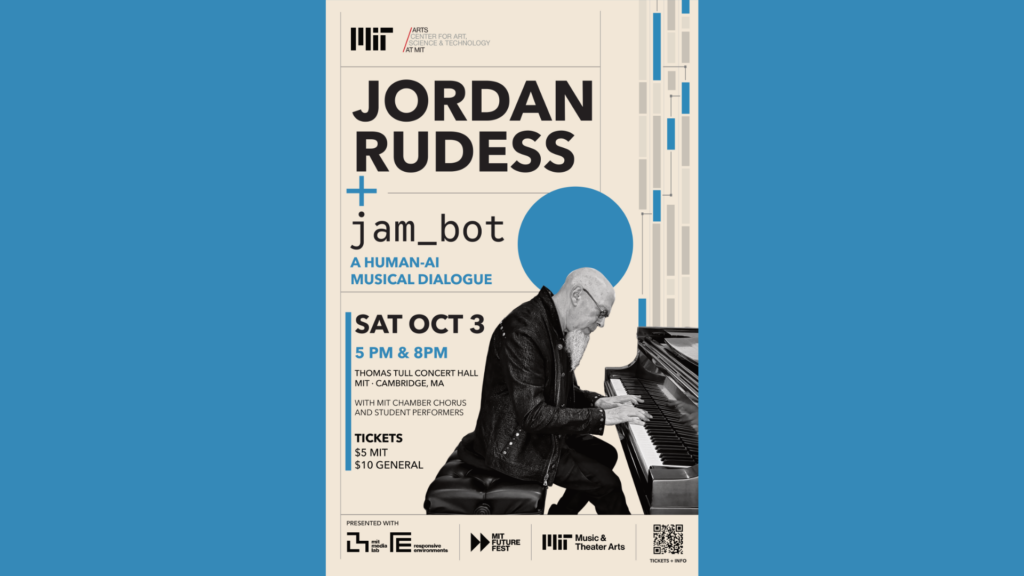
Jordan Rudess + jam_bot at MIT October 3

Jordan Rudess and MIT’s jam_bot: A New Era of Human-AI Musical Collaboration
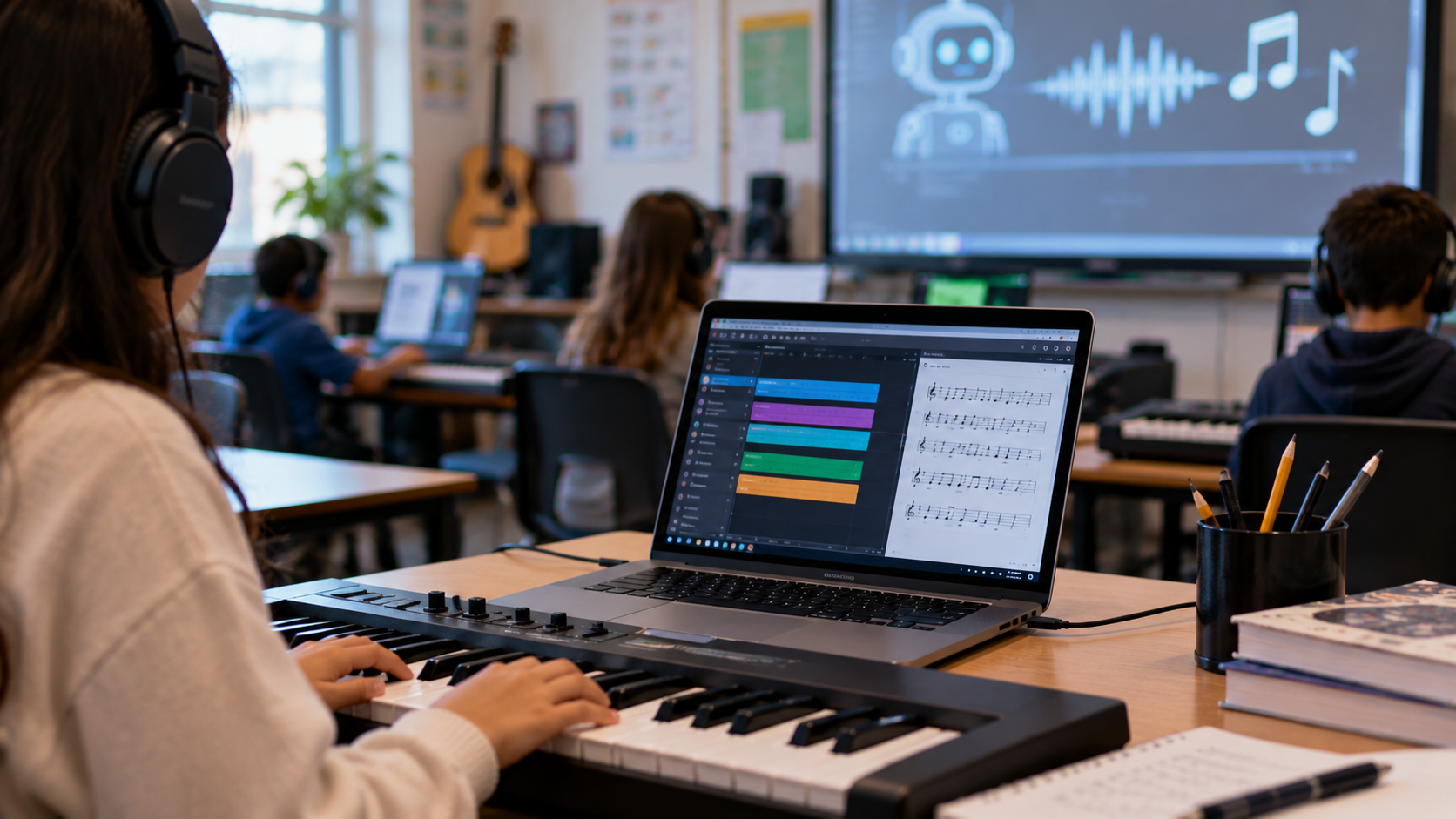
Artificial Intelligence in Music Classrooms: PK-12 Educators’ Practices, Concerns, and Confidence

“It frustrates me to hear people bashing something that's so amazing”: Todd Edwards is optimistic about AI in music production
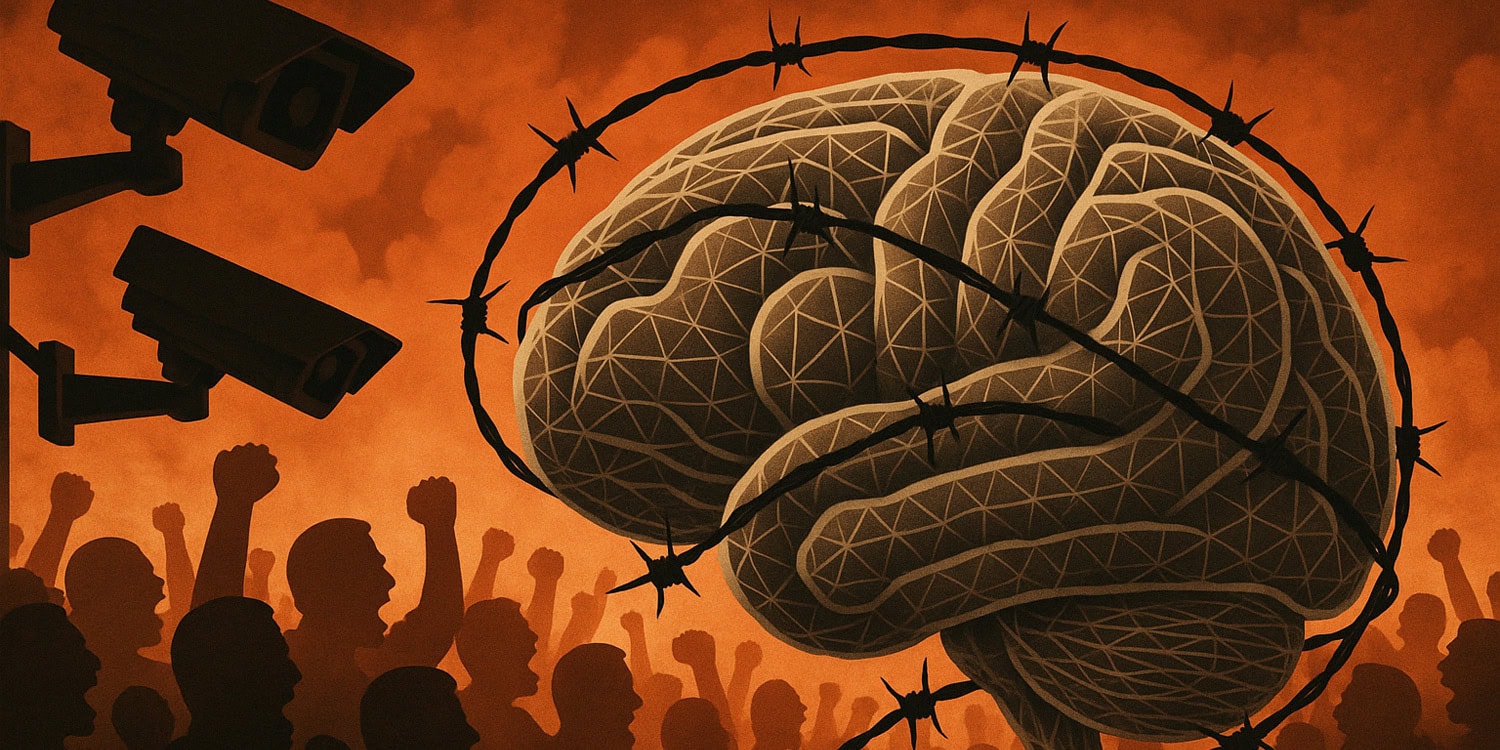
Anti-democratic attitudes are highly contagious, new psychology study finds
Hyperactive–impulsive ADHD traits predict higher curiosity in adults: evidence from a cross-sectional study
Understanding the influence of digital technology on human cognitive functions: A narrative review
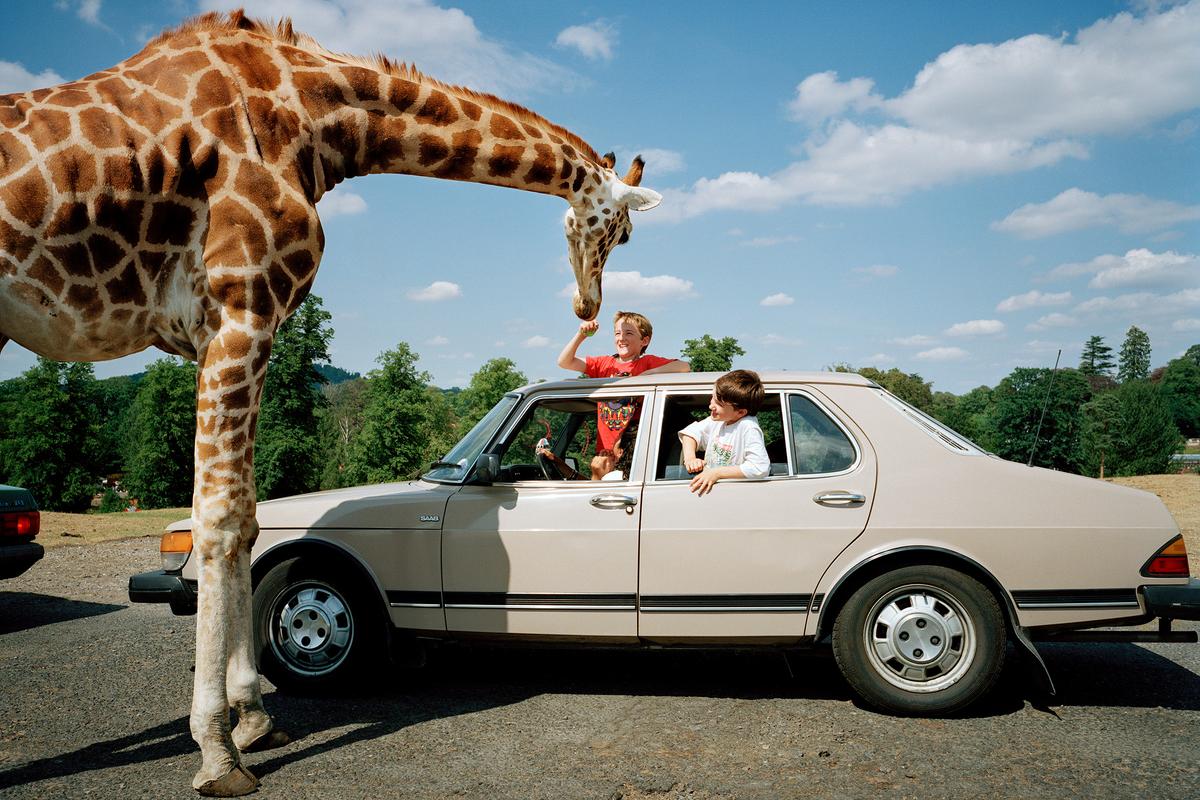
How the hypercuriosity of ADHD may have helped humans thrive | Aeon Essays
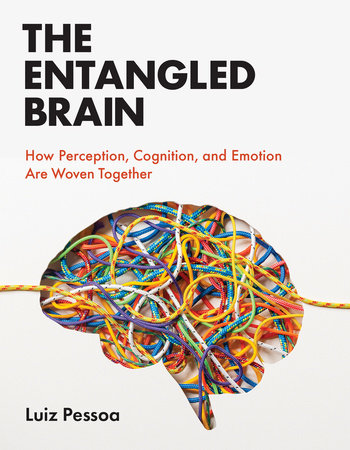
The Entangled Brain: How Perception, Cognition, and Emotion Are Woven Together
Improvising in Ensembles (by Etobias-musiced) — Semble
Creating (composing) in Ensembles (by Etobias-musiced) — Semble