

On the effects of algorithms on everyday experiences
Deconstructing the algorithmic sublime
This special theme contextualizes, examines, and ultimately works to dispel the feelings of “sublime”—of awe and terror that overrides rational thought—that much of the contemporary public discourse on algorithms encourages. Employing critical, reflexive, and ethnographic techniques, these authors show that while algorithms can take on a multiplicity of different cultural meanings, they ultimately remain closely connected to the people who define and deploy them, and the institutions and power relations in which they are embedded. Building on a conversation we began at the Algorithms in Culture conference at U.C. Berkeley in December 2016, we collectively study algorithms as culture (Seaver, this special theme), fetish (Thomas et al.), imaginary (Christin), bureaucratic logic (Caplan and boyd), method of governance (Coletta and Kitchin; Lee; Geiger), mode of inquiry (Baumer), and mode of power (Kubler). [Box: see text]

Co-creating with emergent processes ✦ Hijinx World
Existential musings over algorithmic design with creative programming legend Dan Tapper.

Task-Dependent Algorithm Aversion
Research suggests that consumers are averse to relying on algorithms to perform tasks that are typically done by humans, despite the fact that algorithms often perform better. The authors explore when and why this is true in a wide variety of domains. They find that algorithms are trusted and relied on less for tasks that seem subjective (vs. objective) in nature. However, they show that perceived task objectivity is malleable and that increasing a task’s perceived objectivity increases trust in and use of algorithms for that task. Consumers mistakenly believe that algorithms lack the abilities required to perform subjective tasks. Increasing algorithms’ perceived affective human-likeness is therefore effective at increasing the use of algorithms for subjective tasks. These findings are supported by the results of four online lab studies with over 1,400 participants and two online field studies with over 56,000 participants. The results provide insights into when and why consumers are likely to use algorithms and how marketers can increase their use when they outperform humans.
Task-Dependent Algorithm Aversion
Research suggests that consumers are averse to relying on algorithms to perform tasks that are typically done by humans, despite the fact that algorithms often perform better. The authors explore when and why this is true in a wide variety of domains. They find that algorithms are trusted and relied on less for tasks that seem subjective (vs. objective) in nature. However, they show that perceived task objectivity is malleable and that increasing a task’s perceived objectivity increases trust in and use of algorithms for that task. Consumers mistakenly believe that algorithms lack the abilities required to perform subjective tasks. Increasing algorithms’ perceived affective human-likeness is therefore effective at increasing the use of algorithms for subjective tasks. These findings are supported by the results of four online lab studies with over 1,400 participants and two online field studies with over 56,000 participants. The results provide insights into when and why consumers are likely to use algorithms and how marketers can increase their use when they outperform humans.
Feeling of Computing — Conversations
Algorithm appreciation: People prefer algorithmic to human judgment
Even though computational algorithms often outperform human judgment, received wisdom suggests that people may be skeptical of relying on them (Dawes, 1979). Counter to this notion, results from six experiments show that lay people adhere more to advice when they think it comes from an algorithm than from a person. People showed this effect, what we call algorithm appreciation, when making numeric estimates about a visual stimulus (Experiment 1A) and forecasts about the popularity of songs and romantic attraction (Experiments 1B and 1C). Yet, researchers predicted the opposite result (Experiment 1D). Algorithm appreciation persisted when advice appeared jointly or separately (Experiment 2). However, algorithm appreciation waned when: people chose between an algorithm’s estimate and their own (versus an external advisor’s; Experiment 3) and they had expertise in forecasting (Experiment 4). Paradoxically, experienced professionals, who make forecasts on a regular basis, relied less on algorithmic advice than lay people did, which hurt their accuracy. These results shed light on the important question of when people rely on algorithmic advice over advice from people and have implications for the use of “big data” and algorithmic advice it generates.
Feeling of Computing
Feeling of Computing is an online community with a welcoming, cooperative, and revolutionary spirit. We are unified in the belief that the computer is tragically less humane than it could be. There’s a world of possibilities that get more beautiful the further away from the norm you go. We’re here to explore this world together, to discuss ideas about theory and practice, and to champion and support our members’ research and development efforts to reimagine the computer.
Alexander Obenauer
Exploring new and renewed ideas for how personal computing and the interfaces we think with can better serve people’s lives – expanding opportunity, agency, curiosity, and creativity.
Resonite
A novel digital universe with infinite possibilities. Whether you resonate with people around the world in a casual conversation, playing games and socializing. Or you riff off each other when creating anything from art to programming complex games, you'll find your place here.
Good design hasn’t changed with AI — John Pham, SF Compute
Optimistic Computing
I recently made two new friends: Abhinav Omprakash and Dawn Walker. Abhinav said I’m an optimist and I should write about it. Dawn said I shouldn’t try to coin any new terms. I should know better, but this essay follows Abhinav’s recommendation — and credits Dawn, in the very likely event I should have followed her advice instead. I have been alive for approximately four decades. Each of those decades was witness to its own fun brand of computering.
Revisiting creative behaviour as an epistemic process: lessons from 12 computational artists and designers | Proceedings of the 35th Australian Computer-Human Interaction Conference
As part of the Digital Library's transition to Open Access, new features for researchers are available in the Premium Edition. Click here to learn more.

Algorithms may be making political polarization worse than we think
Marc Torrens and Carlos Carrasco-Farré analyze how algorithms influence opinions and heighten our emotional responses.
Field Theory: AI as Social Science Question, Object & Tool
Uses of advanced artificial intelligence are changing how societies organize labor, govern, produce knowledge, and make meaning. In light of these developments, this essay argues that AI models, tools, and systems pose three interrelated imperatives for social science: they demand renewed attention to social theories of how technology, human experience, and social order are entangled; they require study as objects of inquiry in their own right; and they offer capabilities that may transform—or upend—the practice of social investigation itself. From Weber’s analysis of rationalization to Du Bois’s study of technology and inequality to contemporary scholarship on algorithmic governance, the essay examines what social science distinctively offers: the capacity to historicize the apparently unprecedented, to trace connections across scales, and to center those most affected by technological change. It identifies how algorithmic systems are remaking the distribution of opportunity and risk as a central task of social inquiry and asks what futures social science might help bring into being.
Life With Machines | Substack
A cultural movement (and show) for people who want to live well with AI, not just endure it. Bringing clarity, critique, curiosity (and some comedy) to the AI discourse. A production by Baratunde. Click to read Life With Machines, a Substack publication with thousands of subscribers.
Social Media - Algorithmic Distortions and Polarization


Who Participates in Politics on Social Media, and Why?

We are going to kill “unalive” - Anil Dash

Beyond Misinformation: Social Media and the Sculpting of Epistemic Agency

You’ll do anything for your baby. The algorithm knows how to exploit that.
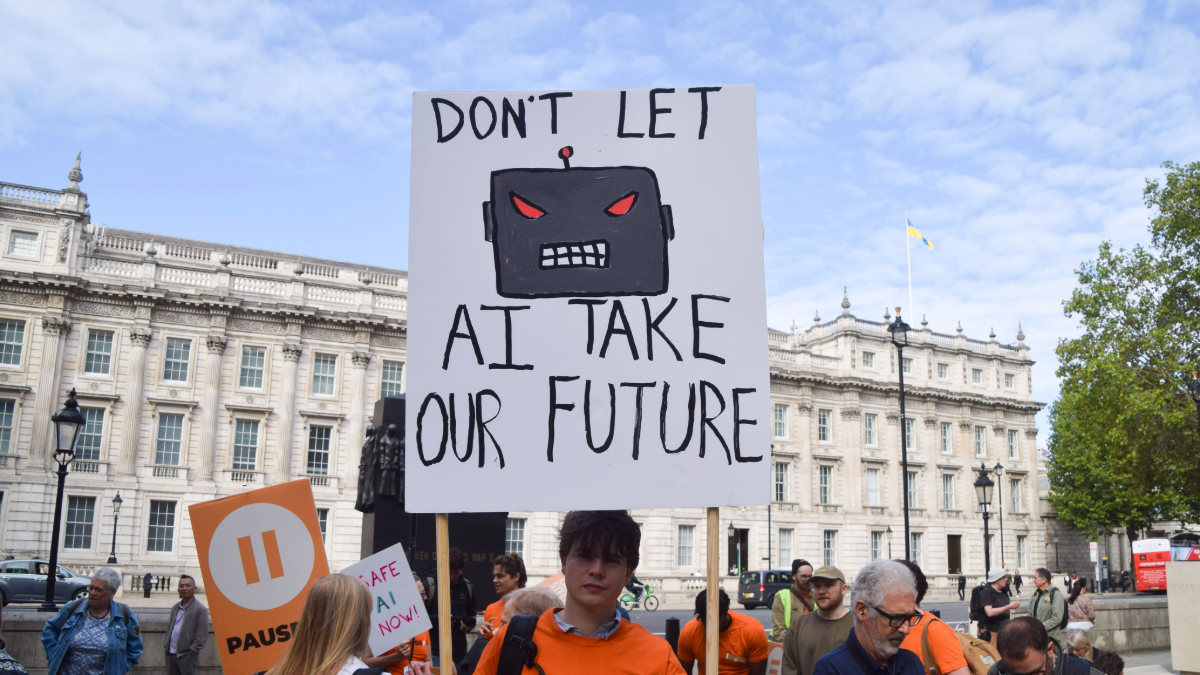
The Like Button Helped Social Media Put Profit Over People. We Can’t Let AI Do the Same.

Middleware for Feed Recommendation in Practice: How Feed Creators...