

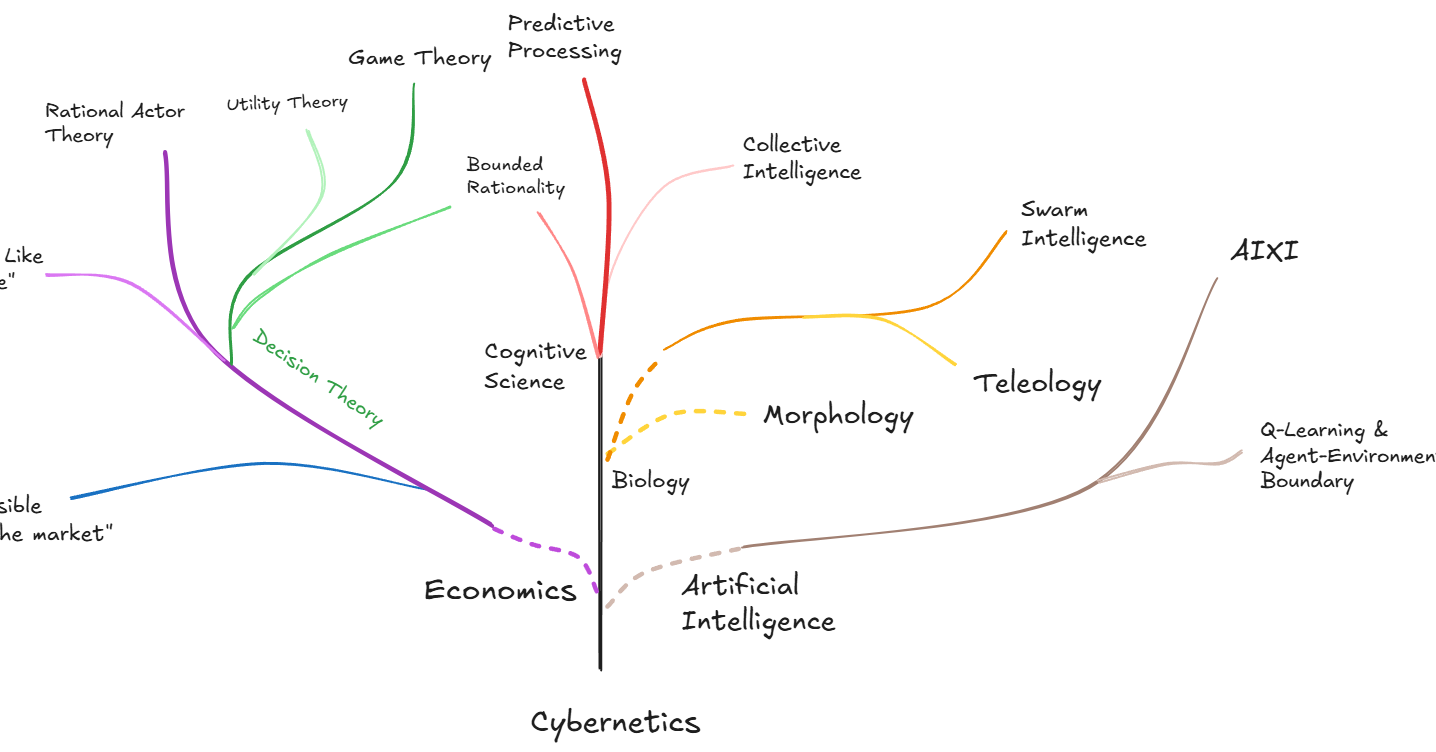
In Douglas Hofstadter's "Gödel, Escher, Bach," he explores how simple elements give rise to complex wholes that seem to possess entirely new properti…
Gödel, Escher, Bach: An Eternal Golden Braid
Douglas Hofstadter's book is concerned directly with th…

Gödel, Escher, Bach: An Interesting Triad and an incredibly Complex Book
Book Review

Composing Action: Representative Agents and the Search for Viable Arrangements | shishyko!
Why promising ideas die between discovery and action, and how representative agents might help
Will we have a theory for in-the-wild AI agents? - undisciplinary
Thoughts after writing a sociology-meets-physics-meets-agents paper I just put out a preprint out on a theory of role emergence in multi-agent systems (soci…
AGENTWORLD | *
An exploration of planetary intelligence, tracing how computation and cosmology—from ancient mechanisms to AI—reshape Earth and its possible futures.

Agentic AI and the next intelligence explosion
For decades, the artificial intelligence (AI) “singularity” has been heralded as a single, titanic mind bootstrapping itself to godlike intelligence, consolidating all cognition into a cold silicon point. But this vision is almost certainly wrong in its most fundamental assumption. If AI development follows the path of previous major evolutionary transitions or “intelligence explosions,” our current step-change in computational intelligence will be plural, social, and deeply entangled with its forebears (us!).

Science that Compounds: The Need for A New Substrate for Research in the Age of AI
This paper is a perspective from Lightcone Research, an open-source initiative building tooling for scientific research in the age of agentic AI.
Agent Design Is Still Hard
My Agent abstractions keep breaking somewhere I don’t expect.
I am a strange loop
Hofstadter's long-awaited return to the themes of Gödel, Escher, Bach--an original and controversial view of the nature of consciousness and identity. What do we mean when we say "I"? Can a self, a soul, a consciousness, an "I" arise out of mere matter? If it cannot, then how can you or I be here? This book argues that the key to understanding selves and consciousness is a special kind of abstract feedback loop inhabiting our brains. Deep down, a human brain is a chaotic soup of particles, on a higher level it is a jungle of neurons, and on a yet higher level it is a network of abstractions that we call "symbols." The most central and complex symbol in your brain or mine is the one we both call "I." But how can such a mysterious abstraction be real--or is our "I" merely a convenient fiction?--From publisher description

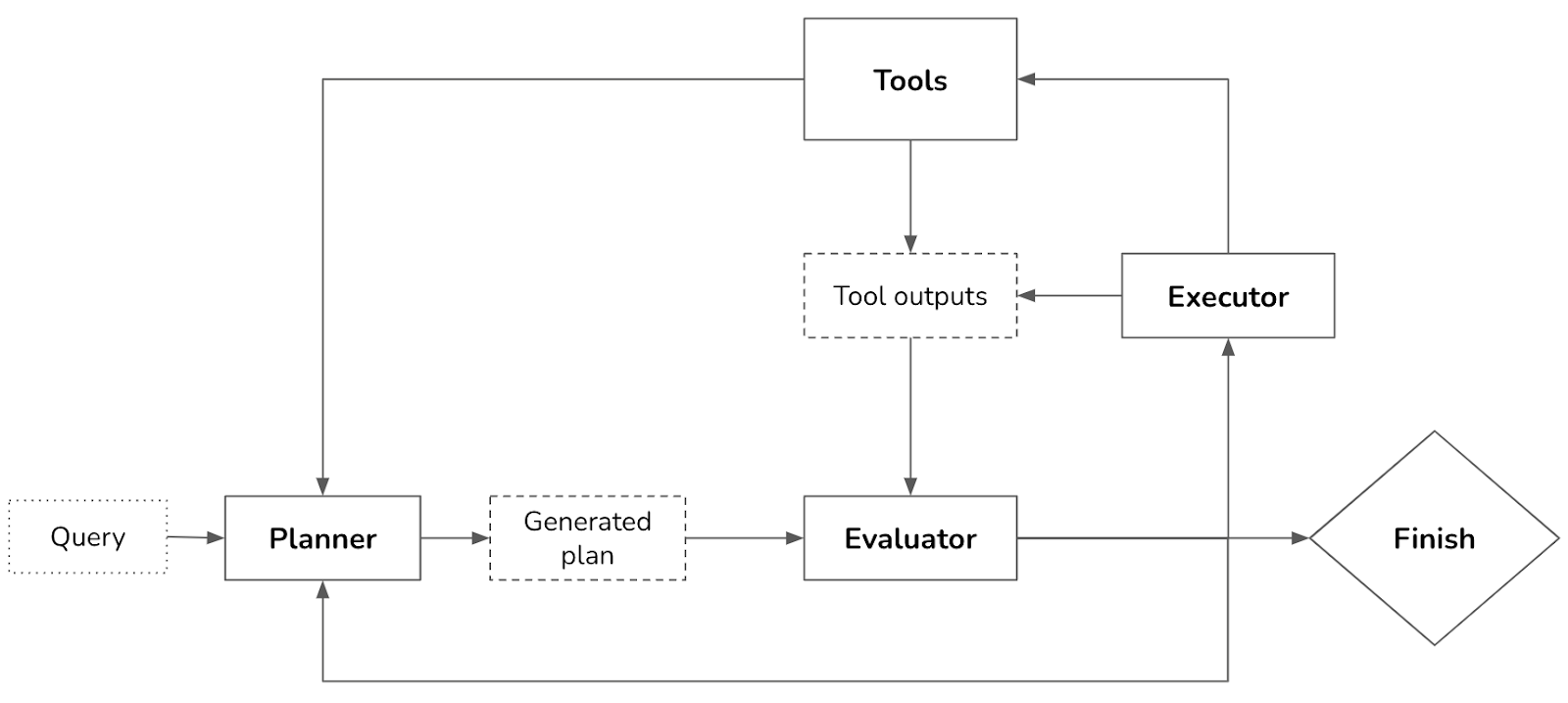
Agents
Intelligent agents are considered by many to be the ultimate goal of AI. The classic book by Stuart Russell and Peter Norvig, Artificial Intelligence: A Modern Approach (Prentice Hall, 1995), defines the field of AI research as “the study and design of rational agents.”
EPISTEMIC STIGMERGY: NATURAL VS. ARTIFICIAL INTELLIGENCE
The article\(^{1}\) defends the thesis that intelligent behavior might require not internal complexity but complex interaction. This is demonstrated by the various forms of stigmergy that can be observed both in social insects and in humans. The exposition is structured as follows: (§0) explains how the term “intelligence” is interpreted in the following text; (§1) clarifies the relation between intelligence and complexity; (§2) shows that intelligent behavior does not require internal complexity; (§3) introduces the concept of stigmergy; (§4) presents the mechanisms that give rise to this phenomenon; (§5) distinguishes several types of stigmergic interaction; (§6) briefly discusses the evolutionary mechanisms that could have produced them; (§7) sketches the possible ways in which the concept of stigmergy is used outside biology; (§8) examines collaborative stigmergy in humans; (§9) points to its epistemic projections; (§10) outlines some conclusions concerning the role of artificial intelligence systems and their place in human society.
[Keynote 04] AgentSociety: Exploring Large Language Model Agents for Piloting Social Experiments
Agentic Search for Dummies — Benjamin Anderson
A simple, effective baseline for building AI search agents.
Agentic AI Stuff

Cellosophy

Exploring the origins of intelligence and agency, starting with unicellular organisms such as bacteria, choanoflagellates and other protists.
Agents

AI agents
SmythOS
pguso/ai-agents-from-scratch
Agentation
Gas Town’s Agent Patterns, Design Bottlenecks, and Vibecoding at Scale
Cognitive Integrity Framework: Formal Foundations for Multiagent Security
Rowboat - Let AI build your agents for you
Swamp: The right way to build with AI

Humans approve intent, machines prove conformance

The issue tracker that runs inside the loop.
vitals — paseo.cafe
depatchedmode/oughta
robot.wtf — Memory for agents in a wiki for humans

Principles of Minimal Cognition: Casting Cognition as Sensorimotor Coordination
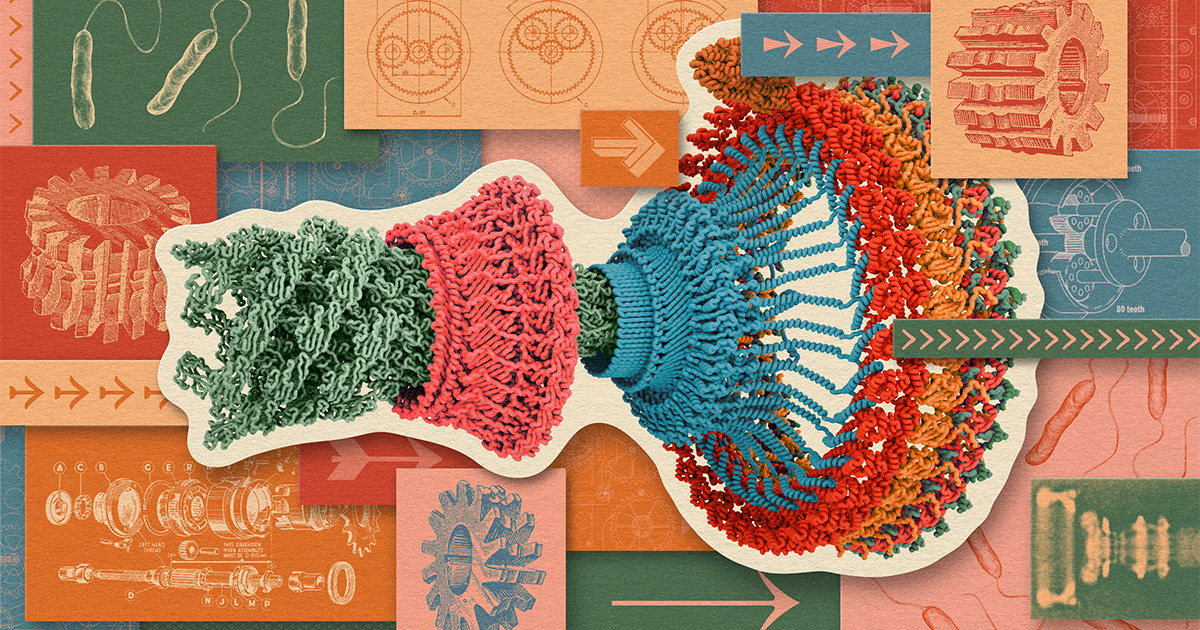
What Physical ‘Life Force’ Turns Biology’s Wheels? | Quanta Magazine
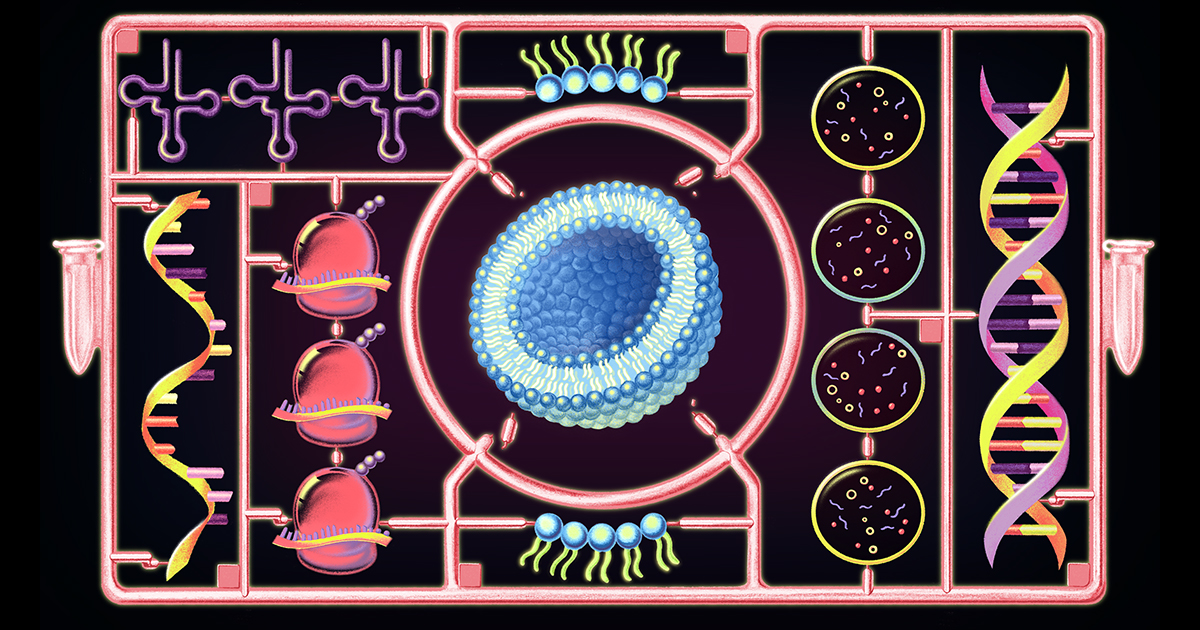
For the First Time, a Cell Built From Scratch Grows and Divides | Quanta Magazine
www.science.org

Cognition without brains? Learning and memory in microorganisms
Learning Outside the Brain: Integrating Cognitive Science and Systems Biology