Malleable software
computing environments where anyone can mold their tools to their own unique needs.That definition is by [[Geoffrey Litt]], who wrote [[Malleable software ...

Malleable Software in the Age of AI - Geoffrey Litt
What is Malleable Software Now | Bryan Min (02-27-2026)
Malleable software
computing environments where anyone can mold their tools to their own unique needs.That definition is by [[Geoffrey Litt]], who wrote [[Malleable software ...
Malleable software: Restoring user agency in a world of locked-down apps
The original promise of personal computing was a new kind of clay. Instead, we got appliances: built far away, sealed, unchangeable. In this essay, we envision malleable software: tools that users can reshape with minimal friction to suit their unique needs.
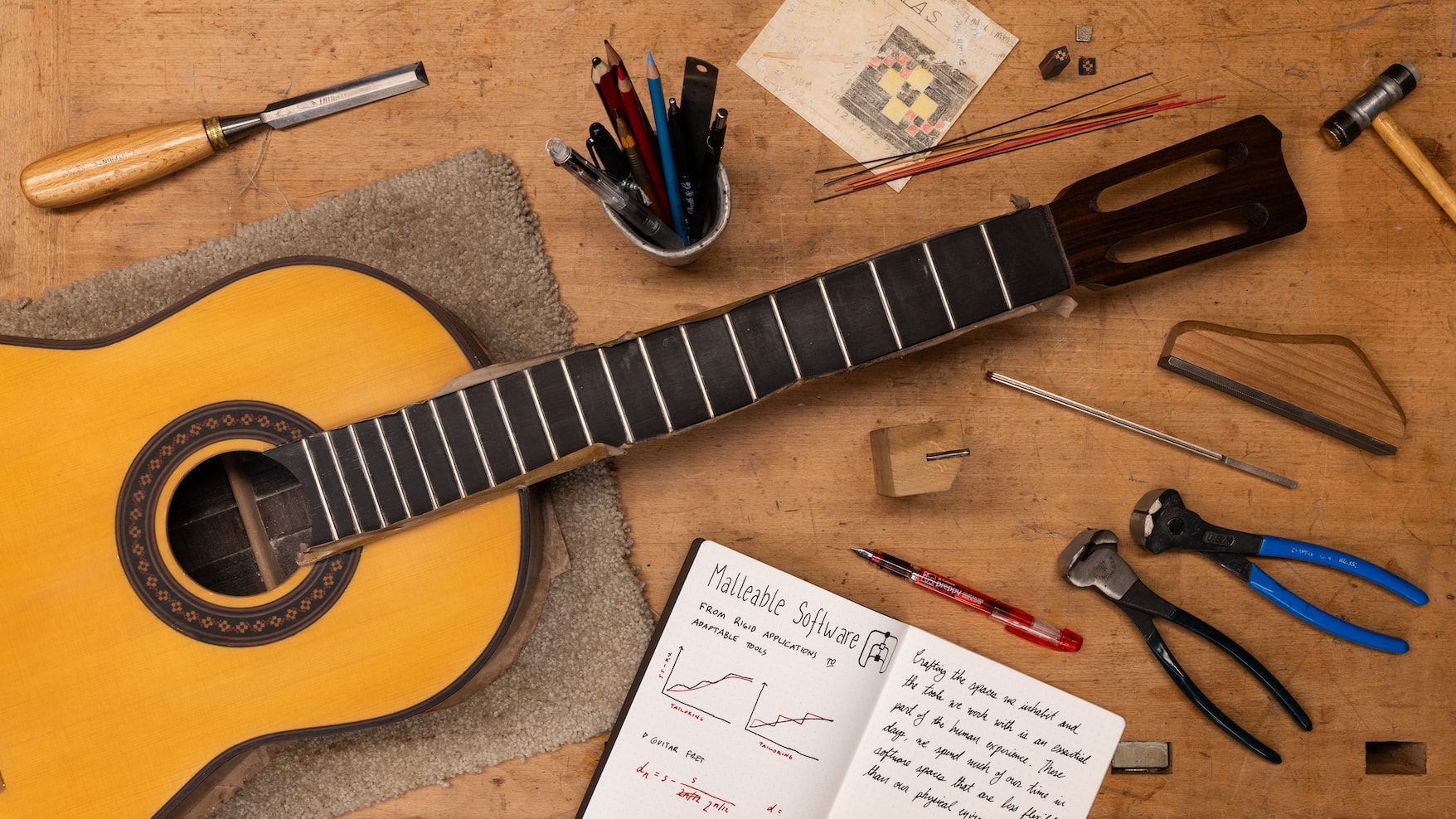
Perfect Software - Software for an Audience of One
We have many names to describe personal tools. Malleable software speaks to how it behaves. Home-cooked software speaks to who makes it.
Introducing Open Intelligent UI | The Open-Source Alternative to ChatGPT's Intelligent UI
Geoffrey Litt
Welcome! I work on malleable software: computing environments where anyone can adapt their software to meet their needs with minimal friction. To see what that means to me, read this essay or listen to this interview.
Apps and programming: two accidental tyrannies
On coding agents, malleable software, and the future of interface invention
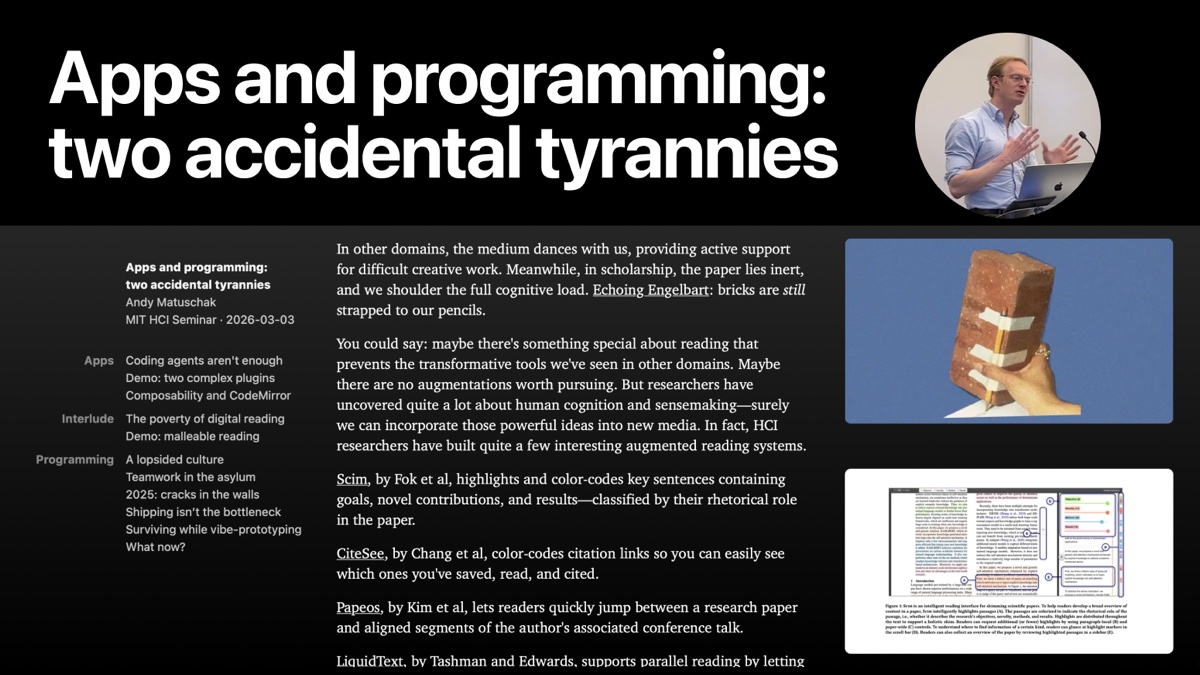
Apps and programming: two accidental tyrannies
On coding agents, malleable software, and the future of interface invention
Generative and Malleable User Interfaces with Generative and Evolving Task-Driven Data Model
As part of the Digital Library's transition to Open Access, new features for researchers are available in the Premium Edition. Click here to learn more.

Regenerative Software - The Phoenix Architecture
Designing and Programming Malleable Software
User needs for software features and interfaces are diverse and changing, motivating the goal of making it as easy as possible for users themselves to change software, or to have it changed on their behalf in response to their developing needs. However, in my opinion, current approaches do not address this issue adequately: software engineering promotes flexible code, but in practice this does not help end-users effect change in their software. End-user and live programming systems help users customize their interfaces by accessing and modifying the underlying source code. I take a different approach, seeking to maximize the kinds of modifications that can take place through regular interactions, e.g. direct manipulation of interface elements. I call this approach malleable software. To understand contemporary needs for and barriers to modifying software, I study how it is produced, maintained, adopted, and appropriated in a network of communities working with biodiversity data. I find that the mode of software production, i.e. the technologies and economic relations that produce software, is biased towards centralized, one-size-fits-all systems. This leads me to propose a long-term, interdisciplinary research program in reforming the tools of software development to create infrastructures for plurality. These tools should help multiple communities collaborate without forcing them to consolidate around identical interfaces or data representations. Malleable software is one such infrastructure, in which interactive systems are dynamic constellations of interfaces, devices, and programs assembled at the site of use. My technological contribution is a reconstruction of the programming mechanisms used to create interactive behavior. I generalize existing control structures for interaction as entanglements, and develop a higher-order control structure, entanglers, which produces entanglements when particular pre-conditions, called co-occurrences, are met. Entanglers cause interactions to be assembled dynamically as system components come and go. I develop these mechanisms in Tangler, a prototype environment for building malleable interactive software. I demonstrate how Tangler supports malleability through a set of benchmark cases illustrating how users can modify systems by themselves or with programmer assistance. This thesis is an early step towards a paradigm for programming and designing malleable software that can keep up with human diversity.
Awesome Generative UI - AI-Powered User Interface Generation Resources
Discover the best Generative UI resources: research papers, real-world cases, video tutorials, and open-source projects about AI-driven dynamic interface generation. Explore how LLMs like Gemini, Claude, and GPT are revolutionizing UI/UX design.
I think I've started to figure out that gentle slope the malleable software essay from @inkandswitch.com talked about (where the user gradually becomes an editor or creator). inkandswitch.com/essay/malleable-software/#a-g… I'm comparing Diffuse (a set of components and tools) to food, copy need work tho 😅
Collection

Updated 4h
Using AI to create your own visualizations, interfaces, and going beyond “apps” bmannconsulting.com/notes/malleable-software/ Other terms: * Regenerative Software semble.so/url?id=https://aicoding.leafl…
Malleable Software

Software that gives users extreme agency over the interface, such as JIT interfaces.
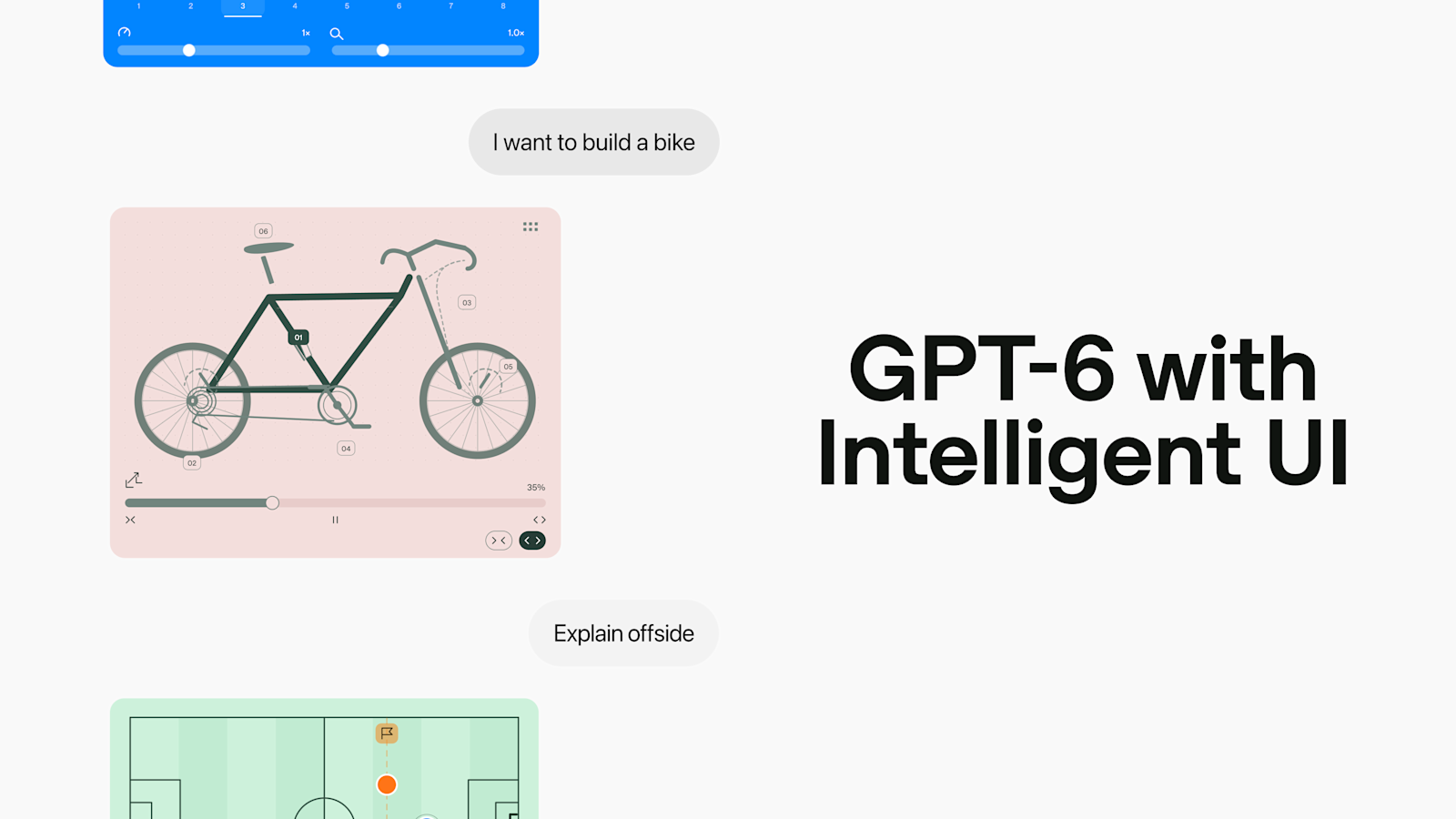
GPT-6 and Intelligent UI for everyone
Web Tiles (by paperpilot.dev) — Semble

Introducing Patchwork-26
