

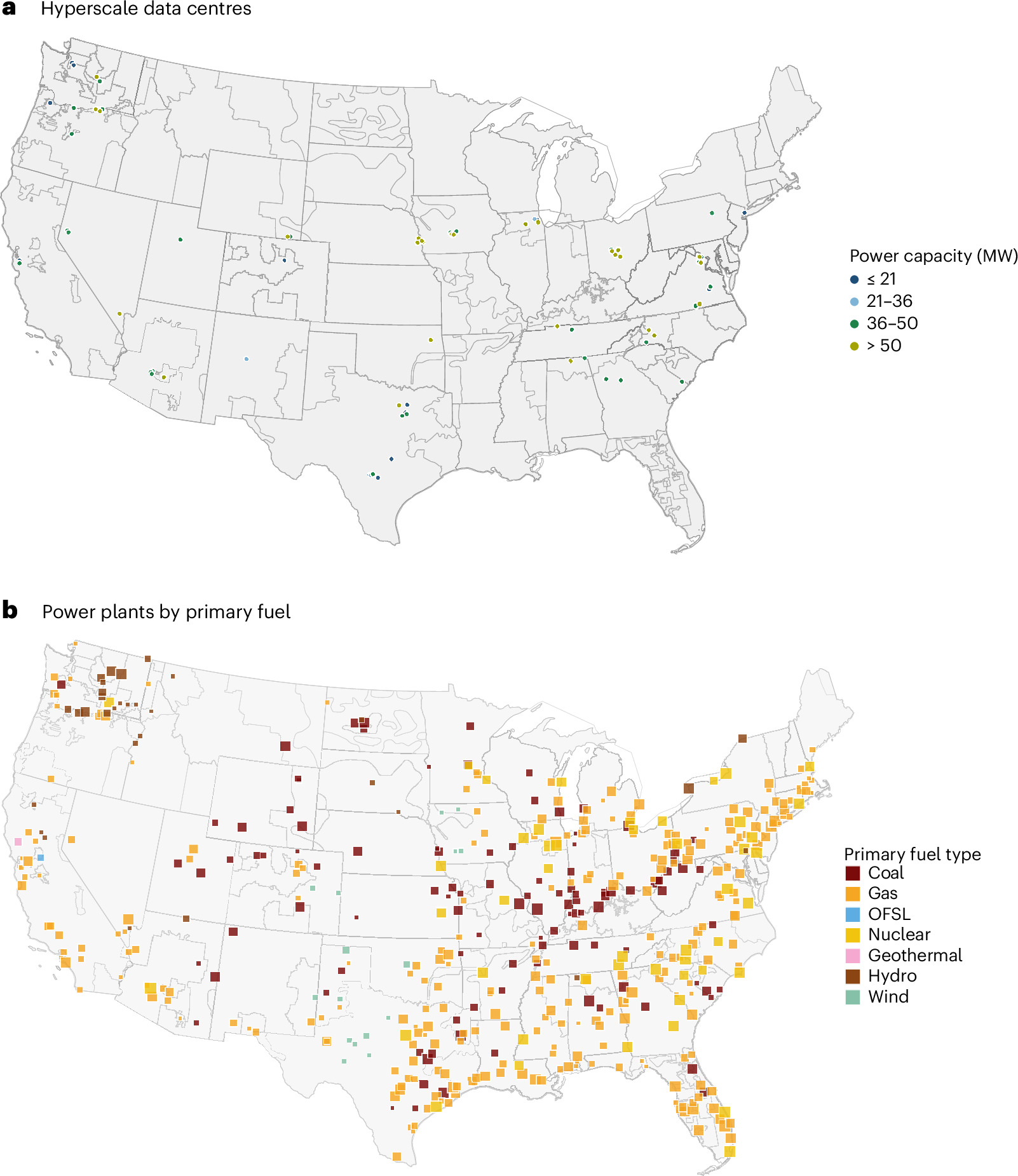
Original study, published in Nature. Covers May 2024 - April 2025.
Another Claudia video November 2026, by a different person
The Paseo plugin is a fork of the bb plugin ported over to Paseo
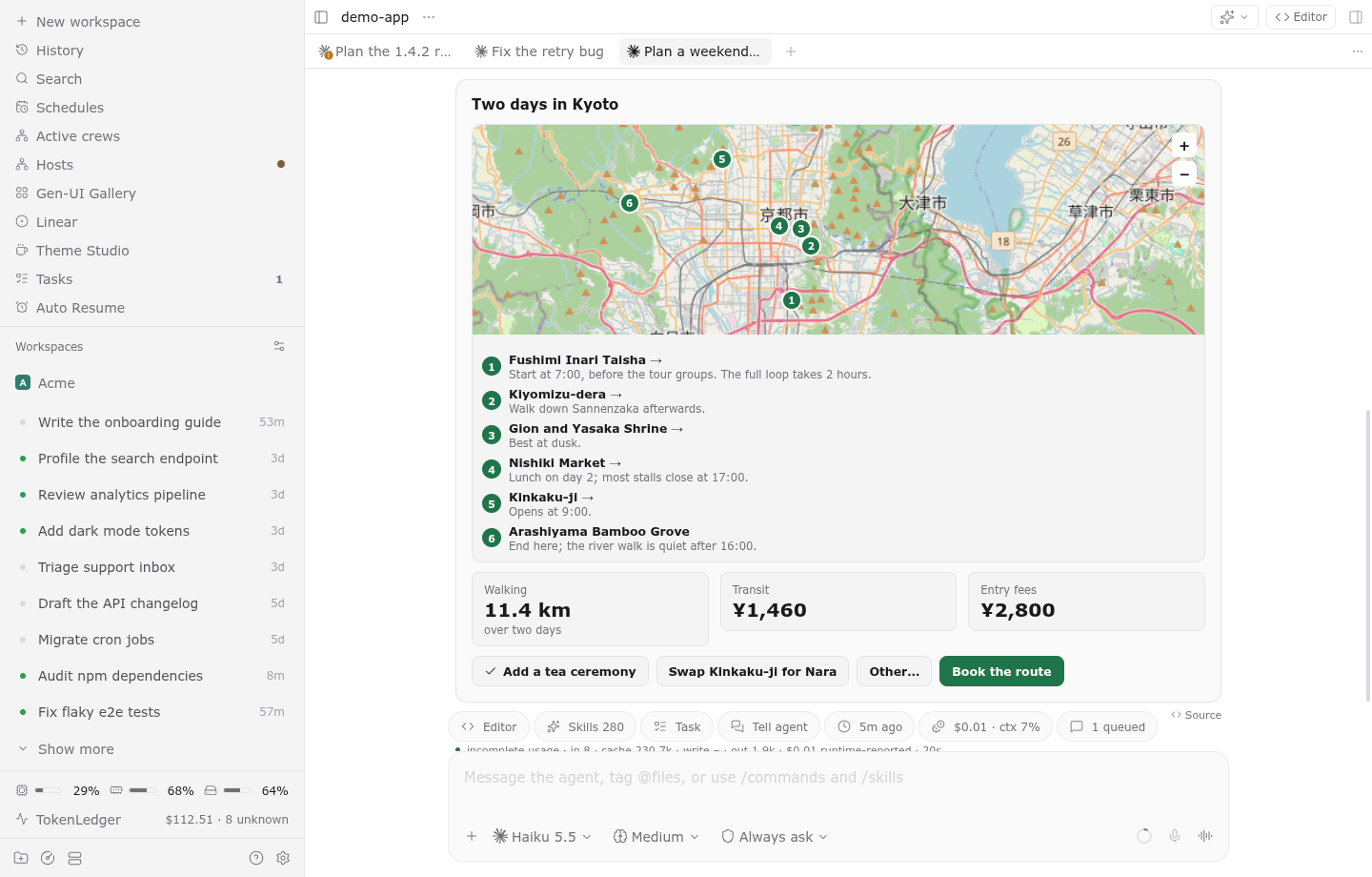
Generative UI with enhanced elements in chat
Source code for bb
Tantivy is part of Quickwit Open-source search engine for observability (logs, traces, and soon metrics!). Not a general search engine, designed for logs and for cloud deployment
Archived link on the Devcon site (still embeds YouTube)
Weights for Flint under Apache2
Seen via @bruces.bsky.social “ *Normally a techno-revolution has an eager avant-garde, but the people closest to AI are the ones most fretful about it *It's been going on so long that now they're into Durkheim anomie and suicidal ideation *"Learn to code" and have a nervous breakdown”
Source code for Thunderbolt
Github for kata tracker
Source code for the plugin
U.S. data centres now emit more carbon than an entire country | CBC
The 400 largest data centres in the United States put more heat-trapping gases into the atmosphere in one year than the entire nation of Denmark did, and that was before the artificial intelligence boom really got going, according to a Harvard University study published Monday.

Assessing the carbon emissions and energy consumption of US hyperscale data centres
The rapid proliferation of hyperscale data centres (HDCs) in the USA—mainly driven by the adoption of artificial intelligence—has raised concerns about this industry’s carbon footprint. We compiled facility-level information on 403 US hyperscale data centres operating between May 2024 and April 2025 and estimated their electricity consumption, electricity sources and attributable CO2 emissions. Across facility-load scenarios, these HDCs consumed approximately 68–99 TWh of electricity and were associated with approximately 21–31 million metric tons of CO2 under a location-based, total-output balancing-authority attribution method. Under the central scenario, HDC electricity demand was approximately 82 TWh, corresponding to about 1.8% of total US electricity consumption, and attributable CO2 emissions were approximately 25.7 Mt. Roughly 54% of attributed generation was supplied by fossil-fuel sources. The HDC electricity-weighted total-output carbon intensity was approximately 314 gCO2 kWh−1, compared with a US total-output average of approximately 348 gCO2 kWh−1. Our approach provides a facility-resolved attributional framework for assessing the carbon footprint of hyperscale data centres using plant-level electricity-generation and emissions data.
Working as Intended (audio fix)
ComicBit/bb-plugin-genui
BB plugin: agents answer with charts, diagrams, maps, plans and forms rendered inline in the chat.
Generative UI – Paseo plugin
Paseo plugin: agents answer with charts, diagrams, maps, plans and forms rendered inline in the chat.
bb
bb can control, customize, and automate itself, laying the groundwork for your own software factory.
ComicBit/bb-plugin-genui
BB plugin: agents answer with charts, diagrams, maps, plans and forms rendered inline in the chat.
bb
bb can control, customize, and automate itself, laying the groundwork for your own software factory.
tantivy
Tantivy is a full-text search engine library inspired by Apache Lucene and written in Rust
How to Magician: Improving Technological Governance by Boris Mann Greg Colvin, Jamie Pitts (Devcon4)
Devcon Archive
Archived content to learn from the leading minds in the Ethereum eco-system.

Introducing Flint - Recursive
Recursive self-improving superintelligence to automate knowledge discovery.

RecursiveSI/flint · Hugging Face
We’re on a journey to advance and democratize artificial intelligence through open source and open science.

Defining the common primitive — Tonk
Our beta test results have shown that Tonk's system for small software was one of many use cases, and that there is a common primitive between them all. A tonk space is data at a link, with its structure, views and rules. People, agents and systems read and write it with the permissions in the link.

Tonk — Data at a link
Data gets locked in apps. Tonk puts it at a link, with its structure, views, and rules, so it travels wherever you and your agents go.
Semble — Make sense of the web, together
A place for mapping the web, connecting ideas, and building shared knowledge.

20-year devs can't find work anymore

thunderbird/thunderbolt
AI You Control: Choose your models. Own your data. Eliminate vendor lock-in.
The issue tracker that runs inside the loop.
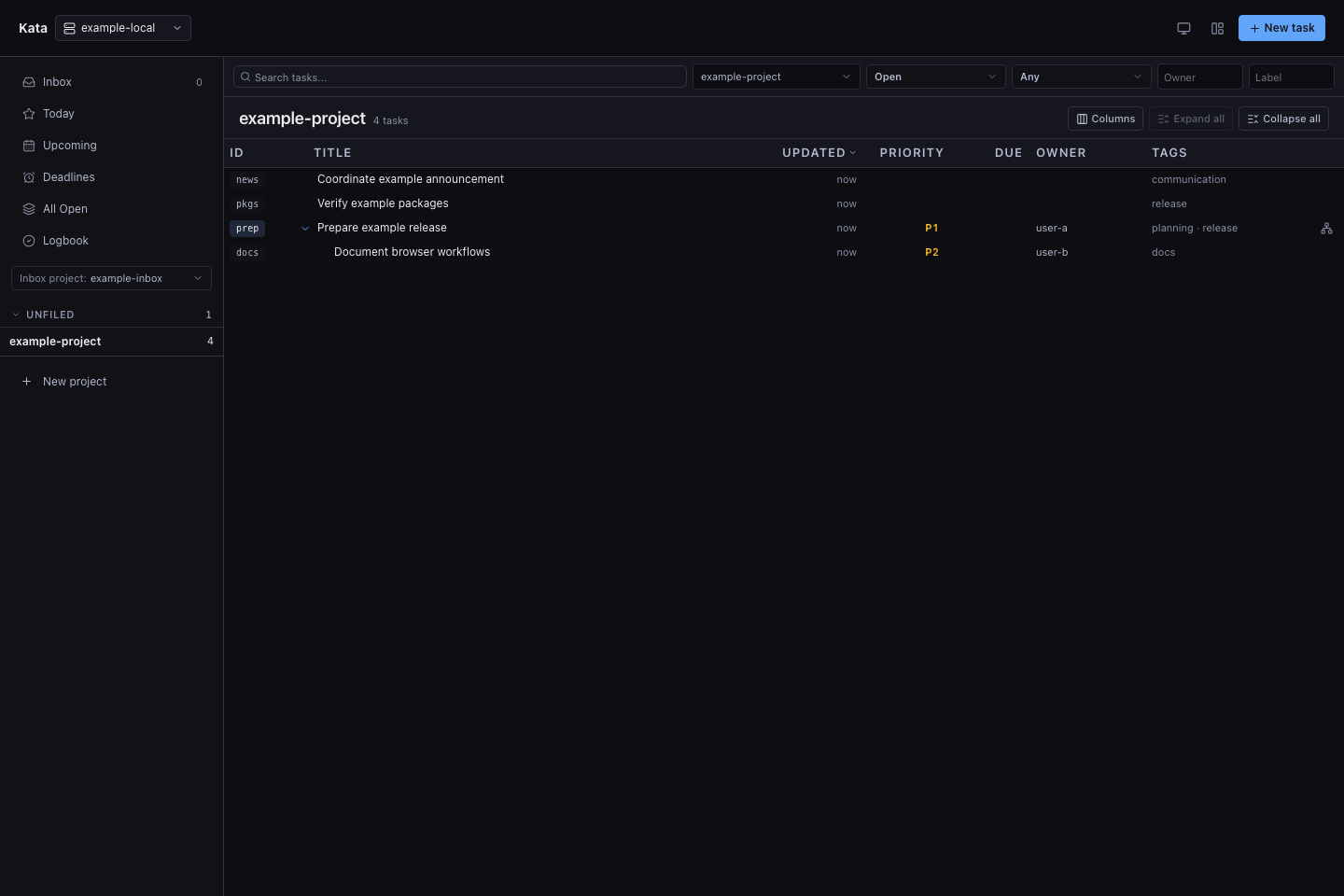
A local-first issue tracker for coding agents and the humans steering them. Queries in 4ms, on your own machine.
kenn-io/kata
Local-first issue tracking for AI-assisted software work, with an agent-friendly CLI and human-facing TUI
Unikernels in 2026: Justin Cormack in conversation with Geoffrey Huntley
unikernels were hard. key word: were.
Justin Cormack, who worked on MirageOS back in the day, called me at the pub to talk about why unikernels are coming back. The friction that made them hard is gone, the operating system is design debt, and if you care about security you should seriously consider them.

The seL4 Microkernel | seL4
seL4 is both the world's most highly assured and the world's fastest operating system kernel. Its uniqueness lies in the formal mathematical proof that it behaves exactly as specified, enforcing strong security boundaries for applications running on top of it while maintaining the high performance that deployed systems need.
unikernels were hard. key word: were.
Justin Cormack, who worked on MirageOS back in the day, called me at the pub to talk about why unikernels are coming back. The friction that made them hard is gone, the operating system is design debt, and if you care about security you should seriously consider them.
*Normally a techno-revolution has an eager avant-garde, but the people closest to AI are the ones most fretful about it *It's been going on so long that now they're into Durkheim anomie and suicidal ideation *"Learn to code" and have a nervous breakdown youtu.be/oAn38UNeRqw?si=Vivlx_GVZgVn2D…

There's a word for what we're feeling
youtu.be

