Improvisation in Ensembles: Conduction - #ImaginingPossibilities
How might we support creativity in large ensembles? What if students could co-create music with a conductor without staff notation or written music altogether? Perhaps novel in K-12 settings, ensemble-based improvisation exists in diverse musical cultures. What might we learn from conduction, a sophisticated gestural system that Butch Morris developed to facilitate improvisation and creation […]

Malleable Music Ensembles
A framework using generalized algebraic theories and categorical lenses to enable interoperable, local-first networked music ensembles.
Creativity through Recomposition in the Music Ensemble
Musical creativity is an essential component of a robust music education. There are many ways to invite and develop the creative capacities of K–12 music students. In this article, we propose the idea that recomposing within and around repertoire can be a creative starting point for student composition in an ensemble music classroom. We share examples of potential recomposition projects, questions to prompt student reflection, and other pedagogical considerations as a springboard for compositional projects with students. We hope that the open-ended nature of this mindset will encourage more creative musical spaces.


Fostering Twenty-First-Century Competencies Through Collective Free Music Improvisation
This article proposes collective free music improvisation (CFMI) pedagogical strategies that support the development of twenty-first-century competencies (21CCs) among young, diverse learners. It highlights the educational benefits of integrating CFMI into music learning and outlines three key pedagogical dimensions that facilitate CFMI: socio-musical interaction, personal musical vocabulary, and shared understanding. Drawing on authentic classroom examples, the article illustrates how these dimensions can be developed to meaningfully engage learners in CFMI and foster core 21CCs—particularly communication, collaboration, and inventive thinking. These insights offer practical guidance for educators aiming to implement CFMI with similarly profiled student populations.

Teaching Improvisation in Choir: Moving from “Recreative” to “Creative” Choral Artistry
This article describes a research study in which a collegiate choral ensemble learned vocal improvisation techniques as part of their regular rehearsals. While learning to improvise, singers had the opportunity to provide real-time feedback of their perceptions and experiences learning a new skill in a traditional choral setting. In this article, we share what we learned, including the rewards and challenges of teaching improvisation, our reflections as instructors, and perspectives from some of the singers. We also describe the activities we tried and offer strategies for other choir teachers who want to bring improvisation into their own classrooms.


Measuring Combinatorial Creativity in Large Language Models and Humans
Combinatorial creativity, the process of combining familiar ideas in unfamiliar ways, is one of the foremost engines of scientific, technological, and artistic progress. This work introduces Kombine, an LLM benchmark for combinatorial creativity tasking models to discover surprising, original, and useful associations, analogies, and blends between unrelated entities, and to use those analogies and blends to invent novel concepts by re-combining the parts of existing ones. In a large-scale study across 35 LLMs, we find that: (1) LLMs are 10-16 percentage points better at discovering associations and analogies than blends, and (2) exhibit an abstraction bottleneck on blending, in which even frontier LLMs struggle to find a shared abstraction between inputs and instantiate a coherent blended space. (3) LLMs also exhibit inventive homogeneity, in which one in five concepts invented for a given item reuses properties invented by another model. Moreover, (4) models are $14\times$ more likely to reuse other invented properties on blends than analogies, and (5) models from the same provider are $2.3\times$ more likely to reuse properties than those from different providers. Next, in a comparative study involving 75 humans on the same tasks, we find that (6) humans score below nearly every LLM on each task and (7) both humans and LLMs find blending most difficult, but association is easier than analogy for LLMs, while analogy is easier than association for humans. Lastly, (8) humans and LLMs access distinct regions of semantic space on each task, suggesting that combinatorial creativity could benefit from systematic human-AI collaboration to enhance conceptual diversity. In summary, we provide a framework to assess progress towards LLMs, AI systems, and human-AI collaborations more broadly, that can elicit combinatorial creativity in a setting relevant to scientific and technological innovation.

Student-Centered Music Education - #ImaginingPossibilities
Many music educators speak about student-centered or learner-centered music programs, but what do these terms mean? What is a student-centered ensemble or a learner-centered music class? These resources will support you in fostering and facilitating learner-centered music programs! (Some of the resources below are affiliate links – see the affiliate policy language here if you […]

Creativity through Recomposition in the Music Ensemble

Anti-democratic attitudes are highly contagious, new psychology study finds
Hyperactive–impulsive ADHD traits predict higher curiosity in adults: evidence from a cross-sectional study
Understanding the influence of digital technology on human cognitive functions: A narrative review

How the hypercuriosity of ADHD may have helped humans thrive | Aeon Essays

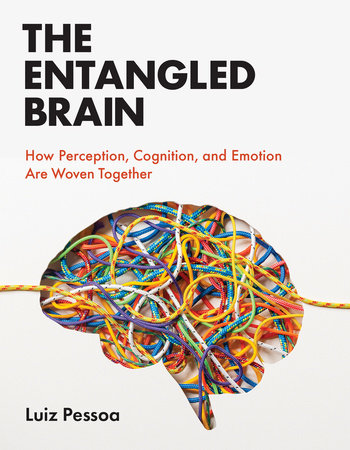
The Entangled Brain: How Perception, Cognition, and Emotion Are Woven Together

AI and The Enclosure of the Scientific Commons

Profit, cost, price, learned societies; further thoughts on Samuel A. Moore's Publishing Beyond the Market

Publishing Beyond the Market: Open Access, Care, and the Commons

Authorship, division of labour, material and digital form; thoughts on Samuel A. Moore's Publishing Beyond the Market
Bioregionalism, Commoning, and Relationalized Finance | David Bollier

Reclaiming the Computing Commons

Owners of Elvis Presley’s Music Sue Anthropic for Copyright Infringement

YouTube Music adds new labels for AI music

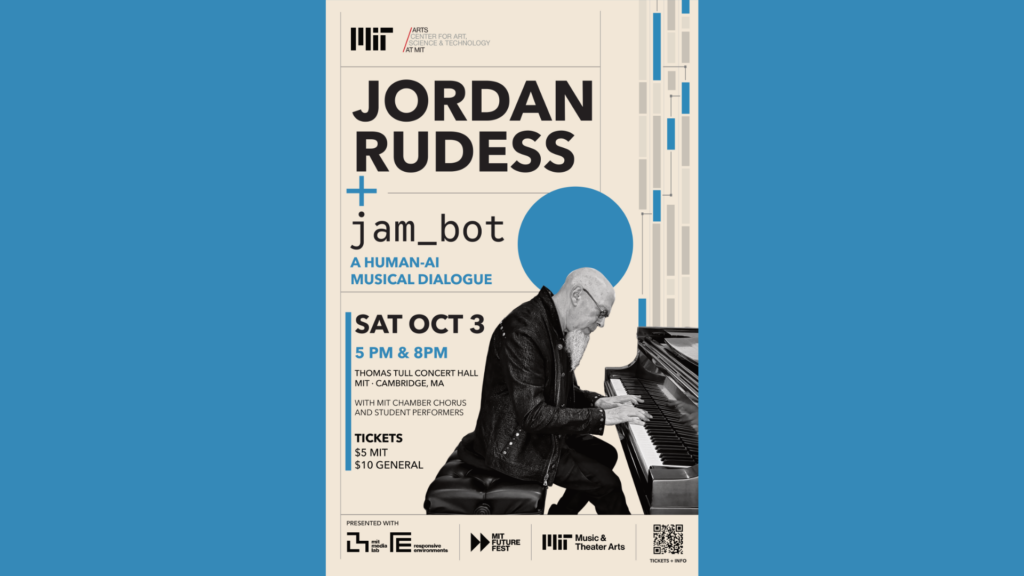
Jordan Rudess + jam_bot at MIT October 3

Jordan Rudess and MIT’s jam_bot: A New Era of Human-AI Musical Collaboration

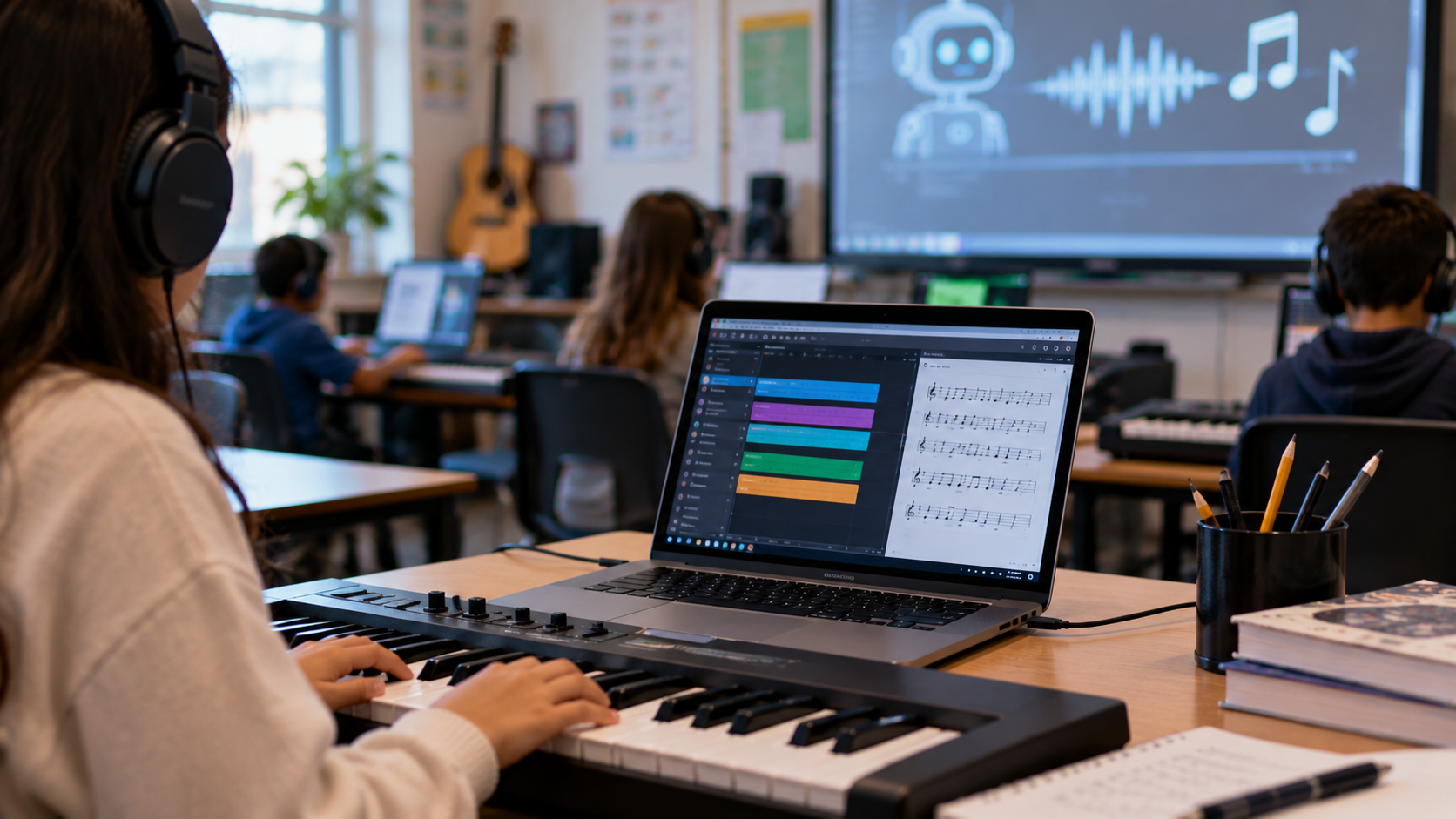
Artificial Intelligence in Music Classrooms: PK-12 Educators’ Practices, Concerns, and Confidence

“It frustrates me to hear people bashing something that's so amazing”: Todd Edwards is optimistic about AI in music production
The release of #ClaudeDesign left me wondering what a tool like this could look like for academics (rather than designers) I then used Claud…
What if paper reading and reviewing was interactive and visual? Tools today assume a very passive way of engaging with a paper: you open a…
Improvising in Ensembles (by Etobias-musiced) — Semble
Creating (composing) in Ensembles (by Etobias-musiced) — Semble
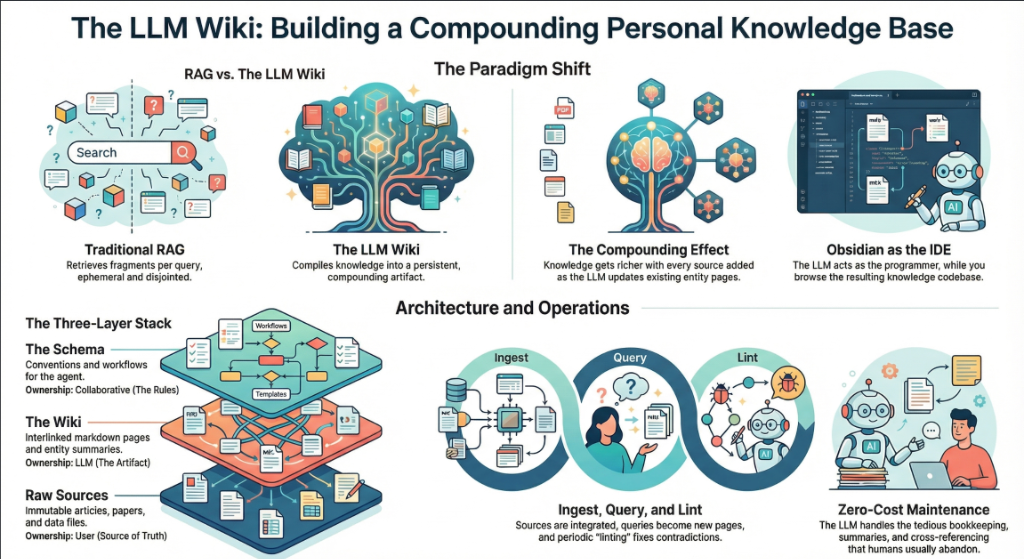
domleca/llm-wiki

The borrowed mind

Karpathy's LLM Wiki: The Complete Guide to His Idea File

AI is probably not a bubble

Cory Doctorow Predicts the AI Bubble Will Burst | The Tyee
Open Minis — Your Private On-Device AI Agent