Sources of the Self — Harvard University Press
“Taylor has taken on the most delicate and exacting of philosophical questions, the question of who we are and how we should live…and he has made this an adventure of self-discovery for his reader.” —Martha Nussbaum, New RepublicIn this extensive inquiry into the sources of modern selfhood, Charles Taylor demonstrates just how rich and precious those resources are. The modern turn to subjectivity, with its attendant rejection of an objective order of reason, has led—it seems to many—to mere subjectivism at the mildest and to sheer nihilism at the worst. Many critics believe that the modern order has no moral backbone and has proved corrosive to all that might foster human good. Taylor rejects this view. He argues that, properly understood, our modern notion of the self provides a framework that more than compensates for the abandonment of substantive notions of rationality.The major insight of Sources of the Self is that modern subjectivity, in all its epistemological, aesthetic, and political ramifications, has its roots in ideas of human good. After first arguing that contemporary philosophers have ignored how self and good connect, the author defines the modern identity by describing its genesis. His effort to uncover and map our moral sources leads to novel interpretations of most of the figures and movements in the modern tradition. Taylor shows that the modern turn inward is not disastrous but is in fact the result of our long efforts to define and reach the good. At the heart of this definition he finds what he calls the affirmation of ordinary life, a value which has decisively if not completely replaced an older conception of reason as connected to a hierarchy based on birth and wealth. In telling the story of a revolution whose proponents have been Augustine, Montaigne, Luther, and a host of others, Taylor’s goal is in part to make sure we do not lose sight of their goal and endanger all that has been achieved. Sources of the Self provides a decisive defense of the modern order and a sharp rebuff to its critics.

On liberty
Introductory -- Of the liberty of thought and discussion -- Of individuality, as one of the elements of well-being -- Of the limits to the authority of society over the individual -- Applications; Book, leather; Explanatory note by H.E. Barker attached; 18

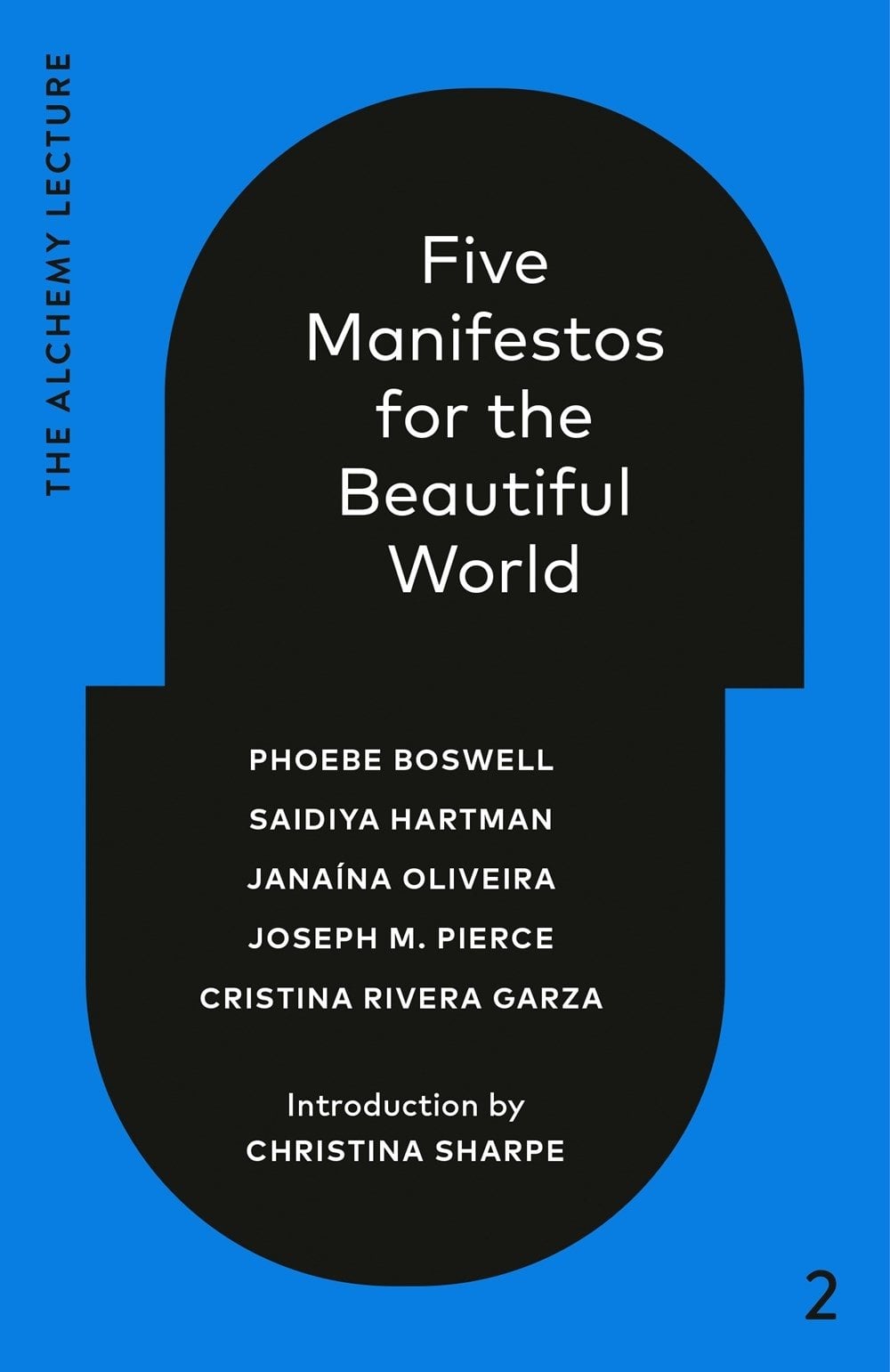
Five Manifestos for the Beautiful World: The Alchemy Lecture 2023
The Alchemy Lecture 2023

W Social and the ancient art of neighbourliness - We Can Just Do Things
Good behaviour matters more than good code
W Social and the ancient art of neighbourliness - We Can Just Do Things
Good behaviour matters more than good code
Towards the Symbiocene: Building an Eco-Civilisation with thought-leader, Jeremy Lent
Jeremy Lent is a long time friend of the podcast. His new book, 'Ecocivilization: Making a World That Works for All' is coming out at the end of April 2026 and so we got together to discuss what an Ecocivilisation is, why we so badly need to become one, and how we might get there.

A compass for a Life-Affirming Economy
This is an invitation to stand at the intersection of Self, Culture, and Science and imagine what flourishing in a life-affirming economy…

Positive Alignment: Artificial Intelligence for Human Flourishing
Existing alignment research is dominated by concerns about safety and preventing harm: safeguards, controllability, and compliance. This paradigm of alignment parallels early psychology's focus on...


Humanity in Open Source

Open Source and Politics
AI will kill open source
Burnout in Open Source (by Erlend Sogge Heggen) — Semble

You Can Help Solve Burnout in Open Source

Report on Burnout in Open Source Software
Where Should Science Go Next
Dr. Casey Fiesler (@cfiesler.bsky.social)

Americans’ Social Activity Has Steeply Declined in the Past 30 Years

Young people five times more likely to have no friends than a decade ago | IPPR

The loneliest generation: What it is like to grow up in England today | IPPR

Why You're Bored and Lonely: The Death of Third Places

Third Places Aren’t Gone. We Just Stopped Going.

The Disappearance of Third Places

Nowhere to Go: The Loss of Third Places
Impact of the COVID-19 pandemic on social media
(PDF) Facebook confessions: Corporate abdication and Silicon Valley dystopianism
How to: Use Signal

Signal, the secure messaging app: A guide for beginners

12 Commonsense Safeguards - staffny

Flock + Surveillance Talking Points - staffny

ACLU Recommendations - staffny

AI, Human Cognition and Knowledge Collapse

AI as Social Technology: Astor Lecture by Professor Henry Farrell

Bayesian Inference of Social Norms as Shared Constraints on Behavior

What people learn from punishment: A cognitive model

Spurious normativity enhances learning of compliance and enforcement behavior in artificial agents

Deference, Dissent, and Dispute Resolution: An Experimental Intervention Using Mass Media to Change Norms and Behavior in Rwanda
W Social has a page where they tracked European MPs accounts: europetalking.wsocial.news It's a cool study, but they have an indicator sayin…

Just 18 unverified VIP accounts produce more than half of all W Social content. | W Don't Have Time | Offprint
“European public voices choosing W” —But are they? - aiueo
@cristinacaffarra.bsky.social FYI you are listed as one of a list of "European public voices choosing W" on this web page: europetalking.wso…
W Social: Key Allegations & Answers - Alt Text
How not to build trust - Mathew's newsletter